





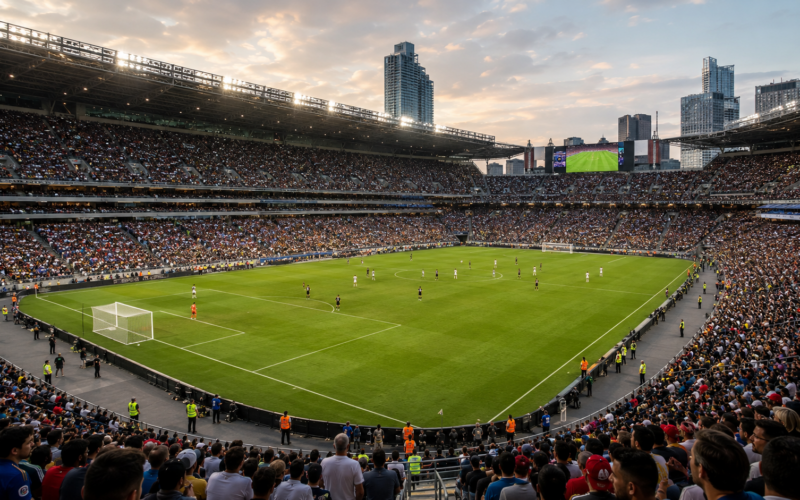
Ivory Coast defeated Curaçao 2-0 in their final FIFA World Cup 2026 Group E match at Philadelphia Stadium in Philadelphia, Pennsylvania, on Thursday, June 25, 2026. The match began at 4pm local time and concluded during the early hours of June 26 in India, with an official attendance of 68,324.
Nicolas Pépé scored both goals, opening the scoring in the seventh minute after Yan Diomande punished an error during Curaçao’s attempt to play out from defence. The forward added his second in the 64th minute when Ibrahim Sangaré released him behind the defensive line.
Curaçao registered more attempts than Ivory Coast and continued attacking after falling behind, but Yahia Fofana preserved the clean sheet with saves from Tahith Chong and Tyrese Noslin. Eloy Room also prevented a heavier defeat during the closing stages.
The victory gave Ivory Coast six points and secured second place in Group E behind Germany. Emerse Faé’s team reached the FIFA World Cup knockout stage for the first time, while Curaçao finished fourth with one point at the end of their debut campaign.
FIFA World Cup 2026 Curaçao 0-2 Ivory Coast full match scorecard and key incidents
How did Yan Diomande’s pressing punish Curaçao before the match could settle?
Ivory Coast entered the match knowing a draw would be enough to secure second place, but Faé’s team did not begin with a passive approach. Pépé and Ange-Yoan Bonny positioned themselves close to Curaçao’s centre-backs, while Diomande and Amad pressed inward from the wide areas whenever Room attempted to begin a short passing move.
The strategy produced a goal after only seven minutes. Juriën Gaari and Joshua Brenet failed to control a passing sequence outside their penalty area, and Diomande reacted before Curaçao could reset its defensive shape.
The 19-year-old accelerated towards goal and identified Pépé arriving inside the penalty area. His low cutback removed the remaining defenders, allowing Pépé to guide a controlled finish beyond Room and into the bottom corner.
The goal reduced the pressure on Ivory Coast because Curaçao now needed to score twice to move above the African champions. It also allowed the Elephants to manage the match with greater patience rather than attacking recklessly.
Diomande remained Ivory Coast’s primary transition threat during the first half. His speed forced Curaçao’s wing-backs to remain cautious, even when Dick Advocaat’s team began committing more players forward.
Why did Nicolas Pépé become the decisive player after an uncertain international period?
Pépé had not been an obvious candidate to define Ivory Coast’s qualification campaign. He had not scored during five World Cup qualifying appearances and had also been omitted from Faé’s recent Africa Cup of Nations squad.
His selection against Curaçao gave Ivory Coast a forward capable of moving between the right channel and the central penalty area. That flexibility allowed Diomande to stay wide before attacking the space created by Pépé’s movement.
The opening goal was a simple finish, but it depended on intelligent positioning. Pépé anticipated Diomande’s recovery, moved ahead of the nearest defender and offered a clear passing target near the right side of the six-yard area.
His second goal required greater technical quality. Sangaré found him with a precise pass through Curaçao’s back line in the 64th minute, and Pépé opened his body before curling a left-footed shot beyond Room.
The brace represented Pépé’s first goals in a competitive international match since October 2024. More importantly, it converted Ivory Coast’s fourth World Cup appearance into the first campaign that continued beyond the group stage.
How did Curaçao create more attempts without producing enough goal threat?
Curaçao finished with 11 attempts compared with Ivory Coast’s seven, but only two of those efforts tested Fofana. The Caribbean side therefore generated activity without creating the type of chances required to overturn an early deficit.
Chong produced the first shot on target after two minutes and remained Curaçao’s most dangerous attacker. He moved inside from the right, attempted to receive between the Ivorian midfield and defence and tested Fofana again during the second half.
Leandro Bacuna and Juninho Bacuna attempted to support the attack from midfield, while Floranus advanced from the left side of the back five. Those movements allowed Curaçao to enter the final third more frequently than expected.
The problem emerged during the final action. Crosses rarely found Jürgen Locadia in a clear position, and several shots were taken from outside the penalty area or under pressure from a recovering defender.
Curaçao’s 11 attempts produced only two shots on target and 18 touches inside the opposition penalty area. Ivory Coast did not completely prevent attacks, but they controlled the locations from which those attacks concluded.
Why did Ivory Coast’s possession advantage not lead to a larger winning margin?
Ivory Coast controlled 63.3% possession and completed 558 accurate passes, yet they attempted only seven shots. The contrast reflected a performance focused more on qualification security than on maximising the scoreline.
Sangaré and Franck Kessié circulated the ball safely across midfield, while Ousmane Diomande and Odilon Kossounou resisted unnecessary forward passes when Curaçao maintained their defensive shape. The approach limited transition risk but reduced the speed of Ivory Coast’s attacks.
Amad had an opportunity to double the lead in the 18th minute after another Diomande delivery, but he failed to make clean contact. Several later attacks also ended before a shot because the final pass arrived too late or Curaçao recovered enough defenders.
Curaçao’s back five deserves credit for preventing a more damaging result. Obispo, Gaari and Brenet protected the centre, while Room maintained the concentration required to save from Wahi during the closing stages.
Ivory Coast nevertheless converted two of their three shots on target. Their attacking volume was modest, but Pépé ensured the most important opportunities were finished efficiently.
How did Ibrahim Sangaré control the transition that produced the second goal?
Curaçao pushed their defensive block higher during the opening phase of the second half. Advocaat’s team understood that elimination was approaching and attempted to press Ivory Coast closer to Fofana’s penalty area.
The higher positioning gave Curaçao more territorial presence, but it also increased the space behind the centre-backs. Sangaré identified that vulnerability before the defensive line could retreat.
In the 64th minute, the midfielder received possession with enough time to look forward and delivered a pass through the gap towards Pépé. The forward stayed onside, moved into the left side of the penalty area and completed the move with a composed finish.
Sangaré’s contribution extended beyond the assist. He offered protection in front of the centre-backs, recovered loose balls and gave Kessié greater freedom to move into advanced areas.
Faé withdrew Pépé, Bonny and Diomande three minutes after the second goal. The triple substitution reflected confidence that the result was secure and allowed Ivory Coast to protect important attackers before the Round of 32.
What did Curaçao’s response reveal about their progress during a historic debut campaign?
Curaçao’s tournament began with a 7-1 defeat against Germany, a result that could have damaged the team’s confidence beyond repair. Instead, Advocaat’s players responded by drawing 0-0 with Ecuador and remaining in qualification contention until their final match.
The performance against Ivory Coast demonstrated further resilience. Curaçao conceded after seven minutes but did not collapse, continued pressing and finished with more attempts than their opponents.
Room remained one of the campaign’s most influential players after making 15 saves against Ecuador. Against Ivory Coast, he had fewer spectacular interventions to make, but his late save from Wahi prevented a third goal.
Curaçao finished with one point, one goal scored and nine conceded. The figures reflect the damage caused by the opening match, but they do not fully represent the competitiveness shown during the final two fixtures.
The longer-term challenge is adding greater attacking quality around Chong and the Bacuna brothers. Curaçao demonstrated organisation, courage and technical ability, but lacked a consistent penalty-area threat capable of converting competitive performances into victories.
Why is Ivory Coast’s first knockout qualification historically significant?
Ivory Coast appeared at the FIFA World Cup in 2006, 2010 and 2014 but finished third in their group on each occasion. Those squads included several of the country’s most celebrated players, including Didier Drogba, Yaya Touré, Kolo Touré and Gervinho.
The 2026 squad entered the tournament with fewer globally established stars but greater collective balance. Faé’s team defeated Ecuador with a late Amad goal, narrowly lost to Germany after conceding in stoppage time and then controlled the decisive match against Curaçao.
The six-point return represented two victories from three matches. Ivory Coast also finished with four goals scored and two conceded, producing a stronger goal difference than Ecuador despite both teams progressing.
Pépé’s brace therefore ended a long national wait. The Elephants had previously come close to qualification, particularly in 2006 and 2014, but had never entered a FIFA World Cup knockout bracket.
The achievement also demonstrated the wider significance of the expanded 48-team format. Africa received more qualification places, and Ivory Coast converted their return to the tournament into the country’s most successful World Cup campaign.
How did the simultaneous Ecuador victory determine the final Group E order?
Germany entered the final round with six points and remained first despite losing 2-1 to Ecuador. Their goal difference of plus six kept them above Ivory Coast, who also finished with six points but had a goal difference of plus two.
Ivory Coast’s victory secured second place and automatic qualification. Ecuador’s comeback against Germany lifted Sebastián Beccacece’s team to four points and confirmed progress through the best-third-place pathway.
Curaçao remained on one point and finished fourth. Their draw with Ecuador prevented a pointless debut, but the eight-goal deficit accumulated across the group left no realistic route forward after the defeat in Philadelphia.
Group E therefore produced three Round of 32 teams. Germany advanced as group winners, Ivory Coast qualified as runners-up and Ecuador progressed as one of the eight strongest third-placed teams.
FIFA World Cup 2026 Group E final points table
What does the Group I matchup mean for Ivory Coast’s Round of 32 strategy?
Ivory Coast will play the team finishing second in Group I in Arlington, Texas, on Tuesday, June 30. The opponent will be either France or Norway, with the final identity determined by their remaining group-stage results.
Both possible opponents would present a more demanding attacking test than Curaçao. France possess elite one-on-one quality across the forward line, while Norway combine direct attacking power with dangerous movement around the penalty area.
Faé is likely to retain the midfield partnership of Sangaré and Kessié. Their ability to protect the centre while releasing Ivory Coast’s wingers will be essential against an opponent capable of punishing turnovers.
Diomande’s speed and Amad’s creativity remain central to the attacking plan, but Pépé’s brace creates a genuine selection question. The experienced forward has demonstrated that he can convert limited opportunities and may have earned another start.
Ivory Coast’s route will also depend on defensive concentration. They conceded only twice during the group stage, but both goals came against Germany after the Elephants had struggled to manage decisive late phases.
Key takeaways from Curaçao vs Ivory Coast at FIFA World Cup 2026
- Ivory Coast defeated Curaçao 2-0 and qualified for the FIFA World Cup knockout stage for the first time.
- Nicolas Pépé scored in the seventh and 64th minutes to complete the decisive brace.
- Yan Diomande created the opening goal after punishing Curaçao’s attempt to play out from defence.
- Ibrahim Sangaré assisted Pépé’s second goal with a pass through the defensive line.
- Curaçao recorded 11 attempts compared with Ivory Coast’s seven but managed only two shots on target.
- Yahia Fofana saved efforts from Tahith Chong and Tyrese Noslin to preserve Ivory Coast’s clean sheet.
- Ivory Coast controlled 63.3% possession and completed 558 accurate passes.
- Curaçao finished their debut campaign with one point after their earlier draw against Ecuador.
- Ivory Coast finished second in Group E with six points, behind Germany on goal difference.
- The Elephants will face the Group I runners-up in the Round of 32 in Arlington on June 30.
Share this:
Discover more from Business-News-Today.com
Subscribe to get the latest posts sent to your email.

