


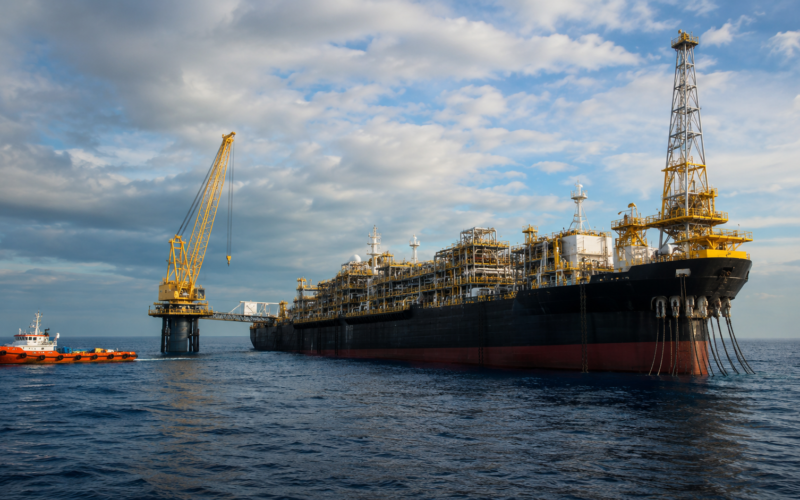
Azule Energy, the equally owned Angola joint venture of BP p.l.c. (NYSE: BP) and Eni S.p.A. (NYSE: E), has taken the final investment decision on the Greater PAJ deepwater oil development in the Lower Congo Basin. The project will combine the Palas, Astraea Central and Juno resources in Block 31 with the Urano and Dione discoveries in neighbouring Block 31/21 through a new floating production, storage and offloading vessel. Eni’s project portfolio indicates a targeted 2029 start and plateau production of approximately 85,000 barrels of oil equivalent per day. Equinor ASA (NYSE: EQNR) owns 50% of Block 31/21 alongside Azule Energy, giving the Norwegian producer material exposure to the cross-block development. The approval strengthens Angola’s replacement-project pipeline, but the investment case will depend on FPSO contracting, cross-block commercial alignment, fiscal stability and Azule Energy’s ability to control deepwater costs through first oil.
Why does the Greater PAJ final investment decision matter for Angola’s offshore production outlook?
Greater PAJ matters because Angola needs new offshore developments capable of replacing natural declines from mature producing fields. The country has a substantial installed base of floating production systems, subsea wells and export infrastructure, but deepwater reservoirs gradually lose output unless operators continue sanctioning infill wells, tiebacks and new production hubs.
The project provides a more meaningful production contribution than a small brownfield intervention. Planned plateau output of approximately 85,000 barrels of oil equivalent per day would make Greater PAJ a significant standalone liquids development within Azule Energy’s portfolio, although it remains smaller than the 180,000 barrels of oil equivalent per day associated with the Agogo Integrated West Hub.
The 2029 production target also extends Azule Energy’s growth pipeline beyond its latest start-ups. The Agogo floating production, storage and offloading vessel entered service in 2025, while the New Gas Consortium moved through commissioning and commercial gas delivery during 2026. Greater PAJ gives the company another major operating asset later in the decade, reducing the risk of a sharp investment and production gap after the current development cycle.
Angola benefits from the project through production-sharing revenue, taxes, contractor activity, local employment and demand for marine, logistics and maintenance services. The development also signals that the country can still attract capital for new deepwater facilities despite competition from lower-cost projects in Guyana, Brazil, the United States Gulf and the Middle East.
The final investment decision does not immediately reverse national production decline. First oil remains roughly three years away, and output will build gradually after start-up. Its strategic value lies in preserving future capacity rather than changing near-term crude supply.
How will Greater PAJ combine five discoveries across two offshore licence areas?
The development brings together Palas, Astraea Central and Juno in Block 31 with Urano and Dione in Block 31/21. Combining these reservoirs creates a larger resource base capable of supporting a new production system rather than developing each discovery through a separate and potentially uneconomic solution.
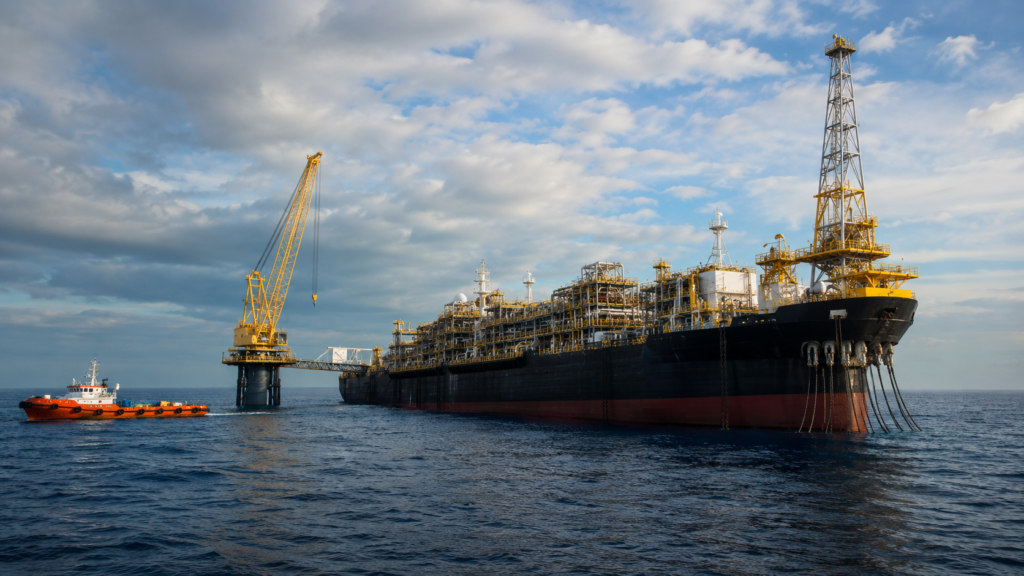
Cross-block developments can improve capital efficiency because processing, storage, export and supporting infrastructure are shared. One floating production vessel can receive fluids from several subsea production centres, separate oil, gas and water, store crude and load export tankers.
The model also increases commercial complexity. Block 31 and Block 31/21 have different ownership groups, licence histories and contractual arrangements. Costs, production, reserves, operating expenditure and decommissioning liabilities must be allocated between the participating groups under an agreed commercial framework.
Azule Energy operates both licence areas, which should reduce some coordination risk. The company holds a 26.67% participating interest in Block 31 and a 50% interest in Block 31/21. Equinor owns the remaining 50% of Block 31/21, while the Block 31 contractor group includes additional partners whose economics must also be accommodated.
BP and Eni each own half of Azule Energy, giving both companies indirect exposure to the operator’s interests. Their eventual project-level economics will depend on Azule Energy’s participating interests, the allocation of production between reservoirs and the commercial agreements established between the two blocks.
Azule Energy disclosed before the final investment decision that negotiations between the contractor groups were still progressing. Approval now indicates that the partners have resolved enough of the commercial structure to commit capital, although the complete allocation formula and contractual terms have not been publicly disclosed.
Why does Greater PAJ require a new FPSO instead of relying entirely on existing Block 31 facilities?
Block 31 already contains the Plutao, Saturno, Venus and Marte development, commonly known as PSVM, together with established subsea infrastructure and production facilities. A smaller discovery near spare processing capacity might normally be tied back to that system.
Greater PAJ appears large and geographically distinct enough to justify a new floating production, storage and offloading vessel. The combined resource base across five reservoir areas is expected to support approximately 85,000 barrels of oil equivalent per day at plateau, creating a production requirement that may be difficult to accommodate through existing facilities without substantial modification.
A dedicated vessel also provides processing and storage capacity designed around the fluids, pressures and production profile of the new reservoirs. It allows Azule Energy to optimise water injection, gas handling, power generation and subsea architecture without competing for capacity with older Block 31 wells.
The trade-off is considerably higher capital exposure. A new FPSO requires engineering, hull construction or conversion, topsides fabrication, mooring systems, risers, subsea equipment, pipelines, wells and offshore installation. These packages must arrive in the correct sequence, and delays in one area can postpone the entire project.
The contract structure will be an important indicator of risk allocation. Azule Energy could purchase the vessel directly, use a long-term lease-and-operate model or combine ownership and contractor services. Leasing can reduce upfront capital but creates multiyear payment obligations and dependency on the FPSO provider.
The company already has experience with major leased production vessels in Angola. That operating history may help it define performance requirements and avoid design changes, but Greater PAJ will still carry project-specific reservoir and engineering risks.
Can Angola’s marginal-field fiscal terms make Greater PAJ competitive against global oil projects?
The original Palas, Astraea and Juno resources received marginal-field treatment intended to improve the economics of discoveries that had remained undeveloped for years. Such terms can include changes to taxes, cost recovery, production sharing or other fiscal conditions that reduce the break-even price required for investment.
Fiscal support matters because the resources were discovered long before the latest final investment decision. The delay suggests that earlier development concepts struggled to compete for capital, whether because of project cost, oil prices, technical complexity or contractual terms.
Combining the original discoveries with Urano and Dione improves scale, while the revised fiscal framework can improve expected returns. Neither factor alone may have been sufficient. Together, they appear to have created a project capable of passing the partners’ investment thresholds.
Azule Energy’s 2025 financial statements indicated that an extension to the marginal-field decree was still awaiting formal completion, although the company had received a favourable opinion from Angola’s upstream regulator. The final investment decision suggests that the remaining regulatory risk has become manageable, but investors should still watch for publication of the final fiscal and contractual documents.
Angola must balance two competing objectives. It needs terms attractive enough to bring delayed resources into production, while preserving sufficient government revenue from assets owned by the state. Overly generous incentives weaken the public return, while inflexible conditions can leave discoveries permanently stranded.
Greater PAJ could become an important reference for other marginal resources. Successful execution would show that fiscal reform, cross-block cooperation and a shared FPSO can convert long-discovered accumulations into commercial production. Cost escalation or renewed contractual disputes would make future investors more cautious.
What does Greater PAJ reveal about Azule Energy’s capital allocation and funding capacity?
Azule Energy entered 2026 with an unusually heavy development programme. Its earlier capital plan included approximately $750 million of maintenance expenditure, $500 million for the Agogo development, $200 million for the New Gas Consortium and around $300 million for exploration.
The company had indicated that proceeding with Greater PAJ could add approximately $260 million to its 2026 spending, increasing total capital expenditure from about $1.75 billion to roughly $2.01 billion. That figure represents expected spending during 2026 rather than the total cost of constructing Greater PAJ.
The full development cost remains undisclosed. Investors should therefore avoid multiplying production capacity by a generic FPSO cost or treating the $260 million estimate as the entire project budget. Spending will be distributed across several years and shared between the participating interests in Blocks 31 and 31/21.
Azule Energy has argued that operating cash flow provides sufficient room for capital investment and debt service. The company generated approximately $2.98 billion of post-tax cash flow before working-capital movements during the twelve months to September 2025, even with an average realised oil price near $69 per barrel.
The funding position is supported by recent production additions from Agogo, Ndungu and the New Gas Consortium. These assets should contribute cash while Greater PAJ moves through engineering, procurement, fabrication and drilling.
However, self-funding capacity remains exposed to oil prices. A prolonged decline in crude prices could reduce cash generation at the same time that Greater PAJ spending accelerates. The company could then optimise exploration, defer discretionary projects, increase borrowing or seek additional support from its shareholders and project partners.
The balance between maintenance and growth capital is equally important. Azule Energy estimated that about 43% of its pre-PAJ capital programme was required to mitigate production decline. This means a substantial share of spending preserves existing output rather than creating entirely new growth.
Why is Greater PAJ strategically relevant to BP and Eni despite their diversified portfolios?
For BP and Eni, Greater PAJ is individually smaller than their largest global projects, but it reinforces a distinctive partnership model. The two groups combined their Angolan assets into Azule Energy to create a separately managed operator with greater scale, portfolio flexibility and local execution capacity.
The joint venture structure allows both companies to retain exposure to Angola without independently duplicating management, logistics and technical organisations. Azule Energy can prioritise projects across the combined portfolio and finance part of its programme through internal cash generation.
Greater PAJ also supports production beyond the immediate start-up cycle. BP and Eni have both emphasised disciplined upstream growth, with preference for projects that can deliver resilient cash flows and competitive break-even economics.
Eni includes Greater PAJ among its principal projects scheduled to start between 2027 and 2030. The company expects approximately 85,000 barrels of oil equivalent per day of gross plateau production from the project beginning in 2029.
BP gains equivalent exposure through its equal ownership of Azule Energy, although Greater PAJ’s contribution to BP’s consolidated production will be diluted by the joint venture and licence-level interests. The project is therefore strategically useful without being transformational for a company of BP’s scale.
The larger value may come from portfolio repetition. If Azule Energy can deliver Agogo, the New Gas Consortium and Greater PAJ while extending mature assets, the joint venture could demonstrate that combining portfolios creates more investable projects than BP and Eni would have pursued separately.
There is also a governance test. Azule Energy is independently managed, but its two shareholders must remain aligned on dividends, capital expenditure, borrowing and future acquisitions. A large multiyear FPSO development will test whether that alignment survives periods of weaker commodity prices.
How does Equinor benefit from Greater PAJ after expanding its position in Block 31/21?
Equinor owns 50% of Block 31/21 alongside Azule Energy. The Norwegian company therefore participates directly in the Urano and Dione portion of the development while Azule Energy operates the licence.
The partnership gives Equinor access to an operated development model without requiring it to build a full standalone organisation around the project. Azule Energy carries responsibility for execution, while Equinor contributes capital, reservoir expertise and partner oversight.
Greater PAJ also reflects a hub-and-cluster approach familiar to Equinor from the Norwegian continental shelf. Multiple discoveries are combined around shared production infrastructure, allowing smaller resources to become economic when developed collectively.
The model can create additional upside beyond the five initial reservoir areas. Block 31/21 contains several discoveries, and Azule Energy reported completing technical assurance work across 13 discoveries during 2025. Future finds or existing accumulations could potentially use the Greater PAJ infrastructure if capacity, distance and economics are suitable.
That optionality can extend the FPSO’s economic life and improve returns after the initial fields begin declining. It can also shorten future development schedules because new discoveries may need subsea wells and pipelines rather than another production vessel.
Equinor must still manage non-operated risk. It cannot directly control project execution, procurement or daily operations, yet it remains exposed to its share of cost overruns and delays. Strong technical assurance and partner governance will therefore be central to protecting returns.
What execution risks could prevent Greater PAJ from meeting its 2029 start-up target?
The 2029 schedule provides approximately three years for detailed engineering, major contract awards, FPSO construction, subsea manufacturing, drilling, offshore installation and commissioning. That is achievable for an experienced operator, but the programme offers limited protection from major supplier disruption.
FPSO delivery is likely to be the critical path. Construction yards capable of producing large deepwater vessels are serving projects across Brazil, Guyana, West Africa and Asia. Competition for engineering capacity, fabrication slots and specialist equipment can affect both cost and schedule.
Subsea equipment presents another long-lead risk. Trees, manifolds, umbilicals, risers and flowlines must be designed around reservoir pressure, fluid properties and seabed conditions. Late design changes can affect several packages at once.
Drilling performance will determine how quickly the project reaches plateau. The operator must complete enough production and injection wells before start-up while avoiding reservoir damage, mechanical problems and rig delays.
Cross-block administration could also create friction after sanction. Cost allocation, reservoir performance and production measurement may differ from planning assumptions. The contractor groups need robust mechanisms for resolving disputes without disrupting execution.
Angola’s local-content requirements provide economic benefits but can add complexity when domestic suppliers lack capacity for specialised packages. Azule Energy must identify where local fabrication and services can be expanded without compromising quality or the delivery schedule.
Commodity prices remain the principal external risk. The final investment decision should be based on long-term economics rather than current oil prices, but a severe downturn can still encourage spending reductions, contractor renegotiations or slower drilling.
What do BP, Eni and Equinor share prices reveal about current investor sentiment?
BP American depositary shares traded around $39.64 on June 22, up modestly during the session. The stock was approximately 4.7% below its June 15 level and about 10.6% lower than its May 22 close, while trading within a 52-week range of $29.58 to $48.27.
Eni American depositary shares traded around $49.48, also moderately higher during the session. The shares were down approximately 3.5% over five trading sessions and about 9% over one month, with a 52-week range of $31.86 to $58.
Equinor American depositary shares changed hands near $32.64. That placed the stock roughly 4.7% below its June 15 close and nearly 15.9% below its May 22 level, within a 52-week range of $22.26 to $43.46.
The similar pattern across all three companies indicates that investors are responding primarily to commodity-market volatility and broader energy-sector sentiment rather than to Greater PAJ alone. An 85,000-barrel-per-day project with a 2029 start is strategically relevant, but it will not materially alter near-term earnings for companies of this size.
The final investment decision nevertheless supports the longer-term production outlook. It provides another sanctioned project capable of replacing decline later in the decade, which is increasingly important as investors demand both shareholder distributions and sustainable upstream volumes.
The market will judge the project through capital discipline rather than headline capacity. Greater PAJ becomes supportive to valuation when the partners disclose competitive economics, award contracts without inflationary surprises and maintain the 2029 timetable.
Which milestones will determine whether Greater PAJ becomes a successful Angola megaproject?
The first milestone will be disclosure of the principal contracts. The FPSO provider, subsea production contractor, drilling contractor and installation companies will reveal how Azule Energy has divided execution and financial risk.
The second will be greater clarity on total project cost. The approximately $260 million identified for 2026 is only one year of spending and cannot be used as a complete development estimate.
The third will be confirmation of fiscal and commercial arrangements across Blocks 31 and 31/21. Final marginal-field terms and cross-block agreements will determine how production and expenditure are allocated.
The fourth will be FPSO fabrication progress. Hull work, topsides manufacturing, module integration and sailaway timing will be the clearest physical indicators of whether the 2029 target remains credible.
The fifth will be drilling commencement. Production and injection wells must be completed in a sequence that supports first oil and a controlled ramp toward plateau.
The sixth will be local-content delivery. Angola will expect the project to expand domestic employment and industrial participation, not simply produce additional crude through imported equipment and labour.
The seventh will be successful commissioning. Processing systems, subsea controls, water injection, gas handling and export operations must function together before the project can produce reliably.
In my assessment, Greater PAJ is strategically stronger than a routine replacement project because it creates a new hub across two licence areas and preserves future development options. The project’s real quality, however, will be determined by cost per recoverable barrel, schedule performance and the amount of additional resource that can ultimately be connected to the new FPSO.
What are the key takeaways from Azule Energy’s Greater PAJ investment decision?
- Azule Energy has approved Greater PAJ, a new deepwater oil development spanning Angola’s Blocks 31 and 31/21.
- The project will combine Palas, Astraea Central, Juno, Urano and Dione through a new floating production, storage and offloading vessel.
- Eni’s project schedule targets start-up in 2029 and gross plateau output of approximately 85,000 barrels of oil equivalent per day.
- BP and Eni each own 50% of Azule Energy, while Equinor owns 50% of Block 31/21 alongside the operator.
- Azule Energy had previously estimated that Greater PAJ would add about $260 million to its 2026 capital expenditure, not that this represented the full project cost.
- Marginal-field fiscal terms and cross-block commercial agreements are central to the development’s economic viability.
- The new FPSO creates capacity for the initial discoveries and possible future tiebacks from surrounding resources.
- BP, Eni and Equinor shares have all weakened over the past month, reflecting wider oil-market volatility rather than project-specific concern.
- FPSO contracting, subsea procurement, drilling performance and local-content execution are the principal schedule risks.
- Greater PAJ will support Angola’s post-2028 production base only if Azule Energy preserves capital discipline through first oil.
Share this:
Discover more from Business-News-Today.com
Subscribe to get the latest posts sent to your email.