
SVEDA has expanded its luxury skincare retail presence into the Hamptons, placing the clean skincare brand in Southampton and East Hampton as it looks to convert affluent destination visibility into a wider premium retail strategy. The privately held company is entering the East End through Plain-T in Southampton and a dedicated pop-up corner at Gathering Marketplace in East Hampton, following recent exposure at the U.S. Open Women’s Polo Championship Final in Wellington, Florida. The move matters because beauty brands are increasingly fighting for discovery in high-context retail environments, not just on social feeds or conventional department-store shelves. For SVEDA, the Hamptons expansion is less about store count and more about whether the brand can prove that curated luxury placement can build trust, trial, and repeat demand in a crowded premium skincare market.
Why is SVEDA using the Hamptons to strengthen its luxury skincare retail strategy?
SVEDA’s Hamptons expansion shows a deliberate attempt to place the brand where premium skincare discovery is tied to lifestyle, social proof, and discretionary spending. Southampton and East Hampton are not mass retail markets. They are seasonal, high-income, reputation-sensitive environments where brands can gain visibility among consumers who are already primed for wellness, beauty, hospitality, gifting, and boutique retail experiences.
That matters because the clean skincare category is saturated with brands that sound similar online. Many claim natural inspiration, formulation discipline, science-led development, and elevated design. In that environment, physical placement becomes a credibility filter. When a skincare brand appears in a curated boutique rather than only through direct-to-consumer advertising, the retailer effectively lends taste validation. That is useful for a smaller premium brand because paid digital channels have become expensive, algorithmic visibility is unstable, and consumers are increasingly wary of yet another beautifully packaged serum promising a soft-focus miracle.
The Hamptons also give SVEDA a geographically concentrated test market. The company can observe how consumers respond in a luxury leisure setting, whether products attract spontaneous discovery, and whether boutique retail staff can explain the brand’s positioning effectively. If the strategy works, SVEDA gains a template for other affluent seasonal markets, resort corridors, wellness destinations, and curated hospitality retail formats.
How does the move into Southampton and East Hampton change SVEDA’s market positioning?
The Southampton placement at Plain-T and the East Hampton pop-up at Gathering Marketplace shift SVEDA from being primarily a product brand into a more experience-led beauty brand. That distinction is important. Premium skincare is not sold only through ingredient lists. It is sold through trust, texture, ritual, environment, and the belief that a consumer is buying into a better version of daily routine. The Hamptons are useful precisely because they make the buying moment feel less transactional.
Plain-T gives SVEDA adjacency to a boutique brand built around craft, sourcing, and sensory quality. That pairing supports SVEDA’s own positioning around simplicity, clean skincare, and understated formulation. Gathering Marketplace adds a different advantage by placing SVEDA inside a curated retail and hospitality-style environment where shoppers may be more open to discovery. Together, the two locations create a small but coherent retail footprint across the East End rather than a single isolated placement.
The operational challenge is whether SVEDA can turn boutique visibility into measurable brand momentum. Small luxury retail placements can look glamorous while remaining commercially modest. The real test will be repeat purchases, online follow-through, customer retention, and whether Hamptons exposure leads to new retail inquiries for fall. In skincare, first purchase is only half the battle. The second purchase is where brand economics start to get interesting.
Why are premium beauty brands relying more on curated retail and destination-led discovery?
The beauty market is still growing, but the path to growth is becoming more complicated. Prestige beauty sales have remained resilient, skincare continues to benefit from demand for facial care, serums, creams, and clinical positioning, and premium consumers are still willing to pay for products that feel differentiated. However, the sector is also noisy, fragmented, and intensely competitive. A small brand cannot simply outspend larger rivals on advertising and expect efficient returns.
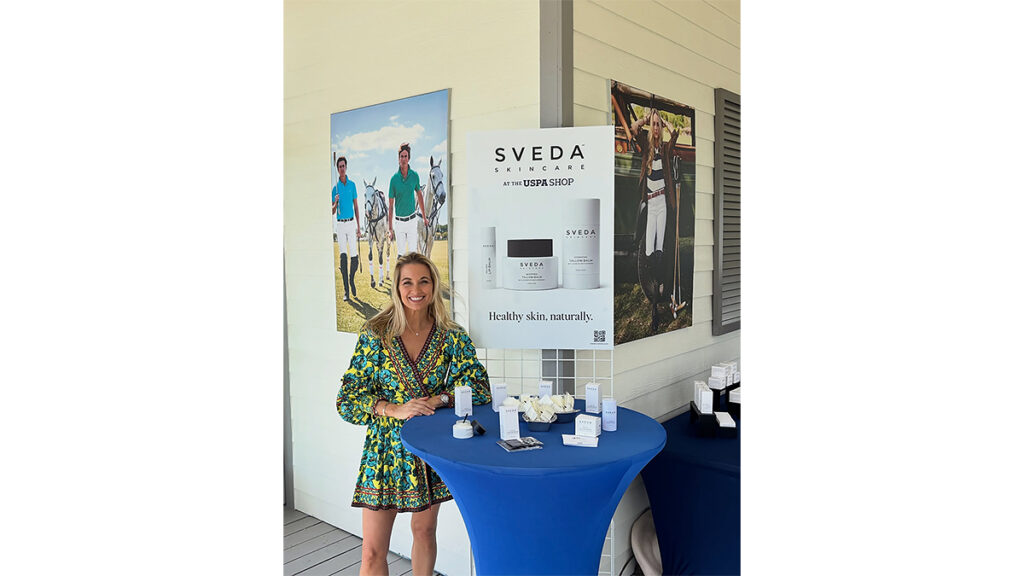
Curated retail helps solve part of that problem by turning discovery into an edited experience. Consumers are not scrolling past hundreds of competing products. They are encountering a smaller selection shaped by a boutique, marketplace, event, or hospitality venue. That environment can be particularly powerful for clean skincare brands because the sales process often requires explanation. Ingredients, formulation philosophy, sensory feel, and skin benefits are harder to communicate in a two-second social media impression.
The downside is scale. Destination-led retail can build brand equity but may not produce rapid volume unless supported by a strong digital conversion path. SVEDA’s challenge will be to connect offline discovery with online repeat ordering. The smartest version of this strategy would treat the Hamptons not as a vanity milestone but as a customer acquisition laboratory, where the company learns which products resonate, which messages convert, and which retail environments produce the strongest reorder behavior.
What competitive signals does SVEDA’s Hamptons expansion send to the beauty industry?
SVEDA’s move reflects a broader premium beauty playbook: niche brands are trying to create intimacy before scale. Instead of immediately chasing national shelf space, many emerging beauty companies are building authority through selective retail, luxury events, influencer-adjacent communities, and high-income local markets. This can protect brand perception, avoid early discount dependency, and make the company more attractive to future retail partners or strategic investors.
For larger beauty groups, the signal is familiar. Independent skincare brands are still trying to win by owning a sharper story before they own distribution. That is why the beauty sector continues to see interest in brands with clean positioning, science-led claims, founder narratives, and strong community resonance. A well-executed small brand can become strategically interesting if it proves that its appeal travels beyond its initial audience.
However, the competitive bar is rising. Luxury skincare consumers are exposed to established names such as Chanel, La Mer, Sisley Paris, Dior, Augustinus Bader, and La Prairie, along with a deep bench of newer clinical and clean beauty challengers. SVEDA must therefore avoid becoming just another premium label with elegant language. The brand needs distinctive product performance, disciplined retail selection, and consistent messaging. In luxury skincare, vague elegance is nice, but it does not pay the invoice forever.
What are the main execution risks as SVEDA expands its premium skincare footprint?
The first risk is that high-end placement may create visibility without sufficient sell-through. Boutique expansion can look impressive from the outside, but retailers ultimately care about inventory turns, customer response, and repeat demand. If SVEDA’s products do not move consistently, the brand may struggle to convert early enthusiasm into durable retail relationships.
The second risk is operational consistency. Premium skincare customers expect packaging quality, stock availability, product education, and service standards to match the price point. A smaller brand expanding through selective retail must ensure that every location presents the brand accurately. Poor merchandising or inconsistent product explanation can weaken positioning quickly, especially in markets where word-of-mouth travels fast.
The third risk is category fatigue. Clean skincare remains attractive, but it is no longer novel by itself. Consumers now expect clean claims, refined packaging, and some form of formulation credibility as table stakes. SVEDA will need to communicate what makes its products meaningfully different without leaning too heavily on broad lifestyle language. The brand’s next stage will depend on whether it can translate a premium aesthetic into repeatable consumer trust.
What could happen next if SVEDA’s Hamptons strategy gains traction?
If the Hamptons expansion performs well, SVEDA could use the region as proof of concept for a broader luxury retail roadmap. The most logical next step would be additional curated placements in affluent seasonal markets, boutique wellness destinations, luxury hotels, resort spas, and independent retailers that serve high-income customers. That would allow SVEDA to grow without immediately diluting its premium positioning through mass distribution.
The company could also use the Hamptons presence to sharpen its content strategy. Retail discovery, polo-event visibility, Southampton placement, and East Hampton pop-up presence create stronger storytelling assets than a standard product launch. For a premium skincare brand, that matters because brand narrative and retail context can carry as much weight as technical formulation claims.
The key question is whether SVEDA can turn summer-season visibility into fall pipeline momentum. The announcement indicates that more opportunities are being explored, which suggests the Hamptons push is not intended as a one-off event. If SVEDA can use this phase to prove consumer demand, strengthen retail relationships, and build a repeat-purchase funnel, the brand could move from niche visibility to a more structured premium beauty expansion strategy.
Key takeaways on what SVEDA’s Hamptons expansion means for luxury skincare retail
- SVEDA’s move into Southampton and East Hampton positions the brand inside high-income, destination-led retail environments where luxury discovery can carry more weight than digital advertising.
- The expansion gives SVEDA a concentrated test market for premium skincare demand, product education, customer feedback, and repeat-purchase potential.
- Plain-T and Gathering Marketplace offer curated retail credibility, helping SVEDA differentiate from crowded clean skincare competitors online.
- The strategy reflects a wider beauty industry shift toward selective retail, events, wellness destinations, and lifestyle-led discovery.
- SVEDA’s biggest opportunity is to convert Hamptons exposure into broader fall retail opportunities without diluting its luxury positioning.
- The biggest execution risk is that visibility may not translate into sell-through, repeat purchases, or scalable distribution economics.
- Premium skincare competition remains intense, so SVEDA will need clear product differentiation beyond clean beauty language and elegant packaging.
- The brand’s event-linked visibility through the U.S. Open Women’s Polo Championship gives SVEDA a useful lifestyle association, but commercial follow-through will matter more than image.
- If successful, SVEDA could use the Hamptons as a template for expansion into resort, wellness, boutique, and hospitality-led retail channels.
- The development signals that emerging beauty brands are still looking for physical retail credibility even as digital commerce remains central to growth.
Share this:
Discover more from Business-News-Today.com
Subscribe to get the latest posts sent to your email.