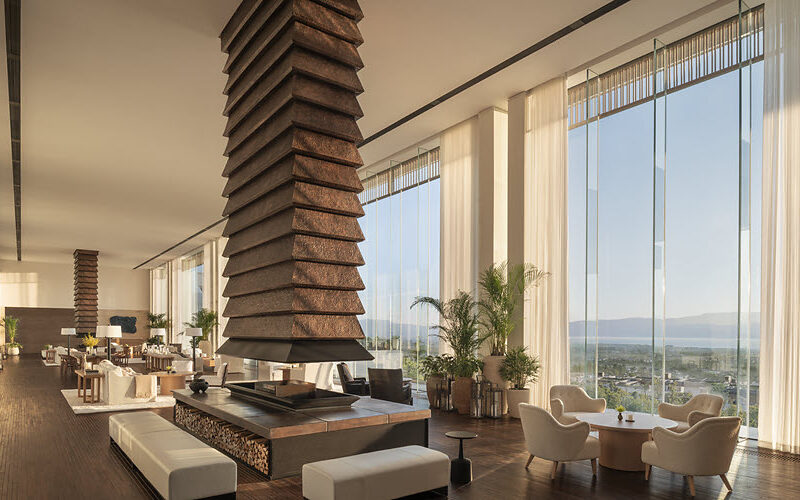
Marriott International, Inc. (NASDAQ: MAR) has opened The Dali EDITION in Yunnan, adding a 151-room and suite luxury property between Cangshan Mountain and Erhai Lake. The hotel becomes the third EDITION property in Greater China and extends the brand beyond Shanghai and Sanya into a destination shaped more by domestic leisure, cultural tourism and nature-led travel than conventional gateway-city demand. The opening adds private pool villas, four dining venues, a spa, event facilities and locally anchored guest experiences to Marriott International’s luxury portfolio. Strategically, the project tests whether the EDITION model can command premium rates in a secondary Chinese destination while converting Dali’s cultural appeal into year-round demand. For investors, the individual hotel is small relative to Marriott International’s global system, but it provides a useful signal of how the company plans to sustain high-value growth in China as its shares trade close to a 52-week peak.
Why does The Dali EDITION opening matter for Marriott International’s luxury strategy in China?
The significance of The Dali EDITION is less about the addition of 151 rooms and more about where Marriott International has chosen to place them. Shanghai offers international business travel, Sanya is an established tropical resort destination, and Dali represents a different proposition built around landscape, heritage, wellness and domestic cultural tourism. Expanding EDITION into Yunnan suggests Marriott International believes demand for high-end accommodation in China is broadening beyond the country’s largest commercial centres and most conventional luxury resort markets.
That shift matters because secondary destinations can provide international hotel groups with a longer development runway than crowded gateway cities. Luxury hotel supply in Beijing, Shanghai and other major markets already includes most global brands, placing pressure on differentiation and owner returns. Dali gives Marriott International an opportunity to establish EDITION as a destination-defining property rather than another entrant in a dense urban luxury cluster.
The opening also supports Marriott International’s wider effort to grow its luxury portfolio through distinctive brands rather than relying only on scale-driven accommodation. EDITION sits at the intersection of design, dining, entertainment and hospitality, allowing Marriott International to target travellers who may view the hotel itself as part of the destination. This can support higher room rates, stronger food and beverage spending and greater customer engagement than a conventional full-service hotel, although those benefits depend heavily on execution.
Marriott International is therefore using The Dali EDITION to pursue two forms of growth at once. It gains another property within its expanding global system, while also strengthening its ability to capture higher-value leisure spending. Luxury hotels generate only a fraction of Marriott International’s total room base, but they can contribute disproportionately to brand visibility, loyalty engagement and management or franchise fee potential.
How does Dali change the economics of Marriott International’s destination-led expansion?
The hotel’s physical configuration is designed to create several revenue streams beyond overnight accommodation. The Dali EDITION includes 151 rooms and suites, private villas with swimming pools, four dining venues, a spa, an indoor pool, meeting studios, a ballroom and outdoor event space. Entry-level rooms begin at approximately 60 square metres, while the 250-square-metre Presidential Suite includes an indoor pool, courtyard and terrace.
Larger rooms and private villas give the property scope to pursue affluent leisure guests, families, private groups and longer-stay travellers. However, generous room sizes also reduce the number of keys that can be placed within a given development footprint. The economic case therefore depends on pricing power, occupancy quality and ancillary spending rather than simply filling as many rooms as possible.
Food and beverage operations could become particularly important. Market at EDITION provides all-day dining, KUSHO focuses on wood-fired cooking, the Lobby Bar moves from daytime tea service to evening drinks, and a Chinese restaurant incorporates elements of Bai architecture and regional cuisine. A successful collection of dining outlets can attract local residents and visitors who are not staying at the hotel, expanding the addressable customer base.
The ballroom, lawn and meeting studios add another commercial layer. Dali’s setting may support weddings, executive retreats, incentives and private celebrations that combine accommodation with catering and event fees. These activities can improve asset utilisation outside peak holiday periods, although group business will depend on transport access and the destination’s ability to attract corporate organisers.
The hotel is approximately 23 kilometres from Dali Railway Station and 39 kilometres from Dali Fengyi Airport. That is manageable for a resort-oriented property, but it reinforces the importance of destination demand. The Dali EDITION cannot depend on the steady flow of short-stay corporate travellers available to urban hotels. Guests need a reason to choose Dali, remain for several nights and spend within the property.
What does the 151-room resort reveal about how luxury hotels are competing for Chinese travellers?
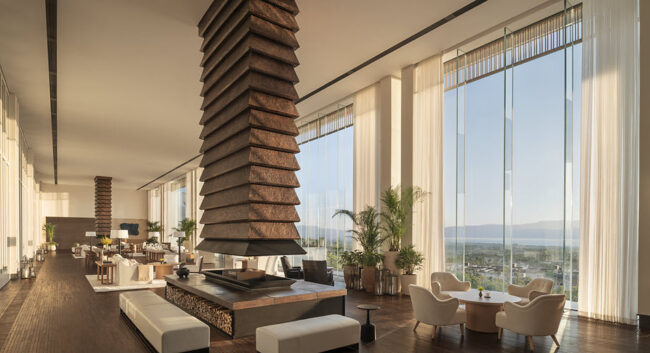
The Dali EDITION reflects a broader change in luxury hospitality, where location-specific experiences are becoming as important as imported service standards. The hotel uses aged timber, bluestone, Erhai Lake pebbles and design references associated with the surrounding landscape. Its commercial purpose is clear: create a property that travellers cannot easily substitute with another luxury hotel in another Chinese city.
Guest programming follows the same logic. The hotel offers tea-focused experiences, guided foraging and mushroom hunts, mountain activities, sound-bath sessions and wellness treatments that draw on regional ingredients and practices. These features are intended to make Dali’s identity part of the stay rather than scenery observed from a window.
This matters because wealthy domestic travellers are increasingly familiar with global hotel brands. A recognised name, large room and polished lobby may no longer be enough to justify a premium. Luxury operators must combine reliability with a sense of discovery, which is a more difficult formula than standardisation. Guests expect the consistency of an international brand without feeling that the property has been copied from somewhere else.
Marriott International also gains an opportunity to deepen Marriott Bonvoy engagement within China. A destination hotel can encourage members to redeem points, extend leisure trips and explore new domestic locations within the same loyalty ecosystem. The value extends beyond the revenue generated during one stay because a memorable property can strengthen customer retention across Marriott International’s wider portfolio.
However, the localisation strategy must feel credible. Hotels sometimes mistake decorative references, themed menus and scheduled cultural activities for genuine connection with a destination. The Dali EDITION will need meaningful local sourcing, informed staff, strong regional partnerships and programming that evolves rather than becoming a fixed performance repeated for every guest.
Where could The Dali EDITION face execution pressure despite Marriott International’s brand strength?
The greatest risk is that Dali’s tourism appeal may not automatically translate into consistent luxury demand at the rates required by an EDITION property. Leisure destinations can experience pronounced seasonality, weather-related variation and dependence on holiday calendars. Strong occupancy during peak travel periods does not guarantee satisfactory full-year economics.
Rate discipline will be a major test. Discounting can fill rooms, but excessive promotional activity may weaken the exclusivity that supports EDITION’s positioning. The hotel must find a balance between introducing a relatively new luxury product to the regional market and protecting its long-term pricing architecture.
Operating complexity presents another challenge. Four dining concepts, villas, wellness facilities, events and curated experiences require more than an attractive building. They demand specialised staffing, procurement reliability, culinary consistency, maintenance discipline and coordination across multiple guest touchpoints. A malfunctioning private pool or uneven restaurant service can erase the goodwill created by expensive design remarkably quickly.
Recruiting and retaining experienced luxury-hospitality employees outside China’s largest cities may also require sustained investment. Marriott International can provide systems, training and brand standards, but the guest experience will ultimately be delivered by the local workforce. Employee accommodation, career progression and management continuity can therefore become hidden determinants of the hotel’s success.
Environmental sensitivity could create further operational constraints. Erhai Lake and the Cangshan Mountain area are central to Dali’s appeal, making responsible water use, waste management and development practices commercially important as well as environmentally necessary. A luxury hotel that sells proximity to nature cannot afford to be perceived as degrading it.
Broader economic conditions remain relevant. Premium domestic travel can be resilient among affluent consumers, but luxury hospitality is not immune to weaker confidence, property-market stress or changes in discretionary spending. The Dali EDITION must create enough perceived value to compete not only with other hotels but also with outbound travel, private villas and high-quality local boutique resorts.
How should investors read Marriott International stock near its 52-week high after this opening?
Marriott International shares closed around $396.20 on June 19, leaving the stock approximately 3.6% below its 52-week high of $410.98 and well above its 52-week low of $253.76. The shares declined about 1.6% over the five trading sessions from June 12 but remained roughly 10.3% higher than their May 18 close. The pattern indicates strong medium-term sentiment with some consolidation after the stock reached record territory.
The Dali EDITION opening is unlikely to produce a measurable near-term change in Marriott International’s earnings. One 151-room hotel is immaterial against a global system of nearly 1.8 million rooms. Investors should view the opening as evidence supporting a development strategy rather than a standalone financial catalyst.
That strategy currently has favourable operating momentum behind it. Marriott International reported first-quarter worldwide revenue per available room growth of 4.2%, while Greater China revenue per available room increased by almost 6%. The company added approximately 15,900 net rooms during the quarter and expanded its development pipeline to nearly 618,000 rooms.
Those figures help explain why investors have awarded Marriott International a valuation of approximately $104.5 billion and a price-to-earnings multiple above 40 times. The market is pricing in continued room growth, fee expansion, resilient travel spending and disciplined capital returns. At that valuation, merely opening hotels is not enough. New properties must contribute fees, strengthen loyalty economics and preserve brand pricing.
The positive interpretation is that Marriott International can continue expanding without depending entirely on major capital cities. A successful Dali property would support the argument that the company’s brands and distribution platform can unlock demand in emerging leisure destinations. That increases the potential inventory available for future management and franchise agreements.
The cautious interpretation is that high expectations leave less room for execution problems. If luxury demand in China weakens, new openings underperform or the broader pipeline takes longer to convert into operating rooms, investors may reconsider the premium embedded in Marriott International’s share price. The stock’s proximity to its 52-week high therefore reflects confidence, but also raises the standard that each development cycle must meet.
What could success at The Dali EDITION mean for Marriott International and luxury hotel competitors?
A strong performance could make The Dali EDITION a template for destination-led luxury expansion across China. Marriott International could apply similar logic to culturally distinctive cities, mountain destinations, coastal areas and wellness markets where international brand penetration remains lower than in major urban centres.
The opportunity is not simply to replicate EDITION properties. Marriott International can use different luxury and premium brands depending on the destination, target customer and development economics. The strategic advantage comes from having several brands, a large loyalty programme and established owner relationships that allow the company to match each location with an appropriate product.
Competitors including Hilton Worldwide Holdings, Hyatt Hotels Corporation, Accor and InterContinental Hotels Group are pursuing their own luxury and lifestyle expansion. The Dali opening increases the pressure to secure distinctive sites before those markets become crowded. In hospitality development, the most attractive mountain view tends to have only one first row.
Local luxury operators and independent resorts will retain important advantages. They may understand regional customer preferences more deeply, move faster on design decisions and operate with fewer global-brand constraints. Marriott International must therefore demonstrate that its distribution reach and loyalty base provide benefits that outweigh the complexity and cost associated with an international brand.
Success would also strengthen the case for hotel owners to sign further EDITION agreements. Owners evaluate more than guest reviews and attractive photography. They consider construction cost, operating margins, distribution fees, rate premiums and the time required to stabilise a property. The Dali EDITION will become a reference point for those discussions within China.
Failure would carry a different lesson. Weak occupancy or aggressive discounting could suggest that destination fame does not necessarily support international luxury economics. Marriott International would then need to reconsider property size, brand selection, development cost or demand assumptions for similar locations.
The opening is therefore a strategic experiment wrapped inside a luxury resort. The building is complete, but the more important work begins with rate positioning, service delivery, local relevance and repeat demand. Marriott International has placed EDITION in one of China’s most visually compelling destinations. The commercial question is whether beauty can be converted into durable fee growth without losing its charm in the process.
What are the key takeaways from Marriott International opening The Dali EDITION in Yunnan?
- The Dali EDITION gives Marriott International its third EDITION property in Greater China and extends the brand into a culturally driven secondary destination.
- The 151-room hotel tests whether EDITION can sustain premium rates outside China’s largest gateway cities and established tropical resorts.
- Private villas, four dining venues, wellness facilities and event spaces broaden the property’s revenue potential beyond guest-room sales.
- The hotel’s economics will depend on length of stay, ancillary spending and pricing discipline because destination demand may be more seasonal than urban business travel.
- Regionally anchored dining, tea experiences, foraging and wellness programming are central to differentiation, but they must feel credible rather than decorative.
- Marriott International’s nearly 618,000-room pipeline provides scale, while The Dali EDITION shows how the company is also pursuing higher-value luxury growth.
- Greater China RevPAR growth of almost 6% provides a supportive operating backdrop, although one hotel will not materially change group earnings.
- Marriott International stock remains close to its 52-week high, indicating positive sentiment but leaving investors sensitive to slower development or weaker travel demand.
- A successful opening could encourage more hotel owners to pursue EDITION or other Marriott luxury agreements in emerging Chinese leisure destinations.
- The main risks include seasonality, staffing complexity, environmental sensitivity, rate pressure and competition from established local luxury resorts.
Share this:
Discover more from Business-News-Today.com
Subscribe to get the latest posts sent to your email.