


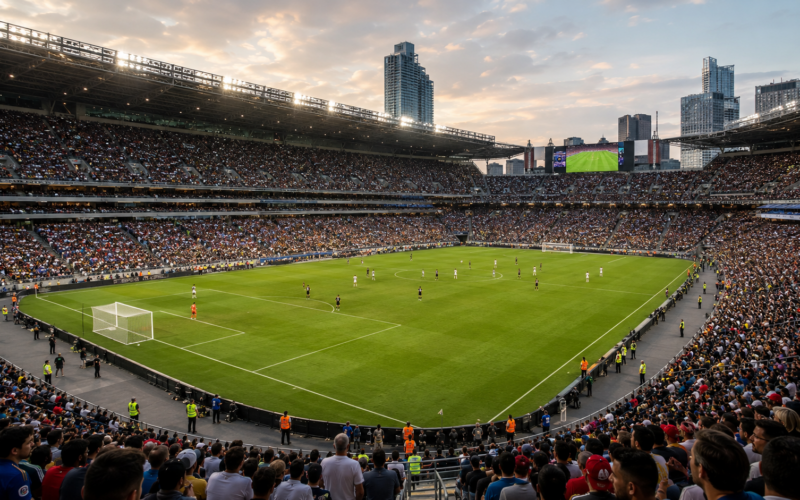
Norway beat Iraq 4-1 at Boston Stadium in Foxborough on June 16, 2026, as Erling Haaland scored twice on his FIFA World Cup 2026 debut to give Ståle Solbakken’s side a winning return to the tournament after 28 years away. Haaland opened the scoring in the 29th minute, Aymen Hussein levelled for Iraq in the 39th minute, but Haaland struck again four minutes later before Leo Østigård and a late Hussein own goal completed Norway’s Group I victory.
The result puts Norway top of Group I on goal difference after France beat Senegal 3-1 earlier in the day. For Norway, this was the ideal result even if the performance had defensive flaws. For Iraq, back at the World Cup for the first time since 1986, the scoreline was painful but did not fully reflect a first-half display that briefly unsettled one of Europe’s most dangerous attacking teams.
How did Erling Haaland turn his FIFA World Cup 2026 debut into a decisive Norway statement?
Erling Haaland did what Norway needed him to do: turn pressure, expectation and a long national wait into goals. Norway were playing their first men’s World Cup match since 1998, and the entire opening narrative centred on whether Haaland could translate his club and qualifying dominance onto the tournament’s biggest stage. He needed less than half an hour to answer.
His first goal came in the 29th minute, when David Møller Wolfe delivered a low cross from the left and Haaland arrived at the far post to convert from close range. It was not a spectacular finish, but it was classic Haaland: simple movement, ruthless timing and the ability to make a difficult World Cup moment look routine.
Iraq responded impressively, but Haaland struck again in the 43rd minute after a defensive mistake. Jalal Hassan hesitated over a back pass, Haaland sensed the uncertainty, pressed aggressively and turned the goalkeeper’s attempted clearance into Norway’s second goal. The finish was unusual, but the cause was familiar: Haaland’s pressure created panic.
That double changed the entire emotional shape of the match. Iraq had briefly levelled and threatened to make the first half awkward for Norway, but Haaland restored control before the interval. Norway were not always convincing, but their biggest player delivered when the match was still alive.
Why did Iraq’s equaliser briefly make this FIFA World Cup 2026 match more competitive than the scoreline suggests?
Iraq’s 39th-minute equaliser was one of the most meaningful moments of the match because it showed Graham Arnold’s side were not overwhelmed by Norway’s star power. Amir Al-Ammari stood up a fine cross, and Aymen Hussein rose above Norway’s defenders to plant a powerful header past Ørjan Nyland.
The goal carried historical weight. Iraq were appearing at the World Cup for the first time in 40 years, and Hussein’s header was only the country’s second goal in men’s World Cup history. It also came at a time when Norway had started to look more comfortable after Haaland’s opener.
For a few minutes, Iraq had the match exactly where they wanted it. The equaliser gave them belief, energised their supporters and exposed Norway’s defensive uncertainty. Ali Al-Hamadi had already gone close earlier, and Iraq’s movement in the final third created enough discomfort to show that Norway’s clean final margin did not come from total control.
The problem was the response. Iraq’s joy lasted barely long enough to change the match because the defensive error before half-time gave Haaland his second goal. That moment turned a promising comeback into a painful lesson in World Cup margins.
What did Norway’s attack show beyond Haaland’s two goals against Iraq?
Haaland was the headline, but Norway’s attacking structure had more than one source. Antonio Nusa was lively throughout the first half, stretching Iraq with movement and direct running. Møller Wolfe’s delivery for the opener was excellent, and Martin Ødegaard, despite a quieter overall display, created Norway’s third with the corner that Østigård headed in.
The third goal in the 76th minute was especially important because it ended Iraq’s hopes of forcing a late equaliser. Østigård, introduced from the bench, attacked Ødegaard’s corner powerfully and headed home to make it 3-1. Iraq complained about contact in the penalty area, but the goal stood and Norway finally had the cushion their performance needed.
The fourth goal deep into stoppage time added gloss. Haaland’s late header caused panic at the far post, and Hussein, under pressure, turned the ball into his own net. It was a cruel ending for the Iraq striker after his first-half equaliser, but it reflected Norway’s ability to keep forcing mistakes.
The larger point is that Norway can hurt teams in several ways: Haaland’s box movement, Nusa’s wide running, Ødegaard’s set-piece delivery, and aerial power from defenders. That gives Solbakken a strong attacking base before a more demanding match against Senegal.
Why should Norway still be concerned despite a 4-1 FIFA World Cup 2026 victory?
The scoreline was emphatic, but Norway’s performance was not flawless. Solbakken’s side looked dangerous going forward, yet the defensive third showed signs of vulnerability that stronger opponents may exploit. Iraq found moments of space, attacked with courage and created chances that could have made the match far more tense.
The equaliser was the clearest example. Hussein was able to rise through traffic and beat multiple Norwegian defenders in the air. Iraq also threatened late in the first half, with Møller Wolfe making a vital block and Akam Hashem going close. Those moments showed that Norway’s midfield and defensive spacing were not always secure.
Ødegaard’s quiet match is another area for reflection. Norway still won comfortably because Haaland was so clinical, but deeper into the tournament, Norway will need more sustained creative control from their captain. Against France, in particular, a loose midfield performance could be punished quickly.
Haaland himself acknowledged that Norway would need to play better in tougher matches. That is the correct assessment. A 4-1 win gives Norway points, goal difference and belief. It does not remove the need for defensive tightening before facing Senegal and France.
What did Iraq’s performance reveal despite the heavy opening defeat?
Iraq’s performance revealed more promise than the 4-1 result suggests. The team were competitive in the first half, showed bravery on the ball and created enough attacking threat to unsettle Norway. They were not simply defending in a low block and waiting for damage limitation.
Hussein’s goal was the emotional peak, but Iraq’s wider play had value. Al-Ammari’s delivery was intelligent, Ali Al-Hamadi found dangerous positions, and Ibrahim Bayesh carried threat in transition. Iraq’s supporters also turned the match into a major occasion, giving the team energy even after the score began to move away from them.
The issue was mistakes. The weak back pass before Haaland’s second goal was decisive. The set-piece defending for Østigård’s goal was too loose. The own goal in stoppage time made the scoreline look harsher but still underlined the same theme: Iraq cannot afford errors against elite attacking players.
Arnold will likely focus on the positives because Iraq still have two matches left, and the expanded 48-team format gives third-place teams possible routes forward. But the next fixture against France is brutal. Iraq will need the first-half courage they showed against Norway, with far fewer defensive lapses.
What does Norway’s 4-1 win mean for the FIFA World Cup 2026 Group I table?
Norway’s 4-1 win puts them top of Group I after the opening round because their +3 goal difference is better than France’s +2. France also have three points after beating Senegal 3-1, while Senegal and Iraq begin the group under pressure.
| Team | Played | Points | Goal difference |
|---|---|---|---|
| Norway | 1 | 3 | +3 |
| France | 1 | 3 | +2 |
| Senegal | 1 | 0 | -2 |
| Iraq | 1 | 0 | -3 |
Norway’s next match against Senegal now becomes an early opportunity to move close to knockout qualification. Senegal lost 3-1 to France but showed enough first-half attacking quality to make them dangerous. Norway will not be able to defend as loosely as they did at times against Iraq.
Iraq next face France, which is the toughest possible recovery assignment. If Iraq lose again, they may still have a mathematical route through the expanded format, but their final match would become heavily dependent on points, goal difference and other results.
For France and Norway, the opening round has created early separation. For Senegal and Iraq, the second round is already about survival.
Why does this FIFA World Cup 2026 result matter beyond Haaland’s debut goals?
This result matters because it gave Norway the perfect numerical start after 28 years outside the World Cup spotlight. A winning return, a Haaland brace and top spot in the group is exactly the kind of opening that can change national belief quickly.
It also matters because Haaland’s World Cup story has finally begun. He had already scored freely in club football and qualifying, but the World Cup is the stage that defines the global memory of elite forwards. Scoring twice on debut immediately places him in the centre of the Golden Boot conversation and gives Norway a tournament identity built around direct attacking power.
For Iraq, the match was painful but historically meaningful. Their return after four decades, their first World Cup goal since 1986 and their competitive first-half performance all matter. But at this level, mistakes decide matches. Against Haaland, they decide them brutally.
The editorial view is that Norway should be taken seriously, but not romanticised too quickly. They have the tournament’s most devastating finisher, a strong attacking cast and early momentum. They also have defensive issues that France will study closely. Iraq, meanwhile, showed enough spirit to avoid being dismissed, even if the scoreline leaves them with urgent repairs to make.
Key takeaways from Iraq vs Norway at FIFA World Cup 2026
- Norway beat Iraq 4-1 at Boston Stadium on June 16, 2026, to open their FIFA World Cup 2026 Group I campaign with three points. Erling Haaland scored twice on his World Cup debut, while Leo Østigård and a late own goal completed the win.
- Haaland scored in the 29th and 43rd minutes, first converting David Møller Wolfe’s low cross and then punishing a defensive mistake before half-time. His brace immediately put him among the early Golden Boot contenders.
- Iraq briefly levelled through Aymen Hussein’s 39th-minute header, a historic goal in the country’s first World Cup appearance since 1986. The equaliser showed Iraq’s competitiveness before defensive mistakes changed the match.
- Norway moved top of Group I on goal difference, ahead of France, who beat Senegal 3-1 earlier. Norway next face Senegal, while Iraq face France in a high-pressure second fixture.
- The scoreline was convincing, but Norway still showed defensive vulnerabilities. Iraq created enough first-half danger to suggest stronger opponents could test Solbakken’s side more severely.
Share this:
Discover more from Business-News-Today.com
Subscribe to get the latest posts sent to your email.