






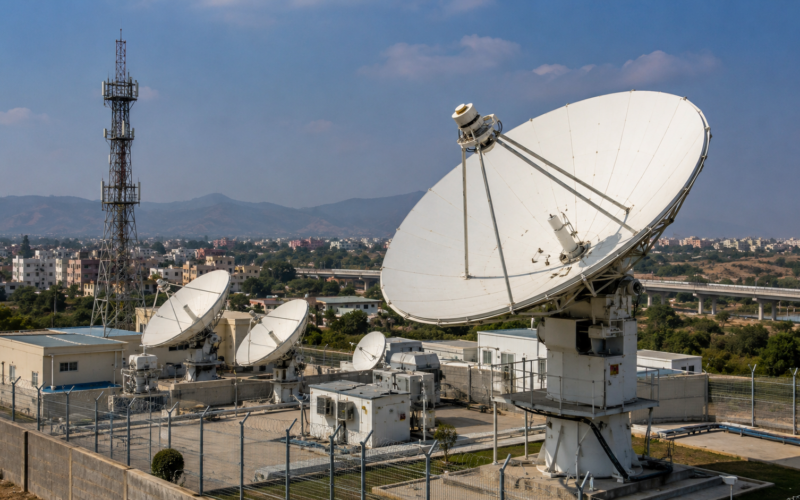
Starlink, the satellite broadband business operated by SpaceX, remains on track for an India launch as it awaits final regulatory steps including spectrum allocation. The company has secured a licence to offer satellite broadband services in India and has established ground infrastructure designed to meet domestic regulatory, enforcement and security requirements. The development places Starlink in direct competitive view of Bharti-backed Eutelsat OneWeb and Jio-SES Space Technology Limited, linked to Reliance Jio’s satellite communications strategy. For listed telecom and digital infrastructure investors, the launch phase could influence sentiment around Bharti Airtel Limited (NSE: BHARTIARTL) and Reliance Industries Limited (NSE: RELIANCE), even if satellite broadband remains a small part of near-term sector revenue.
Why does Starlink’s India launch progress matter for satellite broadband competition?
Starlink’s India progress matters because satellite broadband has moved from a policy debate to a pre-commercial competition. For years, the key question was whether global low-Earth orbit satellite operators would be allowed to enter India at scale. The question now is more operational: who can launch first, comply fully, price sensibly and reach customers that terrestrial telecom networks cannot serve economically.
India’s broadband market is already competitive in urban and semi-urban regions, where fibre, mobile broadband and fixed wireless are expanding. Satellite broadband is more relevant for remote districts, difficult terrain, maritime connectivity, disaster recovery, enterprise backup networks, border regions, mining zones, offshore assets and underserved institutions. That means Starlink’s commercial impact may not be measured by mass-market subscriber numbers alone. It could be measured by whether satellite connectivity becomes a dependable infrastructure layer for places where conventional networks are costly or slow to build.
The competitive field is also unusually strategic. Starlink brings global scale and a large low-Earth orbit constellation. Eutelsat OneWeb brings a Bharti-backed route into enterprise and institutional connectivity. Jio-SES Space Technology Limited brings Reliance Jio’s distribution, enterprise relationships and telecom ecosystem. The result is not a simple foreign entrant versus local incumbents story. It is a three-way test of technology, compliance, distribution and regulatory trust.
How does India’s spectrum allocation decision shape the satellite internet market?
Spectrum allocation is the central commercial bottleneck because satellite broadband cannot scale without clear access to frequencies, pricing terms and usage conditions. The method and cost of spectrum allocation will shape the business case for every operator. If spectrum charges are too high, satellite broadband may remain a premium product for enterprise and government users. If the framework is workable, operators can invest more confidently in customer equipment, distribution, service support and local partnerships.
India’s approach has wider implications because satellite spectrum is not used in the same way as terrestrial telecom spectrum. Mobile spectrum is typically tied to exclusive geographic use and high auction values. Satellite spectrum involves shared global systems, cross-border coordination and orbital network design. That is why the allocation debate has been intense. Telecom incumbents worry about competitive imbalance, while satellite operators argue that auction-style pricing could weaken the economics of rural and remote connectivity.
For policymakers, the challenge is to create a framework that promotes competition without undermining existing telecom investment. India needs mobile operators to keep investing in 5G, fibre backhaul and rural towers. It also needs satellite operators to fill coverage gaps where ground networks remain uneconomic. The right policy answer is unlikely to satisfy everyone fully, which in telecom usually means it is probably close to reality.
What does Starlink’s India-specific compliance model signal about regulatory priorities?
Starlink’s India-specific operating model signals that satellite broadband will be treated as a strategic infrastructure service, not just another internet product. The requirement that user traffic be routed through ground infrastructure within India reflects concerns around lawful interception, data security, network control and sovereign oversight. These requirements matter because satellite networks are inherently global, while telecom regulation remains national.
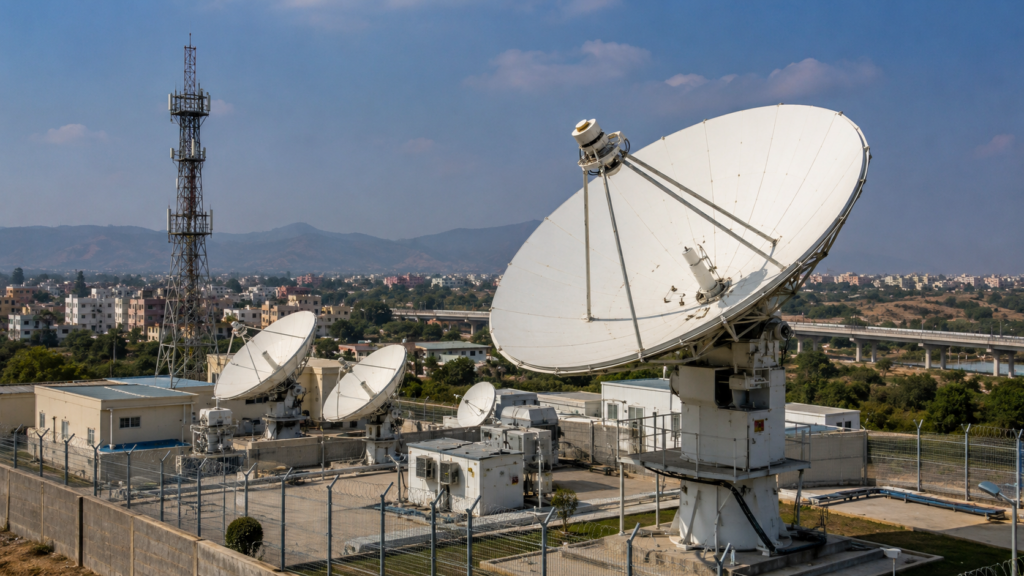
By setting up local ground infrastructure, Starlink is attempting to show that it can adapt to India’s regulatory architecture. That is important because satellite broadband services can raise security questions around terminal use, border areas, emergency communications and network monitoring. India’s authorities are unlikely to allow commercial rollout unless they are satisfied that enforcement agencies can access legally required controls and that data flows remain within acceptable boundaries.
The broader industry implication is that global satellite operators cannot simply copy a worldwide deployment model into India. They must localise infrastructure, compliance systems, traffic routing, customer verification and operational reporting. That increases cost and complexity, but it also creates a higher barrier to entry. In a country as security-sensitive and scale-heavy as India, regulatory compliance is not paperwork. It is part of the product.
How could Starlink affect Bharti Airtel, Reliance Jio and Vodafone Idea?
Starlink is unlikely to disrupt India’s mobile telecom market in the near term because satellite broadband is not a like-for-like replacement for mobile connectivity. Mobile data remains cheaper, more portable and deeply embedded in consumer behaviour. However, Starlink could affect high-value niches where conventional telecom networks face economic limits. These include remote enterprise connectivity, backup internet, rural institutions, defence-adjacent logistics, disaster zones and industries operating outside dense urban networks.
For Bharti Airtel Limited, the competition is nuanced because Bharti has exposure to Eutelsat OneWeb. That gives Bharti Airtel Limited a satellite broadband strategy through a different technology platform and business model. Bharti Airtel Limited shares closed at around ₹1,782 on June 11, 2026, below their 52-week high of about ₹2,174.50 but still above the 52-week low of about ₹1,740.50. The stock context suggests investors continue to value Bharti Airtel Limited primarily around mobile tariffs, premium subscribers, 5G monetisation, Africa exposure and balance-sheet improvement rather than satellite broadband alone.
For Reliance Industries Limited, satellite broadband fits into the larger Jio digital infrastructure narrative. Reliance Industries Limited shares closed at about ₹1,262.60 on June 11, 2026, close to their 52-week low and well below the 52-week high of about ₹1,611.20. That tells investors are currently more focused on broader conglomerate valuation, energy spreads, retail growth, digital monetisation and capital allocation. Jio-SES can become strategically relevant, but it is not yet the main valuation driver. Vodafone Idea Limited may face less direct exposure at first, although enterprise and rural connectivity competition could eventually affect its positioning if satellite operators bundle services through stronger partners.
Why does satellite broadband matter for rural connectivity and enterprise resilience?
Satellite broadband matters because India still has pockets where fibre, mobile towers and fixed broadband expansion are difficult, slow or commercially unattractive. Mountainous regions, islands, forests, sparse rural belts and remote industrial sites can be expensive to connect through terrestrial networks. Satellite connectivity can reduce the time required to bring broadband to such locations, provided equipment cost, service pricing and local support are manageable.
The enterprise use case may develop faster than the household use case. Businesses often pay more for reliable backup connectivity, especially when downtime affects operations. Banks, logistics providers, mines, oil and gas facilities, renewable energy parks, ports, shipping operators, public services and emergency response systems can all use satellite links as resilience infrastructure. In these segments, Starlink does not need to match urban mobile data pricing to create value.
For government programmes, satellite broadband can support schools, health centres, panchayat offices and remote public-service delivery. However, affordability will matter. If customer equipment and monthly service fees remain high, satellite broadband will become a premium backup product rather than a mass inclusion tool. The policy challenge will be to decide where market pricing is enough and where targeted public support is needed.
What are the execution risks for Starlink before commercial launch in India?
The first execution risk is final regulatory clearance. Even with licensing and ground infrastructure in place, spectrum allocation and operational approval must align before commercial service begins. Delays are still possible if security agencies, telecom authorities or spectrum policy processes require additional conditions. In satellite communications, launch readiness is not the same as commercial permission.
The second risk is pricing. India is one of the world’s most price-sensitive telecom markets. Satellite broadband equipment and subscriptions are typically more expensive than mobile data or fibre broadband. Starlink will need to identify the right early customer base rather than trying to compete immediately with low-cost mass broadband plans. Enterprise, government and remote-area customers may be more realistic early segments.
The third risk is distribution and service support. Connectivity products succeed when installation, payments, troubleshooting and customer support work reliably. Starlink’s global model has strong technology credibility, but India requires local adaptation across logistics, device approvals, customer identity processes, service centres and after-sales support. A satellite dish can beam internet from space, but customer service still has to answer the phone on Earth. That part of the business is less glamorous, and often more decisive.
What does the satcom race signal about India’s digital infrastructure policy?
The satcom race signals that India’s digital infrastructure policy is becoming more layered. The country is not relying only on mobile networks or fibre deployment. It is building a framework where terrestrial telecom, fibre, public broadband, satellite communications and data infrastructure can coexist. That is important for a country with India’s geography, population density and uneven infrastructure economics.
It also shows how national security and commercial competition are becoming intertwined. Satellite broadband can improve connectivity, but it also raises questions around terminals, data routing, network control and emergency use. India’s regulatory process is therefore likely to remain cautious even after commercial launches begin. Operators that treat compliance as a strategic capability will have an advantage over those that see it as a delay.
The policy outcome will influence investment beyond Starlink. If India creates a stable satcom framework, it could attract more ground infrastructure, gateway investments, device ecosystem activity, enterprise services and partnerships with Indian telecom players. If the framework remains uncertain, operators may limit capital commitment. The next few months could determine whether satellite broadband becomes a serious infrastructure layer or stays trapped in regulatory orbit.
What should investors and executives watch as Starlink awaits final approval?
Investors should first watch the spectrum allocation framework. Pricing, tenure, usage rules and compliance conditions will determine whether satellite broadband can become a scalable business in India. The framework will also influence whether Starlink, Eutelsat OneWeb and Jio-SES compete aggressively or adopt a more measured rollout.
Executives should watch early customer targeting. If Starlink enters through enterprise, government, remote institutional and backup-connectivity segments, the initial market may be smaller but commercially healthier. If it pushes consumer pricing too early without local cost alignment, adoption could disappoint. India rewards scale, but it punishes weak pricing discipline faster than most markets.
The third area to watch is partnerships. Starlink may need local distribution, installation, enterprise integration and government-sector relationships. Bharti Airtel Limited and Reliance Jio already have distribution depth through their own ecosystems. Starlink’s technology edge will be more powerful if matched by local operating muscle. In India, even space internet needs ground game.
Key takeaways on what Starlink’s India launch progress means for telecom and digital infrastructure
- Starlink has secured a licence for satellite broadband in India and is awaiting final approvals including spectrum allocation before commercial operations can begin.
- The company has built India-based ground infrastructure, signalling that domestic traffic routing, regulatory compliance and security controls are central to the launch model.
- Bharti-backed Eutelsat OneWeb and Jio-SES Space Technology Limited are also licensed contenders, making India’s satellite broadband race a multi-player competition rather than a single-operator story.
- The commercial opportunity is strongest in remote connectivity, enterprise backup networks, maritime services, disaster recovery, rural institutions and difficult-to-serve regions.
- Satellite broadband is unlikely to displace mobile broadband in the near term because India’s mobile data market remains extremely price-sensitive and deeply scaled.
- Bharti Airtel Limited has indirect strategic exposure through Eutelsat OneWeb, while Reliance Industries Limited has exposure through the Jio-SES satellite communications pathway.
- Stock-market sentiment for Bharti Airtel Limited and Reliance Industries Limited remains driven mainly by core telecom, digital, retail, energy and capital allocation factors rather than satellite broadband alone.
- The final spectrum allocation framework will decide whether satellite broadband becomes a scalable infrastructure layer or a premium niche service.
- Regulatory compliance, data routing, lawful access and terminal controls will remain central to India’s approval process because satellite networks carry national security sensitivities.
- The broader signal is that India’s digital infrastructure strategy is moving beyond towers and fibre toward a layered model that includes satellite connectivity as a serious policy and enterprise tool.
Share this:
Discover more from Business-News-Today.com
Subscribe to get the latest posts sent to your email.

