



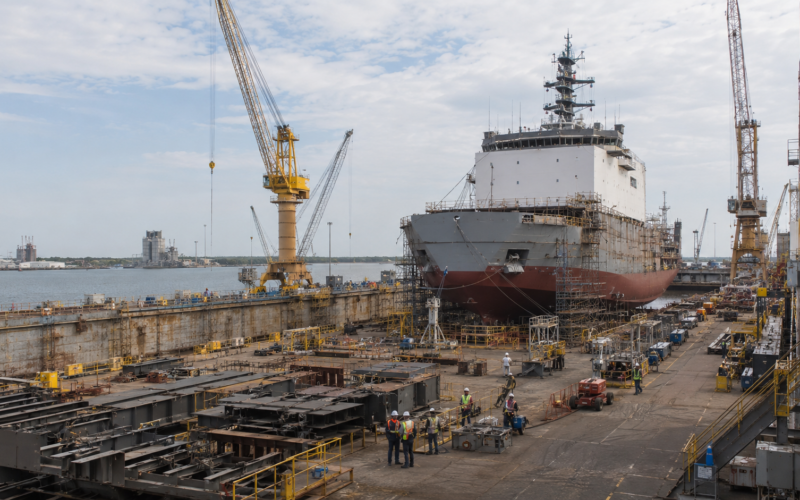
Davie Defense has broken ground on a modernization programme for Gulf Copper shipbuilding facilities in Galveston and Port Arthur, Texas, with the investment potentially reaching $1 billion. The project is tied to the company’s role in delivering Arctic Security Cutters for the U.S. Coast Guard and marks a major attempt to restore complex shipbuilding capacity along the Texas Gulf Coast. The first phase of the shipyard upgrade is scheduled for completion in 2028, aligning with the planned start of U.S. construction for the first three Arctic Security Cutters. Strategically, the project matters because the United States is trying to rebuild maritime industrial capacity at the same time that Arctic competition, naval logistics and domestic manufacturing policy are becoming more tightly connected.
The Davie Defense investment is not just another shipyard expansion. It sits at the intersection of national security, industrial policy, workforce development and the urgent need to modernize the U.S. Coast Guard’s polar fleet. The United States has long faced criticism for having too few heavy icebreakers compared with Russia and China. That gap has become more difficult to ignore as the Arctic becomes more strategically important for energy, shipping, defense posture and sovereignty.
For Texas, the project gives Galveston and Port Arthur a larger role in a national shipbuilding agenda traditionally associated with other Gulf Coast and East Coast yards. For Davie Defense, it is a test of whether a Canadian-linked shipbuilder can convert U.S. acquisition momentum into domestic industrial execution. For Washington, it is one more reminder that buying ships is not the same thing as having the workforce, yards, suppliers and production discipline needed to build them.
How does the Gulf Copper modernization support the U.S. Coast Guard’s icebreaker programme?
The Gulf Copper modernization is designed to prepare the Galveston and Port Arthur facilities for work linked to the U.S. Coast Guard’s Arctic Security Cutter programme. Davie Defense’s broader role is tied to a multibillion-dollar Coast Guard contract for polar icebreaker vessels, with the first vessels involving a mix of work through Davie-related facilities abroad and eventual construction activity in the United States. The Texas upgrade is therefore an industrial bridge between immediate programme needs and longer-term domestic shipbuilding capacity.
The timing is important. The first phase of modernization is expected to be complete in 2028, which is also when U.S. construction of the first three Arctic Security Cutters is expected to begin. That creates a tight delivery window. Shipyard modernization must proceed in parallel with workforce development, supplier readiness, engineering transfer, regulatory compliance and programme coordination with the U.S. Coast Guard. If the yard upgrade slips, the cutter schedule could face pressure before the first U.S.-built hulls even gain momentum.
The icebreaker programme also carries strategic urgency because polar-capable vessels are not ordinary patrol ships. They require reinforced hulls, specialized propulsion, cold-weather systems, mission flexibility and engineering experience that the United States has not maintained at sufficient scale. Building that capability domestically is not simply a procurement choice. It is an industrial learning curve.
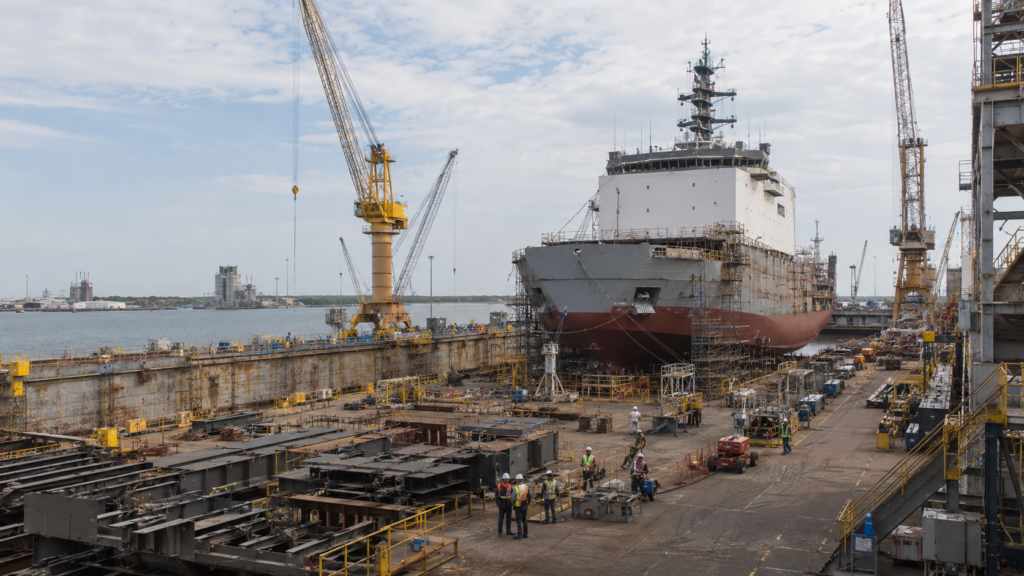
The Gulf Copper facilities could therefore become a key testbed for rebuilding complex shipbuilding knowledge. The project will need to turn physical upgrades into repeatable production capability. That means modern fabrication, dry dock capacity, outfitting systems, workforce training and supply-chain coordination. A shipyard ribbon-cutting is useful. A working production system is the real prize.
Why is Arctic security turning into a shipbuilding and industrial policy issue?
The Arctic is becoming a more contested region because climate change is opening navigable routes, exposing resource opportunities and increasing military and coast guard activity. Russia has a large icebreaker fleet and long-standing Arctic operating infrastructure. China has invested in polar research and ice-capable vessels despite not being an Arctic state. The United States, by comparison, has struggled to maintain a large and modern polar icebreaker fleet.
That imbalance matters because presence in the Arctic depends on ships that can actually operate there. Diplomatic statements, maps and strategy papers do not break ice. Icebreakers support sovereignty missions, scientific research, search and rescue, defense logistics, law enforcement and access to remote waters. Without enough vessels, the United States has limited ability to project sustained authority in a region that is becoming more strategically valuable.
The Davie Defense project turns that geopolitical problem into an industrial policy challenge. The United States cannot close the icebreaker gap merely by allocating money if the domestic production base is too thin. Shipbuilding requires yards, skilled trades, engineering talent, marine equipment suppliers, steel and fabrication capacity, inspection systems and programme management discipline. Rebuilding that ecosystem takes years.
The Texas investment also reflects a wider shift in U.S. policy thinking. Maritime industrial capacity is now being treated as a strategic asset, not just a commercial sector. That shift is visible in debates around naval shipbuilding, merchant marine readiness, sealift capacity, port resilience and defense supply chains. Icebreakers may be niche vessels, but the industrial lessons are broader.
What could the project mean for Galveston, Port Arthur and the Texas Gulf Coast economy?
The modernization programme is expected to create about 2,400 jobs and support up to 7,000 workers through supply-chain and related economic activity. For Galveston and Port Arthur, that makes the project a major regional industrial development rather than a narrow shipyard refurbishment. The employment impact could include welders, pipefitters, electricians, naval architects, engineers, project managers, logistics workers, suppliers and support services.
The economic case is stronger because shipbuilding jobs can be sticky if the yard wins repeat work. Unlike some construction projects that peak and fade, complex shipbuilding can create multi-year production cycles, maintenance work, modernization opportunities and supplier networks. If Davie Defense succeeds, Texas could gain a more durable position in federal maritime procurement.
However, the workforce challenge should not be underestimated. U.S. shipbuilding is already under pressure from skilled labour shortages, aging trades workforces and competition from energy, infrastructure, manufacturing and defense sectors. Training thousands of workers for complex vessel production will require partnerships with local colleges, unions, workforce boards and suppliers. Hiring announcements are easy. Building a reliable skilled labour pipeline is the difficult part.
The regional impact will also depend on how much supply-chain activity remains local. A $1 billion shipyard investment can create strong multiplier effects if local manufacturers, service providers and training institutions are integrated into the programme. If too much specialized equipment or expertise is imported from outside the region, the local economic benefit may be smaller than headline figures suggest. Texas policymakers will want the project to become an industrial cluster, not merely a large construction site.
How does Davie Defense’s Texas investment compare with the wider U.S. shipbuilding challenge?
The United States faces a broader shipbuilding capacity problem across naval, commercial and specialized vessels. Navy programmes have been affected by delays, cost pressure, workforce constraints and supplier bottlenecks. Commercial shipbuilding remains far smaller than in major Asian shipbuilding nations. Coast Guard recapitalization has also faced procurement complexity and long lead times. Davie Defense’s Texas investment fits into this wider concern.
The project is notable because it brings a foreign-linked shipbuilding group into a U.S. industrial capacity role while using Gulf Coast facilities to support a federal maritime programme. That structure may be practical because Davie has icebreaker experience and a connection to Helsinki Shipyard in Finland, where the first two vessels are expected to be built. The challenge will be transferring knowledge into the United States without creating long-term dependence on overseas expertise.
That knowledge-transfer question is central to the project’s strategic value. If Davie Defense can use its international icebreaker experience to accelerate domestic learning, the investment could strengthen U.S. capability. If the U.S. yards remain dependent on external engineering or specialty suppliers for too long, the industrial sovereignty benefit will be more limited.
The broader shipbuilding sector will be watching closely. If Davie Defense can modernize the Gulf Copper facilities, train workers and begin Arctic Security Cutter construction on schedule, it could become a model for targeted shipyard revitalization. If the project struggles, it may reinforce skepticism that the United States can quickly rebuild complex maritime production capacity after decades of underinvestment.
What execution risks could affect the Davie Defense shipyard modernization plan?
The first risk is schedule alignment. The shipyard upgrade, workforce buildout and Arctic Security Cutter programme schedule need to move together. If facilities are not ready in time, production could be delayed. If workforce hiring lags, upgraded facilities may not translate into output. If engineering transfer or Coast Guard programme requirements shift, the yard could face rework or scope changes.
The second risk is cost inflation. Shipyard modernization involves heavy equipment, fabrication systems, waterfront infrastructure, dry dock improvements, utilities, cranes, buildings, environmental controls and safety systems. These inputs are exposed to steel prices, construction labour costs, electrical equipment availability and marine industrial supply constraints. A $1 billion programme can absorb some complexity, but not unlimited cost drift.
The third risk is workforce depth. Complex shipbuilding requires consistency. A yard cannot rely only on hiring workers during the peak phase. It needs training, supervision, quality systems and retention. If skilled workers are pulled away by petrochemical, LNG, defense or infrastructure projects elsewhere on the Gulf Coast, Davie Defense may face competition for talent.
Regulatory and programme oversight risk also matters. Federal shipbuilding programmes must meet strict technical, safety, security and procurement expectations. The U.S. Coast Guard will need confidence that the yard can meet specifications and deliver vessels that perform in extreme conditions. Icebreakers cannot be “mostly ready.” The Arctic has an unfriendly quality assurance department, commonly known as weather.
Why does this project matter for contractors, suppliers and defense industrial investors?
For contractors and industrial suppliers, the Davie Defense modernization creates opportunities beyond shipbuilding itself. Yard upgrades require civil construction, marine works, electrical systems, fabrication equipment, logistics infrastructure, environmental systems and worker facilities. Once shipbuilding begins, suppliers may be needed for steel, propulsion components, control systems, habitability modules, piping, valves, insulation, coatings, communications equipment and specialized marine systems.
The project could also attract defense industrial interest because it sits within a category where public funding, national security demand and supply-chain localization overlap. Icebreakers are not produced at high volume, but they are strategically visible. Suppliers that can prove themselves on these vessels may gain credibility for other Coast Guard, Navy or polar-capable maritime programmes.
The investment also highlights a broader theme for U.S. manufacturing and infrastructure markets. The country is trying to rebuild capacity in sectors that were previously allowed to thin out. That includes semiconductors, batteries, critical minerals, defense production, shipbuilding and grid equipment. In each case, physical capacity must be rebuilt before strategic ambitions can be delivered.
For investors, Davie Defense itself is not a simple listed-company equity story. The more relevant market signal is sectoral. Public and private capital are likely to keep flowing toward maritime industrial capacity if geopolitical pressure continues. Companies tied to shipbuilding equipment, defense maritime systems, marine engineering, steel fabrication and port infrastructure may benefit from a longer cycle of federal investment.
What happens next if Davie Defense executes the Texas shipyard upgrade successfully?
If Davie Defense delivers the first phase of the Gulf Copper modernization by 2028, the project could become a tangible milestone in the U.S. effort to rebuild icebreaker production capacity. The company would be better positioned to begin U.S. construction of Arctic Security Cutters, while Texas would gain a stronger role in federal maritime procurement. Successful execution could also support future Coast Guard, Navy or commercial shipbuilding opportunities at the modernized facilities.
The geopolitical benefit would be more gradual. Even a successful shipyard modernization will not instantly close the U.S. icebreaker gap with Russia or China. Building vessels takes time, and operating them effectively requires crews, maintenance systems, logistics support and Arctic mission planning. However, the project would move the United States from strategic complaint toward industrial response. That is meaningful.
If the project falters, the consequences could extend beyond Davie Defense. Delays would raise questions about whether the United States can rebuild specialized shipbuilding capacity quickly enough to meet Arctic security needs. Cost overruns or workforce problems could weaken confidence in future shipyard revitalization efforts. The project therefore carries reputational risk for both the company and the broader maritime industrial policy push.
For now, the Texas groundbreaking is a serious step. It gives the U.S. Coast Guard’s Arctic ambitions a physical industrial base, gives the Texas Gulf Coast a new maritime manufacturing opportunity and gives Davie Defense a chance to prove that a revived shipyard can support one of the country’s most urgent polar capability gaps. The Arctic may be cold, but the industrial race to build for it is heating up fast.
Key takeaways on what Davie Defense’s Texas shipyard investment means for U.S. maritime industry
- Davie Defense has started a modernization programme at Gulf Copper facilities in Galveston and Port Arthur that could reach $1 billion in total investment.
- The project is tied to U.S. Coast Guard Arctic Security Cutter work, making it strategically important for the country’s limited polar icebreaker capacity.
- The first phase is scheduled for completion in 2028, aligning with the expected start of U.S. construction for the first three Arctic Security Cutters.
- The investment is expected to create about 2,400 jobs and support up to 7,000 workers through supply-chain and related economic activity.
- Texas gains a stronger role in complex federal shipbuilding, an area traditionally concentrated in other U.S. maritime hubs.
- The project highlights how Arctic security is becoming an industrial capacity issue, not just a defense strategy issue.
- Davie Defense’s international icebreaker experience could help accelerate U.S. capability if knowledge transfer into the Texas yards is managed effectively.
- Execution risks include shipyard construction delays, workforce shortages, cost inflation, supplier bottlenecks and technical compliance requirements.
- Contractors and suppliers could benefit from demand for marine construction, fabrication equipment, ship systems and specialized industrial services.
- If successful, the Gulf Copper modernization could become a model for targeted U.S. shipyard revitalization. If it slips, it could deepen doubts about America’s ability to rebuild complex maritime capacity quickly.
Discover more from Business-News-Today.com
Subscribe to get the latest posts sent to your email.