


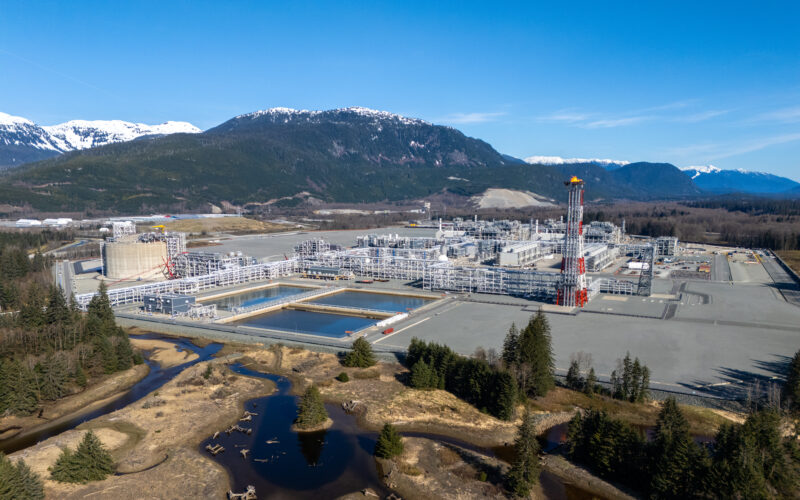
Fluor Corporation has received a limited notice to proceed through its JGC Fluor BC LNG II joint venture for the proposed Phase 2 expansion of the LNG Canada export facility in Kitimat, British Columbia. The New York Stock Exchange-listed engineering and construction group, traded under the ticker FLR, is partnering with JGC Corporation on early work for a project that could double LNG Canada’s production capacity if a final investment decision is reached. The development matters because LNG Canada is already one of the most strategically important LNG export platforms in North America, linking Western Canadian natural gas to Asian demand through a shorter Pacific shipping route than U.S. Gulf Coast terminals. For investors, the notice is not yet the same as a full project sanction, but it gives Fluor Corporation a stronger position in a potential multibillion-dollar LNG expansion at a time when global gas buyers are rethinking supply security.
Why does Fluor Corporation’s limited notice to proceed matter for LNG Canada Phase 2?
Fluor Corporation’s limited notice to proceed matters because it moves LNG Canada Phase 2 from concept and front-end planning into a more active pre-execution stage. A limited notice to proceed does not equal a final investment decision, but it allows the project partners and contractors to begin defined early activities that can shorten schedules, refine cost estimates and prepare the execution model ahead of sanction. In LNG megaprojects, that early discipline can determine whether a project enters construction with real readiness or with expensive optimism.
The award also reinforces Fluor Corporation’s incumbency advantage at LNG Canada. Fluor Corporation and JGC Corporation were already central to the first phase, which gives the joint venture institutional memory of the site, local execution challenges, modular construction strategy, Canadian regulatory environment and workforce requirements. That matters because LNG projects rarely reward contractors that learn everything from scratch halfway through the capital cycle.
For LNG Canada, the limited notice to proceed signals confidence in continuing the expansion pathway while preserving optionality. The project’s owners have not yet committed to the full Phase 2 build-out, but they are clearly preparing for a possible positive final investment decision. That is the balance large LNG sponsors often prefer: move enough work forward to protect schedule and engineering quality, but avoid locking in full capital exposure before market, cost and partner alignment are complete.
How could LNG Canada Phase 2 reshape Canada’s position in global LNG exports?
LNG Canada Phase 2 could reshape Canada’s LNG position because it would turn Kitimat from a major new export facility into a larger Pacific Basin gas platform. Canada has abundant natural gas resources in British Columbia and Alberta, but historically lacked large-scale LNG export access to Asia. LNG Canada’s first phase already changes that equation. A second phase would make the country far more relevant in the global LNG supply conversation.
The location is strategically important. Kitimat offers a Pacific Coast export route that can serve Asian buyers without relying on the Panama Canal or longer Atlantic-to-Pacific voyages from the U.S. Gulf Coast. That geographic advantage could become more valuable as Asian importers seek diversified supply from politically stable jurisdictions. Japan, South Korea, China and other regional buyers have a continuing interest in gas supply reliability, even as they invest in renewables and storage.
The competitive implication is that Canada could become a more credible alternative to U.S., Qatari and Australian LNG supply. Canada will not displace those giants overnight, but LNG Canada Phase 2 could give Western Canadian producers a stronger international outlet and improve pricing optionality for upstream gas. That is particularly relevant if North American gas markets remain divided between regions with abundant supply and regions where export infrastructure determines value.
Why is the JGC Fluor BC LNG II joint venture strategically important for project execution?
The JGC Fluor BC LNG II joint venture is strategically important because LNG megaprojects require contractor teams with deep execution experience, balance-sheet discipline and familiarity with modular delivery. Fluor Corporation brings global engineering, procurement and construction capability, while JGC Corporation has a long history in LNG design and project delivery. Together, the joint venture gives LNG Canada a contractor structure that is already familiar with the Kitimat site and the broader project requirements.
This matters because LNG project execution risk is unforgiving. Cost inflation, labour availability, module fabrication delays, weather disruption, supply-chain bottlenecks and regulatory coordination can all affect schedules. Contractors that have previously delivered on the same site may have an advantage in anticipating practical constraints, from local logistics to sequencing and commissioning. The value is not just technical design. It is knowing where things can go wrong before they politely become a crisis.
The limited notice also gives Fluor Corporation and JGC Corporation a chance to prepare for a smoother transition if Phase 2 receives full approval. Early work can help secure critical suppliers, refine construction planning and protect key execution windows. That does not eliminate megaproject risk, but it lowers the chance that the project loses time after sanction because basic preparation was deferred.
What does the possible expansion mean for Shell plc, PETRONAS and the LNG Canada ownership group?
The possible Phase 2 expansion gives LNG Canada’s ownership group a way to deepen exposure to long-term LNG demand without starting from a blank site. Shell plc owns 40% of LNG Canada, PETRONAS holds 25%, PetroChina Company Limited holds 15%, Mitsubishi Corporation holds 15% and Korea Gas Corporation holds 5%. That ownership structure already reflects the strategic nature of the project, with major Asian and global energy companies sharing access to Canadian LNG supply.
For Shell plc, LNG Canada fits its global gas and LNG strategy, which remains central to cash flow and portfolio positioning. For PETRONAS, PetroChina Company Limited, Mitsubishi Corporation and Korea Gas Corporation, the project supports long-term supply diversification and Pacific Basin access. These partners are not merely financial investors. They represent buyers, traders and energy companies with direct exposure to gas-market security.
The decision to move toward Phase 2 preparation suggests the owners see continuing value in the Canadian LNG model. However, the final investment decision will still depend on project economics, cost estimates, market outlook, emissions obligations, regulatory clarity and partner alignment. LNG demand may be strong, but LNG capital decisions are never just about demand. They are about whether a project can be delivered at a cost and schedule that survives the next cycle.
How does LNG Canada Phase 2 fit into the global gas security debate?
LNG Canada Phase 2 fits into a global gas security debate that has become more urgent since energy buyers began reassessing dependence on single corridors, politically exposed suppliers and fragile chokepoints. Europe’s pivot away from Russian pipeline gas and Asia’s continuing need for flexible LNG supply have changed the way buyers think about long-term contracts. Security of supply now sits beside price and emissions intensity as a central procurement consideration.
Canada’s advantage is political stability, resource depth and Pacific access. Those strengths could appeal to Asian buyers seeking alternatives to Middle East supply, U.S. Gulf Coast shipping constraints or Russian-origin gas. The project also benefits from being integrated with upstream Western Canadian gas resources and dedicated infrastructure such as the Coastal GasLink pipeline.
The risk is that global LNG markets are also heading into a period of major supply growth. Qatar, the United States and other exporters are bringing new capacity to market. If supply expands faster than demand, buyers may gain pricing power and developers may face pressure on returns. LNG Canada Phase 2 therefore has to compete not only on supply security, but also on delivered cost and contract flexibility.
How should investors read Fluor Corporation stock after the LNG Canada notice?
Fluor Corporation shares recently traded at $47.56, giving the company a market capitalisation of about $6.64 billion. The stock remains below its 52-week high of around $57.50 and above its 52-week low of about $37.62, suggesting investors are giving the company credit for backlog opportunities while still weighing execution risk and recent earnings pressure. The LNG Canada notice supports the backlog narrative, but it does not by itself remove broader concerns around margin quality and project discipline.
For Fluor Corporation investors, the key question is whether LNG Canada Phase 2 eventually converts into a full-scale project with attractive economics for the contractor. Early work is useful, but the larger earnings opportunity would come only if the project moves through final investment decision and into broader engineering, procurement and construction activity. A limited notice to proceed is a door opening, not a cheque clearing.
The stock reaction is likely to depend on how investors view Fluor Corporation’s ability to secure high-quality work without repeating the margin problems that have sometimes affected large engineering and construction contractors. LNG megaprojects can be lucrative, but they can also be dangerous when contracts are poorly priced or execution risks are underestimated. The market will want backlog, but it will want profitable backlog even more.
Why does Kitimat matter for British Columbia’s energy and industrial strategy?
Kitimat matters because it is becoming a focal point for British Columbia’s energy export strategy. The area combines deepwater port access, industrial land, pipeline connectivity and proximity to Western Canadian gas resources. LNG Canada has already transformed the industrial profile of the region, and Phase 2 would deepen that role if approved.
The project also carries employment, procurement and tax implications for British Columbia. Large LNG facilities create construction activity, long-term operations jobs, port demand and service-sector opportunities. They also create pressure on housing, local infrastructure, environmental oversight and Indigenous engagement. For a region like Kitimat, LNG development is not abstract macroeconomics. It is a direct local transformation.
Indigenous and environmental considerations remain central. LNG Canada and associated pipeline infrastructure have faced scrutiny over land rights, emissions, construction impacts and long-term fossil-fuel dependency. A Phase 2 expansion would likely intensify questions about whether Canada can expand LNG exports while meeting climate commitments. That debate will not disappear because the project has strong commercial logic.
What risks could still delay or weaken LNG Canada Phase 2?
The main risk is that the final investment decision has not yet been taken. Limited notices to proceed are useful, but project sponsors can still pause, resize or defer expansions if cost estimates, LNG market conditions or policy risks become less attractive. LNG Canada’s ownership group is expected to decide by the end of 2026, making the next several months critical for project definition.
Cost inflation is another major risk. LNG construction requires large quantities of steel, specialised modules, skilled labour, marine logistics, power systems and commissioning expertise. Inflation in any of those areas can weaken project returns. Canada also has a higher-cost construction environment than some competing LNG regions, which means project execution must be tight.
Market timing is equally important. If global LNG prices weaken because of new supply from Qatar and the United States, buyers may resist long-term contracts at prices needed to justify expansion. If prices remain firm because of energy security concerns, the project’s commercial case improves. LNG Canada Phase 2 is therefore being evaluated in a market that is simultaneously bullish on security and cautious on oversupply. That is not a contradiction. That is LNG being LNG.
Can Fluor Corporation convert the LNG Canada notice into a stronger energy backlog story?
Fluor Corporation can convert the LNG Canada notice into a stronger backlog story if Phase 2 receives a final investment decision and the joint venture secures broader execution scope. The company already has a credible position because of its Phase 1 involvement and its partnership with JGC Corporation. That gives Fluor Corporation a stronger seat at the table than a contractor arriving late to the project.
The strategic upside is clear. LNG remains one of the few large energy infrastructure categories where multibillion-dollar capital spending can still move contractor backlog meaningfully. If LNG Canada Phase 2 advances, Fluor Corporation could benefit from a high-profile project aligned with global gas security and North American export growth. That would support the company’s Energy Solutions segment and reinforce its relevance in complex infrastructure delivery.
A neutral reading suggests the limited notice to proceed is an important early win, but not yet a full re-rating event. Fluor Corporation has gained momentum, LNG Canada has moved closer to potential expansion and Canada’s Pacific LNG ambitions have become more tangible. The decisive test now is whether the ownership group sanctions Phase 2, and whether Fluor Corporation and JGC Corporation can turn early preparation into disciplined execution.
Key takeaways on Fluor Corporation’s LNG Canada Phase 2 notice and Canadian LNG strategy
- Fluor Corporation’s JGC Fluor BC LNG II joint venture has received a limited notice to proceed for the proposed Phase 2 expansion of LNG Canada in Kitimat.
- The proposed expansion could double LNG Canada’s production capacity if the ownership group reaches a positive final investment decision.
- LNG Canada is owned by Shell plc, PETRONAS, PetroChina Company Limited, Mitsubishi Corporation and Korea Gas Corporation.
- The final investment decision is expected by the end of 2026, making the limited notice a preparation milestone rather than a full project sanction.
- Fluor Corporation and JGC Corporation benefit from incumbency because the same contractor partnership delivered the first phase of LNG Canada.
- Canada’s Pacific Coast LNG route offers Asian buyers a strategically useful alternative to U.S. Gulf Coast and Middle East-linked supply routes.
- The project could strengthen Western Canadian natural gas pricing optionality by providing a larger export outlet for British Columbia and Alberta supply.
- Execution risks remain significant, including construction inflation, skilled labour availability, module logistics, environmental scrutiny and Indigenous engagement.
- Fluor Corporation investors are likely to view the notice as backlog-positive, but the larger value depends on full project approval and margin discipline.
- LNG Canada Phase 2 sits at the centre of a broader debate over whether Canada can expand LNG exports while managing climate, cost and local impact concerns.
Share this:
Discover more from Business-News-Today.com
Subscribe to get the latest posts sent to your email.