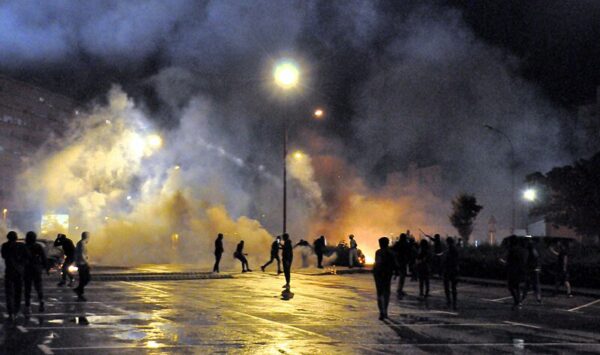


Ukraine struck energy and military targets around Saint Petersburg as the Saint Petersburg International Economic Forum opened, turning President Vladimir Putin’s flagship economic showcase into a visible test of Russia’s wartime vulnerability, air defence capacity and economic resilience.
Ukrainian President Volodymyr Zelenskiy said Ukrainian long-range drones hit the Saint Petersburg Oil Terminal, a military facility at Kronstadt and a weapons-related enterprise in Russia’s Tambov region. The Saint Petersburg Oil Terminal is roughly 1,100 kilometres from the Ukrainian border, making the strike one of the most symbolically important demonstrations of Ukraine’s ability to reach deep inside Russian territory.
The timing gave the attack wider political significance. The Saint Petersburg International Economic Forum is one of Russia’s most important annual economic events and is used by the Kremlin to project confidence, foreign engagement and economic adaptability despite sanctions and the continuing war in Ukraine. Ukrainian drones striking near Saint Petersburg as the forum began directly challenged that message.
Russian authorities said air defences shot down dozens of drones, while regional officials reported that infrastructure sites had been hit. Flights were disrupted, smoke was visible over parts of the city and authorities took security measures as delegates gathered for the forum. President Vladimir Putin was expected to use the event to speak about Russia’s economy, wartime resilience and its global partnerships beyond the West.
The strike did not change the military balance by itself. Its importance lies in what it exposed: Ukraine is increasingly able to conduct long-range attacks on energy, military and industrial targets far from the front line, while Russia is struggling to separate its economic messaging from the visible consequences of the war.
Why did Ukraine’s Saint Petersburg strike carry more political weight than a routine drone attack?
Ukraine’s Saint Petersburg strike carried more political weight because it coincided with the opening of the Saint Petersburg International Economic Forum, a highly managed event designed to present Russia as stable, investable and globally connected. By striking energy and military targets near the host city, Ukraine disrupted the image of distance between Russia’s elite economic stage and the war.
The attack was also geographically significant. Saint Petersburg is Russia’s second-largest city and President Vladimir Putin’s birthplace. A strike on infrastructure near the city carries symbolic force because the Kremlin has often sought to contain the war’s most visible effects within Ukraine or near border regions. Reaching Saint Petersburg challenges that political insulation.
Ukrainian President Volodymyr Zelenskiy confirmed that Ukrainian drones struck the Saint Petersburg Oil Terminal and military targets at Kronstadt. The Ukrainian message was clear: Russia’s infrastructure, ports and military facilities remain vulnerable even far from the front. Kyiv has increasingly used long-range drones to impose costs on Russia’s war logistics, energy assets and domestic sense of security.
For Russia, the timing was awkward. The forum was meant to showcase economic adaptation and international participation. Instead, the opening day was marked by fires, flight disruption and visible evidence that the war can reach a flagship Russian city. That turns the attack into a political information event as much as a military operation.
How does the Saint Petersburg Oil Terminal strike fit Ukraine’s long-range drone strategy?
The Saint Petersburg Oil Terminal strike fits a broader Ukrainian strategy of targeting Russian energy infrastructure, logistics nodes and military facilities deep inside Russia. Ukraine has used domestically developed long-range drones to compensate for limits on conventional long-range strike capacity and to raise the cost of Russia’s war economy.
Energy targets are especially important because Russia’s state finances and export capacity remain tied to fuel, refining, oil terminals and transport infrastructure. A strike on an oil terminal does not need to destroy an entire facility to have strategic value. It can disrupt operations, force repairs, increase security costs, strain air defence coverage and undermine confidence in Russian infrastructure protection.
The reported strike on Kronstadt adds another dimension. Kronstadt is linked to naval and military infrastructure near Saint Petersburg. By targeting both energy and military sites, Ukraine signalled that its drone campaign is not limited to economic disruption, but also seeks to pressure Russia’s military support systems.
The Tambov target also matters because Ukrainian President Volodymyr Zelenskiy said it was connected to weapons production. If Ukraine can regularly hit enterprises involved in military manufacturing, Russia may face additional costs in dispersing production, protecting facilities and maintaining output under wartime pressure.
The wider consequence is that Russia must defend a vast geography. Every long-range Ukrainian strike forces Moscow to decide where to place air defence systems: near the front, around Moscow, around Saint Petersburg, near oil refineries, near military bases or near industrial facilities. That defensive burden is a central advantage of Ukraine’s drone strategy.
Why does the Saint Petersburg International Economic Forum matter to Vladimir Putin’s war narrative?
The Saint Petersburg International Economic Forum matters because it is one of President Vladimir Putin’s main platforms for arguing that Russia remains economically functional despite war, sanctions and isolation from Western markets. The Kremlin uses the event to highlight non-Western partnerships, investment interest, domestic industrial plans and the idea of a multipolar global economy.
Since Russia’s full-scale invasion of Ukraine in 2022, the forum has changed. Western corporate participation has sharply declined, while Russia has leaned more heavily on delegations from China, the Middle East, Central Asia, Africa and other countries willing to maintain or expand ties. The event has therefore become both an economic forum and a geopolitical signal.
The drone strikes cut across that narrative. A forum built around stability and pragmatic economic dialogue opened under the shadow of attacks on nearby infrastructure. That contrast matters because President Vladimir Putin has tried to project that Russia can absorb sanctions, sustain the war and maintain economic momentum at the same time.
Russia’s economy has shown resilience in some areas, supported by state spending, defence production, energy revenues and redirected trade flows. However, the war has also brought inflation pressure, labour shortages, higher defence costs, sanctions constraints and rising dependence on non-Western trade channels. A drone strike near the forum sharpened the question of whether Russia’s wartime economy is stable or simply being kept in motion by heavy state intervention.
How could Ukraine’s deep strikes affect Russia’s air defence priorities and domestic security?
Ukraine’s deep strikes create a serious air defence dilemma for Russia because the country must protect front-line forces, border regions, major cities, military bases, oil infrastructure, ports and industrial plants across an enormous territory. The farther Ukraine’s drones can travel, the more stretched Russia’s defensive network becomes.
Russian officials said dozens of drones were intercepted during the Saint Petersburg attack. Even when interceptions occur, the operational burden remains significant. Air defence crews must detect, track and engage small unmanned aircraft over long distances, often at night and across civilian infrastructure zones. Airport closures, mobile internet restrictions and emergency responses can occur even when damage is limited.
The domestic security consequence is also important. Russian citizens in major cities far from Ukraine may increasingly experience the war through air alerts, flight disruptions, smoke, fire, internet restrictions and visible security measures. That changes the political psychology of the conflict by reducing the distance between the battlefield and ordinary urban life.
For the Kremlin, the challenge is messaging. Russian authorities must reassure the public that the state remains in control while explaining why attacks can reach critical infrastructure near one of Russia’s most important cities. That is difficult when the same city is hosting an event designed to signal confidence and stability.
Why are oil terminals and energy assets becoming central targets in the Russia Ukraine war?
Oil terminals and energy assets are becoming central targets because energy is directly connected to Russia’s revenue, logistics and wartime resilience. Ukraine’s long-range campaign has repeatedly focused on refineries, fuel depots, export terminals and energy infrastructure because these facilities support both the Russian economy and military supply chains.
The Saint Petersburg Oil Terminal is significant because of its role in handling fuel products and its location near a major Russian city and port zone. A strike on such a site can create operational disruption, visible fires and reputational damage, even if the facility later resumes activity. It also forces Russia to spend more on protection, repairs and redundancy.
Ukraine’s targeting logic is shaped by asymmetry. Russia has used large missile and drone attacks against Ukrainian cities and energy infrastructure. Ukraine, with fewer conventional long-range weapons, has developed drones that can hit selected targets inside Russia. That does not equalise the two sides fully, but it gives Kyiv a way to impose costs beyond the front line.
The broader economic consequence is that Russian energy infrastructure can no longer be treated as insulated from the war. Even if exports continue, the threat environment raises costs for operators, insurers, logistics planners and regional authorities. Russia’s ability to sustain its war economy depends partly on keeping those systems functioning under pressure.
What does the attack reveal about Russia’s economic mood at the Saint Petersburg forum?
The attack reinforced the economic unease already surrounding the Saint Petersburg International Economic Forum. Russia is hosting the event after years of sanctions, military spending, labour strain and lower access to Western capital, technology and corporate networks. The forum remains visually important, but the underlying mood is more complicated than the stagecraft suggests.
Inside Russia, different views are emerging over the future direction of the war and economy. Hardline voices argue that Russia must prepare for a long confrontation with the West and reshape society, industry and defence planning accordingly. Economic pragmatists worry that prolonged conflict, sanctions and military spending could deepen stagnation and reduce long-term growth.
The drone strike near Saint Petersburg sharpened that divide. For hardliners, the attack may strengthen arguments for further militarisation and tougher security measures. For economic voices, the attack underscores the cost of continued war and the difficulty of attracting serious investment while critical infrastructure remains vulnerable.
The forum therefore becomes a snapshot of Russia’s wartime contradiction. The Kremlin wants to show stability, sovereign strength and global relevance. Ukraine’s drone campaign shows that the war remains capable of reaching the very spaces where Russia tries to display those qualities.
How does the Saint Petersburg strike affect international perceptions of the war?
The Saint Petersburg strike affects international perceptions by showing that Ukraine is not only defending territory, but also expanding its ability to pressure Russia’s rear infrastructure. That matters for Western governments, non-Western partners and countries watching the war as a test of technological adaptation and strategic endurance.
For Ukraine’s partners, the strike may reinforce the argument that Ukrainian innovation can produce strategic effects despite Russia’s larger resources. Long-range drones are cheaper than many missiles and can be produced in ways that create a persistent threat to Russian infrastructure. That strengthens Kyiv’s case for continued technical and financial support.
For countries attending the Saint Petersburg International Economic Forum, the attack complicates Russia’s messaging. Delegates may still engage with Moscow for trade, energy or geopolitical reasons, but the visible security disruption is a reminder that Russia’s wartime risk profile remains elevated.
For Russia’s critics, the strike will be viewed as evidence that President Vladimir Putin cannot fully shield Russia from the war he launched. For Russia’s supporters, the attack may be framed as a reason to intensify military operations. Either way, the strike becomes part of the international narrative around whether Russia is gaining control or absorbing growing costs.
What could happen next after Ukraine struck targets around Saint Petersburg?
The immediate next step is likely tighter Russian air defence and domestic security measures around Saint Petersburg, Moscow, energy sites and major public events. Russia may move more air defence assets to protect high-profile infrastructure, but doing so could create gaps elsewhere.
Russia may also respond with intensified strikes on Ukrainian cities and infrastructure. Moscow has frequently framed Ukrainian long-range attacks as justification for renewed missile and drone barrages. Ukraine, in turn, argues that its strikes target military and energy infrastructure connected to Russia’s war effort.
Ukraine is likely to continue refining its long-range drone campaign. The strategic logic is clear: impose costs on Russian infrastructure, embarrass the Kremlin during symbolic moments, stretch Russian air defences and demonstrate that the war cannot remain geographically contained on Moscow’s terms.
The Saint Petersburg International Economic Forum will continue, but its opening has already been shaped by the drone attacks. For President Vladimir Putin, the harder task is not only delivering a speech about economic resilience. It is persuading domestic and foreign audiences that Russia can sustain a long war without the war visibly eroding the stability Russia is trying to project.
What are the key takeaways from Ukraine’s Saint Petersburg strikes during Putin’s economic forum?
- Ukraine struck energy and military targets around Saint Petersburg as the Saint Petersburg International Economic Forum opened, creating a visible security challenge during one of President Vladimir Putin’s most important economic events.
- Ukrainian President Volodymyr Zelenskiy said Ukrainian long-range drones hit the Saint Petersburg Oil Terminal, a military facility at Kronstadt and a weapons-related enterprise in Russia’s Tambov region.
- The Saint Petersburg Oil Terminal is roughly 1,100 kilometres from the Ukrainian border, showing Ukraine’s ability to reach major Russian infrastructure far beyond the immediate front line.
- Russian authorities said air defences intercepted dozens of drones, while regional officials reported infrastructure impacts, flight disruption and security measures around the Saint Petersburg area.
- The strikes challenged the Kremlin’s effort to use the Saint Petersburg International Economic Forum to project economic stability, foreign engagement and wartime resilience despite sanctions and conflict costs.
- Ukraine’s long-range drone strategy is increasingly focused on Russian energy assets, military facilities and industrial sites connected to Moscow’s war logistics and economic capacity.
- The attack increases pressure on Russia’s air defence system because Moscow must protect front-line areas, major cities, energy infrastructure, military bases and industrial plants across a vast territory.
- The strike does not by itself change the military balance, but it strengthens the political message that Russia’s rear areas and flagship economic events remain vulnerable to the consequences of the war.
Share this:
Discover more from Business-News-Today.com
Subscribe to get the latest posts sent to your email.