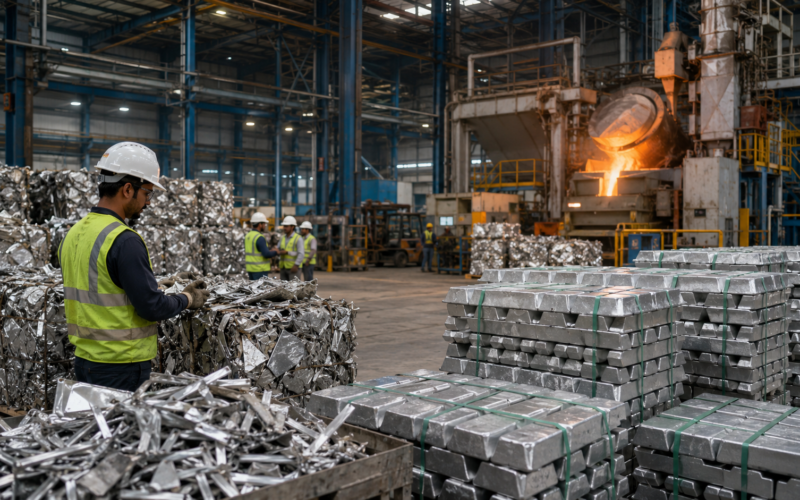
CMR Green Technologies Limited is launching its ₹630.88 crore initial public offering on June 3, 2026, bringing one of India’s major non-ferrous metal recycling businesses to the mainboard IPO market. The company has fixed a price band of ₹182 to ₹192 per share for an issue that is entirely an offer for sale of about 3.28 crore equity shares by existing shareholders. The IPO will close on June 5, with allotment expected on June 8 and listing on BSE and the National Stock Exchange scheduled for June 10. The strategic question for investors is clear: CMR Green Technologies Limited offers exposure to aluminium recycling, auto supply chains and India’s circular economy push, but the IPO proceeds will not flow into the company because the issue is a pure secondary sale.
Why does the CMR Green Technologies IPO matter for India’s aluminium recycling market in 2026?
The CMR Green Technologies IPO matters because aluminium recycling is moving from a back-end industrial activity to a visible investment theme tied to manufacturing, energy efficiency and supply-chain resilience. India’s demand for aluminium alloys is closely linked to automobiles, electrical equipment, construction, consumer durables and industrial components. A company that converts aluminium scrap into usable alloy products sits inside a value chain that is becoming more important as manufacturers try to manage cost, reduce import dependence and improve resource efficiency.
The timing is also useful for the IPO market. After a period in which India’s mainboard IPO activity had become uneven, CMR Green Technologies Limited is entering the market with a manufacturing-led story rather than a purely digital or consumer platform narrative. That can appeal to investors who want exposure to India’s physical economy, especially sectors connected to mobility, metals and industrial reuse. Recycling may not sound as glamorous as artificial intelligence, but aluminium scrap has one advantage over buzzwords: it can be melted, sold and measured.
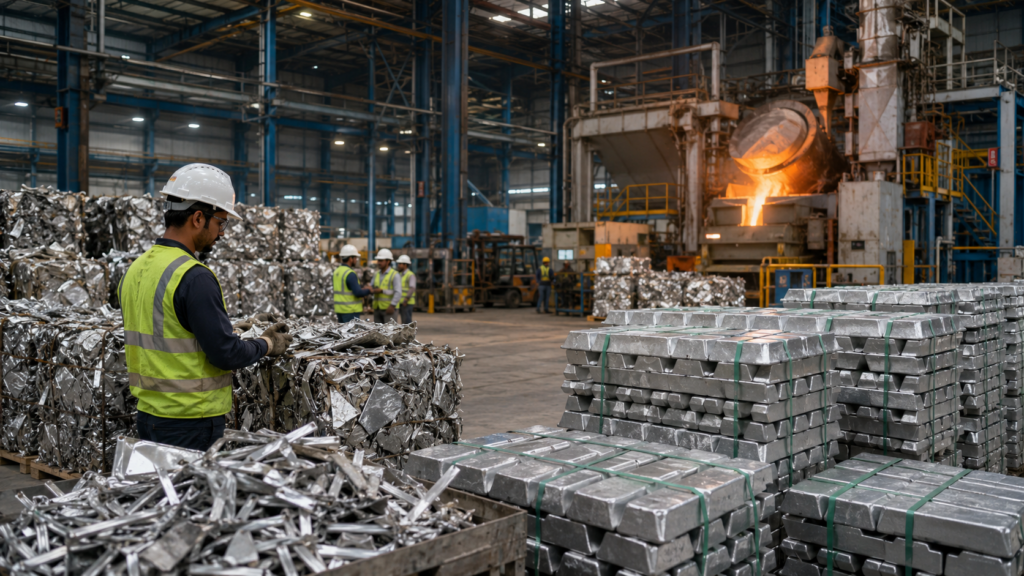
The broader relevance comes from the economics of recycled aluminium. Producing aluminium from scrap generally requires far less energy than primary aluminium production, making recycled alloys attractive for cost and sustainability reasons. For Indian manufacturers, that can translate into a more flexible domestic supply base. For CMR Green Technologies Limited, the opportunity is to position itself as a scaled supplier in a market where customers increasingly care about both price and carbon footprint.
What does the pure offer for sale structure mean for CMR Green Technologies IPO investors?
The biggest caveat in the CMR Green Technologies IPO is the structure. The issue is entirely an offer for sale, which means the proceeds go to selling shareholders and not to CMR Green Technologies Limited. That does not automatically make the IPO unattractive. Many mature businesses come to market through secondary sales, especially when promoters or investors want liquidity after building scale. However, it changes how investors should read the transaction.
A fresh issue would have allowed CMR Green Technologies Limited to raise growth capital for expansion, debt reduction or working-capital support. A pure offer for sale does none of that. Investors are therefore buying into the company’s existing business strength and future earnings potential rather than funding a clearly defined expansion plan. The company may still grow after listing, but that growth will need to be funded through internal accruals, debt or future capital raises rather than this IPO.
The reduced issue size also matters. The offering has reportedly been cut from an earlier proposed size of around ₹823 crore to about ₹631 crore. That could reflect valuation discipline, market feedback, selling-shareholder preference or a mix of all three. For investors, the smaller size may improve absorption, but it also invites a fair question: if the business is entering a favourable recycling cycle, why is the IPO being structured mainly as an exit window rather than a growth-funding event?
How should investors read CMR Green Technologies’ ₹182 to ₹192 price band?
The ₹182 to ₹192 price band will be judged against the company’s revenue base, profitability, return profile, debt levels, working-capital intensity and peer comparisons in the metals and manufacturing space. The problem for investors is that recycling businesses can look attractive on revenue because metal values inflate turnover, but margins may be more sensitive to scrap availability, alloy spreads, energy costs and customer pricing than headline sales imply. That means investors should not read the IPO purely as a top-line growth story.
The price band also places CMR Green Technologies Limited in a zone where institutional investors will examine whether the valuation reflects manufacturing risk or sustainability premium. Recycling-linked businesses often receive positive attention because they align with circular economy themes. But public markets eventually test those narratives against cash flow, asset utilisation and margin consistency. A green label helps bring investors to the table. It does not close the deal by itself.
Retail interest could be supported by the fact that CMR Green Technologies Limited is a mainboard IPO in a tangible industrial category. The issue size, lot size and BSE and National Stock Exchange listing plan give the offering wider visibility than typical small and medium enterprise listings. However, investors should be careful about relying only on grey market premium chatter. In industrial IPOs, the real post-listing performance usually depends less on day-one excitement and more on how quickly the company proves earnings durability after becoming public.
Why is aluminium recycling becoming strategically important for automakers and industrial buyers?
Aluminium recycling is becoming strategically important because industrial customers need materials that support both cost efficiency and manufacturing reliability. Automakers, in particular, use aluminium alloys across engine components, wheels, structural parts and electric vehicle platforms. As vehicle makers push for lighter components and better fuel efficiency, aluminium demand can grow across both internal combustion and electric vehicle supply chains.
For CMR Green Technologies Limited, that creates an addressable market that goes beyond generic scrap processing. The company’s relevance depends on its ability to deliver consistent alloy quality, manage sourcing, maintain plant utilisation and serve customers that require dependable specifications. In metals recycling, scale matters, but quality control matters more. A recycler that cannot meet tight alloy requirements is not a strategic supplier. It is just a processor sitting in a commodity spread.
The shift toward electric vehicles can add another layer of opportunity. Electric vehicle platforms use aluminium in battery housings, lightweight structures and thermal management components. This does not mean CMR Green Technologies Limited automatically becomes an EV winner. It does mean aluminium recycling could become more integrated with mobility supply chains over time. That link may help the IPO narrative, but management will need to show customer concentration, segment exposure and operating discipline clearly after listing.
What are the operational risks behind the CMR Green Technologies growth story?
The first operational risk is raw material sourcing. Aluminium recycling businesses depend on steady access to scrap at commercially viable prices. If scrap prices rise sharply or availability tightens, margins can come under pressure unless the company can pass costs through to customers. That pass-through is not always smooth, especially when customers themselves face margin pressure.
The second risk is working capital. Metal recycling businesses often require significant inventory, receivables management and procurement discipline. A company can report strong sales but still face cash-flow pressure if customer collections stretch or raw material purchases consume liquidity. This is one reason why investors should look closely at operating cash flow and not just profit after tax. In metals, cash flow has a habit of telling the truth before the profit and loss account gets around to it.
The third risk is cyclicality. Aluminium demand is linked to industrial production, automotive cycles, construction demand and export conditions. If domestic manufacturing slows, alloy demand can soften. If input costs move faster than customer contracts, spreads can narrow. If competition increases, pricing power can weaken. CMR Green Technologies Limited’s scale may help, but the company cannot fully escape the nature of the industry it operates in.
How could the CMR Green Technologies IPO influence India’s circular economy investment theme?
A successful CMR Green Technologies IPO could give India’s circular economy theme a more investable public-market reference point. Much of the sustainability discussion in India’s equity market has focused on renewable energy, electric mobility, green hydrogen, water infrastructure and waste management. Metal recycling sits at the intersection of manufacturing and sustainability, making it a practical test of whether investors will pay for industrial decarbonisation themes outside the obvious clean-energy names.
The listing could also attract attention from long-only funds looking for businesses that benefit from formalisation. India’s recycling sector has historically included many fragmented and informal operators. Scaled companies with audited financials, customer relationships and regulatory compliance can gain share as large manufacturers prefer traceable supply chains. That formalisation angle may become important if environmental standards and procurement requirements tighten.
However, the IPO will also test whether circular economy companies can command sustained market interest after listing. Investors may like the theme in theory, but they will still want earnings growth, governance quality and valuation comfort. If CMR Green Technologies Limited lists well and delivers operational performance, it could support more recycling and industrial sustainability listings. If it struggles, the market may become more cautious about applying a premium to green industrial narratives.
What should investors watch after the CMR Green Technologies listing on BSE and NSE?
The first post-listing factor to watch is subscription quality. Strong demand from qualified institutional buyers would suggest serious institutional interest in the company’s industrial and circular economy profile. Heavy retail demand with limited institutional conviction would be a weaker signal, even if the IPO appears oversubscribed. For a manufacturing business, institutional participation often matters because it reflects deeper scrutiny of financials and sector positioning.
The second factor is listing-day behaviour. A healthy listing premium can help sentiment, but it should not become the whole story. If the stock lists strongly and then faces selling pressure, investors may conclude that the offer for sale structure created an exit-heavy perception. If the stock holds above issue price after listing, it could indicate that the market is comfortable with the valuation and business model.
The third factor is quarterly execution after listing. CMR Green Technologies Limited will need to show that revenue growth, margins and cash flows can remain stable in a volatile commodity environment. Public investors will quickly move beyond the IPO deck. The company’s real test will begin when it reports as a listed entity and investors can compare promises with performance.
Can CMR Green Technologies become a long-term listed proxy for India’s metals recycling sector?
CMR Green Technologies Limited has the ingredients for a compelling listed-market story: scale in aluminium and zinc alloy recycling, exposure to industrial manufacturing, relevance to circular economy goals and a market debut at a time when investors are searching for differentiated India growth themes. The company is not selling a speculative concept. It is selling an operating business in a sector with structural demand drivers.
The caution is equally important. A pure offer for sale means IPO investors are not funding immediate expansion through the issue. The business remains exposed to scrap price volatility, working-capital cycles, customer demand and industrial margin pressure. The sustainability angle may attract attention, but valuation support will depend on execution, disclosure and governance.
For investors, the best way to view the CMR Green Technologies IPO is not as a simple apply-or-avoid event. It is a test of whether India’s public markets are ready to value recycling as strategic manufacturing infrastructure. If CMR Green Technologies Limited can convert scale into cash flow, and circular economy relevance into customer stickiness, the listing could become more than another June IPO. It could become a benchmark for how India prices the business of industrial reuse.
Key takeaways on what CMR Green Technologies IPO means for investors and India’s recycling sector
- CMR Green Technologies Limited’s IPO opens on June 3, 2026, with a ₹182 to ₹192 price band and a total issue size of about ₹630.88 crore.
- The IPO is entirely an offer for sale, which means proceeds will go to selling shareholders and not to the company for expansion or debt reduction.
- The company offers exposure to India’s aluminium recycling market, which is linked to automotive, industrial, electrical and manufacturing demand.
- The circular economy narrative gives the IPO thematic appeal, but investors will still judge the business on margins, working capital and cash-flow stability.
- The reduced issue size could support demand absorption, but it also reinforces the need to understand selling-shareholder intent and valuation discipline.
- CMR Green Technologies Limited could benefit from formalisation in India’s recycling sector as large manufacturers seek more reliable and traceable suppliers.
- The main risks include scrap sourcing volatility, alloy spread pressure, working-capital intensity and cyclical exposure to industrial demand.
- BSE and National Stock Exchange listing visibility could make the IPO an important benchmark for future industrial sustainability listings in India.
- Post-listing performance will depend less on grey market premium and more on whether the company can deliver consistent earnings as a public entity.
Share this:
Discover more from Business-News-Today.com
Subscribe to get the latest posts sent to your email.