


Ola Electric Mobility Limited (NSE: OLAELEC, BSE: 544225) has launched a qualified institutional placement with a floor price of ₹37.74 per share, putting the electric two-wheeler maker back in focus after a volatile recovery in its stock. The company opened the issue on June 1, 2026, after its Fund Raising Committee approved the preliminary placement document and application form for eligible qualified institutional buyers. The floor price represents a discount to the stock’s previous close of ₹39.53 on BSE, while the company may offer a further discount of up to 5 percent under applicable rules. The timing is strategically important because Ola Electric Mobility Limited is trying to raise institutional capital just as its May registrations improved, its share price recovered from deep lows, and competition in India’s electric two-wheeler market became more unforgiving.
Why is Ola Electric Mobility Limited launching a QIP when its stock has just recovered from recent lows?
Ola Electric Mobility Limited’s QIP is best read as a balance-sheet and confidence test rather than a routine financing exercise. The company is seeking fresh institutional capital after a sharp share-price rebound from its 52-week low, which gives management a better window to raise funds than it had during the stock’s weaker phase earlier in 2026. The rebound matters because equity raises are always easier to explain when investors can see some market momentum, even if the underlying business still has plenty to prove.
The floor price of ₹37.74 per share is close enough to the prevailing market price to show that Ola Electric Mobility Limited is not raising money from a position of full strength. The stock had closed at ₹39.53 on BSE before the QIP details became public, and then fell in early trade as investors reacted to the placement. That reaction is not surprising. A QIP can strengthen the company’s funding position, but it can also create dilution, pricing pressure and questions about why the business needs fresh equity now.
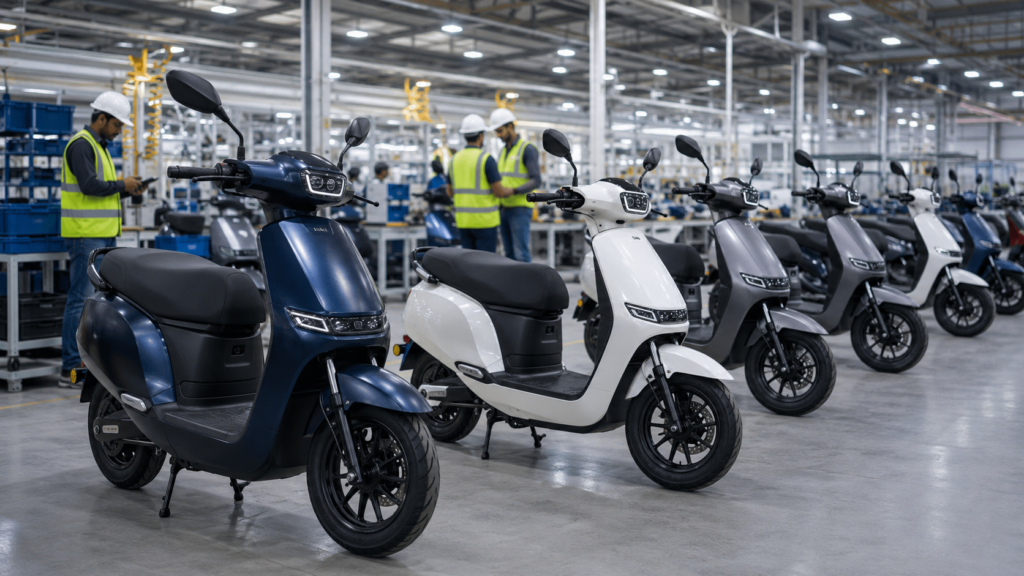
The deeper issue is that Ola Electric Mobility Limited is operating in a sector where capital intensity remains high. Electric two-wheeler companies do not merely need brand visibility and customer bookings. They need manufacturing capacity, battery technology, supply-chain control, service infrastructure, software upgrades, distribution reach and working capital. That is a lot of moving parts, and none of them runs on enthusiasm alone. Institutional capital can help, but it also raises the bar for execution.
What does the ₹37.74 QIP floor price say about investor sentiment toward Ola Electric Mobility shares?
The ₹37.74 floor price gives investors a fairly clear signal: Ola Electric Mobility Limited is trying to raise capital without pushing the discount too aggressively, but the market is still pricing the company with caution. The stock remains well below its 52-week high of about ₹71.25, even after recovering sharply from a 52-week low near ₹22.25. That gap captures the central sentiment problem around #OLAELEC: investors are interested in the turnaround narrative, but they are not yet willing to treat the business as de-risked.
On June 2, 2026, the stock traded lower after the QIP announcement, with early market data showing a fall of roughly 3 percent to 4 percent. This kind of move usually reflects two concerns. First, investors fear dilution if new shares are issued below or near market price. Second, they may view the timing as a reminder that Ola Electric Mobility Limited’s growth model still requires external capital despite the improvement in monthly registrations.
The stock’s 52-week range also matters. A share that has moved from deep stress to a strong two-month recovery can attract momentum buyers, but those buyers are often less patient when a capital raise appears. Long-term investors may view the QIP differently if the money strengthens manufacturing, battery localisation and working capital. Short-term traders, however, may focus on placement pricing and whether institutional demand is strong enough to support the stock after the book-building process. That makes the final issue price and investor mix important signals.
How does the QIP connect with Ola Electric Mobility’s May registration recovery?
The QIP comes at a time when Ola Electric Mobility Limited is trying to show that its operating metrics are stabilising. The company recorded 15,139 registrations in May 2026, up 23 percent from 12,323 units in April, based on VAHAN data cited in market reports. That recovery gives the capital raise a better story because management can point to improving demand rather than raising money in the middle of a visible sales slump.
Still, one month of stronger registrations is not the same as a durable turnaround. India’s electric two-wheeler market is expanding, but it is also becoming more fragmented and competitive. Ola Electric Mobility Limited must prove that the May improvement reflects better retail execution, stronger product traction and sustained consumer demand rather than short-term discounts, seasonal movement or temporary channel adjustment. Institutional investors will want to know whether the company can hold volumes without sacrificing margins.
The Roadster portfolio and the company’s broader product pipeline could help if execution stays on track. Ola Electric Mobility Limited has been trying to move beyond being seen only as a scooter maker and toward a wider electric mobility platform. However, that ambition requires capital. Product development, vehicle launches, cell manufacturing and service reliability all require funding before they generate stable returns. This is where the QIP becomes strategically linked to the operating recovery. The fundraise may be necessary to support the next leg of growth, but it also forces the company to prove that the capital will not merely fund losses.
Why does capital intensity remain the biggest strategic question for Ola Electric Mobility Limited?
Ola Electric Mobility Limited’s long-term investment case depends heavily on whether vertical integration can become an advantage rather than a cash drain. The company has positioned itself around electric vehicles, battery cells and technology-led manufacturing. In theory, that structure can reduce dependence on imported components, improve control over cost, and create differentiation in India’s electric two-wheeler market. In practice, vertical integration often requires large upfront spending before benefits appear in margins.
This is why the QIP matters more than the headline amount alone. Fresh equity can support the company’s EV and cell technology plans, but investors will judge whether the money accelerates a path to profitability or merely extends the runway. Ola Electric Mobility Limited has previously outlined investments in its electric vehicle and battery cell subsidiaries, and the market is likely to link the QIP to that broader funding requirement. The company cannot simply say it is building the future of mobility. It must show that the future has a manageable cash conversion cycle.
The balance between growth and financial discipline is particularly sensitive in India’s electric two-wheeler sector. Subsidy changes, battery costs, warranty obligations, service issues and price competition can all affect margins. A company chasing scale too aggressively may end up buying market share at the cost of profitability. A company that becomes too cautious may lose ground to rivals. Ola Electric Mobility Limited’s QIP is therefore a capital allocation story as much as a fundraising story.
How does Ola Electric Mobility’s QIP change the competitive equation with Bajaj Auto, TVS Motor Company and Ather Energy?
Ola Electric Mobility Limited is not raising money in a vacuum. Its rivals are not standing politely at a traffic signal while it sorts out its balance sheet. Bajaj Auto Limited, TVS Motor Company Limited and Ather Energy have all been strengthening their electric two-wheeler presence, with varying advantages in distribution, brand trust, manufacturing discipline and after-sales networks. That makes institutional funding more important, but also more scrutinised.
Bajaj Auto Limited and TVS Motor Company Limited bring legacy manufacturing experience, dealer networks and balance-sheet strength. Their electric vehicle push benefits from existing operating discipline and consumer familiarity. Ather Energy, meanwhile, competes more directly in the premium connected scooter space and has built a brand around product experience and technology. Ola Electric Mobility Limited’s advantage has been ambition, scale and visibility, but the market increasingly wants proof of execution, service quality and unit economics.
The QIP could help Ola Electric Mobility Limited defend and rebuild market share if the funds are channelled into areas that matter to consumers, such as product reliability, service expansion, battery performance and retail availability. However, if the capital is perceived as plugging losses without improving competitive positioning, the market may punish the stock. In a sector where everyone claims to be riding the EV megatrend, the real differentiator is boring but powerful: better execution per rupee of capital deployed.
What are the main risks for #OLAELEC investors after the institutional placement?
The first risk is dilution. A QIP adds equity capital, but it can reduce existing shareholders’ ownership percentage depending on the size and pricing of the issue. The final issue price and total funds raised will therefore matter. If the placement clears close to the floor price, some investors may read it as a sign that institutional appetite is available but price-sensitive. If the book is strong and priced better than feared, sentiment could stabilise.
The second risk is execution. Ola Electric Mobility Limited needs to translate capital into measurable outcomes. Investors will look for sustained registration growth, better gross margins, progress in battery-cell localisation, disciplined operating expenses and improved service metrics. The market has little patience for companies that raise money with a long-term vision but report short-term operating slippage. In EVs, the road to scale is scenic, but it is also full of potholes.
The third risk is competitive intensity. The Indian electric two-wheeler market remains attractive, but that attractiveness invites more competition, sharper pricing and faster product cycles. Petrol prices may support consumer interest in EVs, but affordability, financing, battery confidence and service access still shape buying decisions. Ola Electric Mobility Limited must prove that its growth is not dependent on promotional bursts or category-wide demand alone. Investors will want evidence that the company can win on product, distribution and cost structure simultaneously.
Can Ola Electric Mobility turn this QIP into a stronger EV investment story?
The QIP can strengthen the Ola Electric Mobility Limited story if it does three things. It must improve funding visibility, reinforce strategic investments in vehicles and cells, and convince institutional investors that management has a credible path toward better economics. The company’s recent May registration recovery gives the fundraise a more constructive backdrop, but the stock reaction shows that investors are still cautious.
For the broader EV sector, this fundraising is also a useful signal. India’s electric two-wheeler market is growing, but growth alone does not remove the need for capital discipline. Listed EV companies will increasingly be judged not only on deliveries and registrations, but also on working capital, margin durability, component localisation and service outcomes. That shift is healthy. It separates business models that can compound from those that merely consume cash in pursuit of scale.
For Ola Electric Mobility Limited, the next few quarters will be decisive. The company has the brand visibility, category relevance and manufacturing ambition to remain central to India’s EV transition. But a QIP is not a magic charger. It can refill the battery, but it cannot fix the vehicle if the drivetrain is weak. The market will now watch whether fresh institutional money helps Ola Electric Mobility Limited move from recovery narrative to operating proof.
Key takeaways on what Ola Electric Mobility’s QIP means for investors, competitors and India’s EV market
- Ola Electric Mobility Limited’s QIP at a ₹37.74 floor price signals a push to strengthen capital availability while the stock is still recovering from earlier lows.
- The timing suggests management is trying to raise funds from a better market position after May registrations improved 23 percent month on month.
- The share-price decline after the QIP announcement shows investors remain sensitive to dilution, placement pricing and future cash requirements.
- The stock is still materially below its 52-week high, which means the market has not fully restored confidence despite the recent rebound.
- Fresh capital could support Ola Electric Mobility Limited’s EV, battery-cell and product expansion plans, but only if execution improves visibly.
- The company faces stronger competition from Bajaj Auto Limited, TVS Motor Company Limited and Ather Energy, making capital efficiency more important than headline growth.
- Institutional demand for the QIP will serve as a near-term sentiment test for #OLAELEC after months of volatility.
- The Indian electric two-wheeler market remains structurally attractive, but pricing pressure, service quality and battery economics remain key risks.
- Ola Electric Mobility Limited’s next challenge is to prove that higher registrations can translate into sustainable margins and not just higher capital needs.
Share this:
Discover more from Business-News-Today.com
Subscribe to get the latest posts sent to your email.