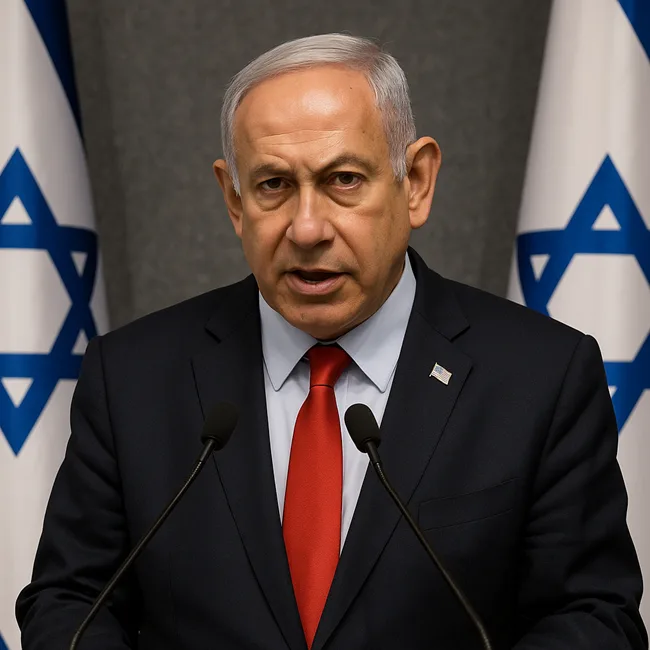



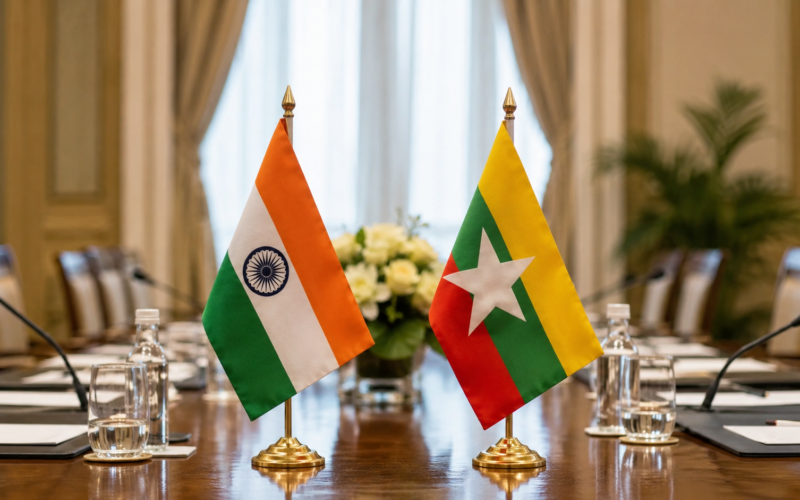
Myanmar President U Min Aung Hlaing has assured Prime Minister Narendra Modi that Myanmar’s territory will not be permitted to be used against India’s security interests, placing border security, insurgent movement, trade, connectivity and defence cooperation at the centre of a strategically important meeting in New Delhi.
The assurance came during talks between Prime Minister Narendra Modi and Myanmar President U Min Aung Hlaing at Hyderabad House on June 1, 2026. The two leaders discussed security cooperation, trade, development assistance, connectivity projects, defence capacity building, energy cooperation and ways to deepen bilateral engagement at a time when instability inside Myanmar continues to affect India’s Northeast.
Foreign Secretary Vikram Misri said after the meeting that Prime Minister Narendra Modi reaffirmed India’s support for Myanmar’s sovereignty and territorial integrity. Both sides underlined the importance of preventing the misuse of sovereign territory for activities harmful to each other’s security interests.
The meeting is significant because India shares a long and sensitive border with Myanmar across the northeastern states. Armed groups, refugee flows, smuggling networks, border villages, ethnic linkages and the fallout from Myanmar’s internal conflict all shape India’s security concerns. New Delhi has been seeking stronger cooperation with Naypyidaw to prevent anti-India groups from using territory across the border for shelter, movement or logistics.
The visit also has wider geopolitical meaning. Myanmar President U Min Aung Hlaing is on a five-day visit to India from May 30 to June 3, 2026. The visit is one of the most important diplomatic engagements between India and Myanmar in recent years, especially as Myanmar’s leadership seeks regional engagement and India tries to balance security needs, connectivity ambitions and China’s influence in Myanmar.
Why does Myanmar’s assurance to India matter for Northeast border security?
Myanmar’s assurance matters because India’s Northeast security is closely tied to developments across the India-Myanmar border. Several northeastern states share ethnic, cultural and geographic linkages with Myanmar, and the border has historically been vulnerable to insurgent movement, arms trafficking, narcotics routes and informal crossings.
The confirmed development is that Myanmar President U Min Aung Hlaing told Prime Minister Narendra Modi that Myanmar’s territory would not be allowed to be used against India’s security interests. The institutional significance is that India secured a public security reassurance at the highest political level during a formal bilateral meeting.
The broader consequence is that India is trying to prevent Myanmar’s internal instability from spilling deeper into the Northeast. The assurance gives New Delhi a diplomatic basis to press for stronger border coordination, intelligence sharing and action against groups that may threaten Indian territory or Indian citizens.
This is not a small issue for India’s internal security planners. The Northeast remains strategically sensitive because it connects India with Southeast Asia while also hosting complex ethnic, political and security dynamics. Any deterioration along the Myanmar border can affect Manipur, Mizoram, Nagaland and Arunachal Pradesh, as well as road projects and regional trade routes.
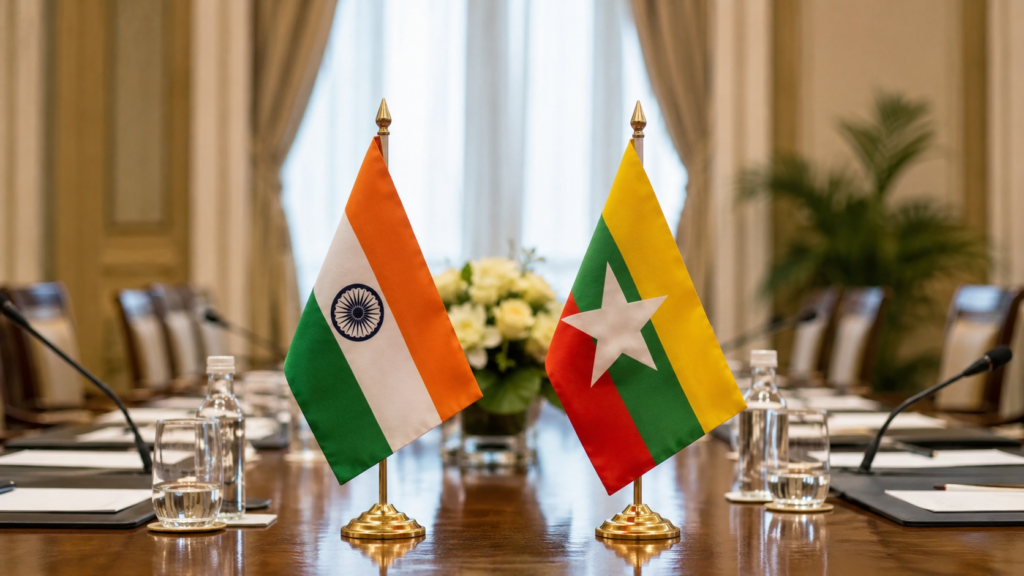
How did Prime Minister Narendra Modi frame India’s position during talks with U Min Aung Hlaing?
Prime Minister Narendra Modi framed India’s position around support for Myanmar’s sovereignty and territorial integrity, while also raising security concerns linked to the misuse of territory against India. This is a careful diplomatic balance. India wants cooperation from Myanmar on border security, but India also wants to avoid being seen as undermining Myanmar’s sovereignty.
The confirmed institutional message was that both countries underlined the importance of preventing their sovereign territories from being used for activities harmful to each other’s security interests. This language matters because it links security cooperation with mutual respect for territorial integrity.
The broader consequence is that India is keeping its Myanmar policy pragmatic. New Delhi has concerns over violence, refugee movement and armed groups near the border, but India also needs working relations with the authorities in Myanmar. Without such engagement, border security, connectivity projects and economic cooperation would become harder to manage.
India’s position also reflects regional realism. Myanmar is a neighbour, a gateway to Southeast Asia and a country where instability directly affects India’s frontier communities. New Delhi cannot treat Myanmar only through a distant diplomatic lens. The relationship has immediate consequences for roads, trade, border villages, security patrols and humanitarian pressures.
Why is U Min Aung Hlaing’s India visit geopolitically important after Myanmar’s internal crisis?
U Min Aung Hlaing’s India visit is geopolitically important because it comes after years of international scrutiny of Myanmar’s political crisis and military rule. The visit gives Myanmar’s leadership a major regional platform while giving India an opportunity to protect its security and economic interests.
The confirmed visit runs from May 30 to June 3, 2026, and includes New Delhi talks, Bodh Gaya, Mumbai business interactions and site visits. The institutional significance is that India has chosen engagement at a high level despite Myanmar’s internal crisis, reflecting New Delhi’s priority of maintaining influence and access in a strategically important neighbouring country.
The broader consequence is that Myanmar remains a space of regional competition. China has deep influence in Myanmar through infrastructure, political links, military engagement and economic projects. India’s engagement with Myanmar is partly about ensuring that India does not lose strategic space in a country that sits directly along India’s eastern frontier.
For Myanmar, the visit helps signal regional diplomatic outreach. For India, the visit supports a mix of security, connectivity, trade and strategic balancing. The diplomacy is therefore not symbolic. It is connected to the practical question of who shapes Myanmar’s external partnerships during a period of internal volatility.
How do trade, connectivity and energy projects shape India-Myanmar relations?
Trade, connectivity and energy projects are central because India and Myanmar are not only security partners. Myanmar is also a key link in India’s Act East policy and India’s ambition to connect the Northeast with Southeast Asia.
The confirmed talks covered trade, development assistance, defence cooperation, connectivity and energy. The institutional objective is to move bilateral ties beyond crisis management and into practical regional integration. India wants projects that improve movement of goods, people and strategic access from the Northeast toward Myanmar and beyond.
The broader consequence is that security and development are linked. Connectivity projects cannot succeed if border areas remain unstable. Trade cannot expand if transport routes are vulnerable. Energy cooperation cannot deepen if political and security risks disrupt investment and operations.
India’s long-term interest is clear. Better links with Myanmar can strengthen the Northeast’s economic role, improve India’s access to Southeast Asian markets and reduce the isolation of frontier regions. However, these benefits depend on border stability and trust between security institutions on both sides.
Why is Myanmar’s internal conflict a direct concern for India’s frontier communities?
Myanmar’s internal conflict is a direct concern for India’s frontier communities because violence inside Myanmar can lead to refugee movement, armed spillover, cross-border sheltering and pressure on local resources in India’s border states. Border communities often feel the effects before national institutions do.
The confirmed issue in the bilateral talks was border security and the impact of armed groups near the India-Myanmar frontier. The institutional response is India’s push for cooperation with Myanmar to prevent misuse of territory and protect Indian security interests.
The broader consequence is that India’s Myanmar policy must balance security enforcement with humanitarian realities. People fleeing violence may cross into India because of ethnic links, geography or immediate survival needs. At the same time, armed groups and criminal networks may exploit the same terrain and local connections.
This creates a difficult policy environment for Indian states such as Manipur and Mizoram. Local communities may have kinship ties across the border, while security agencies must prevent illegal weapons movement and anti-India activity. Effective policy requires coordination between the Union government, state governments, security forces and local administrations.
How does China’s influence in Myanmar affect India’s diplomatic calculus?
China’s influence in Myanmar affects India’s diplomatic calculus because Myanmar is strategically located between South Asia, Southeast Asia and the Bay of Bengal. China has long invested in Myanmar’s infrastructure, energy corridors and political relationships, giving Beijing significant leverage in a country that matters deeply to India’s security.
The confirmed diplomatic context is that U Min Aung Hlaing’s India visit comes amid attempts by Myanmar’s leadership to engage regionally. The institutional concern for India is to preserve direct channels with Myanmar rather than allowing China to become the dominant external player shaping Myanmar’s options.
The broader consequence is that India’s engagement is also a balancing exercise. India may have concerns about Myanmar’s domestic political situation, but disengagement would reduce India’s ability to influence outcomes near its own border. China would likely benefit from any Indian retreat.
This does not mean India and China are the only players in Myanmar. Southeast Asian countries, Japan and other partners also have stakes. However, for India, the China factor makes Myanmar engagement strategically unavoidable. The border, the Bay of Bengal and Northeast connectivity all make Myanmar central to India’s regional security posture.
What could stronger defence cooperation mean for India and Myanmar?
Stronger defence cooperation could mean better coordination on border security, capacity building, training, intelligence sharing and action against armed groups operating in sensitive areas. The talks between Prime Minister Narendra Modi and Myanmar President U Min Aung Hlaing included defence cooperation with focus on capacity building.
The confirmed emphasis on defence cooperation matters because India’s security concerns cannot be addressed through diplomacy alone. Operational coordination is necessary where insurgent movement, arms routes or cross-border networks are involved.
The broader consequence is that India may continue supporting Myanmar’s capacity to secure its own territory while seeking assurances that such cooperation helps Indian interests. This could include training, equipment, communication channels and operational dialogue.
However, defence cooperation with Myanmar also carries reputational and political sensitivity because of Myanmar’s internal political crisis. India’s approach is therefore likely to remain pragmatic and cautious. New Delhi will focus on border stability and national security while avoiding an overtly ideological framing of the relationship.
What happens next after the Modi and U Min Aung Hlaing meeting in New Delhi?
The next phase will depend on how the commitments from the New Delhi meeting translate into operational cooperation. India will likely watch for stronger action against groups or networks that threaten Indian security from across the border. Myanmar will expect India to continue development, trade and diplomatic engagement.
The confirmed visit continues through June 3, 2026, with business and industry interactions in Mumbai forming part of the schedule. The institutional follow-through may involve working groups, security coordination, trade mechanisms, development projects and defence capacity-building channels.
The broader test is implementation. Diplomatic assurances are important, but border security depends on ground-level enforcement, intelligence sharing and sustained engagement between agencies. Connectivity projects require financing, security, construction progress and political stability.
For now, the meeting has given India a public assurance on a core security concern. Myanmar has told India that its territory will not be used against Indian security interests. The harder test begins after the visit, when both sides must turn that assurance into measurable border stability.
What are the key takeaways from Myanmar President U Min Aung Hlaing’s security assurance to India?
- Myanmar President U Min Aung Hlaing assured Prime Minister Narendra Modi that Myanmar’s territory would not be permitted to be used against India’s security interests. The assurance came during talks at Hyderabad House in New Delhi on June 1, 2026.
- Prime Minister Narendra Modi reaffirmed India’s support for Myanmar’s sovereignty and territorial integrity during the meeting. Both sides also underlined the importance of preventing sovereign territory from being misused for activities harmful to each other’s security interests.
- The talks covered border security, trade, development assistance, defence cooperation, capacity building, energy and connectivity projects. This shows that India and Myanmar are trying to link security cooperation with wider economic and regional engagement.
- The assurance is important for India’s Northeast because Myanmar shares a sensitive border with Indian states affected by insurgent movement, refugee flows and ethnic linkages. Stability across the India-Myanmar frontier directly affects Manipur, Mizoram, Nagaland and Arunachal Pradesh.
- U Min Aung Hlaing’s India visit runs from May 30 to June 3, 2026, and includes New Delhi, Bodh Gaya and Mumbai. The visit gives Myanmar’s leadership a major regional platform while giving India a chance to protect strategic interests near its eastern frontier.
- China’s influence in Myanmar remains an important backdrop to India’s engagement. India is seeking to preserve direct influence in Myanmar through security cooperation, connectivity projects, trade links and diplomatic engagement at a time of regional competition.
- Stronger defence cooperation could support border coordination, capacity building and action against armed groups operating in difficult terrain near the frontier. The practical value of the meeting will depend on whether commitments translate into ground-level security coordination.
- The meeting does not by itself resolve Myanmar’s internal conflict or India’s border concerns. The next test will be whether both governments can convert the public assurance into sustained operational cooperation, better intelligence sharing and safer frontier communities.
Discover more from Business-News-Today.com
Subscribe to get the latest posts sent to your email.