





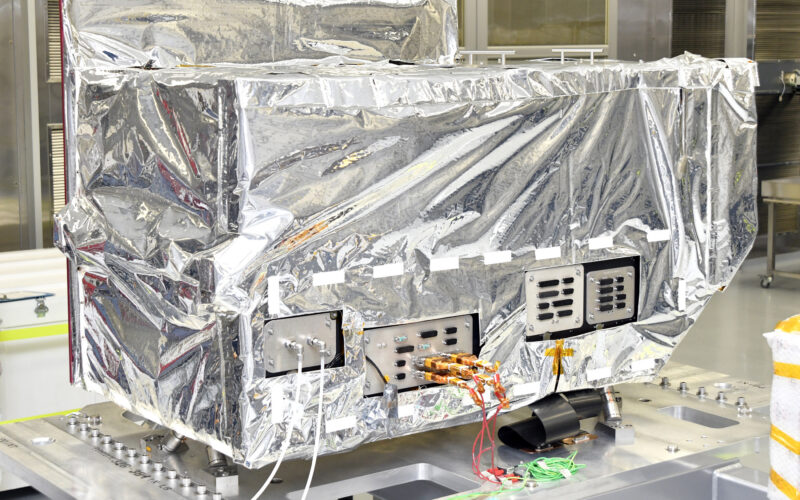
BAE Systems plc (LON: BA) has delivered key flight hardware for the United States Space Force’s Next Generation Overhead Persistent Infrared Polar program, keeping the missile warning payload on track for full assembly ahead of a planned 2028 launch. The British defence and aerospace group supplied the sensor subassembly and sensor system controller components for Flight Unit 1, a payload intended to strengthen missile warning, technical intelligence and battlespace characterization from polar orbit. The delivery matters because space-based infrared surveillance is becoming a higher-priority layer in United States missile defence architecture as ballistic and hypersonic threats become harder to track from traditional systems alone. For investors, the update reinforces BAE Systems’ exposure to long-cycle defence electronics, space payloads and mission-critical government programs at a time when the stock has pulled back from its March 2026 high but remains supported by a large order backlog and elevated defence spending expectations.
Why does BAE Systems’ Space Force hardware delivery matter for missile warning strategy?
BAE Systems’ delivery is not a headline-grabbing platform win in the style of a fighter jet, frigate or combat vehicle order, but it sits inside one of the most strategically sensitive areas of modern defence procurement. The Next Generation Overhead Persistent Infrared Polar program is designed to improve missile warning coverage across polar regions, where launch trajectories and surveillance demands create a different operational challenge from conventional geosynchronous coverage. That makes the sensor payload a core part of the early-warning chain rather than a peripheral space technology contract.
The sensor subassembly supplied by BAE Systems provides the optics, pointing mechanism, controlling electronics and electrical bus interface to the spacecraft. In plain English, that means BAE Systems is supplying hardware that helps the satellite detect, aim, control and communicate critical sensor information. The sensor system controller also interfaces with the space vehicle, receives commands, provides telemetry, manages power conversion and supports mirror direction with high accuracy. These are not commodity parts. They are the components that help determine whether a satellite payload can perform reliably in a mission where timing, sensitivity and resilience matter.
The strategic relevance is amplified by the changing missile threat environment. Hypersonic weapons, manoeuvrable glide vehicles and more complex ballistic missile profiles place higher pressure on early-warning systems to detect heat signatures, track trajectories and feed decision-makers with usable data quickly. Space-based infrared systems are valuable because they can observe launches and heat events across wide areas, including regions where ground-based radar may face geography, line-of-sight or deployment constraints. For the United States Space Force, the polar layer is especially important because northern trajectories remain central to missile warning calculations.

How does the Next Generation Overhead Persistent Infrared Polar program fit into U.S. defence modernization?
The Next Generation Overhead Persistent Infrared Polar program belongs to a broader shift in United States defence modernization from platform-centric procurement toward layered sensing, resilient command networks and space-enabled deterrence. Missile warning is no longer simply a question of detecting a launch. It is increasingly about integrating detection, characterization, data routing and decision support across multiple domains. That is why payload suppliers such as BAE Systems can become strategically important even when they are not the prime contractor.
The program also reflects the growing importance of polar coverage within U.S. missile warning architecture. Polar satellites are expected to support surveillance of the Northern Hemisphere, where strategic missile pathways can stress existing warning networks. If the payload performs as intended, it should contribute to more persistent detection and better technical intelligence. If delays or budget pressure disrupt the program, the risk is not just a missed launch date. It could create capability gaps in a part of the missile warning network that policymakers and military planners increasingly view as essential.
There is also a procurement signal here. BAE Systems said the hardware had originally been designed for the geosynchronous Earth orbit element of the program but was repurposed for the polar mission because of its adaptable design. That detail matters because defence agencies are under pressure to move faster without sacrificing mission assurance. Repurposing proven hardware can reduce schedule risk, but it also places a premium on engineering flexibility. In a defence market where timelines often stretch and costs climb, adaptable designs are becoming a competitive advantage rather than a nice extra.
What does the payload milestone reveal about BAE Systems’ space and electronics strategy?
The delivery reinforces BAE Systems’ positioning as a supplier of high-value mission electronics and space payload technologies rather than only a manufacturer of traditional defence platforms. The company is often discussed through the lens of combat vehicles, munitions, submarines, combat air and naval systems. The Space Force milestone highlights a quieter but increasingly important part of the portfolio: electronic systems, sensors, controls and intelligence-enabling hardware that sit inside larger defence architectures.
That matters for valuation because electronics and mission systems can offer a different quality of defence exposure from pure platform production. Large military platforms tend to involve long procurement cycles, political scrutiny and heavy industrial capacity demands. Mission electronics can also carry execution complexity, but they often attach to recurring modernization cycles across air, land, sea and space assets. As militaries upgrade sensing, targeting, communications and autonomy, suppliers with proven electronics capabilities can benefit from demand across multiple platforms and domains.
The second flight unit for the Next Generation Overhead Persistent Infrared Polar mission is already being built by BAE Systems, with delivery planned to support a 2030 launch. That gives the announcement more weight than a one-off delivery update. It suggests the company has a continuing role in the program’s execution path. For institutional investors, repeat-unit delivery matters because it creates visibility, though the financial scale of this specific milestone has not been disclosed. The bigger investment question is whether BAE Systems can keep converting technical credibility into durable positions across United States space defence programs.
Why are investors watching BAE Systems stock despite strong defence-sector demand?
BAE Systems shares have been under pressure in recent weeks despite the broader defence supercycle narrative. The London-listed stock traded around 1,850p to 1,877.5p on May 15, 2026, down from a 52-week high of 2,360p reached in March. Recent data showed the stock had fallen about 15% over the previous four weeks, although it remained higher over the past twelve months. That pullback does not necessarily weaken the long-term defence thesis, but it does show that investors are becoming more selective after a strong multi-year rally.
The market tension is straightforward. BAE Systems has benefited from rising defence budgets, European rearmament, stronger NATO spending commitments, munition demand, naval programs and global security concerns. However, a high-quality defence story can still face valuation pressure if investors believe near-term expectations have moved too far ahead of execution. A stock that has already rerated sharply needs more than positive headlines. It needs clean delivery, margin resilience, cash conversion and confidence that the order backlog can turn into profitable revenue.
The company entered 2026 with significant momentum. Full-year 2025 results showed a record order backlog of £83.6 billion and management guided to continued sales and profit growth. That backlog gives BAE Systems unusual revenue visibility compared with many industrial companies. The challenge is that backlog is not the same as free cash flow. Defence contractors must manage supply chains, labour availability, inflation, program timing, customer budgets and contract margins. The Space Force hardware milestone is therefore sentiment-positive, but it is most useful as evidence of execution discipline rather than a standalone valuation catalyst.
Could U.S. budget pressure complicate the Next Gen OPIR Polar opportunity for suppliers?
The main risk around the Next Generation Overhead Persistent Infrared Polar program is not whether missile warning is strategically important. The risk is whether budget priorities, schedule trade-offs or changing Space Force architecture decisions alter procurement momentum. Recent reporting has indicated that parts of the polar missile warning program have faced scrutiny in the United States budget process. That does not erase the significance of BAE Systems’ delivery, but it does make execution and political durability more important.
Space defence programs are especially exposed to budget debate because they combine high strategic value with large development costs. Lawmakers, Pentagon planners and service branches must balance missile warning, proliferated satellite constellations, ground systems, launch costs, cyber resilience and broader modernization needs. A program can be technically valid and still face funding pressure if the Department of Defense changes its architecture or seeks alternatives that promise faster deployment or lower lifecycle cost.
For suppliers, this means the most valuable positioning is not simply being attached to one program. It is having technologies that can migrate across architectures. BAE Systems’ ability to repurpose hardware originally designed for a geosynchronous mission into the polar program is therefore a useful strategic signal. If defence space architectures continue to evolve, adaptable payload and control technologies could help BAE Systems remain relevant even if specific program shapes change. In defence procurement, flexibility is not glamour. It is survival with a purchase order attached.
How does BAE Systems compare with other defence contractors in space-based sensing?
BAE Systems is operating in a competitive ecosystem that includes large United States primes, specialist sensor manufacturers, satellite payload suppliers and defence electronics groups. Northrop Grumman Corporation remains central to the broader Next Generation Overhead Persistent Infrared Polar effort, while other United States defence contractors are competing across missile warning, missile tracking, space situational awareness and proliferated low Earth orbit architectures. BAE Systems’ opportunity lies in being a trusted subsystem and payload contributor within these larger mission stacks.
This positioning has advantages and limitations. The advantage is that BAE Systems can participate in strategically important programs without always carrying the full burden of prime contractor risk. High-value components can generate attractive strategic relevance if they are hard to replace, mission-certified and embedded in classified or sensitive architectures. The limitation is that subsystem roles may not deliver the same headline revenue visibility as prime contracts, especially when financial terms are not disclosed.
The broader sector trend still favors BAE Systems. Defence customers are spending more on sensors, electronic warfare, secure communications, intelligence systems and space resilience because modern conflict increasingly depends on information advantage. Platforms still matter, but platforms without sensors and data links are becoming expensive metal with a scheduling problem. BAE Systems has spent years building credibility in electronic systems, and the Space Force delivery helps underline that the company is participating in the shift from hardware-heavy defence procurement to intelligence-enabled defence infrastructure.
What should executives and investors watch next after BAE Systems’ Space Force delivery?
The most important near-term milestone is whether Flight Unit 1 proceeds smoothly through full payload assembly and remains aligned with the planned 2028 launch window. Timely integration would strengthen confidence in BAE Systems’ execution and support the broader program’s schedule credibility. Any delay, redesign or budget disruption would not necessarily reflect directly on BAE Systems, but it could still affect investor interpretation of the space defence opportunity.
The second point to watch is the follow-on flight unit scheduled to support a 2030 launch. Repeat delivery would help demonstrate that BAE Systems is not merely completing legacy work but sustaining a role in future missile warning architecture. That is particularly important if the United States Space Force continues to adjust its missile warning and tracking procurement approach around resilience, polar coverage and proliferated sensing layers.
The third factor is whether BAE Systems can use this program as proof of engineering adaptability across other space and defence electronics opportunities. The repurposing of geosynchronous Earth orbit hardware for the polar mission is a useful message for defence customers looking to compress timelines. If BAE Systems can show that adaptable designs reduce schedule pressure without compromising reliability, the company may strengthen its competitive case across future classified and unclassified space payload competitions.
Key takeaways on what BAE Systems’ Space Force delivery means for defence investors and the missile warning market
- BAE Systems’ flight hardware delivery keeps the Next Generation Overhead Persistent Infrared Polar payload moving toward full assembly ahead of a planned 2028 launch.
- The milestone strengthens BAE Systems’ role in space-based missile warning, a defence category gaining urgency as hypersonic and ballistic threats become harder to track.
- The sensor subassembly and controller components are strategically important because they support optics, pointing, telemetry, power control and payload interface functions.
- The announcement reinforces BAE Systems’ position in mission electronics and space payload systems, not just traditional defence platforms.
- Repurposing hardware from a geosynchronous design to the polar mission highlights engineering flexibility, a valuable trait in compressed defence procurement cycles.
- BAE Systems’ stock pullback from its March 2026 high suggests investors are still weighing valuation, execution and budget risk despite strong defence-sector fundamentals.
- The company’s record backlog supports long-term visibility, but investors will continue to focus on cash conversion, margins and program execution.
- Budget scrutiny around U.S. missile warning programs remains a risk factor, making architecture flexibility and repeat delivery increasingly important.
- The second flight unit planned for the 2030 launch path will be a key indicator of whether BAE Systems can maintain a durable role in the program.
- The broader takeaway is that space-based sensing is becoming a central battleground in defence modernization, and suppliers with proven payload technologies may gain strategic leverage.
Discover more from Business-News-Today.com
Subscribe to get the latest posts sent to your email.

