Lyfe Group, formerly CapsCanada, has introduced a unified corporate identity intended to bring its North and South Americas operations under a single brand while preserving its existing manufacturing, product quality and supply-chain standards. The Dania Beach, Florida-based company said the move is not linked to an acquisition or merger, but to a strategic reorganization of how the business presents itself across pharmaceutical, nutraceutical and dietary supplement markets. The rebrand gives Lyfe Group a broader platform at a time when capsule suppliers are being pushed to support more complex formulation needs, cleaner supply chains and global customer expectations. The shift also signals that the company wants to be seen not only as an empty capsule manufacturer, but as a drug delivery and oral dosage-form solutions provider with room to scale.
Why is CapsCanada rebranding as Lyfe Group at this stage of the capsule market cycle?
CapsCanada’s transition to Lyfe Group appears designed to solve a familiar problem for maturing specialist manufacturers: the legacy brand carries history and trust, but the business has outgrown the narrowness of the name. A company identified primarily with Canada and capsules may find that identity useful for credibility, yet limiting when the business is operating across the Americas, investing in technical service, expanding product lines and serving customers that increasingly need formulation support rather than just capsule supply.
The timing also matters because the pharmaceutical and nutraceutical industries are demanding more from excipient, capsule and dosage-form partners. Capsule suppliers are no longer competing only on unit cost and availability. They are being judged on regulatory documentation, vegetarian and non-gelatin options, delayed-release functionality, colorant choices, technical support, inventory resilience and ability to serve customers from development through commercial scale. A unified corporate identity gives Lyfe Group a cleaner way to package those capabilities under one strategic story.
The decision not to position the name change as the result of a merger or acquisition is also important. Lyfe Group is trying to communicate continuity and expansion at the same time. That can be tricky. Customers in regulated industries care deeply about supply assurance, documentation stability and manufacturing consistency. By stressing that product quality, manufacturing standards and supply-chain arrangements remain intact, Lyfe Group is attempting to reduce customer anxiety while still opening space for a broader market identity.
How does the Lyfe Group identity support expansion beyond traditional empty hard capsules?
The strongest strategic signal in the announcement is that Lyfe Group is not presenting itself only as a capsule vendor. The company describes its business around empty hard capsules, oral dosage-form solutions and advanced drug delivery, which widens the competitive frame. That matters because customers in pharmaceuticals, nutraceuticals and dietary supplements increasingly want formulation partners that can help solve bioavailability, release profile, consumer preference and regulatory challenges.
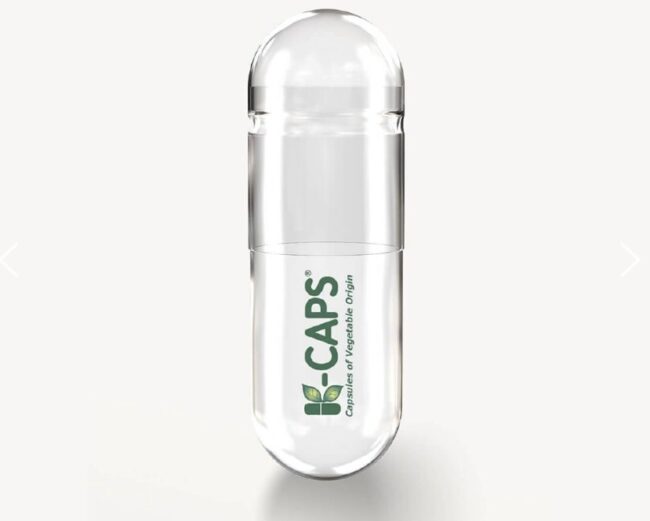
The company’s K-CAPS HPMC vegetarian capsule portfolio sits at the center of that positioning. Hydroxypropyl methylcellulose capsules have become strategically relevant because vegetarian, vegan, religious, dietary and stability considerations have pushed non-gelatin capsules into the mainstream. For nutraceutical brands, the non-gelatin story can support cleaner-label positioning. For pharmaceutical developers, HPMC capsules may support specific formulation needs where moisture sensitivity, compatibility or stability questions influence dosage design.
The newer K-CAPS Natural Colorant Capsules and K-CAPS Delayed Release Capsules also indicate where Lyfe Group wants the market to look. Natural colorant capsules respond to consumer and brand-owner demand for simpler ingredient profiles, while delayed-release capsules speak more directly to functionality. That second category is especially important because delayed-release capabilities move the discussion from container to performance. In a crowded capsule market, the supplier that can credibly support functional delivery has a stronger argument than one selling only shell capacity.
What does the Windsor manufacturing expansion reveal about Lyfe Group’s supply-chain priorities?
Lyfe Group’s recent expansion of K-CAPS HPMC vegetarian capsule manufacturing in Windsor, Ontario, is one of the more commercially important details in the announcement. In capsule manufacturing, capacity is not just an operational metric. It is a trust signal. Pharmaceutical and nutraceutical customers want suppliers that can handle demand swings, maintain quality systems and avoid exposing brands to bottlenecks that can interrupt product launches or commercial supply.
The Windsor investment also strengthens the North American manufacturing angle at a time when customers are paying closer attention to geographic resilience. The pandemic-era supply-chain shock may be fading from headlines, but procurement teams have not forgotten the lesson. Companies that depend on globally distributed ingredients, capsules and packaging components are still asking where supply comes from, how quickly it can be replenished and whether backup capacity exists. Lyfe Group’s Canadian manufacturing base gives the rebranded company a useful answer for customers seeking regional supply optionality.
There is also a competitive implication. Larger capsule suppliers often compete on global scale, broad portfolios and multinational customer relationships. Smaller or mid-sized specialists must find ways to look dependable without appearing rigid. By tying the new identity to manufacturing investment, technical service and supply-chain reliability, Lyfe Group is trying to occupy a middle ground where it can offer specialization with enough operating scale to reassure regulated customers.
Why does the Dania Beach distribution headquarters matter for pharmaceutical and nutraceutical customers?
Lyfe Group’s relocation of its distribution headquarters to a 130,000-square-foot facility in Dania Beach, Florida, supports the same strategic message as the Windsor expansion, but from a logistics and customer-service angle. Distribution infrastructure matters because capsule customers often operate under tight production schedules. Even when the capsule itself is a small component of the finished product, a supply delay can disrupt manufacturing lines, commercial launches or replenishment cycles.
A larger distribution hub can improve inventory management, order responsiveness and regional reach across the Americas. For customers in pharmaceuticals and dietary supplements, that can translate into fewer procurement headaches and better coordination between development-stage needs and commercial production. The facility also gives Lyfe Group a physical anchor for its rebranded North and South Americas structure, helping the company make the new identity feel operational rather than cosmetic.
The risk, however, is that logistics investment only creates strategic advantage if it improves measurable customer outcomes. Faster fulfillment, better stock visibility, stronger technical support integration and fewer supply interruptions are the real tests. A rebrand may create visibility, but execution will decide whether customers experience Lyfe Group as a more capable partner or simply as CapsCanada with a fresh coat of corporate paint.
How could Lyfe Group’s technical library change customer relationships in oral dosage development?
The launch of an extensive digital technical library points to a broader shift in how capsule suppliers engage with customers. In an increasingly technical market, documentation, formulation guidance and regulatory support can become part of the product. Customers do not only need capsules; they need answers on compatibility, stability, processing, filling, labeling, storage and market-specific requirements.
For pharmaceutical customers, technical documentation can support development workflows, regulatory submissions and quality reviews. For nutraceutical and dietary supplement brands, it can help accelerate product development and reduce avoidable formulation mistakes. A strong digital technical library can also lower the burden on sales teams by giving formulation scientists, procurement managers and quality teams access to structured information earlier in the decision process.
This matters because the buying journey for specialized ingredients and dosage components is becoming more technical and more self-directed. Customers may shortlist suppliers before ever speaking to a representative. By investing in digital technical resources, Lyfe Group is positioning itself for a market in which discoverability, documentation depth and technical credibility can influence supplier selection. In other words, the website is no longer just a brochure. It is part of the sales and compliance infrastructure.
What competitive signal does Lyfe Group send to capsule suppliers and drug delivery partners?
Lyfe Group’s rebrand signals that capsule manufacturing is becoming a more strategically layered category. The market still depends on high-quality gelatin and non-gelatin capsule supply, but differentiation increasingly comes from a combination of formulation support, specialized capsule technologies, regulatory readiness and distribution reliability. Lyfe Group is trying to move its customer promise into that wider field.
For incumbent capsule suppliers, the message is that mid-sized or specialist players are not standing still. A company with more than four decades of manufacturing history can use that legacy as a credibility base while repositioning around innovation, service and regional scale. That creates competitive pressure in segments where customers may prefer a supplier that combines technical responsiveness with enough manufacturing depth to support growth.
For Lyfe Group, the challenge is to avoid making the new identity too broad. “Drug delivery solutions” is a competitive space filled with companies offering coatings, excipients, delivery platforms, softgels, capsules, modified-release systems and formulation services. Lyfe Group will need to show where it has defensible strength. The most credible path is likely through its capsule technology portfolio, North American manufacturing base, Americas distribution network and customer support model, rather than through vague claims of being a full-spectrum drug delivery platform.
What execution risks could affect the success of the Lyfe Group rebrand?
The first execution risk is customer confusion. CapsCanada has built recognition over four decades, and changing the corporate identity introduces a transition period in which customers, distributors and procurement teams must update records, understand continuity and trust that regulatory documentation remains stable. Lyfe Group has already tried to address this by making clear that the rebrand does not involve an acquisition or merger, but the practical work of brand migration will continue through 2026.
The second risk is whether the new identity can create commercial momentum beyond design and messaging. Rebrands work best when they coincide with a clear operating shift. Lyfe Group has tangible elements to point to, including manufacturing expansion, a new distribution headquarters, a digital technical library and new capsule products. Still, the company will need to convert these into stronger customer acquisition, deeper account penetration and improved global visibility.
The third risk is market competition. Capsule and oral dosage suppliers operate in a market where quality expectations are high, switching suppliers can be complex, and large customers may prefer established global vendors with broad regulatory track records. Lyfe Group’s opportunity is to use its legacy while sharpening its specialization. Its risk is being caught between larger global competitors and smaller niche innovators unless the company clearly defines where it offers superior value.
What does Lyfe Group’s next chapter mean for the wider capsule and dosage-form industry?
Lyfe Group’s transition from CapsCanada reflects a broader industry trend in which component manufacturers are repositioning as strategic formulation and delivery partners. This is happening because pharmaceutical, nutraceutical and dietary supplement companies want fewer weak links in their product development and manufacturing chains. Capsule suppliers that can provide quality, technical support, differentiated materials and reliable fulfillment are more likely to earn long-term customer relationships.
The rebrand also points to the rising importance of non-gelatin, vegetarian and functional capsule formats. Consumer preferences, religious and dietary requirements, stability needs and formulation complexity are all pushing the category beyond traditional gelatin capsules. Suppliers that can combine HPMC capsule capacity with delayed-release and natural-colorant options may be better placed to serve both regulated drug developers and fast-moving supplement brands.
The bigger implication is that the capsule market is becoming less invisible. For years, capsules were treated as commodity-like inputs unless something went wrong. Now, as dosage-form strategy, supply resilience and clean-label requirements become more important, capsule suppliers have a stronger claim to strategic relevance. Lyfe Group’s rebrand is therefore not just a name change. It is a bet that the market will reward suppliers that can look more integrated, more technical and more scalable.
Key takeaways on what Lyfe Group’s rebrand means for capsule manufacturing and drug delivery markets
- Lyfe Group’s rebrand gives CapsCanada a broader identity that better reflects its ambitions in oral dosage-form solutions, not just empty capsule manufacturing.
- The company is trying to preserve legacy trust while reducing regional brand limitations associated with the CapsCanada name.
- The absence of a merger or acquisition helps reassure pharmaceutical and nutraceutical customers that supply continuity and quality systems remain intact.
- The Windsor, Ontario expansion strengthens Lyfe Group’s North American manufacturing story at a time when customers are prioritizing supply-chain resilience.
- The Dania Beach, Florida distribution headquarters gives the company a stronger logistics platform for serving customers across the Americas.
- K-CAPS HPMC vegetarian capsules position Lyfe Group within the growing demand for non-gelatin and cleaner-label dosage formats.
- Natural colorant and delayed-release capsule products show the company’s effort to compete on formulation value rather than commodity capsule supply alone.
- The digital technical library could improve customer engagement by making formulation, regulatory and product information easier to access during development.
- The main execution challenge is proving that the rebrand creates measurable customer value, not only cleaner corporate messaging.
- The wider industry implication is clear: capsule suppliers are increasingly competing as technical partners in drug delivery and nutraceutical formulation.
Discover more from Business-News-Today.com
Subscribe to get the latest posts sent to your email.