Australia will commit more than A$10 billion, about US$7 billion, to expand fuel and fertiliser security, create a permanent government-owned fuel reserve, and lift domestic fuel stockholding requirements after global supply disruptions exposed the country’s dependence on imported liquid fuels.
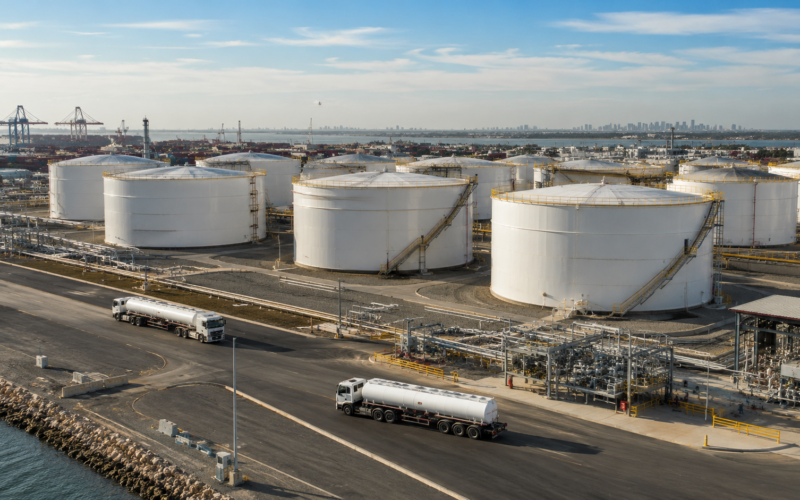
The Australian Fuel Security and Resilience package, to be included in the next federal budget, will establish an Australian Fuel Security Reserve of around one billion litres and expand onshore storage so the country can hold at least 50 days of diesel and aviation fuel supply. The plan marks a major shift in Australia’s fuel security policy because the government-owned reserve will sit alongside private-sector stockholding obligations rather than relying solely on refiners and importers to manage domestic inventories.
The package includes A$7.5 billion for a Fuel and Fertiliser Security Facility, which will use loans, equity, guarantees, insurance, and price support to increase fuel and fertiliser supply and storage. A further A$3.2 billion will be used to establish the Australian Fuel Security Reserve, focused on long-term diesel and aviation fuel storage and support for essential users during regional stockouts or future supply crises.
The Albanese government will also allocate A$10 million for feasibility studies into new or expanded fuel refining capabilities, co-funded with state and territory governments, and A$34.7 million over four years to support the ongoing management of Australia’s fuel security system. The announcement comes after recent global instability placed renewed attention on maritime fuel supply routes, regional import dependence, and Australia’s limited domestic refining capacity.
Why is Australia creating a government-owned fuel reserve after years of private stockholding reliance?
Australia’s decision to create a government-owned fuel reserve reflects a structural reassessment of how the country manages energy security in a volatile global environment. For years, Australia’s fuel security system has relied heavily on commercial inventories held by refiners and importers. The new policy adds a direct public reserve to that framework, giving the federal government a larger operational role in fuel supply resilience.
The government has framed the package as a measure to protect energy sovereignty and national economic continuity. Diesel, jet fuel, and petrol are critical to transport, mining, agriculture, aviation, freight, defence, emergency services, and regional supply chains. A prolonged disruption in imported refined fuel can quickly move from a market problem to a national logistics problem, particularly for a geographically large country with long internal freight routes and remote regional communities.
The Australian Fuel Security Reserve will focus on diesel and aviation fuel, two categories with direct importance for freight, regional connectivity, aviation services, agriculture, mining, and emergency response. By creating a reserve of around one billion litres, the federal government is seeking to build a stockpile that can be used during severe or prolonged disruption rather than leaving crisis response entirely dependent on private inventory decisions.
The policy also changes the balance between commercial efficiency and national resilience. Commercial fuel suppliers generally have incentives to minimise excess inventory because storage is costly, capital-intensive, and exposed to price movements. Government reserves, by contrast, are designed to hold stock for strategic use even when short-term commercial returns are limited. That is the core policy shift behind the Australian Fuel Security and Resilience package.
How will the A$7.5 billion Fuel and Fertiliser Security Facility support supply and storage?
The A$7.5 billion Fuel and Fertiliser Security Facility is designed to increase fuel and fertiliser supply by using public finance tools rather than direct grants alone. The facility may provide loans, equity, guarantees, insurance, and price support to help expand supply and storage capacity. That structure suggests the government wants to mobilise private-sector participation while reducing the financial risk of investment in critical supply infrastructure.
The inclusion of fertiliser in the facility is significant because the package is not limited to transport fuel. Fertiliser supply is tied directly to food security, agricultural productivity, and regional export competitiveness. Australia’s farming sector depends on stable access to fertiliser inputs, and global energy shocks can affect fertiliser prices and availability because natural gas and other energy inputs are central to fertiliser production and logistics.
For fuel markets, the facility is intended to support new and refurbished storage infrastructure, stronger import arrangements, and supply resilience during periods of global disruption. The package gives the federal government tools to underwrite or purchase fuel, support storage, and trade stocks when required. That makes the framework more flexible than a simple static reserve because it can be used to manage both physical availability and commercial risk.
The facility also sits within a broader budget strategy. By using financial instruments such as loans and guarantees, the government can support infrastructure and supply capacity without treating every dollar as direct recurrent spending. That approach may attract scrutiny over fiscal transparency, but it also reflects how governments often structure large-scale strategic infrastructure support when national resilience is the policy objective.
What does the new 50-day fuel target mean for refiners, importers, and essential users?
The Australian government plans to lift the Minimum Stockholding Obligation by around 10 days for every type of fuel. That means refiners and importers will be required to hold more aviation fuel, petrol, and diesel over time. The increase will be implemented progressively, supported by investment in new and refurbished storage capacity.
The stated objective is to expand Australia’s onshore fuel reserves to at least 50 days of diesel and aviation fuel supply and storage. This does not mean every fuel category will immediately reach the same level at the same pace. It means the government is moving the national system toward a larger buffer, especially for the fuels most exposed to critical supply risks.
For refiners and importers, higher stockholding obligations can increase working capital needs and storage costs. Fuel held in reserve is capital tied up in tanks rather than sold immediately into the market. The government’s financial support mechanisms are partly designed to offset that challenge by helping industry build or access storage capacity.
For essential users, the policy is intended to reduce the risk of regional stockouts and supply constraints during another crisis. Essential users include sectors such as freight, emergency services, agriculture, mining, aviation, health logistics, and remote community supply networks. In practice, the reserve is likely to matter most during periods when normal commercial supply chains become disrupted and government intervention is needed to prioritise critical fuel access.
Why does Australia’s fuel security policy matter for the Indo-Pacific and global supply chains?
Australia’s fuel security policy has regional importance because the country is deeply connected to Indo-Pacific shipping routes and refined fuel markets. Australia imports a large share of its liquid fuel needs, and disruptions in maritime chokepoints, refinery hubs, or regional freight lanes can quickly affect domestic availability and prices.
The policy also matters because Australia is a major commodity exporter, agricultural producer, and defence partner in the Indo-Pacific. Mining exports, grain production, livestock logistics, port operations, and aviation links all depend on liquid fuels. A domestic fuel shock in Australia would not remain a purely local issue because it could affect regional supply chains, commodity flows, and strategic mobility.
The Australian government’s decision to build a public reserve also reflects a wider global trend. Energy security has returned to the centre of public policy after repeated shocks involving war, sanctions, maritime disruption, pandemic-era logistics stress, and inflationary pressure. Governments are increasingly reassessing whether lean inventory models are adequate for essential goods.
The International Energy Agency requires member countries to hold oil stocks equivalent to at least 90 days of net oil imports, although countries have flexibility in how they meet stockholding commitments. Australia’s new 50-day domestic fuel supply target is not the same metric as the International Energy Agency’s net import obligation, but the policy direction is consistent with a broader push to strengthen emergency response capacity and reduce vulnerability to imported fuel disruption.
Can new refining feasibility studies change Australia’s long-term fuel security position?
The A$10 million allocation for feasibility studies into new or expanded fuel refining capabilities is a smaller part of the package, but it carries strategic significance. Australia’s refining capacity has declined over the past decade, leaving the country more reliant on imported refined products rather than domestically processed crude or locally refined fuels.
The feasibility studies will be co-funded with state and territory governments, which indicates that any future refining expansion would require jurisdictional coordination. Refining projects involve land use, environmental approvals, capital investment, feedstock access, workforce availability, and long-term demand assumptions. Those constraints make new refining capacity more complex than simply building additional storage tanks.
The government has said the studies will build on work with current refinery operators to retain existing refining capability beyond 2030. That suggests the immediate policy focus is not only on building entirely new refining assets, but also on evaluating whether existing facilities can be sustained, expanded, or adapted to improve national resilience.
The refining question is politically and economically difficult because Australia is also pursuing decarbonisation and transport electrification. Over the long term, electric vehicles, cleaner freight technologies, sustainable aviation fuel, and renewable energy deployment may reduce dependence on imported petroleum products. Over the medium term, however, diesel and aviation fuel remain essential to national logistics. That tension explains why the government is pairing storage and reserve measures with feasibility studies rather than announcing a large new refining buildout immediately.
What are the policy risks and budget questions around Australia’s fuel reserve plan?
The Australian Fuel Security and Resilience package is likely to attract scrutiny over cost, implementation, storage location, industry participation, and whether the reserve will materially reduce consumer exposure to fuel price shocks. A strategic reserve improves availability during disruption, but it does not automatically lower petrol prices at the bowser during normal market conditions.
The package also raises questions about how the government will manage reserve rotation, fuel quality, storage contracts, regional allocation, and release triggers. Fuel stockpiles require active management because products degrade over time and must be cycled through the market. A government-owned reserve therefore needs governance rules, transparent release criteria, and coordination with industry.
Budget treatment may also become part of the political debate. Large financial facilities using loans, guarantees, equity, and insurance can support resilience while spreading fiscal impact, but they can also make the true risk exposure harder for the public to assess. The policy will need detailed budget documentation to show how much direct spending, contingent liability, and commercial exposure the Commonwealth is accepting.
The broader policy question is whether Australia is building a bridge between today’s fossil fuel dependence and tomorrow’s cleaner energy system, or whether it risks locking in more infrastructure around fuels that may decline over time. The practical answer is likely to be mixed. Australia still needs diesel and aviation fuel resilience now, but the long-term value of the package will depend on whether it is integrated with electrification, renewable fuels, grid investment, and industrial energy policy.
What happens next as Australia prepares to include fuel security measures in the federal budget?
The next step is the release of more details in the federal budget, including implementation timelines, financing arrangements, industry consultation plans, and the structure of the Australian Fuel Security Reserve. The government will consult on how the reserve can underwrite or purchase fuel, support storage, and trade stocks during severe or prolonged supply disruption.
Refiners and importers will also need clarity on how the uplift to the Minimum Stockholding Obligation will be phased in. Industry will want to know how quickly obligations rise, which products are covered, what storage support is available, and how compliance will be measured.
State and territory governments will be involved in feasibility studies for new or expanded refining capabilities. That process could identify whether any viable refinery investment proposals are ready for deeper assessment, especially where state governments see strategic or employment benefits.
For Australia’s fuel security policy, the announcement is a clear pivot from short-term crisis management to structural resilience planning. The country is not abandoning market-based supply chains, but it is placing a larger public backstop behind them. In a world where fuel security, food security, maritime disruption, and geopolitical risk increasingly overlap, Australia’s new reserve plan shows how energy policy is moving back into the national security column.
What are the key takeaways from Australia’s A$10 billion fuel security reserve plan?
- Australia will include an Australian Fuel Security and Resilience package worth more than A$10 billion in the next federal budget.
- The plan includes A$7.5 billion for a Fuel and Fertiliser Security Facility using loans, equity, guarantees, insurance, and price support.
- The government will allocate A$3.2 billion to establish a government-owned Australian Fuel Security Reserve of around one billion litres.
- The Minimum Stockholding Obligation will be lifted by around 10 days for every fuel type, with refiners and importers required to hold more stock.
- The package is designed to expand Australia’s onshore fuel reserves to at least 50 days of diesel and aviation fuel supply and storage.
Discover more from Business-News-Today.com
Subscribe to get the latest posts sent to your email.