Kaoko Metals Limited (ASX: KAO) commenced trading on the Australian Securities Exchange on Thursday, 7 May 2026, after closing an oversubscribed A$6.5 million initial public offering at A$0.20 per share. The Perth-based explorer enters the market with an indicative undiluted capitalisation of roughly A$12.1 million, around A$6.8 million in cash, and a two-asset Namibian copper portfolio anchored by the Chalkos Copper-Silver Project in the Kaoko Copper Belt and the Karibib Copper-Gold-Tungsten Project in the Damara Belt. Managing Director Gerard O’Donovan, the former Executive Director of Sun Silver and previously part of Pilbara Minerals’ management team, confirmed maiden drilling at both projects is imminent. The listing arrives at a moment when London Metal Exchange copper has been trading near record territory above US$11,000 per tonne, with J.P. Morgan and Bank of America both forecasting a structural refined-copper deficit through 2026.
Why is Kaoko Metals listing on the ASX in May 2026 with a A$12 million market capitalisation, and what does this signal about the appetite for junior copper exploration capital?
Kaoko Metals’s debut is not a routine micro-cap listing. The IPO closed oversubscribed during a window in which several junior exploration floats have been pulled, repriced, or delayed because of risk-off conditions in small-cap resources. That the company filled its A$6.5 million ceiling at the top of its A$5.5 million to A$6.5 million range, rather than scaling back, is a measurable read on institutional and retail willingness to fund Namibian copper exposure specifically.
The listing also lands inside a particular price regime for the underlying commodity. LME copper hit historical highs above US$13,000 per tonne in January 2026 before settling into a US$10,000 to US$11,000 range, with J.P. Morgan modelling a refined-copper deficit of roughly 330,000 tonnes for the year and Bank of America raising its 2026 average forecast to about US$11,313 per tonne. The International Energy Agency projects the copper market could face a 30% supply gap by 2035 against current project pipelines, citing 17-year average lead times from discovery to production and a 40% decline in average global copper ore grades since 1991. For an explorer raising A$6.5 million today, that macro setup is the entire pitch: capital is flowing toward early-stage copper because the deficit equation cannot be solved by existing mines alone.
The competitive read is more interesting than the headline raise. Kaoko Metals is listing into a peer group where Cyprium Metals is restarting Nifty toward first cathode in the September 2026 quarter, American West Metals just placed A$10 million, and Stellar Resources cleared A$22.1 million for tin. Capital is being recycled through the small-cap copper and base metals shelf at speed. Kaoko Metals has secured its slot at the explorer end, but the burden of proof is on drill results, not on macro narrative.
What does the Chalkos Copper-Silver Project actually contain, and how credible is the comparison to the Otavi Fold Belt and Central African Copperbelt?
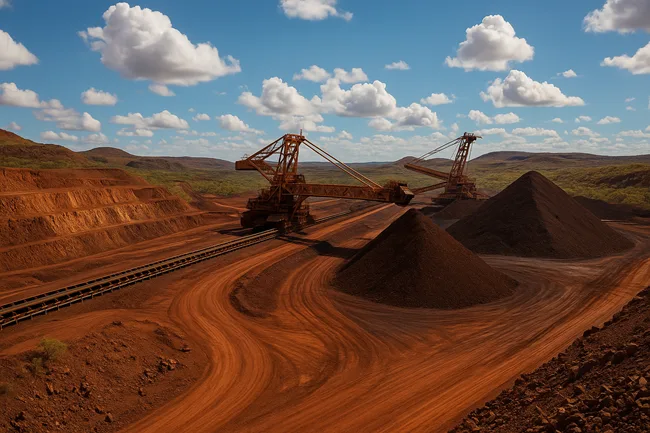
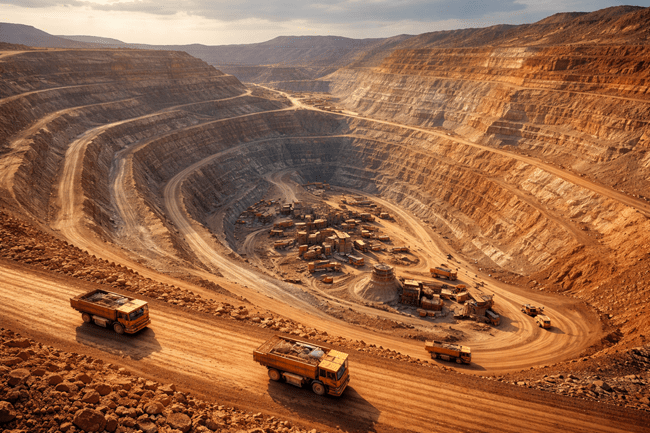
Chalkos is the asset doing most of the valuation work in the Kaoko Metals story. The project covers approximately 80,000 hectares within the Kaoko Copper Belt in north-western Namibia, a sediment-hosted system that the company and its peers are positioning as analogous to the Central African Copperbelt that hosts Glencore and Barrick operations across Zambia and the Democratic Republic of Congo. Sediment-hosted deposits account for roughly 20% of global copper supply and tend to deliver tier-one scale and grade when they hit.
The headline numbers from surface sampling at Chalkos are unusually strong for a pre-drill explorer. Rock chip results returned grades up to 69.6% copper and 2,030 grams per tonne silver, with 52.7% copper and 448 grams per tonne silver at the Otniel prospect and 26.3% copper and 769 grams per tonne silver at Donkey Hill. Continuous outcropping mineralisation has been mapped along about 700 metres of a defined 20-kilometre strike, with a further 20 kilometres of prospective ground unexplored. Early metallurgical testwork has produced copper recoveries of up to 89% via acid leaching from head grades of 7.91% and 10.06%.
Two qualifications belong in the read. Surface rock chip grades, however eye-catching, are a guide to the presence of mineralisation, not to its grade or scale at depth. Many junior explorers have published 60%-plus surface grades that compressed sharply once drilling defined the actual orebody. The second qualification is that proximity arguments, while geologically defensible, do not transfer endowment. The historical Tsumeb mine produced 1.7 million tonnes at 4.3% copper and sits in the same broader Otavi Fold Belt, but that is regional context rather than a direct read across to Chalkos. Midas Minerals, located east of Chalkos, has provided the most concrete validation, publishing a maiden inferred resource of 10.5 million tonnes at 1.6% copper and 21 grams per tonne silver and reporting intercepts including 50 metres at 5.55% copper and more than 125 grams per tonne silver at the T-13 target. That is the closest peer benchmark, and it is the reference point retail investors will use to judge Kaoko Metals’s first drill returns.
How does the Karibib Copper-Gold-Tungsten earn-in fit alongside Chalkos, and what is the strategic logic of a multi-commodity Damara Belt position?
The Karibib Project sits in the Damara Belt, a more established Namibian mining province that hosts the Navachab Gold Mine and the Twin Hills Gold Project. Kaoko Metals holds an earn-in pathway to up to 85% ownership through staged investment milestones, an arrangement originally seeded by Arcadia Minerals’s 2023 work that returned 4 metres at 1.98% copper, 0.92 grams per tonne gold, and 0.72% tungsten from 9 metres downhole.
Strategically, Karibib serves three functions for a small explorer. It diversifies commodity exposure across copper, gold, and tungsten, hedging against any single thematic rotation. It sits in a more established jurisdiction with better infrastructure and proven resource definition by neighbouring operators, lowering geological risk relative to a frontier-only portfolio. And it reduces capital intensity through the staged earn-in, allowing Kaoko Metals to allocate the bulk of its A$6.8 million treasury toward Chalkos drilling while keeping Karibib optionality alive on a milestone basis.
The execution risk is real. Tungsten is a strategically significant but commercially niche metal where Western supply chains remain concentrated and Chinese export controls have shaped pricing. A copper-gold-tungsten polymetallic deposit complicates metallurgical flowsheets and downstream processing economics. For Kaoko Metals to convert Karibib into balance-sheet value, it needs to define a primary commodity within the deposit and demonstrate that the secondary metals are genuine credits rather than processing complications.
What does the Kaoko Metals leadership bench tell investors about execution capability and likely capital markets cadence?
The board composition is a deliberate signal. Non-Executive Chair Mark Thompson is the founder and former Managing Director of Talga Group, the ASX-listed European battery anode materials company that grew from a Perth small-cap into a multi-jurisdictional development story. Managing Director and CEO Gerard O’Donovan was previously Executive Director of Sun Silver and held management roles at Pilbara Minerals during its Pilgangoora development phase. Non-Executive Director Jody Dahrouge brings technical depth as President of Dahrouge Geological Consulting, a firm with extensive African exploration experience.
The implication for investors is that Kaoko Metals is being run by people who have taken explorers through the discovery, capital raising, and re-rating cycles before. That does not guarantee discovery, but it does signal awareness of the market mechanics that determine whether good drilling results translate into share-price re-ratings or stall in low-liquidity oblivion. The Talga Group connection through Mark Thompson is particularly relevant because Talga’s progression from explorer to developer, despite extended timelines, demonstrates the kind of patient capital and serial raising capability a Namibian copper portfolio is likely to require.
The flip side is that experienced boards also carry style preferences. Gerard O’Donovan’s Sun Silver background and Mark Thompson’s Talga history both involved aggressive news flow management and frequent capital markets activity. Investors should expect continuous announcement cadence, multiple capital raises across the discovery phase, and dilution as drilling expands. That is the normal cost structure for a junior explorer pursuing district-scale targets, but it should be priced in rather than discovered later.
What are the immediate catalysts and risks investors should watch in the first six months of Kaoko Metals trading?
The catalyst list is concrete and time-defined. Field mobilisation is expected within weeks of listing, with maiden RC drilling planned at Chalkos starting at the Otniel prospect and progressing to Donkey Hill, alongside a parallel drilling programme at Karibib. Geological mapping, geochemistry, and geophysical surveys will run alongside the rig work, generating supplementary news flow. The first set of assays from Chalkos will be the single most important data release in the company’s near-term history because it will either validate or compress the surface-grade story that anchors current valuation.
Risk vectors cluster across three axes. Geological risk is the dominant concern: surface mineralisation does not always translate to economic intercepts at drill depth, and the Kaoko Copper Belt remains under-tested by modern exploration techniques. Capital risk is structural for any explorer with a A$12 million market capitalisation and A$6.8 million treasury. Drilling at two projects will burn cash quickly, and unless early results trigger a re-rating that supports a follow-on raise at a premium, dilution becomes the financing path of last resort. Macro risk is the most unpredictable element. Copper has been trading near records but Goldman Sachs forecasts the LME price to remain in a US$10,000 to US$11,000 range in 2026 with downside risk if Chinese demand softens, and any sustained pullback would compress the entire junior copper sector regardless of project quality.
Jurisdictional risk in Namibia is comparatively low. The country has a stable mining code, established permitting infrastructure, and both Kaoko Metals projects are fully permitted for drilling. That removes one of the larger variables that typically bedevils African explorers and concentrates the risk back onto pure exploration outcomes.
Key takeaways on what the Kaoko Metals listing means for the company, its competitors, and the junior copper sector
- Kaoko Metals has converted strong copper macro sentiment into a fully funded A$6.5 million IPO at the top of its range, securing roughly A$6.8 million in cash and an indicative A$12.1 million market capitalisation to begin a maiden drill campaign across two Namibian projects.
- The listing validates investor appetite for early-stage copper exposure during a market window when LME copper has traded near record highs and J.P. Morgan, Bank of America, and the IEA are all flagging a multi-year structural deficit.
- Chalkos is the valuation anchor, with surface grades of 69.6% copper and 2,030 grams per tonne silver, a 700-metre mapped outcrop within a 20-kilometre defined strike, and 89% copper recoveries from early metallurgical testwork.
- Midas Minerals’s maiden Otavi resource of 10.5 million tonnes at 1.6% copper and 21 grams per tonne silver provides the closest peer benchmark for what a successful Chalkos discovery could resemble, though geological proximity does not guarantee equivalent endowment.
- The Karibib earn-in for up to 85% adds copper, gold, and tungsten optionality in the more established Damara Belt, with capital intensity managed through staged milestones rather than upfront commitment.
- Leadership credibility runs through Mark Thompson’s Talga Group history and Gerard O’Donovan’s Sun Silver and Pilbara Minerals experience, signalling a board that understands explorer-to-developer capital markets cadence.
- Investors should expect frequent news flow, recurring capital raises, and material dilution risk as drilling expands beyond the maiden programme, regardless of result quality.
- The first Chalkos assays will be the single most important catalyst within six months and will determine whether Kaoko Metals re-rates to a discovery valuation or compresses into the long tail of underperforming juniors.
- Macro tailwinds are real but already partly reflected in copper prices; Goldman Sachs’s US$10,000 to US$11,000 LME range forecast for 2026 leaves limited room for further commodity-driven multiple expansion absent demonstrable drilling success.
- For the broader ASX junior copper peer group, Kaoko Metals’s oversubscribed raise sets a useful precedent that quality Namibian and African copper exposure can clear the market in current conditions, supporting upcoming float pipelines from competing explorers.
Discover more from Business-News-Today.com
Subscribe to get the latest posts sent to your email.