






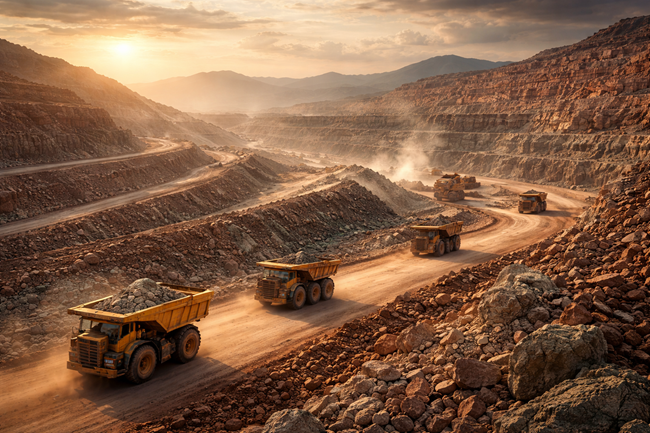
BHP Group Limited (ASX: BHP) jumped 3.4% in Thursday’s morning session, leading the broad mining rally that pushed the S&P/ASX 200 to a fresh two-week high. The world’s largest diversified miner is now trading near A$56.40, within striking distance of its all-time high of A$59.39 set on 3 March 2026, with copper firmly established as its largest profit contributor. The next major catalyst is BHP’s full-year results on 17 August 2026, with the immediate test being whether copper and iron ore price action confirms the equity move over the next two weeks.
Why is BHP Group leading the ASX 200 mining rally when base metals on the LME are largely flat?
The standout feature of Thursday’s session is that BHP’s 3.4% move is not being supported by fresh action in copper or iron ore futures. London Metal Exchange base metals and Asian futures are broadly flat into the Sydney open, which means the buying is sentiment-led rather than priced off a hard commodity move. For retail investors watching the ticker, this distinction matters because sentiment-led rallies can reverse quickly if commodity prices fail to confirm within two to three sessions.
The rotation reflects institutional investors unwinding underweight positions in resources after the March quarter drawdown, when the materials sector fell roughly 15% during the Iran conflict escalation. Domestic fund managers reducing those underweights produces concentrated buying in the largest names, which is exactly what is showing up in BHP. The marginal buyer today is positioning for the copper and energy-transition thesis rather than the cyclical Chinese steel trade.
The risk is that BHP is now trading at the upper end of its 52-week range of A$35.52 to A$59.39, with consensus analyst price targets clustered around A$53. That puts the current price slightly above the average target, leaving limited cushion if commodity prices drift or if Chinese steel demand softens through the second half of 2026.
How does copper now contribute more than half of BHP Group’s earnings and what does that mean for retail investors?
BHP’s half-year results to 31 December 2025 confirmed a structural shift in the company’s earnings mix. Copper contributed roughly US$8 billion in EBITDA, surpassing iron ore for the first time in the company’s modern history. Total copper production hit a record 2,017 thousand tonnes in financial year 2025, up 28% from FY22, with management guiding to 1.9 to 2.0 million tonnes for the full 2026 financial year.
For retail investors, this means BHP is no longer a pure iron ore proxy. The Escondida mine in Chile remains the world’s largest copper producer by volume, and the company has committed to allocating roughly 40% of capital expenditure toward future-facing commodities over the next five years. That positions BHP to benefit from the structural copper demand thesis tied to electric vehicles, renewable energy infrastructure, and AI data centre buildout. BHP itself has flagged that the world needs around 10 million tonnes of additional new copper supply by 2035 to balance demand against consumption growth.
The risk on this thesis is that copper currently trades well above several broker fair value estimates, with one estimate placing 2026 fair value at around US$11,100 per tonne. If copper retraces to fair value under a severely adverse macro scenario, BHP’s earnings leverage works in reverse and the share price could give back a meaningful portion of the recent gains.
What does the failed Anglo American bid signal about BHP’s appetite for copper acquisitions in 2026?
In late November 2025, BHP made a renewed approach for Anglo American at around £34 per share, valuing the target at roughly US$53 billion. Anglo American’s board rejected the offer, citing greater confidence in its planned merger with Teck Resources to form Anglo Teck. BHP formally withdrew under Rule 2.8 of the UK Takeover Code, which locks the company out of another approach for at least six months unless specific conditions change.
The strategic read for retail investors is that BHP remains determined to scale copper exposure inorganically, but is unwilling to absorb the structural complexity of Anglo’s diamond and platinum assets. The Anglo Teck shareholder vote on 9 December 2025 has now reset the competitive landscape. BHP’s lead in global copper production is narrowing without further acquisitions, particularly with Anglo Teck now combining significant Chilean copper operations.
Execution risk for retail investors centres on what BHP does next. The company has emphasised confidence in its organic growth strategy, including the Jansen potash project and continued copper expansion at Escondida and other Chilean assets. However, if BHP returns with another large M&A approach later in 2026, the market may react negatively given investor fatigue around mega-deals laden with regulatory hurdles. The current chief executive Mike Henry is expected to retire some time in 2026, with copper-focused executive Brandon Craig flagged as part of the leadership transition, which adds another variable to capital allocation discipline through the year.
How is the iron ore division performing and why does record Pilbara production still matter despite the copper pivot?
Even as copper takes the earnings lead, iron ore remains BHP’s volume engine and the foundation of its dividend capacity. The company reported a 2% year-on-year increase in iron ore production for the nine months to 31 March 2026, reaching 197 million tonnes. Western Australian iron ore operations have hit record output levels, and management reaffirmed full-year FY 2026 guidance.
The Pilbara region operations benefit from established infrastructure, long mine lives, and low strip ratios, which combine to produce some of the industry’s lowest cash cost profiles. Iron ore prices have held above US$107 per tonne, supported by Chinese steel mill activity, tightened port stockpiles, and weather disruption to Brazilian supply. For retail investors, this matters because iron ore cash flow is what funds the dividend, the copper expansion programme, and the buyback capacity.
The risk is that Chinese steel demand remains the single largest macro variable for BHP earnings, and the property sector contraction has not fully resolved. Any sustained softening of Chinese steel output would flow directly through to iron ore prices and compress BHP’s dividend cushion.
What does the silver streaming deal with Wheaton Precious Metals and the half-year dividend tell investors about BHP’s capital position?
In April 2026, BHP completed a silver streaming transaction with Wheaton Precious Metals, receiving total upfront consideration of US$4.3 billion. The company also finalised the divestment of the Carajás assets, with US$240 million received on completion plus potential for up to an additional US$225 million in contingent payments based on performance targets.
For retail investors, this is meaningful because it confirms BHP is actively monetising non-core or by-product assets to fund its copper-focused growth pipeline without taking on incremental debt. The half-year results showed a 28% increase in attributable profit to US$5.64 billion on revenue of US$27.9 billion, up 11%, supporting a fully franked interim dividend. BHP currently trades on a fully franked dividend yield of around 3.7%, which is a meaningful component of total return for Australian retail investors.
Risk on the capital allocation front is that BHP’s strategic agreements are expected to unlock up to US$10 billion in capital over time, creating optionality but also pressure to deploy that capital well. If BHP overpays for a copper acquisition or experiences cost overruns at the Jansen potash project, the dividend trajectory could be challenged.
How is the market currently pricing BHP shares versus what the newsflow implies for the second half of 2026?
BHP currently trades on a price-to-earnings ratio of roughly 13.3, which is reasonable for a diversified miner near cycle peak earnings. The 12-month average analyst price target sits at A$53.04, with a high estimate of A$67.92 and a low of A$39.17. Five analysts recommend buying, one suggests selling, and the overall consensus is neutral. That distribution tells retail investors the institutional community is genuinely divided on whether the current rally is sustainable or whether the share price has already priced in the favourable commodity backdrop.
Bank of America analyst Jason Fairclough’s mid-January recommendation to accumulate BHP at “late-A$50s levels” occurred when shares were trading around A$48 to A$50, and that level has now been comfortably exceeded. Volume and participation analysis indicates institutional positioning preceded retail sentiment by roughly four to six weeks, suggesting smart money built positions before the broader market caught up.
The retail investor angle is active across HotCopper and X, where BHP is being discussed as a core holding for the commodity supercycle thesis, with debate centred on whether to buy the breakout, wait for a pullback toward A$50, or trim into strength. Forums are particularly focused on the next quarterly production report, the Jansen project milestones, and whether BHP will pursue another copper acquisition before year-end.
Key takeaways for retail investors watching BHP through the second half of 2026
- BHP’s 3.4% move on Thursday is sentiment-led rather than commodity-confirmed, with the next 48 to 72 hours of LME copper and iron ore action the critical durability test for the rally.
- Copper now contributes more than half of BHP’s earnings, transforming the investment thesis from a Chinese steel proxy into a structural energy-transition play, with management targeting 1.9 to 2.0 million tonnes of copper production for FY 2026.
- The failed Anglo American bid leaves BHP locked out of another approach for six months, but signals continued ambition to scale copper exposure inorganically and creates optionality for further M&A activity later in 2026.
- Record Pilbara iron ore production and the US$4.3 billion silver streaming deal with Wheaton Precious Metals reinforce the cash flow base supporting the fully franked dividend yield of around 3.7%.
- Analyst consensus is genuinely split, with the average price target of A$53.04 below the current share price, meaning further upside requires either commodity price confirmation or upgraded earnings forecasts.
- The next major catalyst is the BHP full-year result on 17 August 2026, with quarterly production updates and any M&A signal between now and then likely to drive interim share price action.
- Key risks include Chinese steel demand softness, copper retracement toward broker fair value estimates, leadership transition uncertainty as Mike Henry approaches retirement, and Jansen potash project cost discipline.
Share this:
Discover more from Business-News-Today.com
Subscribe to get the latest posts sent to your email.


