




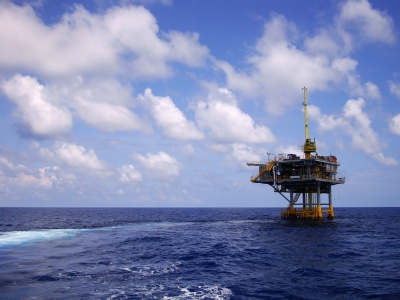
TotalEnergies SE (NYSE: TTE), the Paris-headquartered integrated energy major, has confirmed a hydrocarbon discovery on the Moho license offshore the Republic of Congo following the drilling of the MHNM-6 NFW exploration well on the Moho G structure. The well encountered a hydrocarbon column of approximately 160 meters in Albian reservoirs, a horizon that has historically yielded strong well deliverability across the Lower Congo Basin. Combined with the adjacent Moho F discovery announced previously, total recoverable resources across both structures are estimated at close to 100 million barrels, with TotalEnergies planning to develop the volumes as a subsea tie-back to its existing Moho floating production infrastructure. TTE shares were trading in the range of $92 to $93.49 on the NYSE as of April 13-14, 2026, near a 52-week high of $93.49, reflecting a broader re-rating of the stock that has gained roughly 43% year to date as Middle East supply risk and a series of broker upgrades have driven institutional interest into integrated oil names.
How does TotalEnergies’ Moho G discovery reshape the long-term production outlook for the Republic of Congo’s offshore oil sector?
The Moho license has been the centrepiece of TotalEnergies’ position in the Republic of Congo for nearly two decades. Production from the block began in 2008 using the Alima floating production unit, which was one of the first ultra-deepwater developments in the country. The Moho Nord project, completed in phases between 2015 and 2017, significantly expanded the hub by adding the all-electric Likouf floating production unit and a tension leg platform, with the two facilities together having delivered a peak combined output of 140,000 barrels of oil per day. Current output from the Alima and Likouf units sits at approximately 90,000 barrels of oil equivalent per day, a level that reflects the natural production decline that typically follows large-scale offshore developments. The Moho G and Moho F discoveries are therefore strategically significant not simply as new volumes, but as a mechanism to arrest that decline and extend plateau production from assets that already carry largely sunk infrastructure costs.
The Albian reservoirs in which the MHNM-6 well intersected hydrocarbons are older Cretaceous formations, distinct from the Miocene horizons that were the primary target of earlier Moho Nord development. Industry observers have noted that these reservoirs frequently exhibit good porosity and permeability characteristics when carbonate cementation is limited, which supports strong well productivity. The 160-meter hydrocarbon column confirmed in MHNM-6 is a material result for a near-field exploration well, and the extensive data acquisition and fluid sampling campaign that followed the drilling suggests TotalEnergies is treating this as a serious development candidate rather than a speculative result requiring extensive appraisal before a commitment.
What does the tie-back development model mean for the capital efficiency and timeline of the Moho F and G volumes coming onstream?
The phrase “short cycle, cost effective tie-back development” used by TotalEnergies exploration senior vice-president Nicola Mavilla is not merely marketing language in this context. It describes a genuinely distinct capital allocation approach that materially changes the economics of the discovery relative to a greenfield offshore development. The Alima and Likouf floating production units are already in place, the export infrastructure is established, and the subsea architecture from the Moho Nord phase provides a template for subsurface tie-back engineering. What TotalEnergies needs to do is design and install a subsea production system connecting the new wells to the existing flowline network, a task that for a well-characterized near-field development of this scale typically takes two to three years from a positive final investment decision.
For a combined resource base approaching 100 million barrels across Moho F and G, the absence of a greenfield construction program means the capital outlay is a fraction of what would be required to justify those volumes in isolation. The breakeven economics on tie-back barrels in an established deep-water hub are structurally lower, which means TotalEnergies can sanction development at oil prices that would render a standalone project marginal. With TTE’s upstream production cost advantage widely cited by analysts as one of the stock’s structural positives, adding brownfield volumes at further reduced unit costs is consistent with the capital discipline the company has emphasized since restructuring its portfolio over the past several years.
How does this discovery fit TotalEnergies’ broader upstream strategy amid global energy transition pressure and the current oil price environment?
TotalEnergies has been navigating a more complex strategic environment than some of its supermajor peers. The company exited US offshore wind development earlier this year following political pressure, received a significant settlement from the US government in connection with that exit, and has simultaneously accelerated commitments to LNG and upstream oil and gas. A deal with Turkey’s TPAO for exploration cooperation in the Black Sea region was announced the same week as the Moho G discovery, signaling that TotalEnergies’ exploration function is operating with considerable latitude and ambition across multiple basins simultaneously.
The Republic of Congo represents a long-standing pillar of TotalEnergies’ African portfolio. The company has been active in the country since 1968 and, through a portfolio restructuring that involved divesting interests in the Nkossa and Nsoko II licenses to Trident Energy while simultaneously increasing its stake in the Moho license to 63.5%, has concentrated its in-country position on the asset it knows best and controls most directly. That transaction, completed in 2024, was a deliberate deepening of commitment to Moho rather than a reduction in Congo exposure, and the subsequent exploration success on Moho G vindicates the strategic logic. By owning a larger share of a hub it can develop incrementally at low capital intensity, TotalEnergies has structured its Congo position as a cash generation engine rather than a growth vehicle requiring continuous greenfield investment.
The SNPC’s 15% participation in the Moho license ensures the Congolese state receives direct economic exposure to the new discovery, which is politically relevant given that oil production accounts for a substantial share of Congo’s government revenues and the current Moho hub represents more than half of the country’s total oil output. Extending that hub’s productive life materially matters at a national economic level, not just at an operator level.
What are the execution risks and open questions before Moho F and G can contribute production at scale?
The discovery announcement is positive but preliminary. The 100-million-barrel combined resource estimate for Moho F and G is described as recoverable, not proven reserves, and the data acquisition campaign from MHNM-6 is still being processed and interpreted. Until subsurface modeling is complete, the shape of the production profile, the number of wells required to efficiently drain the reservoirs, and the optimal tie-back configuration remain open engineering questions. Albian reservoirs in the Congo Basin can vary meaningfully in their lateral continuity, so the confirmation that this is a 160-meter column in one well does not automatically mean the resource estimate is conservative or that full field development will be straightforward.
Operationally, the Alima and Likouf units have available processing capacity headroom if current output has declined from the 140,000-barrel peak, but TotalEnergies will need to confirm that the incremental production rates from the new tie-back wells can be absorbed without bottlenecking existing production. Regulatory approvals from the Republic of Congo government will also be required before any final investment decision, though given the state oil company SNPC’s direct participation in the license, governmental alignment is unlikely to be an obstacle.
On the market side, TTE’s strong year-to-date performance has been partly driven by Middle East supply risk premiums in crude pricing. Any durable easing of that risk, including through the US-Iran ceasefire dynamics that briefly moved energy markets in early April 2026, could compress the oil price assumptions that underpin the attractiveness of brownfield development economics. At current prices, the Moho tie-back math works comfortably. At $60 Brent or below, the calculus requires more scrutiny. TotalEnergies’ broader free cash flow resilience at lower price points is a structural feature that analysts including those at TD Cowen and Barclays have highlighted, but that does not make individual project economics immune to commodity cycles.
Key takeaways on what the Moho G discovery means for TotalEnergies, its partners, and Africa’s deepwater oil sector
- TotalEnergies SE has confirmed close to 100 million barrels of combined recoverable resources across the Moho F and G structures offshore the Republic of Congo, one of the more material near-field discoveries from a major operator in sub-Saharan Africa’s deepwater in recent years.
- The tie-back development model eliminates greenfield infrastructure costs, materially reducing the breakeven price at which these volumes are commercially viable and compressing the timeline to first production.
- Current Moho hub output of approximately 90,000 barrels of oil equivalent per day is below the 140,000-barrel peak achieved during Moho Nord’s ramp-up, meaning the new discovery addresses a real and near-term production decline curve rather than extending already-elevated plateau output.
- TotalEnergies’ decision to increase its stake in Moho to 63.5% while divesting other Congo assets in 2024 now reads as a well-timed strategic concentration on the license most likely to generate additional brownfield upside.
- The Albian reservoir horizon targeted by MHNM-6 is distinct from the Miocene reservoirs that drove earlier Moho Nord development, indicating the basin still has meaningful stratigraphic exploration potential beyond the plays already in production.
- TTE shares are trading near a 52-week high on the NYSE at approximately $93, a 43% year-to-date gain driven by Middle East supply risk, broker upgrades, and the company’s pivot toward upstream oil and gas following its US offshore wind exit.
- Trident Energy, with 21.5% in the license, stands to benefit from the discovery but will require capital deployment capacity to participate in tie-back development investment; its position in this high-quality brownfield hub represents a structurally advantaged minority stake.
- SNPC’s 15% carried or participating interest ensures the Republic of Congo government captures direct fiscal upside from development, extending the economic relevance of the Moho hub for a country where oil production underwrites a substantial portion of public revenues.
- The simultaneous announcement of an exploration cooperation MOU with Turkey’s TPAO signals that TotalEnergies’ exploration function is pursuing a diversified near-term portfolio across multiple basins, reducing dependency on any single discovery to underpin reserve replacement targets.
- The primary open risk is subsurface: the 100-million-barrel estimate derives from two discoveries that require further appraisal before a final investment decision, and Albian reservoir continuity in the Lower Congo Basin can vary; the market should treat these volumes as high-probability but not yet sanctioned.
Discover more from Business-News-Today.com
Subscribe to get the latest posts sent to your email.