




The United States and Iran paused their high-level talks in Islamabad after about 14 hours of negotiations, with Iran’s government saying technical experts from both sides would exchange documents and that negotiations would continue despite remaining differences. The talks were aimed at ending the six-week war between Washington and Tehran and came at a delicate moment for a two-week ceasefire whose durability now depends on whether both sides can narrow disputes over security, maritime access, reparations, and nuclear restrictions.
That opening outcome matters because it signals neither collapse nor breakthrough. Tehran indicated that the process was still alive and that expert-level work would continue, but it did not say when formal negotiations would restart. A reporter for Iranian state television said the talks would continue on Sunday, while the Trump administration had not yet publicly clarified whether the first round had formally ended or what differences remained unresolved. That leaves the process in a familiar diplomatic middle zone: active enough to preserve the ceasefire, but too far apart to claim real convergence.
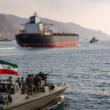
The Islamabad meeting was significant on its own terms. Reuters reported that it was the first direct U.S.-Iranian meeting in more than a decade and the highest-level discussion between the two sides since the 1979 Islamic Revolution. That alone explains why even a partial procedural outcome carries weight. In this case, the talks are not taking place around an abstract dispute. They are tied directly to a recent war, a fragile ceasefire, and the future of the Strait of Hormuz, one of the world’s most important maritime chokepoints for energy trade. Reuters reported that about 20% of global energy supplies move through the strait, which Iran has blocked since the war began.
Why did the US-Iran talks in Islamabad pause even though both sides agreed to keep exchanging documents?
The pause appears to reflect a narrow form of progress. The two sides were prepared to keep communicating through technical experts, which usually suggests that some structure exists for continued negotiation. At the same time, the political gaps are still large enough that senior-level negotiators could not close them in one sitting. Reuters reported that Iran’s government said negotiations would continue despite remaining differences, while a Pakistani source said the mood shifted repeatedly during the first round and that the temperature of the meeting went up and down.
That description is important because it hints at the character of the talks without exaggerating their outcome. The issue is not simply whether both sides showed up. It is whether they were discussing implementation details of a broad settlement or still fighting over first principles. The reported demands suggest the latter. Tehran is seeking the release of frozen assets, control of the Strait of Hormuz, payment of war reparations, and a ceasefire across the wider region, including Lebanon. The United States, by contrast, is seeking guaranteed maritime passage through the strait and the crippling of Iran’s nuclear enrichment programme so Tehran cannot produce an atomic bomb. Those are not cosmetic disagreements. They go to sovereignty, military leverage, economic relief, and deterrence.
Iran’s negotiating posture had already been signalled before the Islamabad meeting. Reuters reported on April 7 that a senior Iranian official said Tehran wanted an immediate halt to strikes, guarantees that attacks would not be repeated, and compensation for damage. The same report said Iran rejected a ceasefire that was only temporary and wanted any permanent peace arrangement to include the right to demand fees from ships passing through the Strait of Hormuz. When those preconditions are read alongside the post-talk reporting from Islamabad, the picture is one of continuity rather than surprise. Iran came in with a maximalist framework tied to security guarantees and economic recovery, and there is no evidence yet that those demands have been substantially narrowed.
What are the main disagreements still dividing the United States and Iran after the first round of talks?
The most immediate disagreement concerns the Strait of Hormuz. For Washington, the priority is clear passage for global shipping and the restoration of normal maritime traffic. For Tehran, the strait appears to be both a bargaining chip and a sovereignty issue. Reuters reported that Iran wants control of the strait and the ability to collect transit fees, while the U.S. military said it was setting conditions to begin clearing the waterway and that two U.S. warships had passed through it. Iran’s state media denied that any U.S. ships had transited the strait. Even at the level of basic operational description, the two sides are not aligned.
Another major point of friction is financial relief. Reuters reported before the talks that a senior Iranian source said the United States had agreed to release frozen Iranian assets held in Qatar and other foreign banks. A U.S. official denied that such an agreement had been made. That contradiction matters because asset releases could become one of the earliest test cases for whether either side is prepared to translate diplomatic language into tangible concessions. When one side describes a concession as agreed and the other side publicly denies it, the room for mistrust expands rather than narrows.
The third dispute is the scope of the ceasefire and any wider settlement. Tehran has linked the discussion not only to the direct U.S.-Iran conflict but also to a broader regional ceasefire, including Lebanon. Reuters reported that Israel has continued bombing Tehran-backed Hezbollah militants in Lebanon and says that conflict is not part of the Iran-U.S. ceasefire. That means the diplomatic map is not symmetrical. Iran appears to be negotiating with the war’s wider regional geometry in mind, while Washington is operating from a narrower set of immediate objectives.
The fourth and most durable divide concerns Iran’s nuclear programme. Reuters reported that President Donald Trump’s minimum stated goal is the crippling of Iran’s nuclear enrichment programme to ensure Tehran cannot produce an atomic bomb. That issue is structurally different from disputes over maritime access or frozen funds because it concerns the long-term strategic balance between deterrence, sanctions, and verification. It is also the kind of issue that rarely yields to a single round of crisis diplomacy.
Why does the Strait of Hormuz remain central to the US-Iran ceasefire and negotiation process?
The Strait of Hormuz is not a side issue in these talks. It is the pressure point connecting war termination, global trade, energy pricing, and military credibility. Reuters reported that the war has already sent global oil prices higher and that disruption in the strait has heightened energy market volatility. Earlier reporting by Reuters also said a ceasefire framework being circulated through Pakistan envisioned the immediate reopening of the strait, followed by 15 to 20 days to finalize a broader agreement. In other words, maritime restoration is not simply an outcome of diplomacy. It is one of the mechanisms through which diplomacy would prove itself.
That helps explain why both sides treat Hormuz in such uncompromising terms. The United States sees freedom of navigation as a baseline condition for de-escalation and for calming global markets. Iran sees control over the strait as one of its few remaining high-value levers after a costly war. When a negotiating issue is simultaneously strategic, economic, and symbolic, compromise becomes harder because each concession looks like a public admission of weakness. That does not make a deal impossible, but it does mean that technical exchanges alone will not solve the political problem unless both capitals decide that the costs of deadlock are now higher than the costs of concession. That inference is consistent with the structure of the talks reported by Reuters, though not yet confirmed by either side as a settled negotiating formula.
How is Pakistan’s role in hosting the US-Iran talks reshaping the diplomatic setting around the conflict?
Pakistan’s role is one of the more consequential features of the current process. Reuters reported that Islamabad has become the sole communication channel in parts of the talks and that Pakistan helped assemble a two-stage proposal involving an immediate ceasefire followed by a final agreement. Reuters also described Pakistan’s mediating role as a remarkable transformation for a country that had been a diplomatic outcast a year earlier.
That does not mean Pakistan controls the outcome. The core decisions still sit in Washington and Tehran. But venue and channel matter in diplomacy, especially when mistrust is high and direct contact has been limited for years. The fact that the delegations met in Islamabad under heavy security, after President Donald Trump said the talks would be behind closed doors, shows that both sides accepted a controlled and politically insulated setting for a highly sensitive encounter. Reuters reported that thousands of paramilitary personnel and army troops were deployed on the streets of Islamabad during the talks. The physical setting underlined the fragility of the moment as much as the importance of the effort.
The names involved also show how elevated the diplomacy has become. Reuters reported that U.S. Vice President JD Vance, special envoy Steve Witkoff, and Jared Kushner met Iranian Parliamentary Speaker Mohammad Baqer Qalibaf and Foreign Minister Abbas Araqchi. That level of engagement suggests the talks were not procedural theatrics. They were an attempt to test whether the ceasefire could be converted into a structured negotiation, even if only imperfectly on the first try.
What does the current pause in US-Iran talks mean for the ceasefire, regional diplomacy, and energy markets?
For now, the pause means the ceasefire remains under diplomatic management rather than under formal settlement. The continued exchange of documents is a signal that the channel is open. The unresolved differences are a signal that the channel is under strain. Both facts are true at the same time. Reuters’ earlier reporting on the proposed framework suggested the parties were working toward a two-phase process, with an initial ceasefire mechanism and then a broader agreement covering nuclear commitments, sanctions relief, and regional arrangements. The Islamabad outcome suggests that if such a structure still exists, it remains incomplete.
For the region, that means uncertainty persists. Iran still wants guarantees against renewed attacks, financial relief, reparations, and wider ceasefire terms. The United States still wants maritime freedom and nuclear constraints. Israel’s continuing operations against Hezbollah in Lebanon further complicate the regional perimeter of any settlement. For energy markets, the key question remains whether the Strait of Hormuz can reopen under mutually acceptable terms. Until that answer is clearer, the diplomatic process may continue to matter as much for oil risk calculations as for formal statecraft.
Key takeaways on what this development means for the countries, institutions, and global context involved
- The United States and Iran ended the first Islamabad round without a breakthrough, but both sides kept the process alive by agreeing to continue expert-level document exchanges.
- The biggest unresolved issues remain the Strait of Hormuz, frozen Iranian assets, war reparations, the scope of any regional ceasefire, and constraints on Iran’s nuclear enrichment programme.
- The talks are unusually significant because Reuters described them as the first direct U.S.-Iran meeting in more than a decade and the highest-level such contact since 1979.
- Pakistan’s role as host and intermediary has become central to the negotiation channel, with earlier Reuters reporting describing a two-stage framework that could link ceasefire maintenance to a broader settlement.
- The diplomatic pause leaves the ceasefire intact for now, but continued disagreement over Hormuz keeps regional security and global energy supply risks firmly in view.
Discover more from Business-News-Today.com
Subscribe to get the latest posts sent to your email.