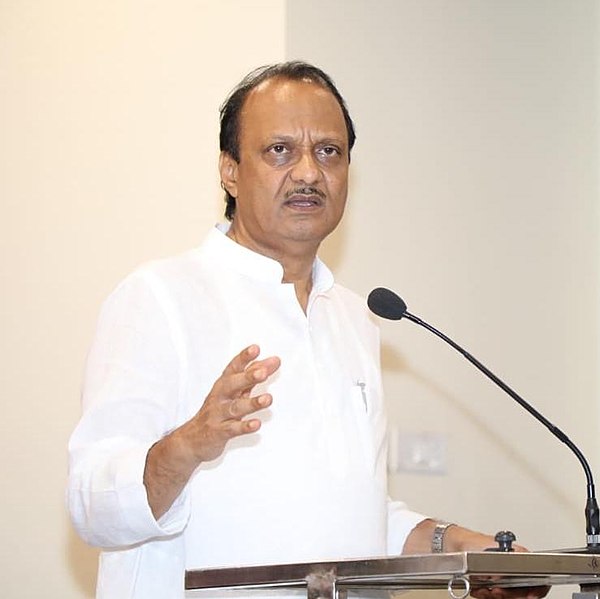




Pakistan Defence Minister Khawaja Asif on Thursday publicly described Israel as “evil” and a “curse for humanity,” accusing the Israeli government of committing genocide in Lebanon even as Islamabad prepared to host high-stakes diplomatic negotiations between the United States and Iran. The remarks, posted on Asif’s verified account on the social media platform X on 9 April 2026, immediately drew sharp condemnation from senior Israeli officials, including Prime Minister Benjamin Netanyahu and Foreign Minister Gideon Sa’ar.
In his post, Asif stated that while peace talks were underway in Islamabad, Israeli forces were committing what he described as genocide in Lebanon, with innocent civilians being killed across the region. He characterised Israeli military operations as having expanded sequentially from Gaza to Iran and now to Lebanon. Asif wrote that he hoped those who created what he called “this cancerous state on Palestinian land to get rid of European Jews” would “burn in hell.”
The remarks were made on 9 April 2026, the same day an Iranian diplomatic delegation was due in the Pakistani capital for preparatory discussions ahead of formal negotiations scheduled for 10 April 2026. Pakistan had formally positioned itself as a neutral mediator in the United States–Iran ceasefire process, following weeks of diplomatic engagement that included direct communication between Pakistani military leadership and the Trump administration, and visits by Pakistani Foreign Minister Ishaq Dar to regional capitals including Beijing.
What was Israel’s official response to Khawaja Asif’s cancerous state remarks about Israel?
The office of Israeli Prime Minister Benjamin Netanyahu responded immediately, condemning the statement in unambiguous terms. The Prime Minister’s Office described Asif’s remarks as a call for Israel’s annihilation and stated that such language could not be tolerated from any government, particularly one claiming to act as a neutral arbiter for peace. “Pakistan Defence Minister’s call for Israel’s annihilation is outrageous. This is not a statement that can be tolerated from any government, especially not from one that claims to be a neutral arbiter for peace,” the statement said.
Israeli Foreign Minister Gideon Sa’ar issued a separate and equally forceful statement on X, describing Asif’s remarks as blatant antisemitic blood libels from a government simultaneously positioning itself as a peacemaker. Sa’ar stated that calling Israel a cancerous state was effectively a call for its annihilation, and that Israel would defend itself against those who vowed its destruction. The exchange represents one of the sharpest public confrontations between Pakistani government officials and Israeli leadership in recent years.
What is the diplomatic context of Pakistan hosting United States and Iran ceasefire talks in Islamabad in April 2026?
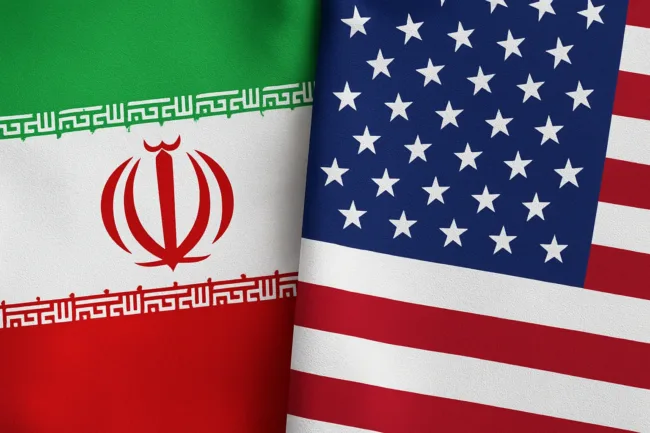
The confrontation between Islamabad and Tel Aviv came at one of the most significant moments in Pakistan’s recent diplomatic history. United States President Donald Trump announced a two-week ceasefire between Washington and Tehran on 8 April 2026, barely an hour before a self-imposed deadline for Iran to reopen the Strait of Hormuz. Pakistani Prime Minister Shehbaz Sharif subsequently invited delegations from the United States and Iran to Islamabad on 10 April 2026 to negotiate a conclusive settlement. The proposed talks between the United States delegation led by Vice President JD Vance and Iranian representatives, including Foreign Minister Abbas Araghchi and Parliamentary Speaker Mohammad Bagher Ghalibaf, were set to be the highest-level direct engagement between Washington and Tehran since the 1979 Iranian Revolution.
Pakistan’s emergence as mediator reflected a convergence of its unique diplomatic relationships across rival international blocs. Islamabad maintains close ties with Washington, Tehran, Beijing, and Riyadh simultaneously. Iran and Pakistan share a 560-kilometre border, deep historical and religious connections, and Iran was among the first countries to recognise Pakistan following its independence in 1947. Pakistan’s military leadership had also developed direct lines of communication with the Trump administration during 2025 and early 2026. International analysts described Pakistan’s mediation role as a significant shift in Islamabad’s global diplomatic standing, noting that Pakistan had not participated in either the 2015 Iran nuclear deal negotiations or the Abraham Accords process.
How do continued Israeli strikes in Lebanon threaten the fragile Pakistan-brokered United States–Iran ceasefire?
The ceasefire was under strain from its first hours. Israel asserted that the truce did not extend to its military operations against Hezbollah in Lebanon, while Pakistan and Iran both maintained that the ceasefire covered all fronts including Lebanon. The White House subsequently clarified that Lebanon was not part of the arrangement. Israeli military operations in Lebanon intensified in the immediate aftermath of the ceasefire announcement, with Lebanese civil defence authorities reporting more than 200 people killed on 8 April 2026 alone, described as among the heaviest bombardment since the current conflict began.
Pakistan’s Foreign Ministry, in its own separate statement on 9 April 2026, condemned these strikes in formal language, describing Israeli actions in Lebanon as a blatant violation of international law and fundamental humanitarian principles. The Pakistani government’s dual posture, an institutional condemnation through the Foreign Ministry and Asif’s personal incendiary post on X, raised questions about coordination within the Pakistani government at a moment of intense international scrutiny.
In response to the continuing strikes in Lebanon, Iran’s Islamic Revolutionary Guard Corps stated that shipping through the Strait of Hormuz had again been halted, threatening one of the central conditions underpinning the ceasefire arrangement. Iranian Parliamentary Speaker Mohammad Bagher Ghalibaf stated publicly that a bilateral ceasefire without addressing Lebanon was unreasonable, and that the United States must choose between a ceasefire or continued conflict via Israel.
Why does Pakistan’s non-recognition of Israel complicate its peace mediation role in the 2026 Iran war ceasefire process?
Pakistan has never recognised the state of Israel since its founding and has consistently opposed Israeli military actions in Palestinian territories, Lebanon, and Iran. Islamabad has rejected Israeli and Indian government accusations that it supports militant groups. The simultaneous public characterisation of Israel as a cancerous state by a serving cabinet minister, at the precise moment Pakistan was hosting American and Iranian negotiators, placed Islamabad’s government under sustained international scrutiny regarding its impartiality.
Israeli officials directly cited this contradiction. Both Netanyahu’s office and Foreign Minister Sa’ar questioned how any government could credibly claim to serve as a neutral peacemaker while one of its senior cabinet ministers simultaneously called publicly for Israel’s destruction. The episode also exposed a visible tension within the Pakistani government itself. The Foreign Ministry’s institutional statement employed formal international law language to condemn Israeli actions, while Asif’s personal post used language that Israeli officials characterised as antisemitic incitement. The episode was not Asif’s first sharp public criticism of Israel. In March 2026, Asif had previously posted that Zionism was a threat to humanity, a statement The Jerusalem Post characterised as escalating from criticism of Israeli government policy to a broader ideological formulation.
The diplomatic fallout adds a further layer of complexity to an already fragile negotiating environment. For Pakistan, the credibility of its mediation role depends in significant part on all parties accepting Islamabad as a good-faith neutral convener. Israeli officials made it explicit that they do not accept Pakistan in that role, and that Asif’s remarks had only deepened that position. Whether the Islamabad talks scheduled for 10 April 2026 proceed as planned, and whether the United States–Iran ceasefire holds long enough to produce a substantive framework, will determine the extent to which Pakistan’s diplomatic ambitions in this episode are realised or undermined.
What are the key takeaways from Pakistan Defence Minister Khawaja Asif’s cancerous state remarks about Israel and the diplomatic fallout for the Islamabad ceasefire talks?
- Pakistan Defence Minister Khawaja Asif posted on X on 9 April 2026 describing Israel as “evil,” a “curse for humanity,” and a “cancerous state,” while simultaneously Islamabad was hosting preparatory discussions ahead of United States–Iran ceasefire negotiations scheduled for 10 April 2026.
- Israeli Prime Minister Benjamin Netanyahu’s office condemned the remarks as a call for Israel’s annihilation and stated that such language was unacceptable from any government claiming to serve as a neutral peace mediator.
- Israeli Foreign Minister Gideon Sa’ar separately described Asif’s remarks as antisemitic blood libels and stated that Israel would defend itself against those who vow its destruction.
- The incident exposed a visible divergence between Pakistan’s institutional Foreign Ministry statements, which used formal international law language to condemn Israeli strikes in Lebanon, and the personal public rhetoric of a senior cabinet minister.
- The remarks have introduced additional uncertainty into the fragile Pakistan-brokered ceasefire process, in which Israel’s continued strikes in Lebanon and disputes over ceasefire scope were already threatening to derail negotiations before they formally began.
Discover more from Business-News-Today.com
Subscribe to get the latest posts sent to your email.