


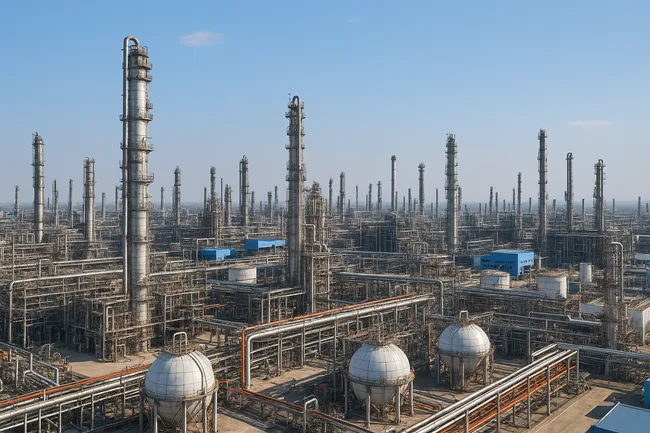
Technip Energies (PARIS: TE) has secured a new engineering and procurement contract from Long Son Petrochemicals Co., Ltd. to convert Vietnam’s first integrated petrochemical complex from naphtha-based to ethane-based feedstock, extending a relationship that began with the original cracker construction in 2018. The project, formally designated the Long Son Petrochemicals Enhancement project and located on Long Son Island in Ba Ria-Vung Tau province, tasks Technip Energies with deploying its proprietary Ultra Selective Conversion furnace design and Heat-Integrated Rectifier System technologies alongside site assistance and purpose-built proprietary burner supply. The award lands in the Technology, Products and Services segment and was recorded in Q1 2026, adding to what has been a strong run of order intake for the Paris-listed engineering group. For Technip Energies, this is the kind of repeat mandate that money cannot easily buy: a client entrusting the same technology partner to rebuild the economics of a plant it originally designed and built.
Why is Long Son Petrochemicals converting its Vietnam steam cracker from naphtha to ethane feedstock in 2026?
The answer is cost, and the arithmetic is stark. Long Son Petrochemicals’ Ba Ria-Vung Tau cracker has historically run on a naphtha and propane mix, sourcing both from the Middle East. That feedstock structure exposed the facility to one of the more volatile cost bases in Asian petrochemicals. Ethane, by contrast, is priced off natural gas rather than crude oil, and US ethane in particular has traded at a sustained discount to naphtha on a per-unit ethylene yield basis for several years.
The Long Son Petrochemicals Enhancement project is budgeted at $500 million in total and is expected to complete by 2027. According to public statements from Long Son Petrochemicals’ management, the switch to ethane-intensive feedstock is projected to cut operating costs by more than 30 percent. That figure is not a minor efficiency gain. On a complex that holds annual capacity of 950,000 tonnes of ethylene and 400,000 tonnes of propylene, a cost reduction of that magnitude has direct implications for cash generation and the plant’s ability to compete against regional peers who have historically enjoyed lower feedstock costs. The plan is to run up to 70 percent ethane feedstock within the existing cracker architecture, importing one million tonnes of ethane per year from the United States using five specialised cryogenic carriers. Two cryogenic ethane storage tanks, each capable of holding 55,000 tonnes, will be constructed on-site to support the import logistics chain.
What makes this one of the first naphtha-to-ethane steam cracker conversions globally and why does that matter?
The rarity of this type of conversion deserves some attention. Most of the global ethylene industry was built in discrete feedstock eras: US Gulf Coast crackers were built for ethane and natural gas liquids from the outset, while Asian and European complexes were designed around naphtha because that was the accessible feedstock. Converting an existing naphtha cracker to handle high ethane loadings requires not just new burners and process adjustments but a rethink of heat integration, product recovery, and cryogenic storage infrastructure. The technical complexity is real, and the number of operators who have successfully executed this conversion is small.
That scarcity is precisely what makes Technip Energies’ role here strategically significant beyond the immediate contract. The company is not just executing an engineering job. It is building a reference case. If the Long Son Petrochemicals Enhancement project delivers the projected economics on schedule, Technip Energies will possess a documented, operating conversion in Asia Pacific at a time when a meaningful cohort of naphtha-cracker operators across the region are evaluating exactly this question. The competitive moat that generates is not easily replicated by rivals without a comparable track record in executing the full cycle from original cracker construction through feedstock transition engineering.
How does the Long Son Petrochemicals Enhancement project fit within the broader Vietnam and Southeast Asian petrochemical landscape?
Long Son Petrochemicals is majority owned by SCG Chemicals, itself a subsidiary of Thailand’s SCG Group, one of the largest industrial conglomerates in Southeast Asia. The complex is Vietnam’s first fully integrated petrochemical facility, with investment exceeding $5 billion across its olefins plant, polyethylene and polypropylene units, port infrastructure, and utilities. That scale gives the facility a strategic importance that extends well beyond individual product margins.
The plant’s history adds important context. Long Son Petrochemicals suspended its entire complex in October 2024, citing margin pressure as a combination of competitive polyolefin import pricing and weak downstream demand compressed the spread between feedstock costs and finished product realisations. It restarted in August 2025 as naphtha-to-polyolefin spreads improved. The timing of the enhancement contract announcement is notable: the feedstock conversion programme was already underway when the plant was idled, and the decision to press ahead with the Technip Energies engagement signals that Long Son Petrochemicals and SCG Chemicals remain committed to the long-term competitive positioning of the complex regardless of near-term margin cycles.
There is an additional geopolitical dimension worth flagging. The ethane supply chain the Long Son Petrochemicals Enhancement project depends on runs from US production basins to Vietnamese import terminals. The Trump administration placed a 46 percent reciprocal tariff on Vietnamese goods in April 2026, though a 90-day pause followed before full implementation. Vietnamese ethane imports from the US would sit on the other side of that trade relationship, but the structure of a long-term feedstock import agreement introduces its own sensitivity to the bilateral relationship between Washington and Hanoi. Long Son Petrochemicals will be managing that geopolitical variable alongside the execution risks of a technically demanding conversion project.
What does the Technip Energies contract structure tell us about Technology, Products and Services segment momentum?
Technip Energies operates two reporting segments: Project Delivery, which handles the large engineering, procurement and construction mandates, and Technology, Products and Services, which covers licensing, proprietary equipment, and advisory work. The Long Son Petrochemicals Enhancement project sits in the latter. That is commercially meaningful. Technology, Products and Services contracts typically carry superior margins relative to Project Delivery work because they are built around intellectual property, licensed process technology, and high-value proprietary equipment rather than labour and supply chain volume.
The company had flagged during its Q3 2025 results that ethylene orders were anticipated in 2026, and the Long Son Petrochemicals Enhancement contract represents early confirmation of that guidance playing out. Technip Energies also announced in the same period a substantial authorization from Commonwealth LNG to advance a 9.5 million tonnes per annum LNG export facility in Louisiana ahead of a final investment decision. The combination of LNG momentum and ethylene technology orders in rapid succession suggests that both pillars of the Technology, Products and Services thesis are activating simultaneously.
How is Technip Energies stock performing as new contract wins accumulate?
Technip Energies shares were trading at approximately 41.10 euros on 9 April 2026, up from a previous close of 39.94 euros, within an intraday range of 40.00 to 41.58 euros. The 52-week range spans 26.68 euros to 42.82 euros, placing the stock near its 12-month high and significantly above its annual low. The 30-day return of approximately 18.7 percent reflects a sustained re-rating as order intake has accelerated. The one-year total shareholder return has exceeded 50 percent. Consensus from analysts tracked by Investing.com sits at a buy rating with an average price target of 41.83 euros, suggesting the current price is approaching but has not yet exceeded the midpoint of analyst expectations, with the high estimate reaching 49 euros. With a Q1 2026 earnings release scheduled for 30 April 2026, the pace of recent contract announcements including the Long Son Petrochemicals Enhancement project and the Commonwealth LNG authorization could provide positive framing for the backlog update that typically accompanies quarterly results.
The Technology, Products and Services segment has historically been under-weighted in how the market has valued Technip Energies relative to the pure-play Project Delivery cycle, in part because order timing in technology licensing is harder to forecast. A cluster of technology contract announcements in a short window, as appears to be happening in Q1 2026, may prompt analysts to revisit segment margin assumptions ahead of the April earnings call.
What are the key takeaways from Technip Energies’ Long Son Petrochemicals Enhancement contract and its implications for the ethylene technology sector?
- Long Son Petrochemicals is executing a $500 million feedstock conversion programme targeting a more than 30 percent reduction in operating costs by shifting the cracker’s primary feedstock from naphtha to US-sourced ethane, a material improvement to unit economics if delivered as planned.
- The contract scope covers engineering and procurement services, site assistance, and proprietary burner supply, placing it within the higher-margin Technology, Products and Services segment rather than the lower-margin Project Delivery segment.
- Technip Energies holds a structural advantage in this engagement through having originally designed, procured, and constructed the same cracker between 2018 and 2023, providing an intimate knowledge of the plant that no competitor can replicate without the same build history.
- This conversion is among the first of its type globally in recent years, meaning a successful execution creates a competitive reference asset at the precise moment Asian naphtha cracker operators are evaluating similar feedstock transitions.
- The ethane supply chain depends on US imports of one million tonnes per year, introducing geopolitical exposure linked to the current state of US-Vietnam trade relations and the 46 percent tariff framework under review.
- Long Son Petrochemicals’ willingness to advance a major capital programme despite an operational suspension in 2024-2025 signals that parent company SCG Chemicals views the feedstock diversification as a structural imperative rather than a discretionary upgrade.
- Technip Energies shares are trading near their 52-week high at approximately 41 euros, with the Long Son Petrochemicals Enhancement contract and the concurrent Commonwealth LNG authorization adding backlog visibility ahead of a Q1 2026 earnings release on 30 April.
- The broader implications for the petrochemical sector are significant: if ethane conversion economics prove compelling at scale in Vietnam, the business case for similar retrofits across Southeast Asia’s naphtha-heavy cracker base strengthens considerably.
- For Technip Energies, the repeat mandate validates the company’s strategic posture of maintaining deep technology relationships with clients across multiple project generations rather than competing on price for standalone engineering contracts.
- Execution risk remains real. Integrating cryogenic ethane infrastructure, converting furnace operations at scale, and managing US ethane import logistics from a Vietnamese island location involves complexity that could affect timelines and cost outcomes through to the 2027 target completion date.
Discover more from Business-News-Today.com
Subscribe to get the latest posts sent to your email.