New Fortress Energy Inc. (NASDAQ: NFE) announced on March 31, 2026 that its Brazil platform has executed a long-term lease and capacity agreement for the Terminal de Gas Sul (TGS), an LNG import terminal in Santa Catarina, Brazil. The lease is scheduled to commence in August 2026 and is expected to generate $50 million in annual EBITDA by 2027, providing the first contracted cash flow from the TGS asset. The announcement arrives two weeks after NFE confirmed it would spin off its Brazilian operations into a standalone entity, known as BrazilCo, as part of a sweeping recapitalization of the parent company under a UK Restructuring Plan. For BrazilCo, the TGS lease removes a critical piece of uncertainty: the terminal now has a paying counterparty before it formally changes ownership.
What is the TGS terminal lease agreement and why does it matter for southern Brazil’s power supply?
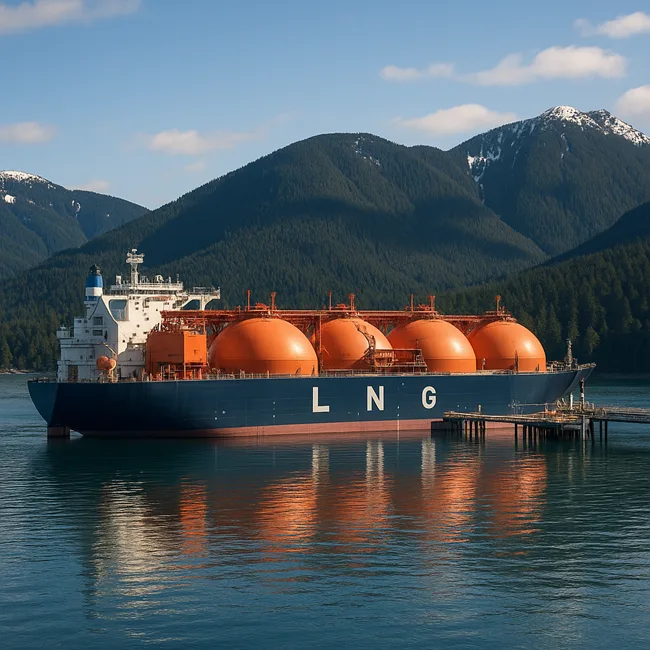
The Terminal de Gas Sul sits on the southern coast of Brazil in Santa Catarina state and functions as an LNG import and regasification facility designed to deliver natural gas to power generators in the region. Southern Brazil is structurally disadvantaged when it comes to gas supply: unlike the northeast, which sits closer to offshore pre-salt production and Bolivia pipeline access points, the south has historically had limited alternatives for reliable, dispatchable gas supply. Hydropower dominates the national grid but introduces seasonal vulnerability during drought years, forcing the system to lean on thermal generation precisely when gas supply is most difficult to secure at short notice. TGS addresses that gap by providing flexible LNG import capability in a region where the alternative is constrained pipeline supply or expensive spot procurement.
The lease agreement commercially activates TGS ahead of its August 2026 commencement date and anchors the terminal’s revenue profile with a contracted counterparty rather than relying on merchant or spot utilisation. The $50 million EBITDA target by 2027 is a tangible financial milestone for BrazilCo’s early operating period, providing institutional investors in the newly carved-out entity with a clear near-term earnings floor from the southern Brazil asset. That matters considerably in a transaction where much of the value story rests on future projects that will not generate earnings until the early 2030s.
How does the TGS terminal connect to NFE Brazil’s longer-term UTE Lins 2 power generation strategy?
Beyond contracted cash flow, TGS serves as the fuel supply backbone for New Fortress Energy Brazil’s UTE Lins 2 power project, a greenfield thermal power plant that was awarded capacity in Brazil’s recent national auction and is scheduled to commence operations in 2031. The sequencing is deliberate: TGS begins generating EBITDA in 2026 through the terminal lease, while simultaneously underwriting the gas supply infrastructure that UTE Lins 2 will depend on once it enters commercial operation. This integrated LNG-to-power model, where the same company controls the import terminal and the power plant it feeds, is central to New Fortress Energy’s operating philosophy across its global markets.
The UTE Lins 2 award is also strategically significant because capacity auction contracts in Brazil come with long-term offtake commitments backed by the national grid operator, providing a degree of revenue certainty that is unusual for greenfield thermal projects. If TGS can secure additional utilisation agreements with third-party power generators and industrial customers in southern Brazil before 2031, the terminal’s contribution to BrazilCo’s earnings profile could expand materially ahead of the UTE Lins 2 ramp. New Fortress Energy Brazil has explicitly flagged this upside, noting that additional agreements with power generators and industrial customers represent incremental opportunities beyond the initial lease.
What is the status of the NFE Brazil recapitalization and how does BrazilCo fit into the parent company’s debt restructuring?
The TGS lease announcement arrives at a moment of significant structural change at the parent company. On March 17, 2026, New Fortress Energy Inc. signed a Restructuring Support Agreement with its creditors under a UK Restructuring Plan, a mechanism that allows the company to bind dissenting creditors and effect a cross-class compromise. The transaction is expected to reduce corporate debt at the parent level from approximately $5.7 billion to around $527.5 million, with creditors receiving a combination of new debt, preferred equity, and common equity in the restructured entity. The Brazilian platform, comprising the Barcarena cluster, TGS, and the UTE Lins 2 development rights, is being carved out entirely and transferred to BrazilCo, which will be owned by a consortium of global institutional investors managing a combined $20 trillion in assets under management.
The separation is designed to be operationally neutral: day-to-day activities in Brazil will not be disrupted, and BrazilCo will initially continue receiving gas supply from New Fortress Energy Inc. while securing its own standalone supply and vessel support. Leadership of the Brazilian platform will remain with Leandro Cunha and Jeremy Dawson, who have operated the business and hold deep familiarity with local regulators, customers, and project contractors. The transaction is targeted to close in mid-2026, subject to regulatory approvals and court sanction under the UK Restructuring Plan process. From BrazilCo’s perspective, the TGS lease signed today strengthens its commercial profile ahead of that close, making the new entity more attractive to its incoming institutional shareholders.
How does NFE stock performance reflect investor sentiment around the Brazil separation and debt restructuring plan?
New Fortress Energy shares have undergone a severe derating over the past twelve months. As of late March 2026, NFE trades at approximately $0.62, compared to a 52-week high of $9.24, representing a decline of over 93% from peak levels reached just twelve months ago. The stock touched a 52-week low of $0.61 on March 30, 2026, one day before the TGS lease announcement, underscoring how deep the market’s skepticism runs regarding the parent company’s financial position. Market capitalisation has collapsed to approximately $163 million against trailing revenue of $1.78 billion, a valuation that reflects not business performance but rather the severity of the balance sheet stress the company is managing.
The net margin for the trailing twelve months is negative at approximately 71%, and debt-to-equity stands at nearly 900%, confirming that the stock is effectively pricing the equity as a residual claim on a heavily leveraged restructuring. In that context, the TGS lease is positive incremental news but is unlikely on its own to materially alter market sentiment toward the parent company’s equity. The more consequential signal for NFE equity holders will be the completion of the recapitalization, the transfer of BrazilCo to its new owners, and the emergence of the remaining NFE entity with a dramatically reduced debt burden. Until that process closes, the stock will continue trading as a restructuring vehicle rather than an operating infrastructure company.
What are the execution risks for BrazilCo’s TGS terminal and LNG-to-power platform in southern Brazil?
The TGS terminal’s commercial viability depends on several interconnected execution variables. Gas supply security is the most immediate concern: BrazilCo must secure standalone supply contracts and vessel support before the UK Restructuring Plan closes in mid-2026, removing its dependence on New Fortress Energy’s existing arrangements. LNG price dynamics and shipping availability will influence the economics of those supply contracts, particularly given the broader disruption to global LNG markets following Iran’s strikes on Qatar’s LNG production facilities in early March 2026. Southern Brazil’s power market is also evolving rapidly, with the national grid operator managing an increasingly complex mix of solar, wind, and hydro that changes the dispatch economics for thermal generation.
The UTE Lins 2 project faces a longer execution horizon, with a 2031 commencement date that carries greenfield construction risk, permitting dependencies, and equipment procurement exposure. BrazilCo’s ability to deliver on that commitment will depend not only on its own project management capability but on the regulatory continuity provided by Brazil’s Ministerio de Minas e Energia and the terms of the capacity auction contract. Institutional ownership by a consortium with stated deep experience in Brazilian infrastructure and long-term asset management should provide some insulation against capital access risk, but it does not eliminate the operational complexity of delivering a large greenfield thermal plant in a market that is simultaneously expanding its renewable generation base and addressing grid congestion.
What does the TGS lease signal about the competitive landscape for LNG infrastructure in southern Brazil?
Southern Brazil has historically been underserved by dedicated LNG import infrastructure. The region’s proximity to Argentina creates some cross-border gas trade, but pipeline capacity constraints and Argentina’s own domestic demand variability mean that reliance on Argentine imports is an unreliable strategy for power generators seeking dispatchable baseload. TGS fills a structural gap, and the execution of a long-term lease agreement before the terminal is even formally operational validates the thesis that dedicated LNG access in Santa Catarina commands a premium from gas-dependent power generators.
For competitors, the TGS lease signals that New Fortress Energy Brazil has successfully commercialised its southern Brazil foothold despite the parent company’s financial difficulties. Any new entrant seeking to develop competing LNG import capacity in the region will now face a more established incumbent with contracted revenue, an integrated power development pipeline, and institutional backing. Brazil’s ongoing thermal power auctions and capacity reserve mechanisms provide a pathway for multiple participants, but TGS’s first-mover position in southern Brazil’s LNG supply chain creates meaningful barriers to displacement in the near to medium term.
Key takeaways: what the TGS lease means for New Fortress Energy Brazil, BrazilCo, and southern Brazil’s energy market
- New Fortress Energy Brazil has executed a long-term lease and capacity agreement for the Terminal de Gas Sul (TGS) in Santa Catarina, with commencement set for August 2026 and a target of $50 million in annual EBITDA by 2027.
- The TGS lease is the first contracted revenue event for the terminal, providing BrazilCo with an early earnings anchor ahead of its planned separation from New Fortress Energy Inc. in mid-2026.
- TGS will also supply the UTE Lins 2 power project, a greenfield capacity auction award due to commence operations in 2031, creating a vertically integrated LNG-to-power model in a gas-constrained region.
- New Fortress Energy Inc. is undergoing a sweeping recapitalization that will reduce corporate debt from approximately $5.7 billion to around $527 million and transfer the Brazilian platform to a consortium of global institutional investors.
- NFE equity trades near its 52-week low of $0.61, with market capitalisation around $163 million against $1.78 billion in trailing revenue, reflecting deep financial stress at the parent level rather than impairment of the Brazilian assets.
- Southern Brazil’s limited pipeline gas infrastructure gives TGS a structurally advantaged position as the region’s dedicated LNG import facility, with potential to expand utilisation through additional agreements with power generators and industrial customers.
- BrazilCo must secure standalone gas supply contracts and vessel support before the recapitalization closes, representing a near-term execution dependency that will be closely watched by its incoming institutional shareholders.
- Brazil’s broader energy transition, with rapidly expanding solar and wind capacity, increases rather than diminishes the strategic value of dispatchable gas-fired generation as a grid stabilisation tool, reinforcing the long-term demand case for TGS.
- The continued leadership of Leandro Cunha and Jeremy Dawson at BrazilCo provides operational continuity through the ownership transition and maintains established relationships with Brazilian regulators and project counterparties.
- Competitors seeking to develop rival LNG import infrastructure in southern Brazil now face an operational incumbent with contracted revenue, institutional capital backing, and a first-mover advantage in the region’s emerging LNG-to-power market.
Discover more from Business-News-Today.com
Subscribe to get the latest posts sent to your email.