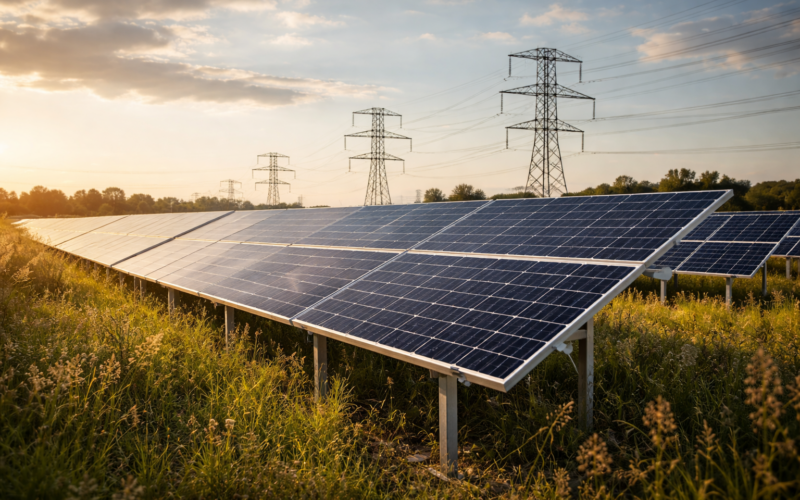
Georgia Power, the largest electric utility in Georgia and a subsidiary of Southern Company, has completed the biggest distributed generation solar procurement in its history, locking in more than 110 megawatts of new solar through a series of third-party power purchase agreements. The move matters not simply because it adds another clean-energy headline, but because it shows how a regulated utility is trying to meet fast-rising electricity demand with smaller, geographically distributed assets that are easier to approve, finance, and integrate than giant new builds. For Southern Company, this is less about splashy disruption and more about preserving the utility balance of growth, reliability, and regulatory credibility.
Why is Georgia Power using distributed solar procurement to meet Georgia’s rising electricity demand?
The immediate takeaway is that Georgia Power is not treating solar as a side program or a public-relations accessory. The utility is using distributed generation procurement as a planning tool tied directly to load growth. The latest batch includes 16 new contracts totaling 70 megawatts, building on 12 contracts previously approved and completed that added another 41 megawatts. In aggregate, that takes the current program past 110 megawatts, making it the largest distributed generation procurement in Georgia Power’s history.
That scale matters because Georgia is experiencing a strong combination of population growth, industrial expansion, and data-center-driven electricity demand. In that context, distributed generation offers a politically and operationally useful middle path. It can add incremental capacity without the long timelines, transmission complications, and capital intensity associated with very large central-station projects. A portfolio of smaller projects can help utilities fill local capacity gaps, diversify supply, and avoid more expensive emergency solutions later.
For regulators, this is also easier to support. These projects are being procured through competitive requests for proposals and sit within an already approved planning framework under Georgia Power’s integrated resource process. The company is executing against a path the Georgia Public Service Commission has already endorsed, including additional distributed generation procurement rounds planned for 2026 and 2027. That forward pipeline is arguably the more important signal than the 110-megawatt headline itself, suggesting distributed solar is becoming part of the utility’s default toolkit.

What does Georgia Power’s record solar award reveal about regulated utility strategy in 2026?
The strategic logic here is about optionality. Utilities facing load growth rarely want to make only one kind of bet. Georgia Power operates within a diverse generation mix that includes nuclear, natural gas, coal, hydro, wind, and solar, and already has thousands of megawatts of renewable resources online with more under development. It is aiming to significantly expand renewable capacity over the coming decade, and distributed generation helps fill in the gaps between larger commitments.
This matters because the utility business in 2026 is no longer just about securing enough power in annual averages. It is about where power is needed, how quickly it can be connected, and how resilient the portfolio is when demand assumptions keep getting revised upward. Smaller solar projects sourced from third-party developers allow Georgia Power to preserve capital flexibility while still securing output. The developer builds and maintains the facility, while Georgia Power purchases the energy under long-term agreements, limiting construction exposure for the utility and reducing execution risk relative to utility-owned builds.
There is also a regulatory messaging advantage. Utilities are under pressure to show they can expand cleaner resources without significantly increasing costs. Georgia Power’s approach is framed around competitive procurement, long-term planning, and maintaining reliability. It is a measured strategy that aligns with how regulated utilities typically earn approval and recover costs over time.
How does this Georgia Power solar expansion fit into Georgia’s wider energy and industrial buildout?
Georgia has become one of the more important solar markets in the Southeast, with thousands of megawatts already installed across the state. That scale confirms that solar is no longer a niche addition but a meaningful part of the supply mix.
This is important because Georgia’s growth story is increasingly tied to energy-intensive development. Manufacturing, logistics, population inflows, and digital infrastructure are all raising expectations for future electricity demand. Distributed solar can help address localized growth pockets, reduce some pressure on transmission expansion, and create a more modular capacity pipeline.
The caveat is that solar output remains intermittent, which means these procurements work best as part of a diversified portfolio rather than as a stand-alone solution. Georgia Power appears to recognize this, positioning distributed solar within a broader mix rather than presenting it as a single answer.
From an industry perspective, this reflects how the energy transition is unfolding in regulated markets. Instead of large, disruptive shifts, the system is evolving through incremental additions, structured procurement programs, and regulatory approvals that gradually reshape the grid over time.
What does Southern Company’s recent stock performance say about investor sentiment around this strategy?
Because Georgia Power is not separately listed, the market lens runs through Southern Company. The stock has remained relatively stable in recent trading, with modest short-term fluctuations and trading below its recent highs. This suggests that investors are not dramatically repricing the company based on this procurement alone.
That is not necessarily a negative signal. Utility investors tend to prioritize visibility, regulatory stability, and predictable earnings growth over individual project announcements. The market is more likely to respond to how effectively Georgia Power converts rising electricity demand into long-term earnings and rate-base growth than to any single solar milestone.
Seen this way, the procurement is supportive rather than transformational. It reinforces the idea that Southern Company is preparing for growth with a diversified resource strategy rather than reacting to demand pressures later. Over time, consistent execution in this approach could support investor confidence, especially if affordability and reliability remain intact.
What execution risks and competitive questions still hang over Georgia Power’s distributed solar buildout?
The primary risk is not contract execution but whether the overall resource mix can keep pace with demand growth in a sustainable way. Distributed solar is valuable, but it is not fully dispatchable, and its contribution depends on local conditions and grid integration.
If demand growth accelerates faster than expected, the utility may still need additional firm capacity, storage solutions, or transmission investments. Planning accuracy becomes critical in such a fast-growing environment.
There is also the question of cost discipline. Third-party power purchase agreements can be efficient, but their long-term value will ultimately be judged by regulators and customers based on affordability and system reliability. Any misalignment between procurement costs and customer outcomes could create pressure in future rate cases.
Competition is another factor. Large industrial and commercial customers increasingly evaluate energy availability, carbon profiles, and supply reliability when choosing investment locations. Georgia Power’s renewable expansion may therefore play a role in broader economic development, not just utility operations.
What are the key takeaways on what Georgia Power’s solar procurement means for Southern Company and the utility industry?
- Georgia Power’s 110-megawatt distributed solar milestone confirms that distributed procurement is becoming a repeatable planning mechanism.
- The structure allows the utility to add renewable capacity without taking on full construction ownership risk.
- The procurement aligns with Georgia’s strong demand growth driven by industrial and population expansion.
- Regulatory approval provides stability and ensures the strategy fits within long-term planning frameworks.
- Southern Company investors are likely to view this as supportive rather than a near-term catalyst.
- Future procurement rounds indicate this is an ongoing strategy, not a one-time initiative.
- Distributed solar improves flexibility but does not replace the need for firm capacity and grid investment.
- Georgia’s established solar base supports further expansion without requiring a complete system overhaul.
- The broader industry takeaway is that energy transition in regulated markets is happening through incremental execution.
- Long-term success will depend on balancing growth, affordability, and reliability.
Discover more from Business-News-Today.com
Subscribe to get the latest posts sent to your email.