

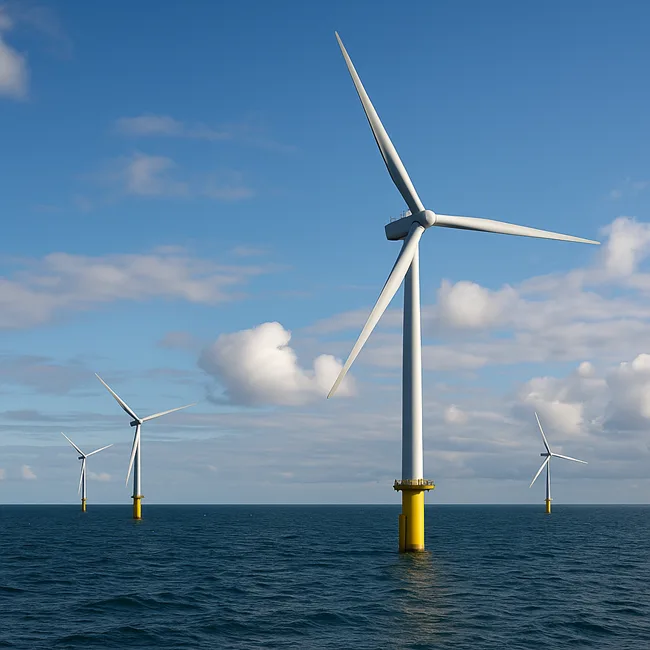
TotalEnergies SE (NYSE: TTE) has signed formal settlement agreements with the United States Department of the Interior to relinquish both of its American offshore wind leases, effectively ending the French energy major’s presence in the US offshore wind sector entirely. The company will recover approximately $928 million in lease fees paid for the Carolina Long Bay and New York Bight concessions, both awarded in 2022, and will redeploy that capital into the Rio Grande LNG export facility in Texas and upstream oil and gas activities in the Gulf of America. The announcement, made at the CERAWeek energy conference in Houston, where TotalEnergies chief executive Patrick Pouyanné signed the agreement alongside US Interior Secretary Doug Burgum, marks one of the most consequential individual retreats from US offshore wind to date. TTE shares were trading at approximately $88.76 on 22 March, near the upper end of a 52-week range spanning $52.90 to $91.38, reflecting a sharp rally driven in part by elevated oil prices following Middle East supply disruptions.
Why did TotalEnergies walk away from its two US offshore wind leases worth nearly $1 billion?
TotalEnergies concluded, based on its own internal studies, that offshore wind development in the United States is structurally more expensive than equivalent European projects and risks placing upward pressure on consumer power prices. That analysis, framed diplomatically, reflects a combination of genuine cost concerns and political calculation. The Trump administration has made dismantling the offshore wind expansion inherited from the Biden era a stated priority, and TotalEnergies’ willingness to frame its exit in terms of consumer affordability aligns neatly with the administration’s messaging. Whether or not the economics fully justify the exit on their own terms is a separate question from whether the settlement structure makes this the path of least resistance for a company with substantial and growing US hydrocarbon exposure.
The mechanics of the deal are worth examining. TotalEnergies invested $928 million in lease payments for the two concessions. Under the settlement, the company will first commit an equivalent amount to qualifying US fossil fuel projects, after which the government reimburses it dollar-for-dollar up to the full lease value. In practical terms, TotalEnergies is not receiving a windfall; it is recycling capital it had already committed. But the effect is to redirect that capital from long-dated, politically vulnerable renewable infrastructure into near-term LNG and oil and gas investments that carry both commercial returns and geopolitical tailwinds.
The agreement also contains a forward-looking pledge. TotalEnergies has committed not to develop any new offshore wind projects in the United States, a condition that goes beyond simply exiting the two existing leases. That pledge, embedded in the DOI settlement documentation, signals a complete and permanent withdrawal rather than a tactical pause, and removes any optionality around re-entry should the political environment shift under a future administration.
How does the $928m capital redeployment into Rio Grande LNG and Gulf of America oil change TotalEnergies’ US strategy?
The reinvestment destinations are specific and already well advanced within TotalEnergies’ existing portfolio. The Rio Grande LNG plant in Texas, developed through a partnership with NextDecade and co-investors including Global Infrastructure Partners, GIC, and Mubadala, reached a final investment decision on its fourth train in September 2025. The project is targeting a total nameplate capacity of 29 million tonnes per annum across its full build-out, making it one of the largest LNG export facilities under development in the United States. The $928 million will be allocated to Trains 1 through 4, accelerating a project already under construction rather than seeding a new development.
The second allocation, into upstream conventional oil in the Gulf of America and shale gas production, consolidates TotalEnergies’ existing onshore and offshore hydrocarbon activities in the United States. The company has invested close to $12 billion in the US since 2022 across oil, LNG, and power, and exported 19 million tonnes of LNG in 2025, a volume it claims positions it as the top US LNG exporter by throughput. The decision to channel the redirected offshore wind capital into these same activities rather than explore new sectors reflects a strategic preference for deepening known positions rather than diversifying into uncertain US clean energy markets under the current regulatory climate.
TotalEnergies has also moved quickly on the LNG supply side. The company recently signed a letter of intent with Glenfarne, the lead developer of the Alaska LNG project, for long-term offtake of 2 million tonnes per annum over 20 years, subject to final investment decision. That LOI, combined with the Rio Grande LNG acceleration, positions TotalEnergies to expand its role as a bridge supplier of US LNG to European buyers facing persistent energy security concerns following the suspension of Russian pipeline gas flows. Pouyanné explicitly cited European LNG demand and US data center gas requirements as the downstream rationale for the pivot.
What does the TotalEnergies settlement signal for the broader US offshore wind industry and remaining lease holders?
The deal carries template risk for the US offshore wind sector. It establishes a precedent under which a major international energy company can exit US offshore wind commitments, recover its full upfront lease investment, and redeploy capital into politically favored fossil fuel projects, all within a negotiated government settlement. That combination, full fee recovery plus a clean regulatory exit, is substantially more attractive than the alternative of holding contested leases through extended legal proceedings, particularly given that federal courts have repeatedly blocked the administration’s attempts to cancel wind permits outright.
The administration has been aggressive in its anti-wind posture but has faced consistent judicial pushback. Courts have allowed construction to resume on projects the administration sought to halt on national security grounds, creating an environment of legal uncertainty that increases execution risk and financing costs for developers. Against that backdrop, a negotiated buyout that restores invested capital and avoids protracted litigation may appeal to other lease holders facing similar commercial and political pressures. Whether the DOI has the budgetary capacity or political appetite to replicate this model with larger portfolios held by developers such as Equinor, BP, and Orsted remains to be seen, but the TotalEnergies settlement has made the question concrete.
For the US offshore wind industry more broadly, the exit removes two significant prospective projects, the Carolina Long Bay development off North Carolina and the Attentive Energy lease area in the New York Bight, from the active development pipeline. TotalEnergies had held these positions in partnership with other parties, and the relinquishment presumably affects those partners’ development positions as well. The New York Bight in particular was seen as a strategically important lease area given proximity to major Northeast demand centers, and its removal from TotalEnergies’ hands reduces the near-term supply of committed offshore wind capacity in a region where state-level renewable targets remain ambitious despite federal headwinds.
How has TotalEnergies maintained its integrated energy model in the US while retreating from offshore wind specifically?
TotalEnergies retains a substantial integrated power footprint in the United States despite the offshore wind exit. The company operates approximately 10 gigawatts of installed power capacity in the US and continues to hold positions in solar, storage, and gas-fired generation. The strategic distinction it appears to be drawing is between power assets that generate competitive returns without exposure to federal permitting risk, and offshore wind specifically, which carries a combination of high development costs, long construction timelines, and acute political vulnerability under the current administration.
That distinction matters for how investors read the move. A wholesale retreat from clean energy in the US would raise questions about TotalEnergies’ long-term positioning relative to European peers who have maintained renewable commitments even at a cost. A more targeted exit that preserves the onshore and distributed power portfolio while eliminating the specific offshore wind exposure is more defensible analytically, even if the settlement language, with its praise for the administration’s energy policy and its framing of offshore wind as harmful to consumer affordability, is more politically accommodating than strictly necessary.
The capital redeployment into LNG also plays directly into TotalEnergies’ core identity as the world’s largest LNG trader by volume. Deepening the Rio Grande LNG position reinforces a strategic franchise rather than building in a new direction. From a capital allocation standpoint, accelerating a project already in execution with known partners is a lower-risk use of $928 million than holding leases for offshore developments whose regulatory future was genuinely uncertain.
What are the geopolitical and European energy security implications of TotalEnergies’ expanded US LNG commitment?
TotalEnergies’ pivot sits at the intersection of two parallel dynamics: the Trump administration’s drive to expand US LNG exports as an instrument of energy diplomacy, and Europe’s continued need to replace Russian pipeline gas with diversified supply. The company’s position as the number one exporter of US LNG by its own account, combined with the Rio Grande LNG acceleration and the Alaska LNG offtake letter of intent, creates a growing transatlantic supply chain anchored around TotalEnergies as the commercial intermediary.
From the US perspective, the TotalEnergies deal is simultaneously a domestic energy policy statement and a foreign investment attraction exercise. The administration can point to a major French company choosing to deepen its US fossil fuel footprint over renewable energy as a validation of its energy policy direction. From TotalEnergies’ perspective, the combination of lease fee recovery, LNG project acceleration, and a continued Gulf of America oil position is commercially rational given the current price environment, particularly with Brent crude elevated above $100 in the wake of Middle East supply disruptions. TTE shares reflect that energy price tailwind, with the stock up approximately 19% over the past month and trading near its 52-week high.
The Alaska LNG letter of intent with Glenfarne represents a longer-dated bet. The Alaska LNG project has been under discussion for decades and has not yet reached a final investment decision, meaning the 2 million tonne per annum offtake commitment is conditional on the project proceeding. If it does, it would add a third US LNG supply point to TotalEnergies’ American portfolio alongside its Texas upstream gas production and the Rio Grande LNG project, creating a genuinely diversified US LNG origination position.
Key takeaways: What TotalEnergies’ US offshore wind exit means for the company, its competitors, and global LNG markets
- TotalEnergies SE (NYSE: TTE) has permanently exited US offshore wind, surrendering the Carolina Long Bay and New York Bight leases in exchange for recovery of approximately $928 million in lease fees paid in 2022.
- The $928 million will be reinvested in 2026 into Trains 1 to 4 of the Rio Grande LNG export plant in Texas and upstream conventional oil and shale gas activities in the Gulf of America.
- A no-new-offshore-wind pledge embedded in the DOI settlement removes any optionality around future re-entry regardless of how the US policy environment evolves.
- The deal establishes a potential template for other offshore wind lease holders: full fee recovery, clean regulatory exit, and capital redeployment into fossil fuel projects that the administration favors, a combination that will be scrutinised by Equinor, BP, Orsted, and others with US offshore positions.
- TotalEnergies retains roughly 10 gigawatts of installed US power capacity across solar, storage, and gas generation, making this an offshore wind exit rather than a wholesale clean energy retreat.
- A letter of intent with Alaska LNG developer Glenfarne for 2 million tonnes per annum of 20-year offtake adds a third potential US LNG supply point, subject to final investment decision.
- TTE shares have rallied approximately 19% over the past month and were trading near $88.76 on 22 March against a 52-week range of $52.90 to $91.38, with the energy price surge from Middle East disruptions providing an additional tailwind.
- The pivot deepens TotalEnergies’ claim as the world’s largest US LNG exporter by volume, reinforcing a strategic franchise that European buyers dependent on non-Russian supply are likely to value.
- The settlement was signed at CERAWeek in Houston, a public venue choice that amplifies its political symbolism as much as its commercial significance.
- For US offshore wind developers, the exit of a major European energy company with deep project development capabilities reduces the talent, technology, and capital pool available to the sector at a critical moment in its federal regulatory battle.
Discover more from Business-News-Today.com
Subscribe to get the latest posts sent to your email.