



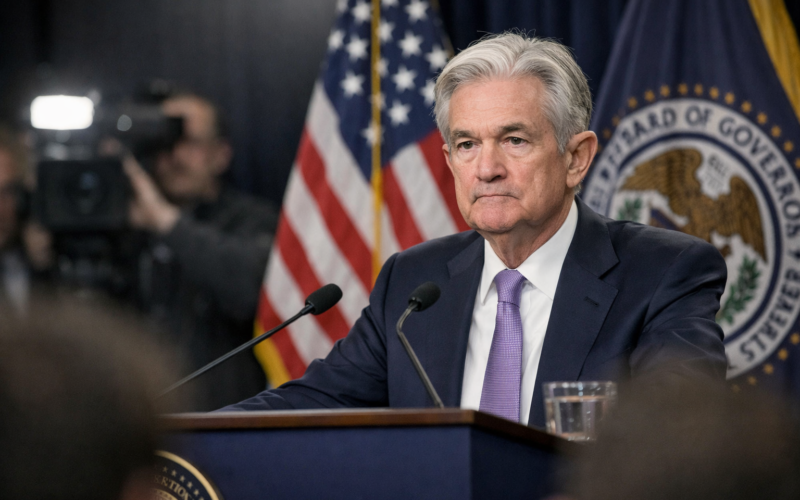
Federal Reserve Chair Jerome Powell stated on 18 March 2026 that he has no intention of vacating his position on the Federal Reserve Board of Governors while a Department of Justice (DOJ) criminal investigation targeting him and the central bank remains unresolved. Speaking at a press conference following the Federal Open Market Committee meeting in Washington, Powell said he would remain at the institution until the investigation is concluded with full transparency and finality. The declaration came days after a federal judge quashed grand jury subpoenas that the Department of Justice had served on the Federal Reserve in January, and as the Senate confirmation process for his nominated successor, former Federal Reserve Governor Kevin Warsh, remains blocked by at least one Republican senator.
At the same meeting, the Federal Open Market Committee voted to hold its benchmark federal funds rate unchanged at a target range of 3.5 to 3.75 percent, marking the second consecutive pause in 2026 following three successive quarter-point rate reductions in the final months of 2025. Committee members cited elevated uncertainty stemming from the ongoing United States and Israel military conflict with Iran, which has disrupted oil flows through the Strait of Hormuz and sent energy prices sharply higher. In its policy statement, the Federal Reserve said the implications of developments in the Middle East for the United States economy remain uncertain. Powell said the economic effects of the war are too early to assess with confidence but acknowledged that the oil price shock will push inflation higher in the near term.
The Federal Open Market Committee’s Summary of Economic Projections, released alongside the rate decision, showed officials now expect inflation to reach 2.7 percent by the end of 2026, an upward revision from the 2.4 percent forecast issued in December 2025. Core inflation, which excludes food and energy, was also revised to 2.7 percent for 2026, up from an earlier forecast of 2.5 percent. The committee’s median projection continued to pencil in one additional rate cut before the close of 2026, unchanged from December’s guidance. Powell cautioned that the rate forecast remains conditional on economic performance, and that if inflation progress falls short of expectations, no reduction may materialise this year.
What did Federal Reserve Chair Jerome Powell say about staying beyond his May 2026 term?
Powell’s term as Chair of the Federal Reserve is formally scheduled to expire on 15 May 2026. However, Powell holds a concurrent and independent appointment as a member of the Federal Reserve Board of Governors, a term that does not expire until January 2028. At the 18 March press conference, Powell addressed both scenarios directly. He stated that if his nominated successor, Kevin Warsh, is not confirmed by the United States Senate before his chairmanship ends in May, he will serve as chair pro tempore in the interim, consistent with legal requirements and precedent. Powell added that he has not yet decided whether he would choose to continue serving as a governor on the board after his chairmanship ends and after the investigation concludes, and that he would make that determination based on circumstances at the time.
Court papers released in the week of 16 March had already indicated Powell’s intention to remain at the institution. Lawyers on both sides of the subpoena litigation referenced Powell’s disinclination to leave while proceedings were ongoing, marking the first public signal that he would exercise his option to stay beyond the chairmanship expiry date. Bloomberg reported on 16 March that the court filings showed Powell felt compelled to remain on the Board of Governors at least until the legal process was complete.
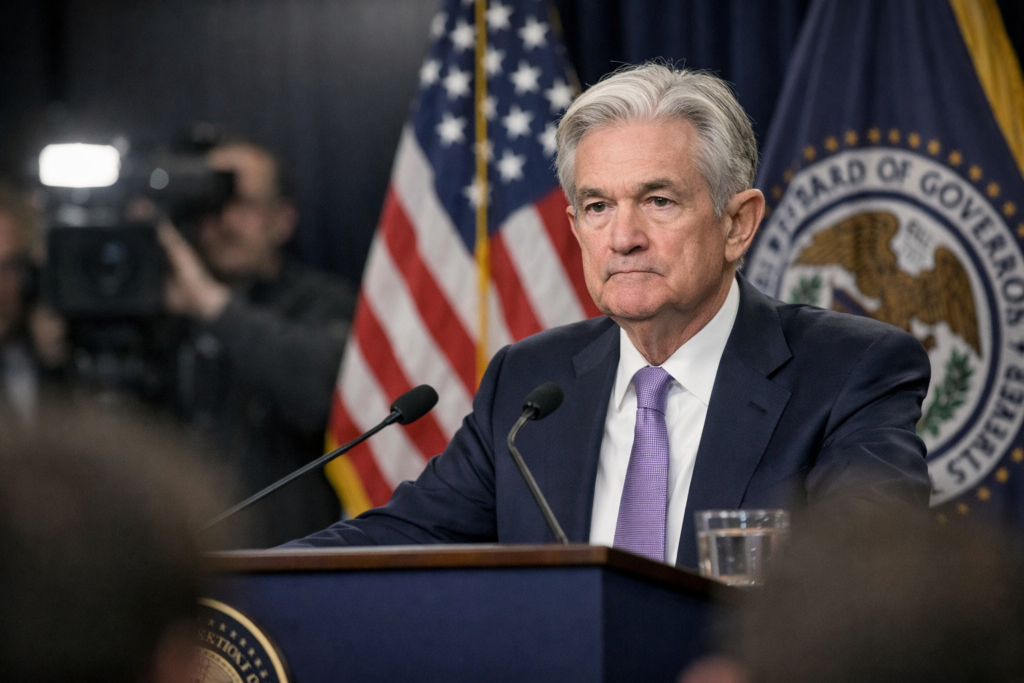
Why did the Department of Justice open a criminal investigation into Federal Reserve Chair Powell?
The Department of Justice, through the United States Attorney’s Office for the District of Columbia under United States Attorney Jeanine Pirro, opened a criminal investigation into Powell in November 2025. The inquiry was framed as an examination of whether Powell made false statements to Congress when he testified before the Senate Banking Committee in June 2025 about a multi-year renovation project at the Federal Reserve’s Washington headquarters. The renovation, which covers the Marriner S. Eccles Building and the adjacent Federal Reserve Board East building, was originally budgeted at approximately 1.9 billion United States dollars before being revised to approximately 2.5 billion United States dollars due to design changes, rising construction costs, and unforeseen site conditions.
On 11 January 2026, the Federal Reserve received grand jury subpoenas from the Department of Justice demanding records related to the renovation. Powell responded the same evening in a public video statement, acknowledging that scrutiny of the renovation project was legitimate but characterising the subpoenas as a pretext rooted in the administration’s ongoing pressure campaign over interest rates. Powell stated directly that the threat of criminal charges was a consequence of the Federal Reserve setting interest rates based on its assessment of what serves the public rather than following the preferences of the President. The Federal Reserve Board of Governors subsequently challenged the subpoenas in court in a proceeding that remained sealed until March 2026.
The investigation emerged amid a sustained period of public conflict between President Donald Trump and Powell over monetary policy. Trump had repeatedly demanded more aggressive interest rate reductions, criticising Powell publicly on multiple occasions and at one point stating he wanted to fire Powell. Trump had also previously threatened legal action over the renovation project, and Federal Housing Finance Agency Director Bill Pulte had called publicly on Congress to investigate the matter. Federal District Court Judge James Boasberg, in his March 2026 ruling, cited these public statements extensively and noted that Pulte’s public call for an investigation preceded the Department of Justice’s decision to open one.
How did United States District Judge James Boasberg rule on the DOJ subpoenas targeting the Federal Reserve?
United States District Judge James Boasberg, chief judge of the United States District Court for the District of Columbia, issued a ruling on 12 March 2026 that was unsealed on 14 March 2026, quashing both subpoenas the Department of Justice had served on the Federal Reserve Board of Governors. In his 27-page opinion, Boasberg concluded that the government had produced essentially zero evidence to suspect Powell of any crime and that its justifications for the subpoenas were so thin and unsubstantiated that the court could only conclude they were pretextual. The ruling stated that a mountain of evidence suggested the subpoenas were served on the board to pressure its chair into voting for lower interest rates or resigning.
Boasberg wrote that there was abundant evidence that the dominant, if not sole, purpose of the subpoenas was to harass and pressure Powell either to yield to the President or to resign and make way for a Federal Reserve Chair who would. The judge cited a documented pattern of at least 100 public statements by President Trump and his deputies attacking Powell and demanding lower interest rates. Boasberg further noted the sequence in which a political appointee with no law enforcement role first suggested the renovation as a line of investigation, followed promptly by the United States Attorney’s Office acting on that same theory. The court found that the subpoenas were issued for an improper purpose and ordered them quashed.
United States Attorney Jeanine Pirro responded swiftly and critically at a news conference, calling Boasberg an activist judge and labelling the ruling outrageous. Pirro announced that the Department of Justice would appeal the decision. She argued that Boasberg had improperly raised the evidentiary bar for grand jury subpoenas and had effectively granted Powell immunity. Pirro maintained that the investigation concerned legitimate allegations of false statements and fraud before Congress and that it would be up to the grand jury, not the court, to determine whether charges were warranted.
Why is Republican Senator Thom Tillis blocking Kevin Warsh’s confirmation as Federal Reserve Chair?
Senator Thom Tillis, Republican of North Carolina and a member of the Senate Banking Committee, announced that he would block the Senate confirmation of Kevin Warsh as the next Federal Reserve Chair until the Department of Justice investigation into Powell is fully resolved. Tillis’s position creates a critical procedural obstacle because the Senate Banking Committee must advance Warsh’s nomination before the full Senate can vote on it. A single senator’s opposition within the committee can deadlock the panel and prevent a confirmation vote from reaching the Senate floor. Tillis welcomed the Boasberg ruling as confirmation that the investigation was frivolous and constituted nothing more than a failed attack on Federal Reserve independence, and called on the Department of Justice to abandon the case entirely.
After the Department of Justice announced it would appeal Boasberg’s ruling, Tillis hardened his position further, stating that pursuing the appeal would only delay the confirmation of Kevin Warsh as the next Federal Reserve Chair. The senator’s stance directly links the fate of Warsh’s nomination to the trajectory of the Department of Justice investigation and the associated legal proceedings. As long as the appeal remains pending or the investigation continues, Tillis has indicated he will not permit the Banking Committee to advance Warsh’s nomination.
President Trump nominated Kevin Warsh, a former Federal Reserve Governor who served from 2006 to 2011 and was closely associated with then-Chair Ben Bernanke during the 2008 to 2009 global financial crisis, as Powell’s successor in January 2026. Warsh is understood to favour lower interest rates, broadly consistent with the preferences Trump has publicly and persistently articulated. However, Warsh’s confirmation path remains uncertain given the Senate dynamic created by Tillis’s hold, and markets and analysts have noted that even if confirmed, Warsh would face a Federal Open Market Committee whose members have signalled wariness about rapid rate reductions amid persistent inflation and an uncertain geopolitical environment.
What is the broader institutional and legal context of the dispute over Federal Reserve independence in 2026?
The Federal Reserve’s independence from political interference has been a foundational element of United States monetary policy architecture since the Federal Reserve Reform Act of 1977 established the dual mandate of maximum employment and price stability. The statute governing the Federal Reserve places restrictions on the executive branch’s ability to remove Federal Reserve governors except for cause, a protection designed to insulate the central bank’s policymakers from short-term political pressure. Powell invoked this institutional context in his public statement in January 2026, framing the Department of Justice subpoenas as a direct attack on the Federal Reserve’s ability to set monetary policy based on economic evidence rather than presidential preferences.
The Powell investigation is not the only active legal challenge to Federal Reserve institutional independence in 2026. A separate case concerning the administration’s attempted dismissal of Federal Reserve Governor Lisa Cook over unsubstantiated allegations of mortgage fraud has reached the United States Supreme Court, which heard oral arguments in January 2026 but had not yet issued a ruling as of 18 March. The outcome of the Cook case is expected to set a significant legal precedent regarding the executive branch’s authority to remove Federal Reserve board members despite statutory protections. The two cases together represent an unprecedented degree of executive branch pressure on the Federal Reserve system in its modern history.
Powell’s public response to the Department of Justice investigation has been notably assertive compared with historical norms of central bank communication restraint. His January 2026 video statement, in which he directly contested the stated rationale for the subpoenas and characterised them as a consequence of the Federal Reserve’s independence in setting interest rates, was described by observers as unusually combative for a sitting Federal Reserve Chair. At the March 2026 press conference, Powell continued to hold rates steady and declined to signal any shift in the Federal Reserve’s monetary policy posture attributable to political pressure, reiterating that monetary policy is not on a preset course and that decisions would continue to be made meeting by meeting on the basis of economic data.
How does the Iran war and oil price shock complicate the Federal Reserve’s interest rate outlook for 2026?
The United States and Israel military conflict with Iran, which began in late February 2026, has materially altered the economic backdrop confronting the Federal Open Market Committee. Iran’s influence over the Strait of Hormuz, through which approximately 20 percent of global oil supply ordinarily transits, has resulted in severe disruption to oil flows. Brent crude futures at one point during the week of 18 March exceeded 109 United States dollars per barrel. The spike in energy prices is expected to push headline consumer price inflation significantly higher in the months immediately ahead, even as Federal Reserve officials indicated they believe the increase is likely to be largely temporary if the conflict does not persist beyond 2026.
The Federal Open Market Committee’s March 2026 Summary of Economic Projections reflected this uncertainty. Officials revised their 2026 inflation forecast upward and introduced language in the policy statement explicitly referencing the Middle East conflict. Powell acknowledged at the press conference that higher oil prices will elevate inflation in the near term but that nobody currently knows whether prolonged high gas prices will suppress consumer spending sufficiently to materially slow economic activity. The committee’s median dot plot retained the projection of one rate cut in 2026 and another in 2027, suggesting officials expect inflationary pressures from the oil shock to unwind by year end. However, seven of the 19 Federal Open Market Committee participants signalled they expected rates to remain unchanged throughout 2026, one more than in the December projections.
United States equity markets reacted negatively to the Federal Reserve’s combined signals. The Dow Jones Industrial Average fell approximately 768 points or 1.63 percent on 18 March, and the S&P 500 declined 1.36 percent, with the Nasdaq Composite losing 1.46 percent. Investors appeared to respond to the simultaneous presence of hotter-than-expected inflation data, elevated oil prices, and a Federal Reserve posture that provided no near-term relief on interest rates. The combination of supply-side inflation pressures from both the Iran war and the Trump administration’s remaining tariff policies has placed the Federal Reserve in what economists described as one of the most difficult dual-mandate environments in recent memory.
Key takeaways on what Jerome Powell’s decision to stay at the Federal Reserve means for United States monetary policy and institutional independence
- Federal Reserve Chair Jerome Powell confirmed on 18 March 2026 that he will not leave the Federal Reserve Board of Governors until the Department of Justice criminal investigation is concluded with transparency and finality, and that if his nominated successor Kevin Warsh is not confirmed by May 2026, he will serve as chair pro tempore in the interim.
- United States District Judge James Boasberg quashed two Department of Justice grand jury subpoenas targeting the Federal Reserve on 12 March 2026, ruling that the government produced essentially zero evidence of any crime by Powell and that the dominant purpose of the subpoenas was to pressure Powell into lowering interest rates or resigning. The Department of Justice has announced it will appeal.
- Senator Thom Tillis, Republican of North Carolina, is blocking Kevin Warsh’s Senate Banking Committee confirmation vote until the Department of Justice investigation is dropped, creating a direct legislative link between the outcome of the legal proceedings and the transition of Federal Reserve leadership.
- The Federal Open Market Committee held the federal funds rate steady at 3.5 to 3.75 percent at its 18 March meeting and revised its 2026 inflation forecast upward to 2.7 percent, citing the Iran war oil price shock, while retaining the projection of one rate cut before the end of 2026, conditional on inflation progress.
- The investigation of Powell, combined with the unresolved Supreme Court case concerning the attempted removal of Federal Reserve Governor Lisa Cook, represents an unprecedented simultaneous legal challenge to the institutional independence of the Federal Reserve under the Trump administration.
Discover more from Business-News-Today.com
Subscribe to get the latest posts sent to your email.