




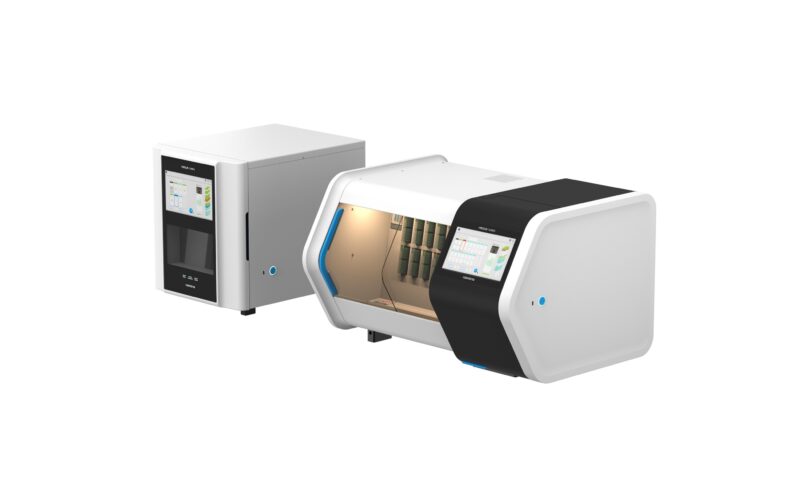
Vieworks Co., Ltd., a South Korea based medical imaging technology developer, will debut the VISQUE DPS LH210 digital pathology slide scanner at the 2026 annual meeting of the United States & Canadian Academy of Pathology in San Antonio, Texas. The new system expands the company’s VISQUE DPS digital pathology portfolio and targets mid-capacity laboratories seeking faster scanning speeds, reduced image data volumes, and simplified workflow integration. The launch reflects the rapid global shift toward digitized pathology diagnostics as hospitals, research institutes, and reference laboratories modernize slide management, remote consultation, and data-driven diagnostics. By introducing a system designed to process both cytology and histology slides on a single platform, Vieworks Co., Ltd. is positioning the VISQUE DPS LH210 as a flexible infrastructure component for laboratories transitioning toward fully digital pathology environments.
The product will be showcased at booth 352 during the United States & Canadian Academy of Pathology annual meeting from March 23 to March 25, an event widely regarded as one of the most influential global gatherings for pathology technology vendors, academic researchers, and clinical diagnostic leaders.
Why are pathology laboratories accelerating adoption of digital slide scanners and automated imaging infrastructure?
Pathology has historically remained one of the most analog corners of modern medicine. Glass slides, microscopes, and manual interpretation have dominated diagnostic workflows for decades. However, the emergence of digital pathology has begun to reshape the field, driven by three converging forces: increasing diagnostic workload, the need for remote collaboration, and the integration of artificial intelligence in medical imaging analysis.
Digital slide scanners convert physical pathology slides into high-resolution digital images that can be stored, analyzed, and shared across networks. For laboratories managing thousands of slides per week, digitization enables remote consultations, automated image analysis, and centralized data management. Hospitals can connect pathologists across locations, while research institutions can train machine learning algorithms on massive datasets of digitized tissue samples.
The shift toward digital pathology also aligns with broader healthcare digitization initiatives that include electronic health records, telemedicine platforms, and AI-assisted diagnostics. Regulators and health systems increasingly view digital pathology infrastructure as a necessary foundation for future precision medicine programs.
Within this context, imaging technology vendors have begun developing slide scanners with greater throughput, improved image quality, and smaller data footprints. These systems must balance speed and resolution while managing the enormous data volumes generated by high-magnification slide imaging.
Vieworks Co., Ltd. is positioning its VISQUE DPS lineup to compete in this evolving infrastructure segment.
What capabilities does the VISQUE DPS LH210 introduce for mid capacity digital pathology laboratories?
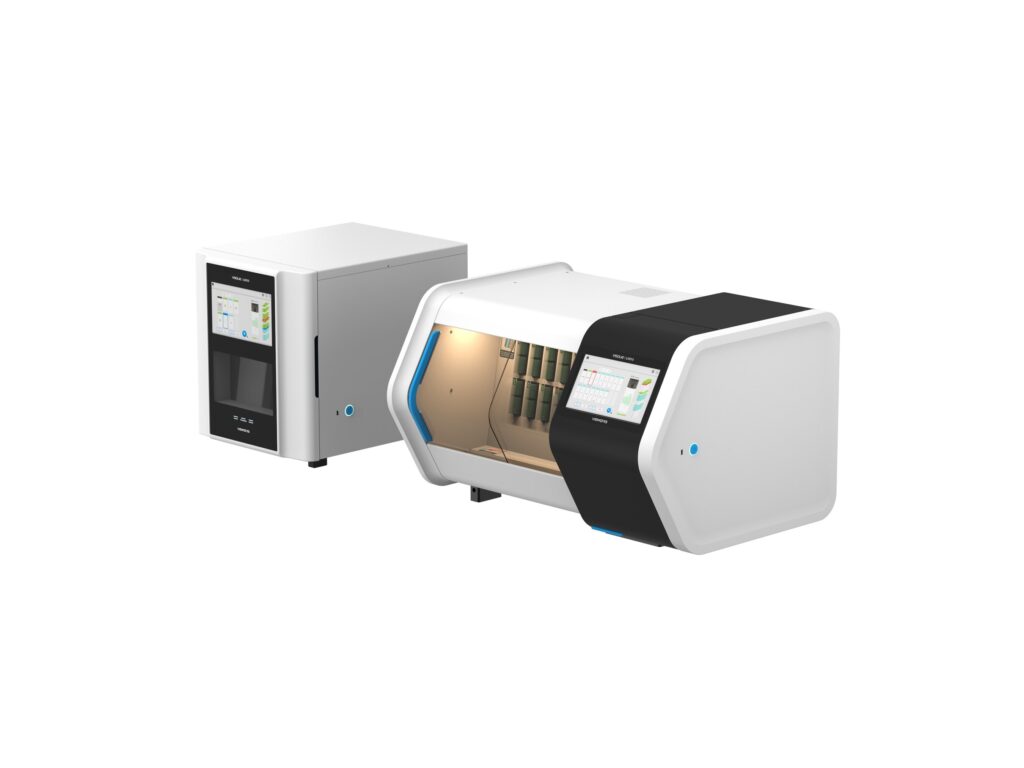
The VISQUE DPS LH210 has been designed as a mid-capacity digital pathology slide scanner capable of handling laboratories that require consistent scanning throughput but do not necessarily need the extreme scale associated with high-volume reference laboratories.
The system supports up to 210 slides per batch and can scan a standard 15 by 15 millimeter slide area at 40× magnification in approximately 23 seconds. That speed places the device in a performance category that balances productivity with operational footprint, allowing laboratories to digitize large volumes of slides without deploying multiple large industrial scanners.
For many pathology labs transitioning toward digital infrastructure, the challenge is not only scanning speed but also the downstream data burden created by high resolution imaging. Whole slide images can easily exceed several gigabytes per scan, creating storage and network challenges for hospitals managing large diagnostic archives.
Vieworks Co., Ltd. designed the VISQUE DPS LH210 to address that issue by optimizing image file sizes while preserving diagnostic image quality. Smaller image data volumes can significantly reduce storage costs and improve the speed of image transfer across hospital networks, an important factor for remote diagnostics and telepathology.
By targeting these operational pain points, the VISQUE DPS LH210 attempts to position itself as a practical upgrade path for laboratories that want digital pathology capabilities without committing to the largest enterprise-scale scanning systems.
How does Realtime Extended Focus imaging technology affect scanning speed and image quality?
A key technical component of the VISQUE DPS LH210 is the integration of Realtime Extended Focus imaging technology developed by Vieworks Co., Ltd. The system employs a three-camera architecture capable of capturing multiple focal layers simultaneously.
Traditional digital pathology scanners often require sequential focus stacking, where images are captured at multiple focal depths and later merged through computational processing. While effective, this approach can slow scanning speed and increase image file sizes.
The Realtime Extended Focus method instead captures focal data concurrently and merges it during the scanning process. This allows the system to produce a single composite image that maintains sharp focus across uneven tissue surfaces while preserving scanning speed.
In practice, pathology slides often contain variations in tissue thickness that can create focus inconsistencies during imaging. Extended focus technologies aim to solve this issue by ensuring that diagnostically important structures remain sharp even when they exist at slightly different depths within the sample.
By combining this approach with optimized image compression, the VISQUE DPS LH210 attempts to deliver high diagnostic image quality without imposing excessive data overhead on laboratory IT systems.
Why are combined cytology and histology scanning platforms becoming strategically important for laboratories?
Pathology laboratories frequently process both cytology and histology samples, but many scanning platforms are optimized for only one of these applications. Cytology samples such as Pap smears often require deeper focus stacks because cells are distributed in multiple layers across the slide surface.
Histology slides, by contrast, typically involve thin tissue sections mounted in a relatively uniform plane. Historically, laboratories often needed separate imaging workflows or scanner configurations to accommodate both sample types.
The VISQUE DPS LH210 is designed to support both cytology and histology imaging within a single scanning system. For laboratories seeking operational efficiency, this capability can reduce equipment complexity while simplifying workflow management.
Consolidating scanning infrastructure can also improve laboratory utilization rates. Instead of allocating separate scanners for different slide types, laboratories can route multiple diagnostic workloads through a single platform, improving equipment efficiency and potentially lowering capital expenditure requirements.
As digital pathology adoption accelerates, vendors that provide multi-application imaging platforms may gain an advantage in laboratories attempting to standardize their digital workflows.
How does the VISQUE DPS LH210 fit within Vieworks Co., Ltd.’s broader digital pathology strategy?
The VISQUE DPS LH210 joins the existing VISQUE DPS LH510 within the Vieworks Co., Ltd. digital pathology portfolio. The LH510 is positioned as a high-throughput scanner designed for large hospitals, reference laboratories, and research institutions that process very high slide volumes.
By introducing the LH210 as a mid-capacity platform, Vieworks Co., Ltd. appears to be pursuing a tiered product strategy designed to cover multiple segments of the pathology infrastructure market.
Large reference laboratories require industrial-scale scanning systems capable of continuous operation and extremely high slide throughput. Smaller hospital laboratories, meanwhile, often require systems that balance capacity, footprint, and cost efficiency.
Offering scanners across these different throughput tiers allows imaging vendors to serve a wider range of laboratory customers while maintaining a consistent technology platform across their product lineup.
This approach is common in other medical imaging segments where equipment vendors deploy product families targeting different clinical environments, from small hospitals to large academic medical centers.
What broader industry trends are driving investment in digital pathology infrastructure worldwide?
The global digital pathology market has expanded significantly over the past decade as healthcare systems recognize the operational and diagnostic advantages of digitizing pathology workflows.
Several structural trends are driving this expansion. Artificial intelligence in pathology is one of the most visible catalysts. Machine learning models trained on digitized pathology images can assist pathologists in detecting cancerous cells, identifying tissue abnormalities, and quantifying biomarkers. However, these tools require large libraries of high-quality digital slide images to function effectively.
Another driver is the increasing need for remote pathology consultation. In regions where specialist pathologists are scarce, digital slides can be transmitted to experts located elsewhere. This capability has become especially valuable in global research collaborations and clinical trial programs where tissue samples must be evaluated across multiple institutions.
Regulatory frameworks have also begun evolving to accommodate digital pathology diagnostics. As health authorities expand approval pathways for digital slide imaging in primary diagnostics, laboratories are increasingly comfortable transitioning away from purely microscope-based workflows.
Together, these factors are transforming digital pathology scanners from optional research tools into foundational components of modern diagnostic infrastructure.
What does the VISQUE DPS LH210 launch signal about competition in the digital pathology imaging market?
The debut of the VISQUE DPS LH210 highlights the intensifying competition among medical imaging technology vendors to capture the growing digital pathology infrastructure market.
Several global companies now compete in this segment, offering slide scanners designed for varying throughput levels, imaging resolutions, and laboratory integration capabilities. Vendors increasingly differentiate their systems through software integration, data management efficiency, and compatibility with AI diagnostic platforms.
In this environment, imaging speed alone is no longer the primary differentiator. Laboratories are increasingly evaluating total workflow efficiency, including file size management, network transfer speed, and compatibility with laboratory information systems.
Vieworks Co., Ltd. appears to be emphasizing these operational dimensions with the VISQUE DPS LH210, particularly through its focus on optimized image file sizes and flexible multi-application scanning capability.
For laboratories evaluating digital pathology investments, these operational factors can significantly influence long-term infrastructure costs.
Key takeaways on what the VISQUE DPS LH210 launch means for Vieworks and the digital pathology industry
- The VISQUE DPS LH210 expands the Vieworks Co., Ltd. digital pathology portfolio into the mid-capacity laboratory segment, enabling the company to address a broader customer base.
- By supporting both cytology and histology imaging on a single platform, the scanner aims to simplify diagnostic workflows and reduce equipment redundancy in pathology laboratories.
- The integration of Realtime Extended Focus imaging technology highlights the industry’s shift toward faster scanning combined with improved focus accuracy for complex tissue samples.
- Optimized image file sizes reflect growing recognition that data management costs are becoming a major constraint in digital pathology deployments.
- The launch reinforces the broader transition of pathology laboratories toward fully digital diagnostic workflows that support remote consultation and AI analysis.
- Mid-capacity scanning systems may represent one of the fastest growing segments of the digital pathology equipment market as mid-size hospital laboratories modernize their infrastructure.
- Vieworks Co., Ltd. is adopting a tiered product strategy with the VISQUE DPS LH210 and VISQUE DPS LH510 to address laboratories with different throughput requirements.
- Increasing demand for AI-assisted pathology analysis will likely accelerate adoption of high-resolution digital slide scanners across both research and clinical settings.
- Competition among digital pathology equipment vendors is shifting from pure scanning speed toward overall workflow efficiency and data infrastructure integration.
- The VISQUE DPS LH210 launch signals that imaging vendors are positioning themselves for a future where digital pathology becomes a core component of diagnostic medicine.
Discover more from Business-News-Today.com
Subscribe to get the latest posts sent to your email.

