


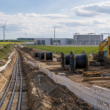


Meeka Metals Limited (ASX:MEK), the Western Australian gold producer operating the Murchison Gold Project 50 kilometres north of Meekatharra, has commenced installation of a Steinert multi-sensor ore sorting system at its processing plant, targeting expanded throughput of approximately 800,000 tonnes per annum and a meaningful step-up in annual gold production. The company has committed A$6 million to the project, funded entirely from existing cash reserves, with commissioning targeted for the September 2026 quarter. The ore sorter will initially process ore from the Andy Well underground mine, separating high-grade material for immediate processing and stockpiling lower-grade material for later treatment. The upgrade is designed to address a structural mill constraint that has limited Meeka Metals’ ability to fully exploit its growing multi-source feed pipeline.
The strategic logic is straightforward. The existing Murchison processing plant operates at approximately 600,000 tonnes per annum nameplate capacity, and with Andy Well underground, multiple open pit operations, and the forthcoming Turnberry underground mine all contributing feed, the plant has become the binding constraint on production growth. Rather than commit to a A$40 million-plus crushing and grinding circuit expansion or a A$100 million-plus standalone processing facility, Meeka Metals has opted for a capital-light intervention that delivers 200,000 tonnes per annum of additional effective throughput in six months at a fraction of those costs. The ore sorter achieves this by concentrating gold-bearing material before it enters the mill, effectively doubling the head grade of Andy Well ore and freeing up milling capacity for ore from other sources.
How does Steinert ore sorting technology work and what results did Meeka Metals achieve in test work at Andy Well?
The Steinert combination sensor sorting system deployed at Murchison integrates four detection technologies: X-ray transmission for density differentiation, two optical sensors providing colour and three-dimensional shape data, and an inductive sensor for metal detection. The system processes ore on a particle-by-particle basis, enabling precise separation of gold-bearing quartz veins from barren host rock at throughput rates of up to 100 tonnes per hour. The combination of X-ray transmission and laser sensors is particularly well-suited to gold ore sorting, where the mineralogical contrast between mineralised quartz and waste rock provides the sorting signal.
Test work conducted at Steinert’s facility in Bibra Lake, Western Australia, using development ore samples from Andy Well underground confirmed strong amenability. The ore sorter demonstrated the ability to concentrate approximately 85 percent of contained gold ounces into approximately 50 percent of the total rock mass. Applied to the Andy Well Ore Reserve grade of 3.8 grams per tonne gold and an annual underground production rate of 400,000 tonnes, this translates to a high-grade product stream of approximately 200,000 tonnes at 6.5 grams per tonne gold containing around 42,000 ounces, against a low-grade stockpile of 200,000 tonnes at 1.1 grams per tonne gold containing around 7,000 ounces. The head grade entering the mill effectively rises from 3.8 grams per tonne to 6.5 grams per tonne for the processed stream, which the company describes as effectively doubling Andy Well’s already above-average head grade.
What does the 200ktpa capacity unlock mean for Meeka Metals gold production outlook at Murchison?
The capacity release is not merely arithmetic. By processing 200,000 tonnes of high-grade Andy Well ore instead of 400,000 tonnes of unsorted feed, Meeka Metals frees approximately 200,000 tonnes of annual milling capacity for ore from open pit operations, the Turnberry underground mine currently in development, or accelerated Andy Well production. The Turnberry underground mine is scheduled to commence development in 2026 and will add a second underground ore source to the Murchison feed pipeline. The ore sorter upgrade is therefore timed to coincide with a meaningful increase in total feed availability, and Meeka Metals is already conducting test work to assess the applicability of ore sorting to other Murchison ore sources beyond Andy Well.
The company’s December 2024 Definitive Feasibility Study outlined a 10-year production plan with peak annual production of 76,000 ounces and average annual production of 65,000 ounces over the first seven years. The DFS was based on a 600,000 tonnes per annum processing rate. The ore sorting upgrade, by lifting effective throughput to 800,000 tonnes per annum, opens the possibility of outperforming DFS production assumptions, particularly once Turnberry comes online and adds feed volume. Meeka Metals has not yet issued revised production guidance incorporating the upgrade’s contribution, which leaves scope for a positive update once commissioning is confirmed.
How does the A$6M ore sorter capex compare with alternative processing expansion options Meeka Metals assessed?
The capital efficiency of the ore sorting approach stands out against the alternatives Meeka Metals evaluated. An expansion of the existing crushing and grinding circuit at Andy Well to deliver 200,000 to 400,000 tonnes per annum of additional capacity was costed at over A$40 million with a 12 to 18-month commissioning timeline. A new larger standalone processing facility capable of 2 to 3 million tonnes per annum was estimated at over A$100 million with a 24-month build timeline. Against these benchmarks, A$6 million for 200,000 tonnes per annum of effective throughput gain in six months is a materially different capital allocation proposition.
Critically, the unit processing cost at the higher throughput remains consistent with the DFS estimate of approximately A$38 per tonne, preserving the cost structure established in the feasibility work. The company also flags a downstream benefit on tailings infrastructure: lower tailings volumes per ounce produced are expected to reduce tailings storage facility capital expenditure by an estimated A$3 per tonne, a secondary saving that compounds over a 10-year mine life. Reduced hard waste rock in the mill feed is also expected to lower plant wear and maintenance costs, though Meeka Metals has not yet quantified those savings. The A$6 million is funded entirely from existing cash, preserving balance sheet headroom without dilution or external financing.
The comparison with the crushing and grinding circuit expansion is important for a second reason. Meeka Metals has not abandoned that option: the company states that further expansion of crushing and grinding capacity and the construction of a new larger processing plant remain viable alternatives under ongoing assessment. This suggests Meeka Metals is treating ore sorting as a near-term, high-return bridge investment while continuing to evaluate the longer-term infrastructure question. Continued drilling success across Turnberry, Rosapenna, and the Fairway shear zone will strengthen the economic case for a larger processing solution if the resource base grows sufficiently to justify the capital commitment.
What are the operational and environmental benefits of ore sorting beyond the throughput and grade uplift at Murchison?
The ore sorter delivers several subsidiary operating benefits that are worth disaggregating. The removal of hard waste rock from the mill feed before it enters the processing plant is expected to reduce wear on grinding media, liners, and other mill components, translating to lower maintenance expenditure and extended equipment life. Given that grinding circuits are typically the highest-cost and most maintenance-intensive element of a gold processing plant, this is not a trivial secondary benefit.
The reduction in tailings deposition per ounce produced is similarly material over a multi-year operation. Tailings storage facilities require ongoing capital investment as capacity is consumed, and regulatory scrutiny of tailings management has intensified across the Australian gold sector following several high-profile failures internationally. By processing a lower total mass per ounce recovered, Meeka Metals extends the effective life of its existing tailings infrastructure and reduces the capital required to expand or construct new tailings facilities. The company estimates the tailings-related saving at approximately A$3 per tonne, which across 200,000 tonnes of low-grade stockpile deferral represents a meaningful reduction in infrastructure liability.
How is Meeka Metals ASX:MEK stock performing and what does the market reaction suggest about investor confidence in the upgrade?
Meeka Metals shares were trading at approximately A$0.23 on 17 March 2026, representing a gain of around 2.2 percent on the day. The stock has a 52-week range of A$0.11 to A$0.305, placing the current price roughly in the upper half of that range and well above the 52-week low. The 12-month return of approximately 109 percent substantially outperforms the broader ASX 200, which returned around 2.6 percent over the same period. Year-to-date the stock is down approximately 11 percent from its recent highs, reflecting broader gold equity volatility rather than any company-specific deterioration. The consensus analyst price target sits at A$0.40, implying meaningful upside from current levels if the operational build-out proceeds as planned.
The market reaction to the ore sorting announcement is modestly positive, consistent with a development that confirms execution rather than changing the investment thesis. The upgrade is a relatively low-risk capital deployment: at A$6 million and six months to commissioning, it is too small to materially affect near-term financial risk but is large enough to accelerate ounce production and improve unit economics. Investors who have tracked Meeka Metals’ progress since gold production commenced in July 2025 will recognise the ore sorting upgrade as a logical operational evolution rather than a strategic pivot. The more meaningful re-rating catalyst will be the commissioning result in September 2026 and the subsequent production numbers that confirm whether the test work grade separation is replicable at operational scale.
What execution risks should investors monitor as Meeka Metals commissions the Steinert ore sorter in 2026?
The primary execution risk is the translation of bench-scale test work to commercial-scale performance. Ore sorting amenability can vary across a deposit, and while the Andy Well underground ore has demonstrated strong sensor response in Bibra Lake test conditions, the actual ore feed delivered to the sorter in commercial operations may show compositional variability that affects separation efficiency. The 85 percent gold recovery into 50 percent of the rock mass is a test-work outcome, not a guaranteed operating result, and investors should monitor initial commissioning data closely for any divergence from that benchmark.
The commissioning timeline also carries inherent schedule risk. Civil works are underway and equipment delivery is expected in the June 2026 quarter, leaving a compressed installation and commissioning window to reach the September 2026 target. Any delay in equipment delivery, civil completion, or wet commissioning would push the production benefit into the December 2026 quarter, deferring the anticipated ounce uplift. The company has not disclosed contingency arrangements or a fallback plan if commissioning is delayed, though the existing 600,000 tonnes per annum plant would continue operating in the interim.
A second risk is the low-grade stockpile. The ore sorting process creates approximately 200,000 tonnes per annum of material at 1.1 grams per tonne gold that is deferred rather than discarded. The long-term recovery of those ounces depends on processing economics, gold price conditions, and plant availability at the time the stockpile is eventually processed. If gold prices decline or processing costs rise materially, the economics of treating low-grade stockpiled material may be challenged. Meeka Metals has not disclosed a specific treatment timeline or economic threshold for the low-grade stockpile, which is a disclosure gap worth monitoring as the project matures.
Key takeaways: What Meeka Metals’ Murchison ore sorter upgrade means for production, costs, and the ASX gold sector
- Meeka Metals has commenced a A$6 million ore sorting upgrade at the Murchison Gold Project, targeting processing throughput of approximately 800,000 tonnes per annum, up from 600,000 tonnes per annum, with commissioning expected in the September 2026 quarter.
- The Steinert multi-sensor ore sorter will initially process Andy Well underground ore, concentrating approximately 85 percent of contained gold into 50 percent of the rock mass and effectively doubling the mill feed head grade from 3.8 grams per tonne to approximately 6.5 grams per tonne gold.
- At A$6 million, the upgrade delivers 200,000 tonnes per annum of effective additional throughput at a fraction of the cost of equivalent crushing and grinding circuit expansion (over A$40 million) or a new standalone processing facility (over A$100 million), making it one of the highest-return capital decisions Meeka Metals has announced.
- The freed mill capacity positions Meeka Metals to absorb feed from the Turnberry underground mine (commencing development in 2026) and accelerate open pit production, creating direct operational optionality ahead of the company’s next resource and production update.
- Processing unit costs are expected to remain consistent with the DFS estimate of approximately A$38 per tonne at the higher throughput rate, while tailings-related capital expenditure is expected to fall by an estimated A$3 per tonne due to reduced mass processed per ounce.
- Meeka Metals is funding the upgrade entirely from existing cash reserves with no equity dilution or external financing, preserving balance sheet flexibility for longer-term processing expansion decisions, including a potential new 2 to 3 million tonne per annum facility.
- The stock is trading around A$0.23, with a 52-week range of A$0.11 to A$0.305 and a consensus analyst target of A$0.40, suggesting the market has not yet fully priced the production and cost benefits that successful ore sorter commissioning would deliver.
- Key execution risks include variability between test-work sorting results and commercial-scale performance, schedule risk in the June-to-September 2026 commissioning window, and unresolved economics around eventual processing of the low-grade stockpile.
- Test work to determine ore sorting applicability to other Murchison ore sources is underway, and positive results would extend the technology’s contribution beyond Andy Well, potentially supporting the investment case for a larger-scale processing decision.
- The upgrade reinforces a broader trend among Australian mid-tier gold producers toward capital-efficient processing technology as an alternative to large-scale plant expansion during a period of elevated construction costs and tight capital markets.
Discover more from Business-News-Today.com
Subscribe to get the latest posts sent to your email.

