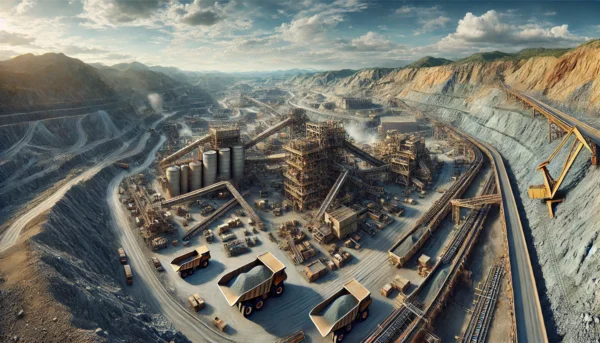
Vulcan Energy Resources (ASX: VUL, FSE: VUL) has been granted its first lithium production licence for the Lionheart Project in Germany’s Upper Rhine Valley Brine Field, marking a regulatory first for both the brine field and the state of Rhineland-Palatinate. The licence, designated LiThermEx, covers Vulcan Energy’s Insheim geothermal production permit area, which is already generating renewable heat and power. With the Lionheart Project now funded through a 2.2 billion euro financing package finalised in December 2025 and construction under way, this permit removes one of the last remaining regulatory barriers before commercial lithium output begins. The development directly advances Europe’s objective of securing a domestic, fossil fuel-free battery raw material supply chain ahead of a structural shortfall in lithium that the continent’s electric vehicle industry cannot afford to ignore.
What does the LiThermEx lithium production licence mean for Vulcan Energy’s Lionheart construction timeline and 2028 production target?
The LiThermEx licence has been granted for an initial six years by the Mining Authority in Rhineland-Palatinate, with Vulcan Energy planning to extend it to a minimum of 30 years in line with the Lionheart Project’s Field Development Plan. Its immediate practical effect is to formally authorise commercial lithium production activities at the Insheim geothermal site, which already operates as a producing geothermal energy facility. That existing infrastructure base accelerates the integration of lithium extraction into an environment where surface and subsurface works are already in progress, reducing both technical risk and the approval pathway for subsequent phases of the project.
For investors tracking the Lionheart Project’s critical path, the LiThermEx approval is a material de-risking event. Vulcan Energy has communicated a targeted start of commercial lithium production in 2028, and the regulatory structure required to support that target is progressively locking into place. Further lithium production licences are planned for the remaining Lionheart area, meaning the Insheim grant is the first in a sequence rather than the sole approval required. Each successive licence will similarly confirm that German regulators are proceeding constructively with what amounts to an entirely new class of extractive industry in the URVBF.
How does Vulcan Energy’s geothermal lithium extraction model differ from conventional lithium production, and why does it matter for European battery makers?
Vulcan Energy’s process differs from both hard-rock spodumene mining and conventional brine evaporation in one fundamental respect: the brine is naturally heated by geothermal energy, which drives both the lithium extraction and the conversion to battery-grade lithium hydroxide monohydrate without the use of fossil fuels. The proprietary VULSORB adsorption technology selectively captures lithium from the brine before the fluid is returned to the subsurface. The geothermal heat co-product generates renewable electricity and thermal energy for local consumers, meaning the project operates as an integrated energy and materials facility rather than a conventional mine.
For European battery cell manufacturers and automotive groups operating under tightening carbon accounting requirements, the provenance of raw materials is no longer an afterthought. Regulations such as the EU Battery Regulation, which requires lifecycle carbon disclosure and eventually sets maximum thresholds for carbon intensity, make zero-fossil-fuel lithium a structurally attractive input. Vulcan Energy’s contracted offtake volumes include commitments from Stellantis, LG Corp, Umicore, and Glencore for the first ten years of production from 2028, reflecting demand for material that simultaneously meets supply chain origin requirements and decarbonisation targets. Approximately 72% of those contracted volumes carry floor or fixed pricing well above current spot levels, which provides meaningful revenue protection through the lithium market’s current trough.
What is the scale of the Lionheart Project and how does the 2.2 billion euro funding package underpin the path to first production?
Phase One of the Lionheart Project targets annual production capacity of 24,000 tonnes of lithium hydroxide monohydrate, sufficient to supply batteries for approximately 500,000 electric vehicles. Co-products include 275 gigawatt-hours of renewable electricity and 560 gigawatt-hours of renewable heat per annum for local consumers over the project’s estimated 30-year life. The financial architecture behind the project is unusually robust for a pre-revenue materials developer. The 2.2 billion euro package, finalised in December 2025, comprises approximately 1.18 billion euros in senior debt from 13 lending institutions, 204 million euros in German government grants, a 250 million euro facility from the European Investment Bank, and an equity raise of approximately 528 million euros at 2.24 euros per share.
Backing from Germany’s state-owned development bank KfW, which holds a stake in Vulcan Energie Ressourcen, the project’s German operating entity, and participation from the European Investment Bank, signal that Lionheart is being treated by European institutions as strategic critical materials infrastructure rather than a speculative mining venture. The export credit agency component of the financing package, which includes participation from Denmark’s EIFO, further demonstrates the breadth of sovereign and quasi-sovereign support behind the project. For execution risk purposes, the key questions now centre on the rate at which remaining upstream licences are granted, the pace of construction at the Insheim and Frankfurt-Höchst sites, and whether the global lithium market recovers sufficiently by 2028 to validate the project’s economics for the uncontracted portion of its output.
How does the Upper Rhine Valley Brine Field position Vulcan Energy relative to other European lithium developers, and what does the first permit signal for competitors?
The Upper Rhine Valley Brine Field is the largest known geothermal lithium resource in Europe, and Vulcan Energy holds 17 granted licences covering approximately 2,234 square kilometres within it. The LiThermEx licence is the first lithium production permit ever granted within the brine field and the first in Rhineland-Palatinate, establishing a regulatory precedent that did not previously exist. That precedent matters for the broader European direct lithium extraction sector because it demonstrates that the German regulatory framework can absorb and process applications for a genuinely novel category of mineral production permit in a reasonable timeframe. Earlier in the Lionheart permitting sequence, Vulcan Energy also secured approval for its Central Lithium Plant at Industriepark Höchst near Frankfurt, confirming that the processing side of the operation has also cleared its primary regulatory hurdle.
For competing developers attempting to establish lithium projects in Europe, whether through brine extraction, hard rock mining, or lithium from geothermal sources in other geographies, Vulcan Energy’s progression through the German permitting system creates an implicit benchmark. Projects that cannot demonstrate similar regulatory momentum will face increasing investor scrutiny as Lionheart moves from construction into commissioning. ABB has been appointed as main electrical contractor for Phase One, providing further evidence of the project’s transition from development stage to active construction. The involvement of tier-one engineering and infrastructure partners reduces the risk that the project stalls at the execution phase for want of capable contractors.
What does the current VUL share price trajectory tell investors about market sentiment versus the strategic progress being made on Lionheart?
Vulcan Energy’s shares have tracked a notable divergence between operational momentum and market pricing over the past twelve months. As of mid-March 2026, VUL was trading in the A$3.28 to A$4.41 range, well below the 52-week high of A$7.52 and representing a decline of approximately 15% over the past year. Market capitalisation sits at approximately A$1.57 billion to A$1.95 billion depending on the reference date, against a project that carries a 2.2 billion euro construction budget already fully funded. The analyst consensus price target of approximately A$8.23 per share implies upside of more than 100% from current levels, with individual targets ranging from A$4.05 to A$11.29 across a small coverage universe.
The gap between current trading levels and analyst targets likely reflects several factors operating simultaneously. Lithium spot prices remain well below the peaks of 2022 and 2023, creating sentiment headwinds for all producers and developers despite the structural supply deficit that is expected to re-emerge as new project approvals have slowed materially. Vulcan Energy is pre-revenue and carries the execution risk inherent in a multi-billion-euro greenfield construction programme. Some investors may also be discounting the project on the basis that the contracted 2028 start of production is more than two years away, which is a long hold in a sector where capital cycles are often short. Against that, the LiThermEx licence announcement and the steady progression of construction activities support the view that Lionheart is advancing in line with the timeline that management has communicated, which over time should close the valuation gap if execution continues without material delays.
What are the second-order implications of Europe’s first domestic geothermal lithium production for policy, the EU Critical Raw Materials Act, and battery supply chain strategy?
The EU Critical Raw Materials Act, which entered force in 2024, sets a target for the European Union to produce at least 10% of its annual consumption of strategic raw materials domestically by 2030. Lithium sits near the top of the strategic materials list given its centrality to battery cell production and the continent’s current near-total dependence on imports from Chile, Australia, and China-controlled refining capacity. Vulcan Energy’s Lionheart Project is the most advanced European initiative that directly addresses this domestic production gap, and its successful permitting and construction would substantially contribute to the EU’s progress against the Critical Raw Materials Act benchmark.
Beyond the regulatory target, Lionheart’s geothermal energy co-product has the potential to supply low-cost renewable heat to local industrial consumers in southwestern Germany, a region that experienced significant energy price disruption following the 2022 gas crisis. The 560 gigawatt-hours of annual heat output is not a trivial amount at a regional level and positions Vulcan Energy as a contributor to Germany’s Energiewende agenda as well as its materials security objectives. Whether this dual-utility profile translates into further German or EU policy support beyond the grants already received remains to be seen, but the political economy of the project is clearly aligned with the priorities of multiple European governments.
Key takeaways: what Vulcan Energy’s first lithium production licence means for investors, competitors, and Europe’s battery supply chain
- Germany’s Mining Authority in Rhineland-Palatinate has granted the first-ever lithium production licence in the Upper Rhine Valley Brine Field, a regulatory milestone that establishes precedent for the entire European geothermal lithium sector.
- The LiThermEx licence covers the Insheim production area within Lionheart, an already-operating geothermal site, reducing technical integration risk compared with a greenfield extraction start.
- Vulcan Energy’s 2.2 billion euro financing package, locked in December 2025 with 13 lending institutions, the European Investment Bank, KfW, and German government grants, means the project is funded through to commercial production with no further capital raise required for Phase One.
- Ten years of lithium offtake is contracted with Stellantis, LG Corp, Umicore, and Glencore from 2028 commencement, with approximately 72% of volumes carrying floor or fixed pricing, materially reducing revenue risk through the current low-lithium-price environment.
- VUL shares are trading at a significant discount to the analyst consensus target of A$8.23, with the 52-week range of A$3.36 to A$7.52 reflecting both the broader lithium sector downturn and pre-revenue development risk rather than any project-specific deterioration.
- Further lithium production licences are required for the remainder of the Lionheart area, and each successive approval will represent an additional de-risking event for investors tracking the critical path to 2028 first production.
- The project’s zero-fossil-fuel production model positions Vulcan Energy’s lithium hydroxide monohydrate as structurally attractive for European automotive and battery cell customers facing EU Battery Regulation carbon intensity disclosure requirements.
- ABB’s appointment as main electrical contractor, alongside the broader engagement of tier-one construction and engineering partners, reduces the execution risk that typically attaches to first-of-kind projects of this scale in Europe.
- Lionheart is the most advanced initiative in Europe for meeting the EU Critical Raw Materials Act’s domestic production targets, and its successful progression could catalyse further policy support and investment in European direct lithium extraction projects.
- The competitive implication for other European lithium developers is significant: Vulcan Energy’s permitting timeline now functions as the benchmark against which all competing projects will be measured, increasing pressure on developers who have not yet achieved equivalent regulatory milestones.
Discover more from Business-News-Today.com
Subscribe to get the latest posts sent to your email.