




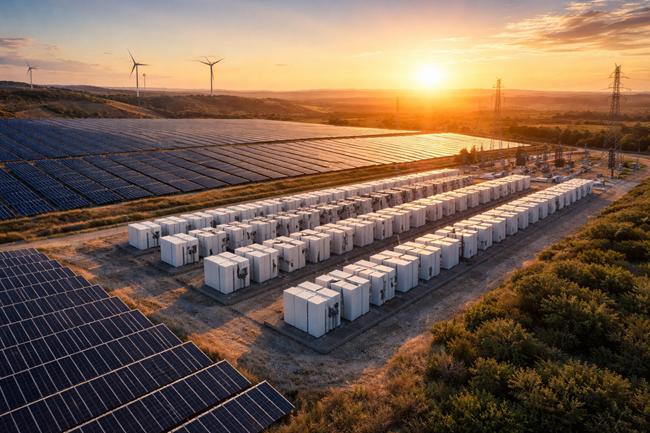
IPX Power has launched as a new independent power producer in the United States following the acquisition of Intersect Power by Google. The newly formed company begins operations with a substantial clean energy portfolio that includes 4.4 gigawatts of solar photovoltaic capacity and 8.8 gigawatt-hours of battery storage either operational or under construction. The spinout is supported by investors including TPG Rise Climate, Climate Adaptive Infrastructure, and Greenbelt Capital Partners, positioning IPX Power as a major participant in the rapidly expanding U.S. clean electricity market. The move reflects accelerating demand for large-scale renewable infrastructure as power consumption surges across industries, particularly from artificial intelligence and electrification trends.
The launch signals a structural shift in how large renewable portfolios are organized and financed in the United States. Instead of being absorbed directly into technology companies or utilities, large project pipelines are increasingly spun into specialized independent power producers capable of scaling rapidly while attracting institutional infrastructure capital. IPX Power appears to be designed precisely for that role.
Why the creation of IPX Power signals a new phase of renewable infrastructure consolidation in the United States
The formation of IPX Power highlights a broader consolidation wave underway in the renewable infrastructure sector. Over the past decade, many solar developers built significant pipelines but struggled to transition into long-term asset operators capable of financing and managing multi-gigawatt portfolios.
By carving out operational assets and project pipelines into a dedicated entity, investors can pursue a more traditional infrastructure model. This model relies on stable power purchase agreements, long-duration asset ownership, and scalable project development. The approach also appeals to institutional investors such as pension funds and climate-focused infrastructure funds seeking predictable returns tied to energy assets.
IPX Power’s initial portfolio already places it among the larger solar asset platforms in North America. With 4.4 gigawatts of solar capacity and nearly 9 gigawatt-hours of battery storage in operation or development, the company begins with scale that many renewable firms spend years attempting to achieve.
Battery storage is particularly important. Solar capacity alone does not solve the intermittency challenge that has long constrained renewable adoption. By pairing large solar farms with grid-scale batteries, independent power producers can provide dispatchable power that more closely resembles traditional generation assets.
How Google’s acquisition of Intersect Power reshaped the renewable development landscape
Google’s involvement in the broader transaction adds another layer of strategic context. Hyperscale technology companies have become some of the largest buyers of renewable electricity in the world, driven by commitments to carbon neutrality and the immense energy demands of data centers.
Data centers supporting artificial intelligence workloads are especially energy intensive. Analysts increasingly expect electricity consumption from AI infrastructure to reshape power markets over the next decade.
Technology firms therefore face a strategic choice. They can continue purchasing renewable energy through long-term contracts, or they can move further upstream into energy infrastructure ownership and development.
The acquisition of Intersect Power by Google appears to represent a hybrid approach. Instead of fully absorbing development assets, the restructuring allows a new independent company to operate renewable projects while maintaining strong links to large corporate buyers.
This structure can provide several advantages. Developers retain operational flexibility and infrastructure investors maintain clear governance structures, while technology companies secure reliable access to clean electricity.
In other words, it represents a partnership model rather than a full vertical integration strategy.
What IPX Power’s solar and battery portfolio reveals about the next generation of grid infrastructure
The scale of IPX Power’s portfolio reveals how quickly renewable energy infrastructure has evolved in the United States. Solar farms today are measured in gigawatts rather than megawatts, and grid-scale batteries are increasingly paired with generation assets from the outset.
IPX Power’s portfolio includes projects across key energy markets such as California and Texas, two states that have become central to renewable deployment. Both regions face rapid electricity demand growth, volatile weather patterns, and grid stability challenges that make battery storage increasingly valuable.
One of the projects in IPX Power’s development pipeline includes a battery system expected to rank among the largest in the world. Such installations are becoming essential as renewable penetration increases on the grid.
Large batteries serve multiple roles. They smooth fluctuations in solar generation, provide frequency regulation services, and allow electricity to be shifted from daytime production peaks to evening demand periods.
For utilities and corporate energy buyers, this capability significantly improves the reliability profile of solar generation.
How infrastructure investors are positioning themselves for the next wave of energy demand growth
The investor base behind IPX Power illustrates how climate-focused infrastructure funds are positioning themselves for long-term growth in electricity demand.
TPG Rise Climate, Climate Adaptive Infrastructure, and Greenbelt Capital Partners specialize in infrastructure assets tied to decarbonization. Their investment thesis rests on a simple but powerful premise. The energy transition requires trillions of dollars of capital, and large infrastructure platforms will be needed to deploy it efficiently.
Institutional investors increasingly prefer platforms that combine development pipelines with operational assets. This allows new projects to be built while generating stable returns from existing facilities.
The IPX Power structure fits neatly into this framework. By operating as an independent power producer, the company can develop, own, and operate projects while maintaining long-term relationships with utilities and corporate energy buyers.
Such a model is expected to become more common as climate infrastructure investments scale globally.
Why the United States may need 250 gigawatts of new power capacity by 2030
One of the most striking aspects of the IPX Power announcement is the reference to projected electricity demand growth in the United States. Estimates suggest the country may require roughly 250 gigawatts of new power generation capacity by 2030 to support economic expansion and electrification.
Several factors are driving this surge.
Artificial intelligence computing infrastructure is dramatically increasing electricity consumption in technology hubs. Electric vehicles are gradually adding load to distribution networks. Industrial electrification and hydrogen production projects are also expected to raise demand.
At the same time, older fossil fuel plants are retiring across multiple regions.
This combination creates a significant capacity gap that must be filled by new generation assets. Solar and battery storage projects are often the fastest to deploy, which is why independent power producers like IPX Power are becoming increasingly central to energy planning.
What leadership continuity from Intersect Power means for execution risk
Leadership continuity is another notable aspect of the IPX Power launch. The company’s executive team includes several senior figures from Intersect Power, including Chief Executive Officer David Brochu and other experienced industry executives.
Continuity in leadership is important for infrastructure platforms because project pipelines depend heavily on relationships with regulators, utilities, and corporate power buyers.
Renewable projects also involve complex permitting processes and long development timelines. Experienced teams that have already navigated these challenges often have a significant competitive advantage.
Maintaining much of the Intersect Power leadership structure therefore reduces execution risk and provides operational stability during the transition to the new IPX Power entity.
Why independent power producers are becoming central players in the energy transition
Independent power producers occupy a unique position in modern energy markets. Unlike traditional utilities, they do not typically own transmission networks or retail electricity operations. Instead, they focus on developing and operating generation assets.
This specialization allows them to scale renewable projects rapidly while maintaining financial flexibility.
In recent years, the role of independent power producers has expanded dramatically. As renewable technologies became cheaper and more competitive with fossil fuels, utilities increasingly relied on external developers to supply new capacity.
Corporate power purchase agreements further accelerated this trend by enabling technology companies, manufacturers, and retailers to contract directly for renewable electricity.
IPX Power is entering the market at a time when demand for this model is rising.
Corporate buyers want long-term renewable energy contracts. Utilities need flexible generation sources that support grid reliability. Infrastructure investors want large portfolios capable of producing stable cash flows.
Independent power producers sit at the intersection of all three.
What the emergence of IPX Power may signal about the future structure of clean energy markets
The creation of IPX Power may also signal a broader shift in how renewable energy platforms are structured.
Instead of small developers selling projects individually, large platforms are emerging that control multiple gigawatts of generation capacity. These platforms can negotiate financing at scale, optimize portfolios across multiple markets, and deploy advanced technologies such as grid-scale battery storage.
They also become attractive acquisition targets for institutional investors seeking exposure to energy infrastructure.
In this sense, IPX Power may represent a template for future renewable development models.
As electricity demand accelerates and the energy transition gathers pace, large independent platforms capable of building and operating gigawatt-scale infrastructure will likely play a central role.
Key takeaways: What the launch of IPX Power means for the U.S. energy market
- The formation of IPX Power creates a new large-scale independent power producer with 4.4 GW of solar capacity and 8.8 GWh of battery storage already in operation or development.
- The restructuring following Google’s acquisition of Intersect Power reflects a hybrid model combining corporate energy demand with independent infrastructure development.
- Institutional investors including TPG Rise Climate and Climate Adaptive Infrastructure are increasing their exposure to renewable infrastructure platforms capable of scaling rapidly.
- The company’s portfolio highlights the growing importance of battery storage as solar deployment accelerates across the United States.
- Renewable infrastructure platforms are increasingly structured as long-term asset operators rather than pure project developers.
- U.S. electricity demand could require roughly 250 GW of new generation capacity by 2030, creating significant growth opportunities for independent power producers.
- Corporate buyers such as technology companies are emerging as major drivers of renewable energy deployment through long-term power purchase agreements.
- Leadership continuity from the Intersect Power team reduces execution risk for the new platform during its early growth phase.
- The emergence of gigawatt-scale renewable platforms signals consolidation across the clean energy sector.
- Independent power producers like IPX Power are likely to play a critical role in meeting the next decade of electricity demand growth driven by artificial intelligence, electrification, and industrial expansion.
Discover more from Business-News-Today.com
Subscribe to get the latest posts sent to your email.