Reliable Robotics has been selected alongside the City of Albuquerque Aviation Department to participate in the Federal Aviation Administration’s Advanced Air Mobility Integration Pilot Program, a federal initiative designed to test how autonomous aircraft can safely operate in the United States National Airspace System. The program will enable pilotless cargo flights connecting Albuquerque with communities across the Four Corners region, potentially marking the first commercial deployment of large uncrewed cargo aircraft in the United States. The selection signals increasing regulatory confidence in autonomous aviation technology and positions Reliable Robotics as one of the most advanced developers pursuing certification of pilotless aircraft operations. For regional logistics networks and defense supply chains alike, the pilot program could serve as a practical test of whether aircraft autonomy can move from experimental concept to operational infrastructure.
The project is designed to demonstrate how autonomous cargo aircraft can integrate into controlled airspace around major airports while maintaining safety standards required for commercial aviation. Under the program, Reliable Robotics’ subsidiary airline will operate cargo flights from Albuquerque International Sunport to regional destinations including Durango-La Plata County Airport in Colorado and Santa Fe Regional Airport in New Mexico.
Why the FAA’s advanced air mobility pilot program is becoming a proving ground for autonomous aviation
The FAA’s Advanced Air Mobility Integration Pilot Program has become one of the most important regulatory platforms for testing emerging aviation technologies in the United States. While earlier pilot programs focused heavily on small drones used for deliveries or surveillance, the current effort is increasingly focused on integrating larger autonomous aircraft capable of transporting cargo and potentially passengers.
Reliable Robotics’ participation therefore reflects more than just a regional logistics experiment. It represents a structured regulatory pathway toward certification of large autonomous aircraft operations.
Under the program, companies collaborate with government agencies and local aviation authorities to conduct real-world operations that provide regulators with operational data. This data ultimately feeds into aviation standards, certification frameworks, and safety guidelines.
Reliable Robotics’ participation will involve collecting operational data related to flight safety, air traffic integration, and autonomous decision-making. These datasets will inform the development of regulations enabling larger uncrewed aircraft systems to operate within the national airspace system.
From the FAA’s perspective, the objective is not simply to enable drone operations but to determine whether autonomous aircraft can safely operate alongside traditional piloted aircraft.
How Reliable Robotics’ autonomy technology aims to remove the pilot while improving aviation safety
At the center of the company’s strategy is the Reliable Autonomy System, a platform designed to automate every phase of flight from taxiing and takeoff through en route navigation and landing.
The system integrates flight computers, redundant actuators, and autonomous flight software capable of operating aircraft without a pilot onboard. Detect-and-avoid capabilities are supported by radar systems, transponder surveillance, and the Advanced Collision Avoidance System X architecture developed for next-generation aircraft safety.
In practical terms, the technology allows a ground-based remote pilot to monitor and control aircraft operations rather than sitting inside the cockpit.
This architecture offers several potential safety advantages. Many aviation accidents historically occur during pilot workload spikes such as takeoff, landing, or unexpected weather conditions. Automation systems designed to operate continuously could theoretically reduce the probability of loss-of-control incidents or controlled flight into terrain.
Reliable Robotics’ leadership has argued that removing the pilot from the cockpit does not eliminate human oversight but instead moves that oversight to a remote operations environment where automation assists decision-making.
For regulators, however, the central question remains whether such systems can maintain the reliability required for commercial aviation.
Why regional cargo logistics may become the first viable market for autonomous aircraft
The choice of regional air cargo as the initial commercial application for autonomous aircraft is not accidental.
Regional cargo routes typically involve shorter distances, smaller aircraft, and lower passenger safety sensitivities compared with commercial passenger aviation. These characteristics make cargo networks an ideal early proving ground for autonomy.
Many smaller communities across the United States already depend on regional cargo flights for time-sensitive deliveries including medical supplies, industrial parts, and e-commerce shipments. However, the economics of these routes can be difficult because of pilot shortages and rising operational costs.
Autonomous aircraft offer the possibility of reducing crew costs while increasing aircraft utilization. Aircraft could theoretically operate longer hours and service routes that are currently uneconomical.
Reliable Robotics’ Four Corners pilot program reflects exactly this strategy. By linking Albuquerque with smaller regional airports, the company can test whether autonomous cargo flights can improve connectivity for communities that currently lack consistent air service.
If successful, similar networks could expand across rural regions of North America.
Why government partnerships are becoming essential for autonomous aviation certification
The FAA pilot program is only one element of Reliable Robotics’ broader regulatory engagement strategy.
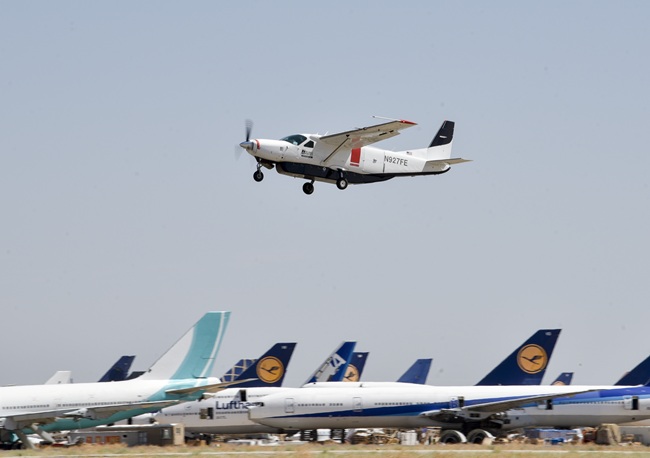
The company has also been working with NASA through the Aeronautics Research Mission Directorate to conduct flight demonstrations and collect operational data related to autonomous aircraft systems. These demonstrations involve automated flights of a Cessna 208B Caravan and include testing of contingency scenarios such as lost communications links or degraded GPS signals.
Such scenarios are critical because autonomous aircraft must demonstrate safe operation under conditions where human pilots would normally intervene.
The data generated from these test flights is shared with the Federal Aviation Administration and standards development organizations to support the creation of minimum operational performance standards and other regulatory frameworks.
For regulators, this approach allows certification standards to be built using real-world operational evidence rather than theoretical simulations alone.
In effect, Reliable Robotics and similar companies are helping to write the rulebook for autonomous aviation.
How defense logistics and contested supply chains are driving interest in aircraft autonomy
While commercial cargo logistics may represent the first civilian use case, military logistics could become an equally important driver of aircraft autonomy.
Reliable Robotics has highlighted that the same technology used in its civilian cargo operations can support defense logistics missions, particularly in contested environments where pilot risk is a major concern.
Autonomous cargo aircraft could deliver supplies to remote or dangerous locations without exposing pilots to operational hazards.
The company has already secured a contract with the United States Air Force to demonstrate autonomous logistics operations in the Indo-Pacific region.
This dual-use positioning is increasingly common across the advanced air mobility sector, where technologies developed for civilian transportation are often adapted for defense applications.
From an industry perspective, the combination of civilian logistics demand and defense funding could accelerate development timelines significantly.
What challenges remain before autonomous aircraft become mainstream
Despite growing momentum, several obstacles remain before autonomous cargo aircraft become a routine part of the aviation ecosystem.
Certification remains the largest hurdle. Aviation regulators maintain extremely stringent safety requirements, and proving that autonomous systems meet those standards will require extensive testing and operational validation.
Public acceptance is another variable. While cargo flights may face less resistance than passenger aircraft, communities still need confidence that autonomous systems can operate safely near airports and populated areas.
Infrastructure integration also presents technical challenges. Autonomous aircraft must interact seamlessly with existing air traffic control systems, airport operations, and airline logistics networks.
Reliable Robotics’ pilot program is designed precisely to address these issues through real-world operational testing.
If the data demonstrates safe integration into controlled airspace, the FAA could gradually expand certification pathways for autonomous aircraft operations.
What Reliable Robotics’ progress signals about the future of the aviation industry
The broader aviation industry is increasingly viewing autonomy not as a distant technological experiment but as a potential long-term transformation of air transportation.
Autonomous cargo aircraft could reshape logistics networks by enabling smaller, more frequent flights connecting regional airports. This could reduce dependence on large hub-and-spoke networks and improve supply chain resilience.
At the same time, aircraft autonomy may become a critical component of next-generation aviation safety systems, reducing human error while enhancing situational awareness.
Reliable Robotics’ latest FAA pilot program therefore represents more than a regional logistics experiment. It signals that autonomous aviation is moving steadily toward operational reality.
The next few years will determine whether the technology can meet the regulatory, safety, and economic thresholds required to transform the industry.
Key takeaways on what Reliable Robotics’ FAA pilot program signals for autonomous aviation
- Reliable Robotics’ participation in the FAA Advanced Air Mobility Integration Pilot Program marks a major step toward commercial autonomous cargo operations in the United States.
- The pilot program will test autonomous cargo flights linking Albuquerque with regional airports across the Four Corners region.
- Data from these operations will help shape regulatory frameworks governing large uncrewed aircraft systems in controlled airspace.
- Reliable Robotics’ autonomy platform automates every phase of flight including taxi, takeoff, navigation, and landing.
- Regional air cargo logistics is emerging as the first viable commercial market for autonomous aircraft deployment.
- NASA flight testing and FAA pilot programs are helping build the certification evidence required for regulatory approval.
- Defense logistics use cases could accelerate adoption because autonomous aircraft reduce risk in contested environments.
- Pilot shortages and rising operating costs are increasing industry interest in autonomous cargo aircraft solutions.
- Successful integration into airport operations will be critical for wider commercial deployment of autonomous aviation.
- Reliable Robotics’ progress suggests aircraft autonomy may become one of the most disruptive shifts in aviation since the jet age.
Share this:
Discover more from Business-News-Today.com
Subscribe to get the latest posts sent to your email.