




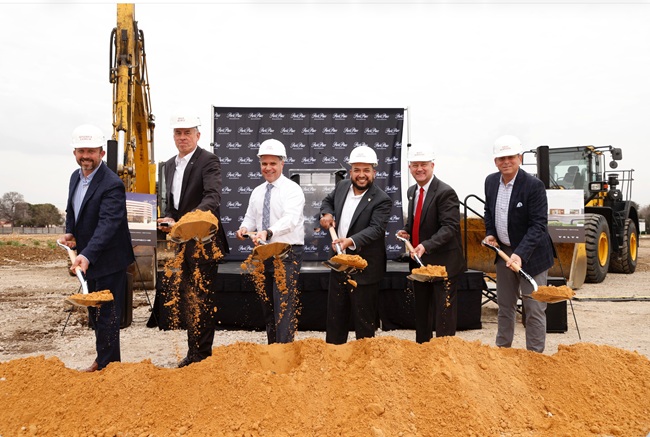
Park Place Dealerships, part of Asbury Automotive Group, Inc. (NYSE: ABG), has broken ground on a new Porsche dealership and an expanded Volvo retail and service complex on Lemmon Avenue in Dallas, marking a multi-year physical expansion in one of the most competitive luxury auto markets in the United States. The development reflects a deliberate capital allocation decision by Asbury Automotive Group to deepen brand concentration, enhance service throughput, and reinforce premium customer retention at a time when U.S. vehicle demand growth is normalizing and margin pressure is rising.
The project, scheduled for phased completion through 2027, includes a purpose-built Porsche dealership and a standalone Volvo service center adjacent to the existing Volvo showroom, effectively repositioning the Lemmon Avenue site as a flagship luxury retail hub for North Texas.
Why is Asbury Automotive Group committing long-cycle capital to luxury dealership expansion while broader U.S. auto demand cools?
The decision to invest heavily in physical luxury retail infrastructure runs counter to the prevailing narrative that U.S. auto retail is entering a downshift phase marked by inventory normalization, rising incentive intensity, and cautious consumer financing behavior. However, Asbury Automotive Group’s move highlights a critical distinction between mass-market and luxury vehicle economics that continues to shape capital allocation across the dealership sector.
Luxury brands such as Porsche and Volvo remain structurally more resilient than volume segments due to higher average transaction prices, stronger brand loyalty, and a greater share of revenue derived from service, customization, and lifecycle ownership rather than pure unit sales. By committing to a new Porsche facility and an expanded Volvo service footprint, Asbury Automotive Group is effectively doubling down on the segments where long-term margin durability remains strongest, even if near-term unit growth moderates.
Dallas, and North Texas more broadly, offers a demographic profile that supports this strategy. High household income growth, corporate relocations, and a sustained appetite for premium vehicles provide a demand base that is less sensitive to short-term rate volatility. The Lemmon Avenue corridor already functions as a luxury auto cluster, and scale matters in these environments, both operationally and perceptually.
What does the new Porsche dealership reveal about brand economics and network strategy in the U.S. luxury segment?
The planned Porsche dealership, expected to open in 2027, is designed as a purpose-built facility rather than a retrofit or expansion of an existing site. This matters because Porsche’s U.S. retail strategy increasingly emphasizes experiential differentiation, bespoke delivery environments, and service integration as core drivers of brand equity rather than optional enhancements.
By relocating Park Place Porsche from its existing Lemmon Avenue location to a larger, modernized facility across the street, Asbury Automotive Group is aligning itself with Porsche Cars North America’s broader network expectations. Dealerships are no longer viewed solely as sales outlets but as long-term brand embassies that reinforce pricing power, manage allocation scarcity, and sustain customer engagement across ownership cycles.
For Asbury Automotive Group, the payoff is not just higher per-unit gross profit but improved lifetime value per customer. Porsche buyers tend to remain within the brand ecosystem, upgrading vehicles, purchasing performance options, and returning for high-margin service. A flagship-level facility increases the probability that those customers stay within the Park Place network rather than migrating to competing dealers in adjacent markets.
How does the expanded Volvo service center change the economics of aftersales revenue and customer retention?
While the Porsche facility draws attention, the Volvo service expansion may be the more strategically significant element of the project. Service and parts revenue has become the stabilizing backbone of dealership profitability, particularly as new vehicle margins fluctuate and incentive cycles reassert themselves.
The addition of a dedicated Volvo service center adjacent to the existing dealership addresses two persistent constraints in high-volume luxury service operations: capacity and convenience. By separating service throughput from showroom congestion, Park Place Dealerships can increase repair order volume, reduce wait times, and improve technician utilization, all of which translate into higher service absorption rates.
For Volvo customers, the proximity of sales and service on a single campus enhances convenience and reinforces brand continuity. For Asbury Automotive Group, it strengthens recurring revenue streams that are less exposed to macroeconomic swings and financing conditions. This is particularly relevant as electric and hybrid vehicle penetration increases, requiring updated service infrastructure and specialized technician training.
What does this investment indicate about Asbury Automotive Group’s broader capital allocation discipline?
Asbury Automotive Group has spent the past several years balancing acquisitive growth with organic reinvestment, shifting from a roll-up-centric model toward operational optimization and brand-aligned scale. The Lemmon Avenue project fits squarely within that evolution.
Rather than pursuing incremental dealership acquisitions at elevated valuations, the company is deploying capital into owned real estate and infrastructure that it directly controls. This approach reduces long-term lease exposure, enhances operational leverage, and creates assets that appreciate independently of near-term vehicle sales cycles.
The multi-year timeline to 2027 also reflects a willingness to absorb short-term capital drag in exchange for durable competitive positioning. These facilities will not materially boost earnings in the immediate quarters ahead, but they are designed to support margin stability and brand strength well into the next cycle.
How does this move affect competitive dynamics among luxury auto retailers in North Texas?
North Texas is one of the most contested luxury auto markets in the country, with multiple dealer groups competing for brand allocations, customer loyalty, and service dominance. Scale and facility quality increasingly function as barriers to entry, particularly for brands with tight network controls.
By consolidating Porsche and Volvo operations into a flagship-style campus, Park Place Dealerships raises the bar for competing retailers. Rivals operating from older or capacity-constrained facilities may struggle to match service turnaround times, customer experience consistency, or brand presentation standards demanded by manufacturers.
This matters because OEMs are becoming more selective about allocation and franchise support, favoring dealers that can deliver both volume discipline and experiential consistency. Asbury Automotive Group’s investment strengthens its negotiating position within OEM networks and reinforces its role as a preferred long-term partner.
What execution risks should investors and industry observers watch as the project progresses?
Despite the strategic logic, the project is not without risk. Construction timelines extending to 2027 introduce exposure to cost inflation, labor availability, and potential permitting delays, particularly in a dense urban corridor like Lemmon Avenue. Any overruns could dilute expected returns or pressure near-term free cash flow.
There is also execution risk in aligning new facilities with evolving OEM requirements. Luxury brands continue to refine retail standards around electrification, digital integration, and sustainability, and facilities designed today must remain compliant and competitive several years from now.
From a demand perspective, while North Texas remains attractive, luxury auto sales are not immune to broader economic slowdowns. A sharper-than-expected contraction in discretionary spending could lengthen payback periods, though service revenue should provide partial insulation.
How are investors likely to interpret this expansion in the context of Asbury Automotive Group’s stock performance?
Asbury Automotive Group’s shares have historically traded on a blend of earnings visibility, acquisition discipline, and confidence in management’s capital allocation strategy. Large physical investments tend to be viewed cautiously in the short term, particularly when they do not immediately translate into earnings accretion.
However, institutional investors familiar with dealership economics are likely to see this move as consistent with Asbury Automotive Group’s longer-term emphasis on margin resilience and brand concentration. The focus on Porsche and Volvo aligns with segments that continue to outperform industry averages on profitability and customer retention.
Rather than signaling aggressive growth, the Lemmon Avenue project signals confidence in the durability of luxury automotive retail and a willingness to invest through the cycle, a trait often rewarded over longer investment horizons.
What does this development signal about the future of luxury automotive retail in the United States?
The Park Place Dealerships expansion underscores a broader shift in luxury automotive retail away from transactional volume and toward integrated ownership ecosystems. Physical dealerships are evolving into hybrid spaces that combine sales, service, community engagement, and brand storytelling.
For dealer groups with the balance sheet strength and operational discipline to invest at scale, this model offers a path to sustained relevance even as digital retail tools proliferate. For those without such capacity, competitive pressure is likely to intensify.
In that sense, the Lemmon Avenue project is less about adding square footage and more about reinforcing a structural advantage in a market where brand, experience, and service excellence increasingly determine long-term winners.
Key takeaways: What Park Place Dealerships’ Dallas expansion means for Asbury Automotive Group and the U.S. luxury auto market
- The project represents a deliberate long-cycle capital investment focused on luxury brand concentration rather than short-term unit growth.
- Porsche and Volvo exposure reinforces margin durability through higher transaction values and recurring service revenue.
- The expanded Volvo service center strengthens aftersales economics, improving service absorption and customer retention.
- Purpose-built luxury facilities enhance Asbury Automotive Group’s standing within OEM networks and allocation frameworks.
- North Texas remains a strategically attractive luxury market with demographic resilience and brand density.
- Construction and timeline risks exist but are offset by long-term asset control and operational leverage.
- Investor sentiment is likely to remain anchored to fundamentals rather than near-term earnings impact.
- The move reflects a broader industry shift toward experience-driven, service-centric luxury retail models.
Discover more from Business-News-Today.com
Subscribe to get the latest posts sent to your email.

