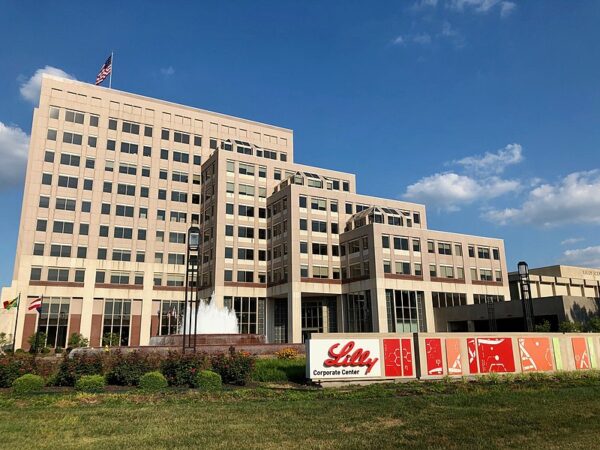



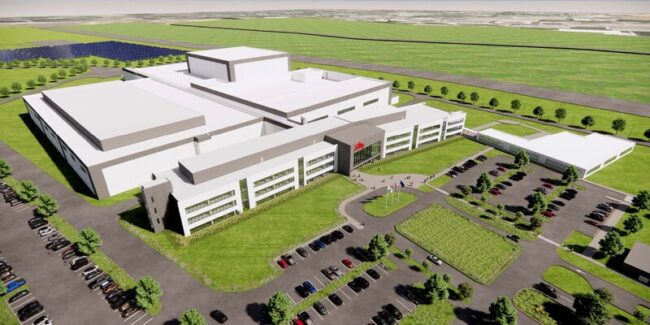
Eli Lilly and Company (NYSE: LLY) has selected Fogelsville in Lehigh Valley, Pennsylvania as the location for its latest injectable medicine and device manufacturing facility, with a planned investment exceeding $3.5 billion. The site will produce next-generation weight-loss medicines, notably including retatrutide, a novel triple hormone receptor agonist designed to reshape the company’s position in the competitive obesity treatment market. Construction is set to begin in 2026 with full operations targeted for 2031.
This marks Lilly’s fourth U.S. manufacturing site announcement since February 2025 and its tenth overall since 2020. The rapid expansion is a clear indication that the company sees domestic manufacturing not only as a logistics or capacity issue, but as a strategic hedge amid global pharmaceutical supply chain vulnerabilities and heightened geopolitical volatility. The Pennsylvania site, chosen from more than 300 applicants, strengthens Lilly’s foothold in the Northeast biotech corridor while aligning with broader U.S. policy objectives around life sciences reshoring.
What does the site reveal about Lilly’s obesity drug strategy, particularly for retatrutide?
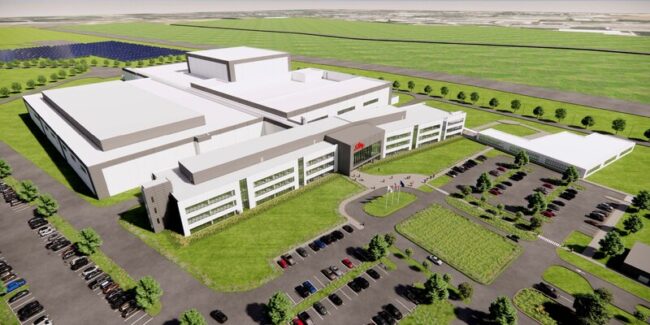
The Pennsylvania site is purpose-built to scale injectable delivery platforms for obesity and diabetes treatments, underscoring the strategic weight behind retatrutide’s commercial trajectory. Unlike existing GLP-1 or GLP-1/GIP dual agonists such as tirzepatide (marketed as Mounjaro and Zepbound), retatrutide is a triple hormone receptor agonist combining GIP, GLP-1, and glucagon receptor activity. Early clinical trials have shown promising weight loss and metabolic regulation outcomes, positioning retatrutide as a potentially superior therapy in the class.
By choosing to anchor production capacity within the United States, Lilly is ensuring both continuity of supply and regulatory proximity for one of its most anticipated therapies. With obesity drug demand surging and GLP-1 supply constraints affecting all major producers, vertical integration of manufacturing and tighter geographic control over production inputs is a clear operational hedge. The Lehigh Valley plant will support both formulation and device manufacturing for delivery systems, likely signaling a future convergence of drug and delivery tech innovation at scale.
How will this facility impact Pennsylvania’s life sciences ecosystem?
Lilly’s investment is projected to generate 850 direct jobs in engineering, lab operations, and production, along with over 2,000 temporary construction roles. However, the more transformative impact may come from multiplier effects across the region’s life sciences value chain. According to the company’s estimates, every dollar invested is expected to create four dollars in local economic activity.
State and federal officials, including Governor Josh Shapiro and Senators John Fetterman and Dave McCormick, have publicly framed the project as a turning point for Pennsylvania’s industrial competitiveness. Governor Shapiro tied the win to policy reforms in permitting and site readiness, suggesting the state’s new Economic Development Strategy is now capable of attracting life sciences megaprojects once exclusive to Massachusetts, California, or North Carolina.
Beyond job creation, the site’s proximity to STEM universities and existing manufacturing infrastructure could make it a magnet for research partnerships, workforce development programs, and supplier clusters. Lilly has also signaled its intent to embed AI, machine learning, and integrated analytics into the facility’s operations, potentially creating a digital manufacturing showcase for biopharma peers evaluating site modernization.
What does this mean for Eli Lilly and Company’s capital allocation strategy and U.S. expansion push?
This facility is part of Lilly’s broader $50 billion capital investment program announced since 2020. The company has already committed to new sites in Alabama, North Carolina, Texas, Virginia, and Indiana—where its flagship Lilly Medicine Foundry is under development—as well as expansions in Puerto Rico and Wisconsin. The consistent cadence of announcements reflects a deliberate allocation shift toward domestic infrastructure to support fast-scaling biologics and metabolic disease assets.
Retatrutide’s potential blockbuster profile is a major driver, but Lilly’s broader injectable portfolio, including pipeline assets in Alzheimer’s, autoimmune diseases, and oncology, also justifies the long-term investment. The Pennsylvania site represents both a manufacturing hedge and a capacity node in anticipation of approval pipelines converging. It also signals Lilly’s confidence in the long-term reimbursement, demand, and political viability of GLP-1 based therapies—even as scrutiny around pricing, insurance coverage, and equity of access mounts.
Financially, the project is unlikely to materially move near-term earnings or free cash flow, given the construction timeline and depreciation phase-in. However, for investors tracking Lilly’s capital intensity and infrastructure ROI, this is a bet on pipeline realization and supply chain defensibility, rather than a generic productivity play.
What challenges could undermine the success of this facility or similar investments?
Execution risk is inherent in any capital project of this scale, especially in a sector with stringent FDA and GMP manufacturing compliance requirements. Project slippage, cost overruns, or unexpected regulatory headwinds could delay time-to-impact. Additionally, workforce readiness remains a wildcard. While Lehigh Valley offers access to local talent and academic pipelines, competition for biomanufacturing expertise is intensifying across the Northeast.
There are also potential macro constraints. Continued inflationary pressures on construction materials, energy inputs, and skilled labor could strain budget assumptions. Geopolitical dynamics, particularly around raw material imports or export restrictions from key countries like China and India, may affect supply chains despite the domestic manufacturing push. Finally, the regulatory future of GLP-1s—especially under different U.S. administrations—may affect pricing, coverage, and volume forecasts in ways that change the economics of such facilities post-2030.
Could this development shift the competitive balance in the obesity drug market?
Yes—but not immediately. While Novo Nordisk A/S and Eli Lilly and Company currently dominate the GLP-1 landscape, manufacturing constraints have held back supply for both players. By building out new facilities in parallel to clinical development, Lilly is attempting to get ahead of the supply–demand mismatch that plagued semaglutide and tirzepatide rollouts.
The Lehigh Valley facility may not change the near-term market structure, but it positions Lilly to be less constrained once retatrutide or other next-gen injectables are approved. This is critical in a therapeutic category where adherence, formulation convenience, and delivery innovations can swing market share. If Lilly is first to launch a triple-agonist therapy with consistent supply, it could disrupt pricing bands and prescribing behavior across obesity and Type 2 diabetes.
For smaller biotech companies and CDMO competitors, Lilly’s internalization of injectable capacity raises the bar. The message is clear: scale, integration, and automation are becoming competitive requirements, not just efficiency boosters.
What are the key takeaways from Lilly’s $3.5 billion Pennsylvania manufacturing expansion?
- Eli Lilly and Company will invest $3.5 billion to build a new injectable medicine and device manufacturing facility in Lehigh Valley, Pennsylvania.
- The site will focus on producing next-generation weight-loss drugs like retatrutide, a triple hormone receptor agonist targeting obesity and metabolic disorders.
- The facility will bring 850 full-time jobs and 2,000 construction roles, reinforcing Pennsylvania’s life sciences ecosystem.
- Advanced manufacturing technologies including AI and machine learning will be used to improve supply reliability and operational efficiency.
- The project is part of Lilly’s $50 billion capital allocation strategy focused on U.S.-based biopharmaceutical manufacturing capacity.
- This marks Lilly’s fourth new U.S. manufacturing site since February 2025 and tenth since 2020, indicating an aggressive domestic reshoring strategy.
- Pennsylvania’s selection reflects competitive site-readiness, STEM talent availability, and proximity to life sciences infrastructure.
- Long construction and regulatory timelines mean the facility will not begin operations until 2031.
- The investment may give Lilly a strategic supply advantage if retatrutide or other pipeline therapies receive approval and achieve scale.
- Execution risk, workforce constraints, and evolving regulatory scrutiny around GLP-1 drugs remain potential headwinds to full value realization.
Discover more from Business-News-Today.com
Subscribe to get the latest posts sent to your email.