

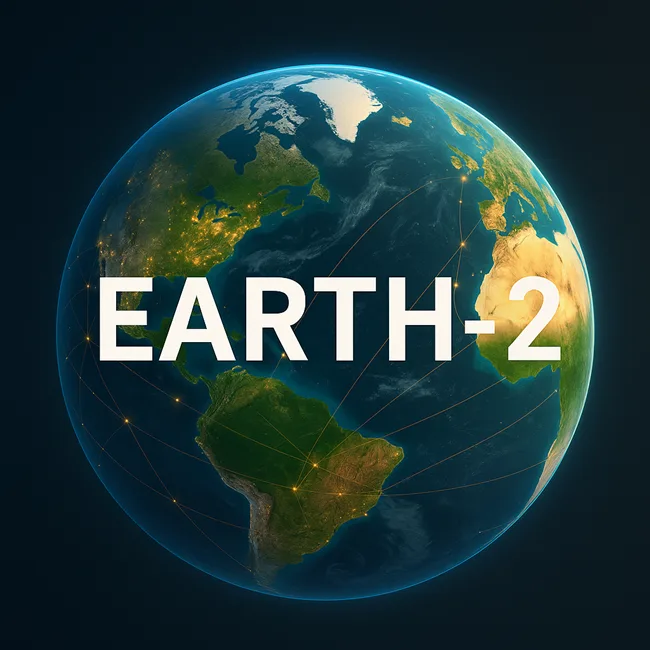
NVIDIA Corporation (NASDAQ: NVDA) has formally launched its Earth-2 suite of fully open, accelerated AI weather models and forecasting tools at the American Meteorological Society’s 2026 Annual Meeting. The announcement introduces three newly architected models focused on medium-range prediction, storm-scale nowcasting, and global data assimilation, solidifying Earth-2 as the first production-ready, end-to-end AI-native weather forecasting stack to be made publicly accessible.
This release reframes NVIDIA’s role in the climate-tech landscape, transitioning the company from a supplier of hardware accelerators into a foundational enabler of real-time, locally adaptive climate modeling. The open-source positioning allows Earth-2 to serve both public-sector forecasting infrastructure and commercial energy, insurance, and risk analytics platforms, making it a strategic move that signals NVIDIA’s intent to anchor critical climate intelligence across sectors.
How does NVIDIA’s Earth-2 platform change the economics and accessibility of weather forecasting?
Traditionally, weather forecasting has required supercomputing clusters running physics-based numerical models over multi-hour cycles. These systems are expensive, opaque, and often centralized within government meteorological agencies or academic consortia. NVIDIA’s Earth-2 offers an alternative rooted in generative AI, enabling real-time inference and deployment on standard GPU infrastructure. The implications of this architecture shift extend beyond cost efficiency.
Earth-2 enables full-stack forecasting that begins with raw atmospheric observations, processes them through neural data assimilation, and generates multi-day or high-resolution forecasts on demand. This model-centric design democratizes forecasting infrastructure for smaller nations, research centers, and commercial operators who lack access to conventional high-performance computing environments. The elimination of licensing fees and vendor lock-in allows organizations to fine-tune models on-premise, offering a modular weather stack with both strategic and operational autonomy.
With three new architectures—Atlas for medium-range forecasting, StormScope for near-term storm prediction, and HealDA for real-time data assimilation—NVIDIA is bridging the performance gap between open research-grade models and proprietary production systems.
What kinds of institutions are already operationalizing NVIDIA’s Earth-2 models?
Adoption of Earth-2 is already underway across government agencies, national weather services, grid operators, and risk analytics firms. The Israel Meteorological Service has incorporated Earth-2 CorrDiff into operational use, reporting up to a 90 percent reduction in compute time for high-resolution forecasts compared to traditional numerical models. The agency also plans to bring Earth-2 Nowcasting online in 2026, citing enhanced accuracy for localized precipitation prediction in extreme weather events.
In the United States, the National Weather Service is actively evaluating Earth-2 models as part of its broader modernization strategy. This evaluation reflects growing institutional interest in transitioning from traditional deterministic forecasts to probabilistic, AI-native ensembles that are both faster and more adaptable to edge infrastructure.
TotalEnergies is testing Earth-2 Nowcasting to improve short-term risk assessments in energy markets where minute-level predictions can inform trading, safety protocols, and dispatch decisions. In a similar effort, GCL, one of China’s largest solar materials and power generation companies, has deployed Earth-2 models within its photovoltaic forecast systems. GCL has cited improved accuracy at lower operational cost compared to its previous numerical weather prediction framework.
In the financial and insurance sectors, AXA is using Earth-2 to simulate thousands of hypothetical hurricane scenarios, allowing underwriters to stress-test portfolios against more granular and dynamic risk models. S&P Global Energy is deploying Earth-2 CorrDiff to integrate climate data directly into location-specific impact models for clients managing infrastructure portfolios vulnerable to temperature extremes and storm surges.
Across these diverse use cases, NVIDIA has successfully positioned Earth-2 as a foundational layer for institutions seeking to shift from observational dependence to predictive advantage.
How does the Earth-2 stack differentiate itself technically from other AI weather models?
The Earth-2 launch includes three newly designed models, each with specific architectural roles in the weather AI pipeline. Earth-2 Medium Range is built on the Atlas architecture and delivers forecasts up to 15 days across more than 70 variables including temperature, wind, pressure, and humidity. It has demonstrated higher accuracy than comparable open-source models on standard ERA5 benchmarks, particularly in metrics such as anomaly correlation and root mean square error.
Earth-2 Nowcasting introduces StormScope, a generative AI model designed to generate localized storm forecasts at kilometer-scale resolution within a zero-to-six-hour horizon. Unlike traditional radar extrapolation techniques or coarse global convection models, StormScope simulates the evolution of storm dynamics directly by predicting both satellite and radar imagery, representing a novel approach in short-term severe weather forecasting.
Earth-2 Global Data Assimilation, powered by the HealDA model, converts satellite, weather balloon, and ground station data into a seamless global atmospheric snapshot within seconds. This model replaces traditional physics-based data assimilation workflows that can take hours on high-end supercomputers. When combined with Earth-2 Medium Range, HealDA enables a fully AI-driven pipeline from initial condition generation to forecast output.
The stack also incorporates previously launched models such as CorrDiff for resolution downscaling and FourCastNet3 for high-speed ensemble forecasting. These models provide continuity with earlier research outputs while offering performance enhancements through architectural upgrades and model distillation.
NVIDIA is also integrating Earth-2 with its PhysicsNeMo framework, a toolkit that allows researchers to customize model behavior through domain-specific physics priors. This interoperability suggests that Earth-2 will continue to evolve as a live open ecosystem rather than a static model suite.
Why is NVIDIA open-sourcing Earth-2, and what strategic goals does this move serve?
NVIDIA’s decision to release the Earth-2 suite under an open model governance structure reflects a broader play to embed its infrastructure into verticals that traditionally relied on government-funded software or industry-specific vendors. By open-sourcing Earth-2, NVIDIA accelerates developer adoption, ensures interoperability with existing research workflows, and positions its GPU infrastructure as the de facto backend for future forecasting pipelines.
From a strategic perspective, Earth-2 serves multiple ends. It allows NVIDIA to influence modeling standards and datasets within the scientific community, similar to how it shaped AI development with CUDA and TensorRT. It also gives national weather agencies and global institutions a viable alternative to vendor-locked proprietary tools while enabling sovereign AI deployments aligned with local data governance policies.
Furthermore, in the context of climate-related regulation and carbon accounting, Earth-2 creates pathways for more precise environmental modeling. This capability is particularly relevant to sectors navigating new climate disclosure requirements, such as the Task Force on Climate-related Financial Disclosures or the European Union’s Corporate Sustainability Reporting Directive.
By offering an open platform that reduces capital expenditure while maintaining high forecasting skill, NVIDIA is anticipating future procurement models where governments and corporates favor low-latency, explainable, and modifiable AI systems built atop standardized infrastructure.
What are the biggest risks or barriers to widespread Earth-2 adoption?
While the Earth-2 models show strong performance and ecosystem readiness, the path to widespread operational deployment will depend on more than accuracy metrics. One of the primary challenges is institutional inertia. Most national weather services are heavily invested in legacy numerical prediction pipelines, and transitions to AI-native alternatives will require extensive validation, regulatory alignment, and workforce retraining.
There are also operational risk factors. Earth-2’s deep learning models are susceptible to data drift, adversarial perturbations, and rare event generalization failures. In mission-critical applications such as early flood warnings or aviation safety, agencies will need to invest in robust model validation, version control, and fallback procedures before Earth-2 can be deemed fit for primary operational use.
Another consideration is compute availability. While Earth-2 is significantly more efficient than traditional weather supercomputers, it still relies on access to NVIDIA GPU infrastructure. This creates a dependency that could hinder uptake in regions with limited data center capacity or restrictive procurement environments. Open access does not eliminate capital investment needs, particularly for agencies seeking sovereign control of their weather infrastructure.
Lastly, the open nature of Earth-2 will necessitate careful governance to avoid model misuse or unsanctioned adaptations that could lead to misinformation in public weather communications. As with open-source language models, success will depend on the emergence of clear community standards around versioning, evaluation, and trust.
Could Earth-2 redefine the competitive landscape in AI weather forecasting?
The release of Earth-2 fundamentally resets the benchmark for AI weather modeling. By providing a complete, open, and accelerated pipeline, NVIDIA effectively commoditizes a capability that many startups and proprietary platforms have positioned as their unique selling point. This will likely pressure players such as The Weather Company, Tomorrow.io, and proprietary tools built by Microsoft or Alphabet subsidiaries to differentiate on integration, services, or reliability rather than core model IP.
It also opens up opportunities for downstream application builders to skip model development entirely and focus on use-case specific optimization—whether that be for insurance, agriculture, maritime, or disaster response. For countries and agencies with national weather mandates, Earth-2 provides a credible foundation for hybrid systems that blend traditional physics with AI-first approaches.
If NVIDIA maintains a cadence of community engagement, technical updates, and benchmarking transparency, Earth-2 could become the reference platform for global AI weather modeling—similar to how GPT-style models now define natural language processing infrastructure. The competitive battleground will then shift from model performance to ecosystem leadership, governance tooling, and integration with operational workflows.
Key takeaways on what this development means for NVIDIA, its competitors, and the weather AI industry
- NVIDIA Corporation has launched the Earth-2 open model suite for AI-native weather forecasting at the AMS Annual Meeting.
- Earth-2 includes generative AI models for medium-range, nowcasting, and data assimilation use cases, all fully open source.
- The launch positions NVIDIA as the infrastructure backbone for operational weather intelligence across public and commercial sectors.
- Institutions such as the U.S. National Weather Service, TotalEnergies, AXA, and GCL are already piloting Earth-2 for forecasting and risk analytics.
- Earth-2 eliminates the need for supercomputers in weather forecasting by accelerating inference on GPUs via models like StormScope and HealDA.
- Open interoperability with third-party models and platforms could drive standardization and research reproducibility in climate science.
- Potential risks include deployment readiness in critical infrastructure sectors and technical validation hurdles in public sector adoption.
- Earth-2 sets a new default for AI weather models, forcing private vendors and government consortia to recalibrate their model strategies.
- NVIDIA’s open model ecosystem strategy reflects a broader play to standardize AI pipelines across verticals using proprietary infrastructure.
- Long-term success will depend on sustained community adoption, transparent benchmarking, and governance tooling for critical applications.
Discover more from Business-News-Today.com
Subscribe to get the latest posts sent to your email.