





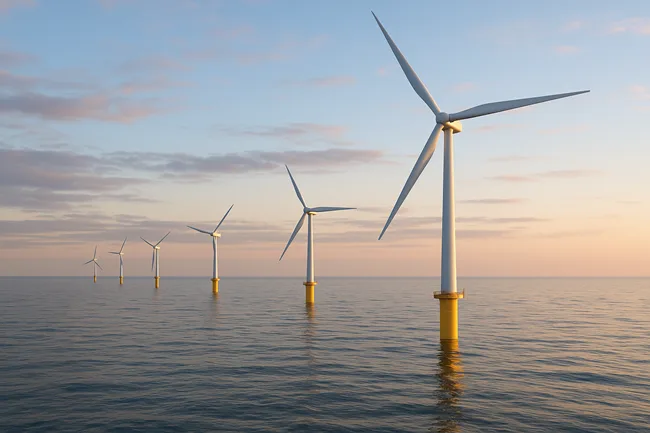
SSE PLC (LON: SSE) has secured a 20-year contract for 1.38GW of offshore wind capacity from Phase B of the Berwick Bank Wind Farm, under the UK government’s latest Contracts for Difference (CfD) Allocation Round 7. The award gives SSE Renewables a CPI-indexed strike price of £89.49/MWh (2024 prices), setting up Berwick Bank B for final investment decision in 2027 and advancing one of Europe’s most consequential clean energy projects.
The contract is not just a commercial milestone for SSE PLC. It also marks a strategic acceleration in the UK’s attempt to close the gap to its 2030 offshore wind targets amid recent auction shortfalls, permitting bottlenecks, and rising cost inflation across the sector. At full 4.1GW buildout across Phases A, B, and C, Berwick Bank would be the world’s largest offshore wind farm by capacity.
Why does the CfD for Berwick Bank Phase B matter for UK energy strategy and offshore wind economics?
The award of 1.4GW of CfD-backed capacity for Berwick Bank Phase B signals a tactical shift in how the UK government is allocating clean power contracts to deliver on the Clean Power 2030 Action Plan. Following a disappointing Allocation Round 6 in 2023, where no new offshore wind projects secured contracts due to cost inflation outpacing auction ceiling prices, Allocation Round 7 is being closely watched for its ability to restore market confidence.
SSE’s Berwick Bank B is the largest winner in this round, and its strike price of £89.49/MWh—although materially higher than past auctions—reflects a more realistic floor for offshore wind in the current cost environment. The inclusion of CPI-based indexing means the project will benefit from inflation protection, a key point of contention during prior rounds. For SSE PLC, the award provides revenue certainty over a 20-year horizon, making it easier to raise project finance and pursue supply chain commitments.
Berwick Bank Phase B will now move toward a final investment decision (FID) in 2027. SSE has indicated this FID will be contingent on internal hurdle rates and capital discipline frameworks. Phases A and C of the project remain available for bidding in future CfD rounds, including Allocation Round 8 expected in late 2026. Together, the three phases comprise a planned 4.1GW capacity buildout in the outer Firth of Forth.
How will Berwick Bank reshape Scotland’s renewable generation capacity and economic footprint?
The Berwick Bank Wind Farm is being positioned not just as an energy project but as a national infrastructure asset. At full capacity, it could deliver enough clean power to serve more than six million homes—roughly double the number of households in Scotland. The project is estimated to avoid 8 million tonnes of CO₂ annually, equivalent to eliminating Scotland’s entire passenger car emissions.
If fully constructed, Berwick Bank would increase Scotland’s operational renewable electricity capacity by nearly 30 percent and boost the UK’s offshore wind fleet by over 8 percent. This gives the project both regional and national strategic significance. From a climate policy standpoint, it aligns with both Scotland’s 2045 net zero emissions goal and the UK’s ambition to reach 50GW of offshore wind by 2030.
Beyond carbon, the project is also a job and investment multiplier. Independent economic impact studies suggest Berwick Bank could create over 9,000 jobs at peak construction, with roughly half of those expected to be in Scotland. Over its lifetime, the project could inject £8.3 billion into the UK economy. The strategic location of the landfall and grid connections—in East Lothian and the Blyth area of Northumberland—will also spur development of grid, port, and manufacturing infrastructure in these zones.
What is the current regulatory and planning status of the project, and what hurdles remain before FID?
SSE Renewables has already cleared a major regulatory milestone with the Section 36 consent order granted by the Scottish Government in mid-2025. This approval covers the offshore array development and came after a decade of environmental assessments and project design reviews.
On the onshore side, East Lothian Council granted Planning Permission in Principle in late 2023 for the transmission infrastructure. SSE has since submitted an Approval of Matters Specified in Conditions (AMSC) application for the 275kV underground cable works. This application is currently open for public comment until January 30, 2026.
The broader onshore works include the installation of 275kV cables from landfall to substation, the construction of a new onshore substation, and the routing of 400kV cables from the substation to the grid connection point at Branxton. The final buildout will require seamless integration of offshore generation with onshore transmission—an increasingly complex process given capacity constraints on the UK grid.
Execution risk remains considerable. The path to FID in 2027 will depend on several factors: successful permitting for the remaining cable routes and substations, firm offtake agreements, potential transmission upgrade approvals by National Grid ESO, and securing a credible cost baseline amid global offshore wind supply chain inflation. SSE has not yet disclosed its estimated capex for Berwick Bank B.
How does the Berwick Bank CfD award affect peer positioning and upcoming UK offshore wind auctions?
The significance of SSE PLC’s success in AR7 goes beyond the company. It resets the benchmark for what a viable CfD strike price looks like in the post-inflation offshore wind era. Other developers who sat out AR6—such as Vattenfall, Iberdrola’s ScottishPower, Ørsted, and Ocean Winds—will now recalibrate their AR8 strategies using this outcome as a price signal.
It also raises the bar for scale and readiness. Berwick Bank’s advanced development status, multi-phase structure, and grid readiness gave SSE a competitive edge. With the UK’s 2030 targets looming, future CfD rounds may increasingly favor large, shovel-ready projects that can deliver material volumes quickly, rather than early-stage developments with unclear timelines.
SSE’s win could also tilt future industrial policy. A project of Berwick Bank’s scale will require major UK supply chain engagement, including for turbine assembly, port upgrades, and heavy-lift vessel scheduling. The government’s own pressure to ensure UK content and job creation may incentivize more direct industrial commitments in AR8 bid evaluation.
How are capital markets and institutional investors viewing SSE’s offshore wind expansion?
Investor sentiment toward SSE PLC has been broadly constructive in recent months, especially as the company continues to tilt its capital expenditure toward regulated networks and renewables. While the 1.4GW CfD win does not trigger an immediate change in earnings forecasts, it strengthens the long-term growth visibility of SSE Renewables, a key value driver.
The 20-year CfD structure provides predictable cash flows, which investors tend to discount favorably, especially in inflation-indexed scenarios. However, the market is also cautious on capital intensity and execution risk. Offshore wind developers have faced heavy criticism globally for underestimating inflation, permitting delays, and cost overruns.
SSE’s approach—spacing out the investment decision to 2027 and tying it to internal hurdle rates—is likely to be viewed as prudent capital discipline. If Berwick Bank B progresses smoothly, it could enhance SSE’s renewables credibility and potentially support future asset monetizations or partnerships via infrastructure funds or pension capital.
What should institutional players and policymakers watch as the next milestones for Berwick Bank?
The next inflection points for Berwick Bank Wind Farm include planning approvals for the 275kV and 400kV cable works, final permitting for Phase C, and results from Allocation Round 8. Any delay or constraint in onshore transmission approvals could affect the project’s FID timeline.
Institutional investors will watch closely for capex guidance, project finance structures, and clarity on turbine procurement, given recent volatility in offshore wind cost curves. SSE may also pursue strategic partnerships or farm-downs ahead of FID to de-risk the balance sheet impact.
For policymakers, Berwick Bank serves as a test case for whether gigawatt-scale projects can move fast enough through the UK permitting and contracting system to meet 2030 targets. The project’s success or delay will have direct implications for grid planning, auction design, and industrial policy enforcement.
Key takeaways on what this CfD award means for SSE PLC, offshore wind rivals, and UK energy policy
- SSE PLC has secured a 20-year CfD for 1.4GW of offshore wind from Berwick Bank Phase B at £89.49/MWh, CPI-indexed.
- Berwick Bank B is expected to reach final investment decision in 2027, with Phases A and C still eligible for future auctions.
- At full 4.1GW capacity, Berwick Bank would become the world’s largest offshore wind project by capacity.
- The CfD award restores momentum in UK offshore wind after AR6 failed to secure any bids due to unviable strike prices.
- The project could increase Scotland’s renewable energy capacity by nearly 30% and support over 9,000 jobs.
- Onshore transmission works in East Lothian and Northumberland remain a key gating factor for timeline certainty.
- Berwick Bank now serves as a benchmark for realistic offshore wind strike pricing in a high-inflation environment.
- SSE’s inflation-indexed contract and phased capital discipline offer a model for risk-aware offshore wind development.
- The award pressures peers like Ørsted and ScottishPower to reenter AR8 with competitive, shovel-ready projects.
- Institutional investors will watch for execution signals, permitting progress, and capex discipline as the project advances.
Discover more from Business-News-Today.com
Subscribe to get the latest posts sent to your email.



