



Dominion Energy secured a major legal victory as the U.S. District Court for the Eastern District of Virginia granted a preliminary injunction allowing the company to resume construction of the Coastal Virginia Offshore Wind (CVOW) project. The ruling, issued by Judge Jamar Walker, overturns the U.S. Department of the Interior’s December 2025 order suspending construction over national security concerns tied to the project’s proximity to critical military installations in Norfolk, Virginia.
The decision is significant not only for Dominion Energy’s $11.2 billion flagship renewable energy project but also for the future of offshore wind infrastructure across the United States. It comes at a time when energy policy, military readiness, and judicial oversight are converging in highly contentious ways, with broader implications for developers, utilities, investors, and regulators alike.
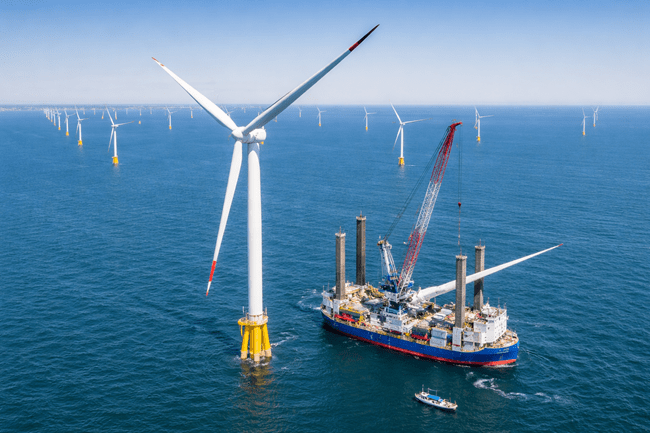
Why did the court side with Dominion Energy and what does the injunction mean for offshore wind execution risk?
At the center of the dispute is whether the Department of the Interior overstepped its statutory authority by halting CVOW construction on the basis of classified national security assessments. Dominion Energy argued that the Interior Department’s actions were procedurally flawed, lacked a clear legal foundation, and imposed material economic harm on a project that had already secured all necessary federal and state approvals.
The court agreed, at least in the preliminary phase, concluding that the Department’s suspension order could result in irreparable financial and operational harm if allowed to stand during ongoing litigation. The injunction enables Dominion Energy to continue offshore and onshore work while the underlying legal challenge plays out.
For the company, this ruling protects project momentum at a critical stage. As of January 2026, Dominion Energy had already committed more than $9 billion in capital, mobilized a complex multinational supply chain, and begun seabed foundation work. Halting construction midstream not only risked spiraling demobilization costs but also threatened the integrity of supplier agreements, workforce stability, and delivery timelines.
From an execution risk standpoint, the ruling removes immediate uncertainty for Dominion and reinforces the judicial view that long-gestation infrastructure projects deserve a degree of procedural insulation once permitting milestones are achieved. More broadly, it signals that federal agencies cannot retroactively halt industrial-scale energy infrastructure projects without offering a clearly articulated and legally defensible rationale.
How does this impact the broader U.S. offshore wind pipeline and investment environment?
The Coastal Virginia Offshore Wind ruling reverberates across the U.S. offshore wind sector, which has already been under pressure due to cost escalations, permitting delays, supply chain volatility, and political reversals at both federal and state levels. In 2025, several projects—including Empire Wind, SouthCoast Wind, and Sunrise Wind—faced deferrals, contract renegotiations, or outright cancellations.
Against this backdrop, Dominion Energy’s court victory is being interpreted as a rare legal tailwind for developers and financiers who have grown increasingly wary of shifting political signals. By confirming that project sponsors can challenge federal overreach successfully, the ruling may help restore confidence among investors evaluating gigawatt-scale developments off the East Coast.
Importantly, the case also underscores the strategic value of regulated utility ownership. Unlike merchant developers that rely on volatile power purchase agreements and competitive auctions, Dominion Energy is pursuing CVOW under a vertically integrated model approved by the Virginia State Corporation Commission. That structure has proven more resilient in turbulent policy environments, offering a clearer pathway for cost recovery and long-term return on capital.
The decision also comes amid heightened investor scrutiny of renewable capital allocation. Research firms and brokerage houses had flagged CVOW as a key earnings and valuation inflection point for Dominion Energy in 2026. The company’s ability to proceed with the project now reduces the probability of write-downs, protects balance sheet assumptions, and supports Dominion’s broader pivot away from natural gas investments.
Why is this project so politically and strategically contested—and what are the implications for future permitting?
Located approximately 27 miles off the coast of Virginia Beach, CVOW’s 176-turbine commercial array is adjacent to the world’s largest military complex, including Naval Station Norfolk. The U.S. Navy has reportedly issued multiple classified assessments over the last decade warning that offshore wind installations could interfere with radar systems, surveillance protocols, and regional operational readiness.
These concerns led the Department of the Interior, under the Trump administration in December 2025, to impose a freeze on all offshore wind activity near key military zones pending further interagency review. The move was widely interpreted as a national security-led realignment of energy infrastructure permitting, even as it directly conflicted with previously approved lease agreements.
Dominion Energy and several other developers argued that these national security concerns had already been addressed through extensive interagency consultations led by the Bureau of Ocean Energy Management, and that the late-stage intervention lacked both procedural justification and statutory authority. The company also emphasized that halting CVOW would undermine grid stability in Virginia and stall efforts to meet state-level clean energy mandates.
From a legal perspective, the federal court ruling limits the scope of executive branch discretion to revoke or suspend infrastructure projects without legislative or statutory clarity. In doing so, it strengthens the precedent that judicial review will play an increasingly active role in balancing environmental, industrial, and security priorities.
This is particularly relevant for utilities and developers navigating the Inflation Reduction Act’s offshore wind incentives, as well as for policymakers attempting to reconcile defense posture with decarbonization goals. The CVOW case may serve as a catalyst for formalizing clearer permitting channels that preempt late-stage conflicts between defense agencies and energy regulators.
How are markets and institutions reacting to this legal development?
Investor reaction to the ruling has been cautiously optimistic. Dominion Energy’s share price saw a modest uptick following the injunction, although analysts remain wary of residual regulatory risk. Jefferies recently adjusted its price target on Dominion stock to reflect what it called “policy friction premiums” associated with offshore wind execution, even as it reiterated a neutral rating.
Institutional positioning has also shifted in response to the ruling. Several pension funds and infrastructure investors previously hesitant to back offshore wind asset classes due to federal policy uncertainty are now reassessing risk-return dynamics in light of the court’s decision. Legal clarity, even if temporary, improves underwriting conditions for debt issuance, supply chain expansion, and project finance.
At the same time, opposition groups including the Committee for a Constructive Tomorrow, the Heartland Institute, and the National Legal and Policy Center have vowed to continue legal challenges. These organizations argue that CVOW threatens both national security and environmental protections, and have signaled their intention to escalate the matter to the Court of Federal Claims or the D.C. Circuit Court of Appeals.
This continued legal pressure, while unlikely to stop construction in the short term, could slow procurement schedules, elevate litigation costs, and influence future court rulings on similar infrastructure cases. For developers across the U.S. East Coast, the message is clear: legal risk is now as material as technical risk in the offshore wind development cycle.
What does this ruling signal about the future of clean energy infrastructure under the Trump administration?
The CVOW decision is shaping up to be a litmus test for how the Trump administration’s second term will balance its pro-fossil energy platform with growing economic and industrial support for renewable generation. While the administration has prioritized energy independence and military preparedness, the court’s ruling illustrates that policy reversals, even when framed as national security actions, are not immune to judicial constraints.
Looking ahead, clean energy infrastructure is likely to remain entangled in broader ideological and legal battles. Whether future offshore wind projects can avoid the kind of federal-state conflict that engulfed CVOW will depend on how effectively the permitting process incorporates defense feedback from the outset.
It will also depend on how consistently the judiciary interprets executive authority under environmental, defense, and administrative statutes. If courts continue to insist on procedural rigor and agency accountability, infrastructure developers may gain a firmer legal foundation to challenge abrupt policy pivots.
In the meantime, Dominion Energy’s court win gives the offshore wind sector something it has sorely lacked in recent months: a legal precedent that favors continuity over disruption, and a potential blueprint for how to defend long-horizon projects in an increasingly contested energy and regulatory landscape.
Key takeaways on what this development means for Dominion Energy, offshore wind developers, and U.S. infrastructure policy
- The court ruling reinstates construction of Dominion Energy’s $11.2 billion Coastal Virginia Offshore Wind project, mitigating immediate execution risk and preserving capital already deployed.
- The injunction reduces uncertainty for the broader U.S. offshore wind pipeline, offering legal precedent that challenges federal suspensions based on procedural grounds.
- Dominion’s vertically integrated model, supported by state regulatory approval, has proven more resilient than merchant-led offshore wind ventures vulnerable to offtake volatility.
- Policy friction between national security agencies and clean energy regulators is now a major axis of project risk, elevating the need for integrated permitting frameworks.
- Judicial oversight is becoming a critical backstop against arbitrary federal interventions, reshaping how infrastructure developers plan, finance, and litigate projects.
- Investor sentiment remains cautious but less pessimistic, with Dominion’s stock regaining some ground as regulatory clarity improves.
- Ongoing lawsuits and appeals from opposition groups keep litigation risk alive, even if construction continues under court protection.
- This case could redefine how courts mediate between environmental objectives, defense imperatives, and industrial planning in future energy infrastructure development.
Discover more from Business-News-Today.com
Subscribe to get the latest posts sent to your email.