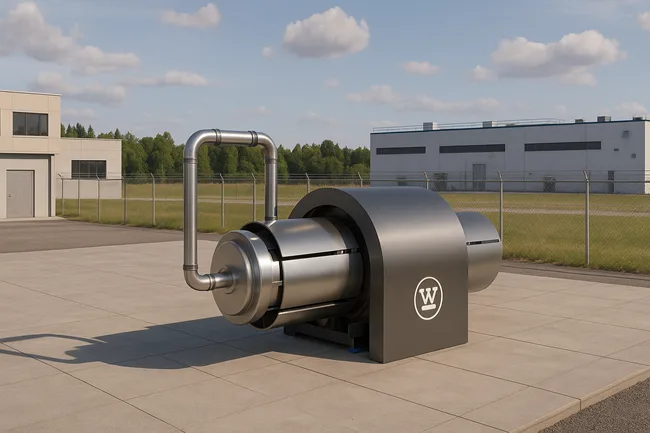






CleanSpark has expanded its Texas footprint with a major power acquisition near Houston, a move that places electricity access rather than compute hardware at the center of its growth strategy as artificial intelligence and high-performance computing demand accelerates. The acquisition comes at a moment when power availability has emerged as one of the most binding constraints on digital infrastructure expansion, often outpacing shortages in chips, land, or networking capacity. By securing power in one of the most energy-dense regions of the United States, CleanSpark is positioning itself at the intersection of energy infrastructure and next-generation compute.
The Houston-area asset provides CleanSpark with scalable electricity access inside the Texas power market, a region increasingly favored by data-intensive industries due to regulatory flexibility, industrial load density, and faster project timelines. While CleanSpark is widely known for its bitcoin mining operations, this transaction signals a broader infrastructure thesis that increasingly resonates with investors focused on AI-adjacent growth rather than pure digital asset exposure.
Why electricity access has become the defining bottleneck for AI and high-performance computing deployments
Across the AI and HPC ecosystem, electricity has quietly overtaken compute hardware as the limiting input. Hyperscale AI clusters consume power at levels once associated only with heavy industry, and grid interconnection delays now stretch into multiple years in many U.S. regions. This has shifted strategic emphasis away from where chips can be procured toward where megawatts can be reliably delivered.
Texas stands out in this context. Its power market supports faster interconnection timelines, a broad mix of generation sources, and comparatively fewer regulatory hurdles. Houston, in particular, benefits from proximity to energy trading hubs, industrial infrastructure, and transmission density that supports large incremental loads. CleanSpark’s acquisition near Houston directly targets this structural advantage, enabling the company to scale workloads in a market where electricity can still be mobilized at speed.
How CleanSpark’s Houston-area move reflects a shift from crypto-centric growth to infrastructure optionality
Although CleanSpark continues to operate within the bitcoin mining sector, its recent strategic decisions suggest a widening aperture. Management has indirectly emphasized that power ownership offers flexibility across multiple compute use cases, not all of which are tied to cryptocurrency economics. This framing aligns with a broader industry evolution, where miners increasingly view themselves as energy-to-compute conversion platforms rather than single-purpose operators.
The Houston-area power acquisition reinforces this narrative. By controlling power assets rather than simply leasing capacity, CleanSpark preserves optionality to deploy mining hardware, host third-party compute, or support AI and HPC workloads as market conditions evolve. In an environment where compute demand is increasingly heterogeneous, that flexibility may prove more valuable than any single revenue stream.
How Texas market dynamics and ERCOT volatility influence risk and reward for CleanSpark
Texas operates under the Electric Reliability Council of Texas framework, a market known for price volatility but also for responsiveness. While volatility introduces exposure to price spikes, it also creates monetization opportunities for operators capable of flexible load management. CleanSpark has historically highlighted its ability to modulate consumption and participate in grid programs, positioning volatility as a manageable rather than existential risk.
For AI and HPC workloads, which are typically less interruptible than mining, this dynamic introduces new considerations. However, proximity to Houston’s industrial infrastructure and transmission backbone may mitigate some of these challenges. CleanSpark’s ability to integrate power assets into a broader operational strategy will be central to how effectively it balances grid participation with stable compute delivery.
What the acquisition suggests about capital allocation discipline and long-term asset value
From a capital allocation standpoint, the Houston-area power acquisition reflects a preference for durable infrastructure over short-cycle expansion. Power assets, particularly in constrained markets, tend to appreciate in strategic value as demand rises. By acquiring capacity ahead of peak AI deployment cycles, CleanSpark may be positioning itself to capture long-duration returns rather than short-term operational gains.
This approach has implications for balance sheet perception. Investors have historically discounted crypto-linked equities due to earnings volatility tied to asset prices. Infrastructure ownership, by contrast, supports a narrative of asset-backed value creation that can smooth earnings across cycles. CleanSpark’s transaction therefore speaks not only to operational expansion but also to how the company wants to be valued by the market.
How AI and HPC demand could reshape CleanSpark’s revenue mix over the next several years
AI and HPC workloads differ materially from traditional mining in both revenue stability and customer profile. These workloads are typically contracted, long-term, and tied to enterprise or institutional demand rather than commodity price cycles. CleanSpark has not disclosed specific deployment plans tied to the Houston-area power asset, but the strategic logic is increasingly clear.
As enterprises race to secure power-backed compute capacity, operators that control electricity may find themselves in a position of leverage. CleanSpark’s ownership of scalable power near Houston could enable partnerships, colocation arrangements, or bespoke compute offerings that diversify revenue. Even if mining remains a core activity, the presence of alternative demand sources could materially change the company’s earnings profile.
How investor sentiment is evolving as CleanSpark leans into infrastructure ownership
CleanSpark’s stock has historically traded in close correlation with digital asset markets, reflecting its mining roots. However, investor response to infrastructure-focused announcements has tended to be more constructive, particularly among market participants seeking exposure to AI-related growth without the valuation premiums attached to pure-play data center operators.
Recent trading patterns suggest cautious optimism. While volatility persists, sentiment appears to be gradually shifting toward viewing CleanSpark as an energy-infrastructure-enabled compute platform rather than a narrowly defined miner. The Houston-area acquisition reinforces that perception, though sustained improvement in sentiment will depend on execution clarity and financial transparency.
What execution milestones investors will watch as CleanSpark integrates its Texas power assets
The strategic merit of the Houston-area power acquisition ultimately hinges on execution. Investors will be watching for concrete milestones, including interconnection readiness, site development timelines, and early indications of how the power will be monetized. Clear disclosure around capital expenditures and expected returns will be critical to sustaining confidence.
Equally important will be how CleanSpark communicates its evolving identity. As the company straddles mining, AI, and HPC narratives, coherence becomes a competitive advantage. The ability to articulate how power assets translate into predictable cash flows will likely determine whether the market rewards the Texas expansion with a higher multiple.
Why CleanSpark’s Texas expansion reflects a broader recalibration across the digital infrastructure sector
CleanSpark’s move near Houston is emblematic of a wider recalibration underway across digital infrastructure. As AI adoption accelerates, power has emerged as the scarce resource that shapes where and how growth occurs. Companies that anticipated this shift are now repositioning themselves around energy access rather than compute density.
In this context, CleanSpark’s Houston-area acquisition appears less opportunistic and more structural. By anchoring its expansion strategy in power ownership within a favorable market, the company is aligning itself with the realities of next-generation compute. Whether this recalibration ultimately delivers sustained shareholder value will depend on execution, but the strategic logic is increasingly difficult to ignore.
Key takeaways on why CleanSpark’s Houston-area power acquisition could influence long-term valuation
- CleanSpark’s Houston-area power acquisition underscores how electricity access has become the primary constraint shaping AI, high-performance computing, and digital infrastructure expansion across the United States.
- By securing scalable power capacity in Texas, CleanSpark positions itself ahead of competitors facing multi-year interconnection delays in more regulated or congested power markets.
- Ownership of power infrastructure enhances CleanSpark’s strategic optionality, enabling flexibility across bitcoin mining, AI workloads, HPC deployments, and potential third-party hosting arrangements as demand evolves.
- The Texas power market’s responsiveness and industrial density near Houston reduce execution risk while preserving upside tied to rising power scarcity and long-duration compute demand.
- From an investor perspective, the shift toward infrastructure ownership supports a narrative of more durable, asset-backed value creation compared with purely cyclical mining economics.
- Market sentiment may increasingly reflect CleanSpark’s role as an energy-enabled compute platform rather than a narrowly defined cryptocurrency miner, contingent on execution transparency and monetization clarity.
Share this:
Discover more from Business-News-Today.com
Subscribe to get the latest posts sent to your email.