





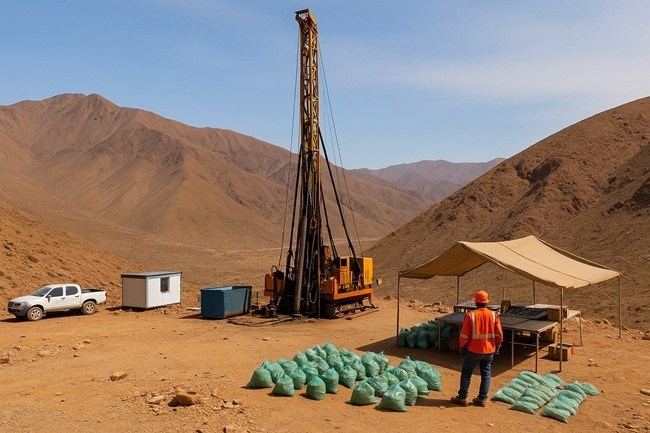
The energy transition’s accelerating demand for copper is reshaping how the mining industry views junior developers. With clean energy technologies, electric vehicles, and grid upgrades requiring exponential volumes of copper over the next two decades, junior copper companies are finding themselves back in focus. The International Energy Agency projects that copper demand from green energy alone could more than double by 2040, creating a raw material bottleneck unless new sources of supply are brought online quickly.
Yet the challenge remains whether undercapitalized juniors can move fast enough. Many of the projects that could fill the coming copper gap are held by early-stage developers facing a capital-constrained environment, complex regulatory landscapes, and rising scrutiny on environmental, social, and governance practices. From the Andean copper belts to Arizona’s legacy mine districts, these companies are exploring modular project designs, leveraging gold credits, and attracting majors as strategic investors in an effort to close the feasibility gap and meet commercial timelines.
Which junior copper companies are advancing projects with real transition potential?
In Chile, Hot Chili Limited has made progress with its Costa Fuego copper and gold project located in the coastal porphyry belt. The company’s pre-feasibility study outlines a blend of sulphide and oxide ore sources, low strip ratios, and substantial gold credits that could significantly improve cash flow metrics. Its proximity to existing infrastructure and phased development strategy are attracting investor attention.
In Ecuador, SolGold plc continues to advance the Cascabel copper-gold project, a tier-one porphyry system situated at Alpala. With institutional backing from companies like BHP and Newcrest Mining, SolGold is pursuing a phased development approach. The project’s size and long mine life make it one of the most closely watched copper assets in South America despite jurisdictional and permitting risks.
Arizona Sonoran Copper Company Inc. is emerging as a key junior player in the southwestern United States. Its Cactus Project, located near Casa Grande, benefits from past mining infrastructure and offers modular development potential. The company’s phased leach and SXEW flowsheet reduces upfront capital costs and provides flexibility to scale operations depending on market conditions.
Faraday Copper Corp. is another name attracting attention in Arizona. Its Copper Creek project recently delivered high-grade intercepts that point to a robust resource base. The company’s dual development strategy involves both open pit and underground options, aligning with investor interest in flexible, de-risked copper plays.
Filo Corp. is advancing the Filo del Sol project, a copper-gold-silver deposit straddling the Argentina-Chile border. The asset has already attracted capital from strategic investors including BHP, and the company is positioning Filo del Sol as a future cornerstone supply for energy transition markets.
How gold credits are helping rescue marginal porphyry economics
One of the most decisive trends enabling junior copper developers to advance is the strategic use of gold credits. Once considered a bonus, gold by-product revenues are now central to improving the economics of copper projects with marginal grade profiles. Hot Chili Limited’s Costa Fuego deposit includes more than two million ounces of contained gold, allowing the company to reduce its estimated net cash costs per pound of copper.
SolGold’s Alpala resource includes significant gold and silver content, which has been integrated into updated economic models to enhance return on investment. In Canada, American Eagle Gold Corp. is exploring the NAK copper-gold project in British Columbia’s Babine region. The goal is to identify a large porphyry system where gold grades could shift the feasibility outlook in favor of development.
These credits not only improve net present value calculations but also make projects more attractive for streaming deals, joint ventures, and prepayment financing from gold-focused institutional funds.
Why modular mine designs are gaining traction among junior developers
As capital costs for greenfield copper projects often exceed one billion US dollars, a growing number of junior companies are adopting modular development strategies. This approach segments projects into manageable, lower-cost phases that can be expanded over time. Arizona Sonoran Copper Company Inc. is planning to initiate production at the Cactus Project using heap leaching and SXEW technology, with further expansion into concentrator-based sulphide processing.
Hot Chili Limited has also adopted a phased design that allows for initial lower throughput with staged capacity expansion. This strategy provides cash flow earlier in the mine life and allows for optionality in mill design, ore blending, and future permitting adjustments. Investors are increasingly favoring these plans as they reduce funding risk, align better with ESG goals, and increase takeover attractiveness for major mining firms.
What risks still challenge junior copper projects in 2025?
Despite renewed optimism, junior copper developers face a number of structural and macroeconomic headwinds. Permitting timelines remain lengthy in jurisdictions like Ecuador and Peru, where community engagement, environmental licensing, and changing political priorities introduce substantial delays. Even in the United States, companies such as Faraday Copper Corp. and Arizona Sonoran Copper Company Inc. must navigate extensive federal and state environmental review processes that can add years to project timelines.
Infrastructure is another critical factor. Developers operating in remote areas of Argentina, Brazil, or Canada often require significant investment in roads, power, and water access before production can begin. Solis Minerals Ltd., which is actively exploring for copper in Brazil and Peru, has acknowledged that logistics remain a key variable in advancing exploration-stage projects to development.
Cost inflation is also a persistent issue. With equipment, fuel, labor, and input costs rising globally, budget overruns are a common risk that juniors must manage proactively through strategic procurement and engineering design.
Are majors likely to acquire these junior copper assets?
The resurgence of M&A in the copper sector is a growing theme heading into 2026. As larger mining companies look to replenish their project pipelines, many juniors with de-risked assets are becoming acquisition targets. Companies like BHP and Rio Tinto have shown interest in early-stage porphyries with scale and longevity, particularly in politically stable jurisdictions.
Filo Corp. has already attracted investment from BHP, signaling that its Filo del Sol project is on the radar of major players. As Hot Chili Limited, SolGold plc, and Arizona Sonoran Copper Company Inc. move their assets further along the development curve, analysts expect consolidation to accelerate. This could offer exit opportunities for early investors and allow majors to take over high-potential assets without facing grassroots exploration risk.
What is the current investor sentiment for junior copper developers?
Investor sentiment toward junior copper developers remains cautious but selectively optimistic. While many small-cap mining stocks have underperformed in 2025 due to tighter capital markets and global macro uncertainty, companies with near-term catalysts, strong gold credits, and modular growth paths are beginning to outperform their peers.
On the Australian Securities Exchange, Hot Chili Limited has seen growing institutional interest, while on the Toronto Stock Exchange, Arizona Sonoran Copper Company Inc. and Faraday Copper Corp. have experienced rising volumes and analyst coverage. Gold-linked copper developers with low capital intensity are faring better than their greenfield counterparts in frontier regions.
Why these juniors matter in the global copper supply outlook
Global decarbonization efforts depend on secure, scalable copper supply chains. While much of the focus remains on established producers, junior developers hold the key to the next generation of copper supply. Their ability to explore, de-risk, and partner on high-grade, long-life assets will shape whether the world can meet copper needs for electrification, renewables, and digital infrastructure over the next 15 years.
Tracking the development timelines, technical milestones, and financing moves of companies such as Hot Chili Limited, SolGold plc, Arizona Sonoran Copper Company Inc., Faraday Copper Corp., Filo Corp., Solis Minerals Ltd., and American Eagle Gold Corp. offers investors an edge in understanding how copper supply may evolve in a constrained and competitive market.
Share this:
Discover more from Business-News-Today.com
Subscribe to get the latest posts sent to your email.