




Fabric8Labs, Inc. has announced a $50 million funding round to accelerate the expansion of its U.S.-based advanced manufacturing footprint, significantly boosting capacity for next-generation electronics components. The San Diego-based manufacturing innovator is scaling up production using its proprietary Electrochemical Additive Manufacturing (ECAM) platform to meet growing demand across artificial intelligence data centers, RF wireless communication systems, and power electronics for electric vehicles.
The latest financing round was led by New Enterprise Associates (NEA) and Intel Capital. It also included continued support from existing backers such as Lam Capital, the venture arm of Lam Research Corporation, TDK Ventures, and SE Ventures. New investors joining the round include Marunouchi Innovation Partners, SK hynix, Ericsson Ventures, Masco Ventures, and Toppan Global Venture Partners.
With this new capital, Fabric8Labs plans to ramp up its U.S. production capacity from 5 million to 22 million components per year. The company also intends to grow its workforce across manufacturing, design, process engineering, and quality assurance to support a growing portfolio of customer programs across critical industries. The expansion positions Fabric8Labs as a strategic domestic manufacturing partner capable of delivering high-volume production of precision components, especially in sectors facing supply chain risk and scaling pressure.
Jeff Herman, Co-Founder and Chief Executive Officer of Fabric8Labs, stated that the funding marks a pivotal step in the company’s mission to commercialize its Electrochemical Additive Manufacturing technology across industries where performance, reliability, and supply chain resiliency are now essential. He noted that customers increasingly require rapid iteration and seamless transition from prototyping to full production, especially in high-growth markets such as artificial intelligence, high-performance computing, wireless infrastructure, and electric vehicles.

What distinguishes Fabric8Labs’ ECAM platform from other additive manufacturing technologies?
Fabric8Labs is known for developing a disruptive room-temperature metal 3D printing process called Electrochemical Additive Manufacturing, or ECAM. The technology is based on electroplating principles and operates at ambient temperatures, which eliminates the need for high-heat processing, laser sintering, or post-processing steps common in traditional additive manufacturing. This results in extremely fine resolution, superior surface finish, and reliable part integrity.
By enabling the construction of complex three-dimensional metal parts at the atomic level, ECAM offers a combination of performance and manufacturability that is well-suited for demanding use cases. The process is optimized for applications where thermal performance, power efficiency, and spatial constraints intersect, such as chip cooling systems, 3D RF antennas, and power delivery components in automotive and aerospace systems.
Fabric8Labs noted that components made with ECAM are ideal for integrating directly onto performance substrates and ceramics. This capability allows customers to eliminate multiple assembly steps and interfaces, which can otherwise limit efficiency and reliability. The technology is particularly compelling for manufacturers that require small-scale prototyping that can transition to tens of millions of units without compromising part quality or design flexibility.
Which industries are driving demand for ECAM-enabled components?
Fabric8Labs is targeting three primary growth sectors with its ECAM platform: artificial intelligence and data center infrastructure, wireless communications systems, and electric vehicle power electronics.
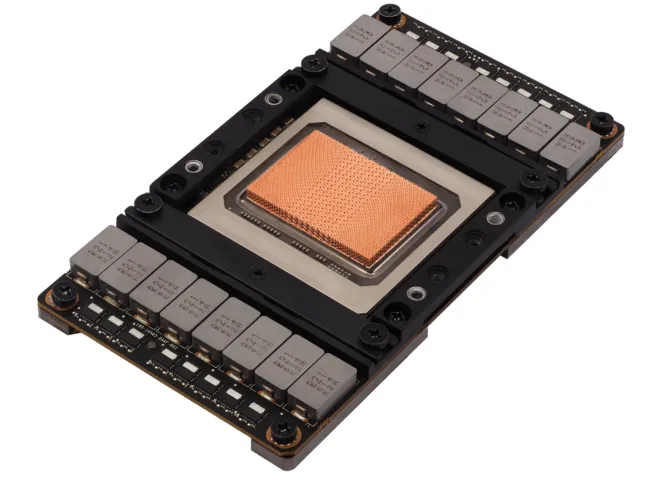
In the artificial intelligence sector, the growing density and heat load of high-performance chips has driven a need for advanced cooling systems. Fabric8Labs supports this need by manufacturing next-generation thermal management components, including direct-to-chip and direct-to-silicon cooling hardware that enables efficient heat dissipation under extreme power loads. As artificial intelligence workloads continue to scale globally, data center operators are investing in thermal solutions that allow for higher chip utilization and longer system lifespans.
In wireless communications, demand is surging for miniaturized, high-performance radio frequency components that can be integrated into space-constrained environments. ECAM enables the printing of 3D antennas directly onto printed circuit boards and other substrates. This manufacturing method enhances the size, weight, power, and cost profile of components used in mobile infrastructure, low Earth orbit satellite constellations, and automotive connectivity systems.
In electric vehicles and power electronics, Fabric8Labs is fabricating high-current interconnects and passive components that can be printed directly onto ceramics. This approach reduces the number of material interfaces and boosts electrical efficiency, offering a more compact and reliable solution for vehicle electrification. With original equipment manufacturers pushing for higher energy density and smaller footprint power systems, ECAM is increasingly seen as a differentiator.
What does this mean for U.S. supply chains and reshoring efforts?
The strategic timing of Fabric8Labs’ expansion aligns with a broader push across industries and government stakeholders to bring critical manufacturing capabilities back to U.S. soil. Global supply chain fragility, geopolitical uncertainty, and the rising complexity of modern hardware systems have led both commercial and defense customers to prioritize domestic production of precision components.
Fabric8Labs emphasized that its U.S.-based manufacturing facilities are ISO 9001 certified and International Traffic in Arms Regulations registered. This makes the company compliant with rigorous quality and security requirements needed to serve customers in aerospace, defense, and semiconductor sectors.
By combining additive manufacturing scalability with domestic production capabilities, Fabric8Labs is positioning itself as a platform player for system-level hardware innovation. The company’s ECAM process provides not only performance benefits but also a viable reshoring pathway for customers aiming to reduce their dependency on offshore suppliers for sensitive or high-value parts.
Why are major semiconductor and telecom investors betting on Fabric8Labs’ ECAM expansion and what signals are they watching next?
Investors backing the $50 million round view Fabric8Labs as one of the most promising ventures in the emerging intersection of advanced manufacturing, hardware design, and supply chain transformation. Greg Papadopoulos, PhD., a Venture Partner at NEA, stated that his team identified ECAM early as a platform with potential to transform multiple industries. He highlighted its combination of unmatched precision, design freedom, and scalability.
Intel Capital’s involvement reflects a strategic interest in manufacturing platforms that can meet the evolving demands of semiconductor packaging and data infrastructure. The addition of investors from SK hynix and Ericsson Ventures further suggests institutional appetite for upstream component technologies that support 5G, telecommunications, and cloud infrastructure.
Industry analysts believe that Fabric8Labs is well-positioned to serve not only next-generation applications but also become a foundational technology supplier in reshoring efforts. With supply chains under scrutiny and advanced fabrication requirements outpacing legacy methods, ECAM could emerge as a critical enabler for the next wave of product development in hardware-intensive industries.
What are the next milestones for Fabric8Labs as it scales?
The primary operational focus for Fabric8Labs in the near term is to successfully scale its U.S. manufacturing output from 5 million to 22 million components per year. This expansion will be closely watched by customers, partners, and investors as a test of ECAM’s viability in sustained high-volume manufacturing.
At the same time, the company plans to deepen its customer engagements in artificial intelligence infrastructure, mobile networks, and electric vehicle systems. Investors will be monitoring Fabric8Labs’ ability to convert new design wins into recurring revenue streams and long-term supply agreements. The ECAM platform’s ability to accommodate design iteration while delivering production-grade quality is expected to be a key selling point.
With the backing of strategic capital and a differentiated technology stack, Fabric8Labs aims to become a core contributor to domestic manufacturing resilience and innovation. As reshoring trends and performance demands converge, the firm’s technology is well-aligned with the future of component manufacturing in the United States and beyond.
Key takeaways: Fabric8Labs secures major funding to scale up ECAM-based U.S. component manufacturing
- Fabric8Labs, Inc. raised $50 million in a funding round led by New Enterprise Associates and Intel Capital to expand its U.S. advanced manufacturing capabilities.
- The company will increase its production capacity from 5 million to 22 million components annually, supporting growth across AI, RF, and EV hardware segments.
- Its proprietary Electrochemical Additive Manufacturing (ECAM) platform enables high-resolution, room-temperature metal 3D printing with no post-processing.
- ECAM supports key applications such as direct-to-chip thermal cooling, 3D RF antennas for satellite and wireless infrastructure, and power components for electric vehicles.
- The round included new strategic investors such as SK hynix, Ericsson Ventures, Masco Ventures, and Toppan Global Venture Partners, underscoring cross-sector interest.
- Fabric8Labs’ ISO 9001-certified and ITAR-registered U.S. manufacturing base offers a domestic alternative for high-precision electronics components.
- Analysts view the raise as a strong vote of confidence in the company’s potential to become a cornerstone of U.S. reshoring and supply chain resilience strategies.
- Investors are expected to track the company’s ability to convert prototyping engagements into large-scale recurring production contracts.
- Industry sentiment around Fabric8Labs is bullish, with its ECAM platform seen as a scalable solution for thermal, RF, and power design bottlenecks.
- The funding marks a broader trend of institutional capital flowing into U.S.-based advanced manufacturing platforms amid heightened geopolitical and technology supply chain risks.
Discover more from Business-News-Today.com
Subscribe to get the latest posts sent to your email.

