


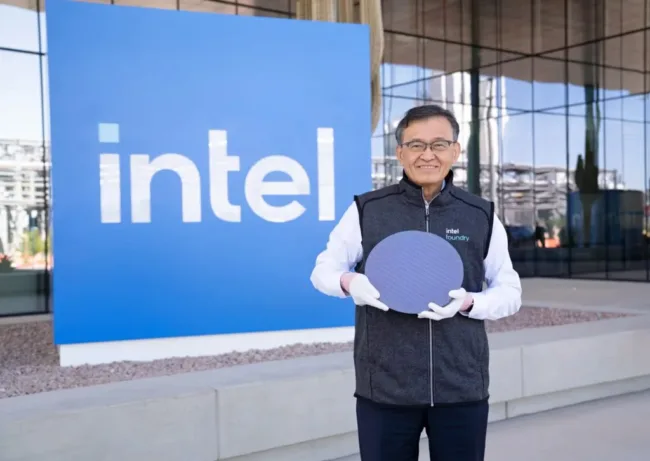
Intel Corporation (NASDAQ: INTC) has officially unveiled its next-generation client processor platform, Panther Lake, built on the advanced Intel 18A node. Introduced on October 9, 2025, this launch is not just about performance metrics or architecture diagrams. It represents a pivotal moment in the American semiconductor firm’s long-delayed effort to regain process and packaging leadership in the AI computing era.
The Panther Lake-based Intel Core Ultra series 3 processors are already in production, with first shipments expected by the end of 2025 and wider commercial availability from January 2026. At the same launch event, Intel also previewed its next major server-class platform, Clearwater Forest, which will use the same 18A node and target large-scale data center workloads in 2026.
Intel’s leadership is positioning Panther Lake as more than just a processor family. It is the first AI PC platform built on Intel 18A, a U.S.-developed and U.S.-manufactured node that introduces key breakthroughs in transistor design, power efficiency, and 3D chiplet integration.
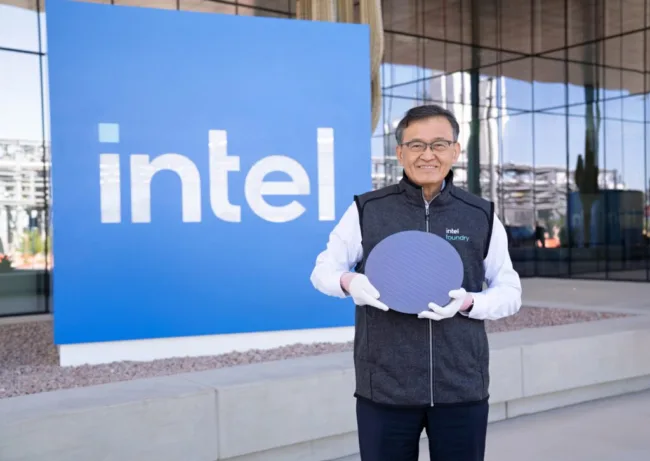
What makes Panther Lake a foundational upgrade for the future of AI-driven personal computing?
The Panther Lake architecture debuts with a modular system-on-chip design that integrates up to 16 performance and efficiency cores, supported by a redesigned Intel Arc GPU boasting 12 Xe cores. The chip family delivers more than 50 percent uplift in both CPU and GPU performance compared to the previous generation, while also supporting AI acceleration with up to 180 TOPS of platform-level compute.
Panther Lake’s architecture enables scalable design flexibility across laptops, workstations, edge devices, and even robotics platforms. It incorporates a balanced XPU approach, distributing workloads between CPU, GPU, and NPU elements. The platform is optimized not only for classic computing tasks but also for generative AI, real-time inference, and perceptual robotics workloads.
Intel has also introduced a robotics-focused software suite and reference board based on Panther Lake, allowing developers to deploy AI-rich robots using the same SoC powering next-generation laptops. This strategic push into edge robotics reveals Intel’s intent to stretch the AI PC narrative far beyond productivity and gaming into full-stack embedded AI systems.
How is the Intel 18A process node redefining domestic semiconductor manufacturing standards?
Intel 18A is a 2-nanometer class semiconductor node designed to deliver performance gains through transistor innovation rather than just node shrinkage. It introduces RibbonFET, Intel’s first new transistor architecture in over a decade, allowing for faster switching and better energy efficiency. The second innovation, PowerVia, enables backside power delivery, improving signal routing and reducing power loss.
This dual innovation delivers up to 15 percent higher performance per watt and 30 percent better chip density compared to Intel 3, the previous advanced node in Intel’s foundry roadmap. The node was initially developed and qualified in Oregon and is now ramping toward high-volume manufacturing at Fab 52 in Chandler, Arizona.
Intel Corporation has emphasized that 18A will support at least three future generations of both client and server products. It also supports advanced packaging techniques through Intel Foveros, allowing multiple chiplets to be stacked vertically to create denser, more powerful SoCs.
These process innovations, when combined, form the backbone of Intel’s response to rival chipmakers such as Taiwan Semiconductor Manufacturing Company and Samsung Electronics, both of whom are also pushing 2-nanometer nodes into commercial deployment timelines.
Why is Fab 52 being positioned as a strategic pillar of Intel’s reindustrialization roadmap?
Fab 52 is Intel Corporation’s most advanced fabrication facility to date. Located at the Ocotillo campus in Chandler, Arizona, it is the fifth high-volume fab on the site and the flagship location for Intel 18A production. The facility is part of a broader 100 billion dollar investment by Intel into U.S.-based semiconductor manufacturing, encompassing R&D in Oregon and packaging operations in New Mexico.
This domestic manufacturing capability is being framed as a response to supply chain fragility, export restrictions, and rising geopolitical risk in the semiconductor ecosystem. Intel’s leadership has explicitly tied Fab 52’s success to broader national security and industrial policy goals, including compliance with CHIPS Act objectives and resilience planning in defense-critical sectors.
Institutional investors and policymakers alike have viewed Fab 52 as a potential catalyst for reshoring advanced semiconductor capacity, especially as East Asian manufacturing concentration continues to raise concerns in Washington and Brussels.
What are the expectations from Clearwater Forest, Intel’s 18A-based Xeon 6+ server processor?
While Panther Lake aims to redefine the consumer and edge computing experience, Clearwater Forest is Intel’s high-efficiency bet for data centers. Based on the Xeon 6+ brand and using the same Intel 18A node, Clearwater Forest integrates up to 288 efficient cores and boasts a 17 percent uplift in IPC over prior server architectures.
The processor is designed to meet the needs of hyperscale cloud providers, telecom operators, and AI infrastructure workloads. Intel has emphasized that Clearwater Forest will deliver substantial gains in energy efficiency, throughput, and density, all of which are critical in the context of rising power costs and model complexity in AI training and inference.
Slated for launch in the first half of 2026, Clearwater Forest may serve as a bridge between Intel’s current-generation Xeon roadmap and its future disaggregated architectures. Its success will be closely watched by cloud hyperscalers and telecom vendors who are currently diversifying silicon supply chains to keep pace with surging demand.
How is the investment community interpreting the Panther Lake and 18A milestones?
Intel Corporation has endured a volatile few years in the equity markets, marked by delayed roadmaps, competitive losses, and manufacturing missteps. The Panther Lake reveal, however, appears to be generating cautious optimism across buy-side institutions.
Analysts point to the combination of domestic 18A volume production, new chiplet-based SoCs, and AI-specific acceleration as factors that could restore competitiveness in the face of Apple Inc., Advanced Micro Devices, and NVIDIA Corporation. While execution risk remains high, the investor community is beginning to acknowledge Intel’s momentum in delivering key roadmap milestones.
Early signals from trading activity suggest a modest rebound in Intel stock, driven by institutional positioning around the AI PC theme and the potential monetization of its U.S. manufacturing base through Intel Foundry Services. The alignment of Fab 52 and Intel 18A with CHIPS Act incentives and national procurement frameworks may also lead to long-term visibility in government and enterprise contracts.
What execution risks could still derail Intel’s ambitions in the AI hardware market?
Despite the strong technical narrative and government alignment, Intel Corporation faces a number of structural risks. The 18A node, while groundbreaking, must still achieve consistent yields at scale to remain cost-competitive. Any misstep in yield optimization or package integration could delay both Panther Lake and Clearwater Forest timelines and weaken customer confidence.
The AI PC market, while expanding, is also growing more competitive. Apple’s M-series processors, Qualcomm’s Snapdragon X Elite platform, and Advanced Micro Devices’ AI-tuned Ryzen portfolio all offer tightly integrated hardware-software ecosystems. Intel’s modular architecture must prove it can match or exceed these vertically integrated designs in both performance and real-world efficiency.
Moreover, Intel’s shift to a foundry-first model under Intel Foundry Services adds another layer of execution complexity. The company must balance internal product priorities with external customer fabrication demands, which is a highly challenging balancing act that few firms have executed successfully at this scale.
Finally, macroeconomic factors, talent shortages in U.S. semiconductor fabrication, and heightened geopolitical risk across the Asia-Pacific region will continue to shape Intel’s trajectory. The next 12 to 18 months are likely to determine whether Panther Lake and Intel 18A become the long-awaited turnaround or another delayed promise.
Key takeaways from Intel Corporation’s Panther Lake and 18A platform announcement
- Intel Corporation has launched Panther Lake, its next-generation AI PC processor built on the advanced Intel 18A node.
- The Intel Core Ultra series 3 processors are already in production and will be widely available starting January 2026.
- Panther Lake integrates up to 16 P-cores and E-cores, a 12-core Intel Arc GPU, and up to 180 TOPS for AI acceleration.
- Intel 18A introduces RibbonFET and PowerVia technologies, offering significant performance-per-watt and chip density improvements.
- Fab 52 in Chandler, Arizona is now ramping Intel 18A into high-volume production, solidifying U.S. chipmaking leadership.
- Intel also previewed Clearwater Forest, an 18A-based Xeon 6+ server chip with 288 E-cores and 17% IPC gains, arriving in H1 2026.
- Institutional investors are cautiously optimistic, viewing Panther Lake and 18A as potential inflection points for Intel’s recovery.
- Execution risks remain high, including yield challenges, AI PC market competition, and geopolitical supply chain constraints.
Share this:
Discover more from Business-News-Today.com
Subscribe to get the latest posts sent to your email.