




Super Micro Computer Inc. (NASDAQ: SMCI), trading as Supermicro, has announced an expansion of its collaboration with NVIDIA Corporation to roll out a new generation of AI infrastructure platforms purpose-built for U.S. federal government deployments. The announcement, made during NVIDIA GTC in Washington, D.C., outlines Super Micro Computer’s plans to launch the NVIDIA Vera Rubin NVL144 and NVL144 CPX platforms in 2026. These new systems are expected to deliver more than three times the attention acceleration performance of the previous Blackwell Ultra architecture.
This expanded partnership between the American server manufacturer and the GPU and AI leader marks a continuation of their long-standing collaboration based in Silicon Valley. Alongside the product roadmap, Super Micro Computer is reinforcing its position as a domestic supplier of Trade Agreements Act (TAA)-compliant and Buy American Act-eligible systems through fully U.S.-based design, manufacturing, and validation at its San Jose, California headquarters.
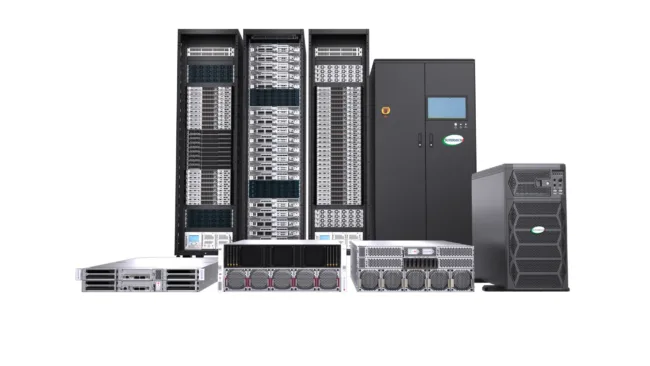
As part of the rollout, Supermicro has introduced a compact 2OU NVIDIA HGX B300 8-GPU server system. This design utilizes an Open Compute Project (OCP)-based rack-scale architecture that can support up to 144 GPUs within a single rack. The solution is targeted at large-scale AI and high-performance computing deployments, particularly in government-owned or defense-grade data centers.
Also debuting is a new rack-scale platform built around the NVIDIA GB200 NVL4 architecture. This platform will support accelerated scientific computing and generative AI workloads at scale. The offering complements a broader strategy to provide a full-stack AI infrastructure suite optimized for compliance, security, and government-grade reliability.
How is Super Micro Computer positioning itself in the U.S. AI infrastructure ecosystem?
Super Micro Computer is framing its expanded NVIDIA alignment and U.S.-based manufacturing capabilities as a core differentiator in the evolving AI infrastructure market. With its entire R&D, design, production, and validation infrastructure located in San Jose, the company is focusing on its ability to rapidly engineer systems that meet stringent U.S. government procurement and compliance mandates.
The firm’s CEO, Charles Liang, emphasized that years of close collaboration with NVIDIA—both companies being headquartered in Silicon Valley—have positioned Super Micro Computer as a pioneer in domestically manufactured AI solutions. The aim is to serve U.S. federal agencies that require not just high-performance computing power but also trusted, verifiable hardware supply chains.
By focusing on systems that meet the federal government’s TAA and Buy American Act requirements, Supermicro is targeting a segment of the infrastructure market that is often underserved by global original equipment manufacturers reliant on overseas production. This strategic bet could help the company capture a larger share of government-related AI and edge compute contracts between 2025 and 2030.
What new systems and hardware innovations were announced alongside the NVIDIA platforms?
Alongside its rack-scale AI platforms, Supermicro has introduced several new solutions targeting varied deployment environments. Among them is the Super AI Station, a liquid-cooled deskside system built around the NVIDIA GB300 Grace Blackwell Ultra Superchip. Designed to offer server-grade computing in a tower form factor, the station is capable of supporting AI models with up to one trillion parameters and delivering up to 20 PFLOPS of AI performance.
The Super AI Station supports up to 784 GB of coherent memory and includes a direct-to-chip liquid cooling system for CPU, GPU, memory, and networking components. The platform is being pitched as a complete on-premise solution for model training, fine-tuning, inference, and algorithm development in government agencies, national research institutions, and deep-tech startups.
Super Micro Computer is also releasing the ARS-121GL-NB2B-LCC platform, a rack-scale system optimized for GPU-accelerated HPC and AI workloads such as weather simulation, fluid dynamics, genomics, and molecular modelling. The solution integrates four NVIDIA NVLink-connected Blackwell GPUs and two NVIDIA Grace CPUs per node. Up to 32 nodes can be deployed per rack, with 800G-per-GPU networking using NVIDIA ConnectX-8 for interconnect.
These platforms are designed with modularity in mind, allowing rapid integration of newly announced infrastructure components like the NVIDIA BlueField-4 data processing unit (DPU) and ConnectX-9 SuperNIC, which are being positioned as the next generation of accelerated networking solutions for AI factories.
How Super Micro Computer’s U.S.-made AI systems are addressing the compliance and security needs of federal agencies in 2025
Super Micro Computer’s announcement is timed with heightened demand for domestic, secure, and scalable AI infrastructure across critical U.S. sectors. As agencies such as the Department of Defense, Department of Energy, and Homeland Security look to build out sovereign AI capabilities, the need for turnkey, compliant, and high-performance systems has become a national priority.
The company’s product roadmap aligns closely with the NVIDIA AI Factory for Government reference design. This framework defines a full-stack, hybrid-ready AI deployment architecture tailored for high-assurance environments. By supporting this design with its own suite of validated hardware, Supermicro is offering federal agencies an off-the-shelf path to AI acceleration that remains under U.S. jurisdiction and avoids supply-chain risk.
Importantly, the modular design of these systems allows for rapid updates as new NVIDIA platforms are released. That flexibility could prove essential for federal buyers, especially those running classified, evolving, or multi-model workloads where system obsolescence and security compliance must be addressed simultaneously.
The company’s emphasis on liquid cooling, direct-to-chip thermal management, and high-density rack-scale engineering also speaks to the operational needs of government data centers that often face space, power, and latency constraints.
What are analysts and institutional investors saying about Super Micro Computer’s outlook?
The latest announcement supports a broader narrative that Super Micro Computer is moving from a high-growth AI server supplier to a long-term infrastructure partner for specialized markets like defense, intelligence, and federal science.
Following its inclusion in the S&P 500 earlier in 2025, Supermicro has seen significant institutional inflows, although its stock (NASDAQ: SMCI) has experienced volatility due to macroeconomic headwinds, valuation recalibrations, and intense investor debate over sustainability of its growth margins. As of the last trading session, Super Micro Computer’s share price hovered around USD 52.36, with intraday highs above USD 54 and volume exceeding 28 million shares.
While analysts remain divided on near-term valuation, many agree that the company’s ability to quickly deploy NVIDIA-aligned systems and manufacture them domestically gives it a distinct advantage over peers. That advantage is particularly important given the tightening procurement standards post-Executive Order mandates around AI governance and cybersecurity.
Institutional sentiment appears cautiously optimistic. Investors are closely watching execution timelines for the 2026 Vera Rubin product launches, margin evolution from compliance-heavy contracts, and the company’s ability to differentiate itself in a competitive server landscape increasingly dominated by hyperscalers and vertically integrated OEMs.
How does this affect the broader AI server and infrastructure market?
The announcement by Supermicro could reshape how AI infrastructure is purchased, validated, and scaled in the United States. By combining server-grade performance with compliance and modularity, the company is offering a blueprint for how U.S.-based firms can compete in a market historically dominated by offshore manufacturers.
As AI workloads grow in complexity and sensitivity, the requirement for U.S.-manufactured and fully validated systems is becoming not just a preference but a necessity. Super Micro Computer’s full-stack approach—ranging from deskside AI workstations to rack-scale HPC clusters—means it can serve both decentralized agencies and centralized national labs.
While companies like Dell Technologies and Hewlett Packard Enterprise also have federal AI offerings, Super Micro Computer’s speed to market and close NVIDIA alignment may offer a defensible niche in deployments where compliance and rapid scalability are non-negotiable.
Going forward, how quickly the company delivers on its announced platforms and how effectively it competes on cost, energy efficiency, and support will determine whether it can sustain its current momentum in the face of intensifying competition.
What are the key takeaways from Super Micro Computer’s expanded collaboration with NVIDIA for U.S. federal AI infrastructure?
- Supermicro is expanding its partnership with NVIDIA to launch the next-generation NVIDIA Vera Rubin NVL144 and NVL144 CPX platforms in 2026, delivering over 3x the AI attention acceleration performance compared to Blackwell Ultra systems.
- The server manufacturer unveiled a 2OU NVIDIA HGX B300 8-GPU system with a rack-scale OCP design, supporting up to 144 GPUs per rack and optimized for large-scale AI and HPC deployments across government data centers.
- All new systems are TAA-compliant and Buy American Act-capable, developed and validated entirely at Super Micro Computer’s San Jose, California facilities, reinforcing the firm’s U.S.-based manufacturing advantage.
- A new Super AI Station based on the NVIDIA GB300 Grace Blackwell Ultra Superchip brings high-performance AI computing to a desktop form factor, supporting models up to 1 trillion parameters with over 5x the computing power of traditional PCIe-based GPU workstations.
- The AI Station is targeted at government agencies, deep-tech startups, and research labs that require on-prem AI infrastructure for sensitive workloads that cannot rely on public cloud services due to security, latency, or regulatory concerns.
- Super Micro Computer’s expanded portfolio aligns with the NVIDIA AI Factory for Government reference design, offering federal clients a full-stack, compliance-ready architecture for running secure, scalable, multi-model AI environments.
- Modular integration of NVIDIA BlueField-4 DPUs and ConnectX-9 SuperNICs is expected to support faster AI networking, storage, and data processing in next-generation gigascale deployments.
- Financially, Supermicro (NASDAQ: SMCI) remains a high-interest stock among institutional investors, with analysts viewing its NVIDIA alignment and first-to-market server strategy as critical advantages despite recent share price volatility.
- The announcement strengthens Super Micro Computer’s position as a trusted provider of secure, high-performance AI systems tailored for the compliance and operational demands of U.S. federal infrastructure programs.
Share this:
Discover more from Business-News-Today.com
Subscribe to get the latest posts sent to your email.

