Aclara Resources Inc. has announced a US$277 million plan to develop a heavy rare earths separation facility in Louisiana, marking a significant escalation in U.S. efforts to build an independent supply chain for critical minerals. Positioned as the first commercial-scale facility in the country dedicated to heavy rare earths from ionic clays, the project could reduce American reliance on China, which currently dominates over 90% of the world’s rare earth processing capacity.
The Canadian developer stated that the Louisiana site will process concentrate from its ionic clay deposits—starting with feedstock from its operations in Brazil—and produce dysprosium, terbium, and other essential heavy rare earths. These materials are integral to electric vehicle drivetrains, offshore wind turbines, defense systems, and industrial magnets.
Louisiana’s state government has committed US$46.4 million in economic incentives, highlighting how U.S. states are increasingly competing for clean energy manufacturing infrastructure in 2025. The announcement positions Aclara as a pivotal player in the evolving American critical minerals landscape.
Why is Aclara building the facility in Louisiana and what makes it strategically important?
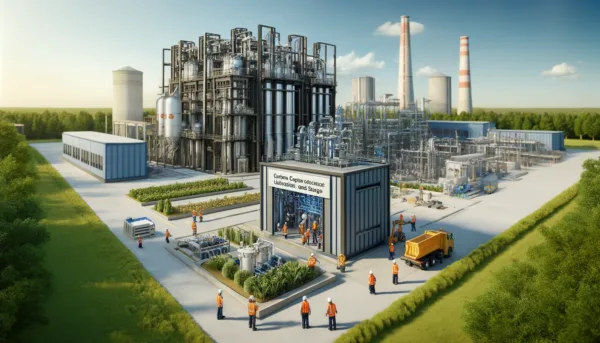
Aclara’s facility is planned for an industrial site in the U.S. Gulf Coast and is expected to begin construction in 2026. Commissioning and first production are targeted for 2028. Once operational, the Louisiana plant will be capable of separating dysprosium and terbium—two of the most geopolitically sensitive elements—at commercial scale from ionic clay sources.
Most rare earth production globally is dominated by Chinese supply chains, both in terms of upstream mining and downstream separation. While light rare earths like neodymium and praseodymium receive wide attention, heavy rare earths are scarcer and even more concentrated in China. Aclara’s plan would create a unique U.S.-based capability to refine these materials using non-Chinese technology and sources.
The proposed plant will process feedstock sourced initially from Aclara’s Carina Module in Brazil. The ionic clay material, common in southern China and Brazil, is amenable to lower-cost, more environmentally responsible extraction methods than hard rock sources like bastnaesite or monazite. This approach avoids radioactive tailings and supports a more sustainable supply chain.
How is the $277 million project being funded, and what state-level incentives are involved?
While the full funding package is yet to be finalized, Aclara Resources revealed that Louisiana Economic Development has approved a US$46.4 million incentive plan that includes performance-based grants and tax breaks tied to job creation and capital investment thresholds. The remainder of the capital required to deliver the facility is expected to be raised through a mix of public and private sources, including potential U.S. Department of Energy support and strategic industrial partnerships.
Aclara’s CEO Ram Ramachandran described the initiative as a rare opportunity to establish a heavy rare earths supply chain in the Western Hemisphere. He emphasized that the company’s separation technology, combined with ionic clay feedstock, allows for an ESG-forward process that avoids the radioactive risks and intensive water usage common in other rare earth operations.
Louisiana’s package of incentives adds another layer of regional competition, as U.S. states seek to attract federal dollars and private investment in the race to secure domestic capacity for critical minerals processing.
What are the key economic and geopolitical drivers behind U.S. rare earth independence?
The global race for rare earths has intensified as electric vehicles, renewable energy projects, and defense modernization programs create insatiable demand for magnetic materials. The U.S. government has placed heavy rare earths on its critical minerals list and has prioritized the creation of a fully domestic value chain for magnet supply and rare earth separation.
China’s control of over 90% of rare earth refining capacity and its tightening of export restrictions on gallium, germanium, and other key materials have accelerated this push. Aclara’s Louisiana facility represents one of the most advanced non-Chinese efforts to create separation infrastructure specifically tailored to heavy rare earths.
The announcement also aligns with broader U.S. industrial policy goals under the Inflation Reduction Act and Defense Production Act. These frameworks reward domestic sourcing, with EV tax credits tied to non-Chinese minerals and subsidies increasingly targeted at midstream processing capabilities.
How does Aclara’s strategy differ from other rare earth developers like MP Materials and Lynas?
Unlike MP Materials, which primarily focuses on light rare earths extracted at the Mountain Pass mine in California, and Lynas Rare Earths, which operates a hybrid model across Australia and Malaysia, Aclara’s Louisiana project is focused entirely on heavy rare earths derived from ionic clay deposits. This gives the company a distinct niche in the global rare earths sector.
The ionic clay source material from Aclara’s Carina Module in Brazil allows for acid-free, water-based leaching processes that are more environmentally benign than traditional hard rock mining. This method is also less energy-intensive and avoids the issue of radioactive byproducts, which has plagued other projects and led to regulatory scrutiny.
Aclara’s strategy also prioritizes downstream integration into the U.S. value chain, potentially enabling long-term offtake agreements with EV manufacturers, magnet producers, or defense contractors. That could place it at the center of future efforts to insulate Western supply chains from geopolitical volatility.
What are the investor watchpoints and near-term execution milestones to track?
Institutional sentiment around Aclara Resources has shifted positively following the announcement, but execution risk remains high. The company is still in a pre-revenue stage and will need to deliver on a range of technical, regulatory, and financial milestones before the Louisiana project becomes a commercial reality.
The first watchpoint is permitting. Environmental assessments and community engagement will determine the speed at which ground can be broken in 2026. The second is capital structure—whether Aclara raises debt, equity, or secures joint development partners. Third, investors will be tracking offtake deals, especially if automakers or defense suppliers are willing to commit volumes or funding in exchange for long-term access to dysprosium and terbium.
Lastly, clarity on timelines, plant throughput expectations, and feedstock scalability from the Brazilian modules will determine how the market values the project. Aclara’s OTC-listed stock (ticker: ARAAF) has seen sharp price swings, with its 52-week range spanning from US$0.29 to US$3.65.
What does the $277 million Louisiana rare earth facility mean for Aclara’s long‑term valuation, supply chain positioning, and investor outlook going into 2026 and beyond?
Aclara Resources has unveiled a US$277 million plan to build the United States’ first heavy rare earth separation facility, with initial feedstock sourced from its Brazilian ionic clay deposits. The Louisiana-based plant, targeted for a 2026 construction start and 2028 commissioning, is designed to process dysprosium, terbium, and other critical materials for the electric vehicle, wind energy, and defense sectors.
The state of Louisiana has committed US$46.4 million in incentives, indicating a strong local and national interest in building secure and sustainable critical mineral supply chains. Aclara’s use of ionic clays positions the project as an environmentally friendlier alternative to conventional hard rock processing, avoiding radioactive byproducts and water waste.
Investor focus will now turn to permitting progress, project financing, and offtake agreements as potential value triggers. The success of this facility could redefine Aclara Resources’ position in the global rare earths market and establish a new benchmark for heavy rare earth production outside China.
What are the most important investor takeaways from Aclara’s $277 million U.S. rare earths facility announcement?
- Aclara Resources plans to build a US$277 million heavy rare earth separation facility in Louisiana, targeting dysprosium, terbium, and other critical elements for electric vehicles, defense, and clean energy sectors.
- The facility will be the first of its kind in the U.S. focused specifically on heavy rare earths sourced from ionic clay deposits, reducing reliance on Chinese supply chains and radioactive hard rock ores.
- Construction is expected to begin in 2026, with commercial operations targeted for 2028, using feedstock from Aclara’s Carina Module in Brazil.
- Louisiana Economic Development has committed US$46.4 million in incentives, including performance-based grants and tax credits tied to job creation and capital deployment.
- Aclara’s ESG-friendly, water-based extraction process avoids radioactive waste and aligns with U.S. federal clean tech and defense procurement priorities.
- Investors are closely watching project permitting, federal funding opportunities, strategic offtake agreements, and future capital raises as key near-term catalysts.
- With its focus on heavy rare earths and ionic clay sources, Aclara’s strategy stands apart from MP Materials and Lynas Rare Earths, offering differentiated exposure to a high-priority supply chain vertical.
- Market sentiment toward Aclara (OTC: ARAAF) may re-rate as clarity emerges on execution, financing, and commercial scale—especially amid intensifying U.S. efforts to localize rare earth infrastructure.
Discover more from Business-News-Today.com
Subscribe to get the latest posts sent to your email.