



Woodside Energy Group Ltd (ASX: WDS | NYSE: WDS) has signed and completed a strategic partnership with Williams Companies Inc. (NYSE: WMB), marking a pivotal moment in the development of the Louisiana LNG project near Lake Charles. The agreement includes the sale of a 10 percent equity stake in Louisiana LNG LLC and an 80 percent stake in Driftwood Pipeline LLC for a total consideration of USD 378 million, including capital reimbursement since the effective date of January 1, 2025.
The transaction not only secures Williams’ entry into the liquefied natural gas space for the first time but also advances Woodside Energy Group Ltd’s capital strategy while reducing its funding exposure. With this move, the Australian oil and gas major continues to scale its footprint in the U.S. Gulf Coast LNG market while reinforcing offtake security, infrastructure capability, and project credibility.
The deal brings together two industry leaders with complementary expertise—Woodside Energy Group Ltd in LNG development and global marketing, and Williams Companies Inc. in natural gas infrastructure and pipeline operations. The result is a de-risked development model with aligned incentives and clear line of sight to delivering first LNG by 2029.
How is the deal structured, and what assets are now under Williams’ control?
Under the transaction, Williams Companies Inc. now holds a 10 percent stake in Louisiana LNG LLC (HoldCo), while Woodside Energy Group Ltd retains the remaining 90 percent. HoldCo itself owns 60 percent of Louisiana LNG Infrastructure LLC (InfraCo), with New York-based infrastructure investment firm Stonepeak owning the remaining 40 percent.
Additionally, Williams Companies Inc. has acquired an 80 percent interest in Driftwood Pipeline LLC (PipelineCo) and will assume full construction and operational responsibility for the Line 200 pipeline, which will serve the Louisiana LNG terminal. Woodside Energy Group Ltd retains a 20 percent stake in PipelineCo but will deconsolidate this asset and account for it as an equity investment on its balance sheet.
HoldCo will continue to lead long-term gas procurement strategy and execute gas sourcing agreements exceeding 12 months in duration. Daily balancing, sourcing, and gas flow optimization will be handled by a new team led by Williams Companies Inc., leveraging its Sequent Energy Management platform. Woodside Energy Group Ltd will maintain strategic oversight with secondees integrated into the team.
This governance model is designed to deliver operational efficiency while preserving equity value creation for all project participants. With 33,000 miles of pipeline already under its belt and a marketing platform that moves over 7 billion cubic feet per day, Williams Companies Inc. brings substantial operational scale and reliability to the partnership.
What are the capex implications and how much LNG volume will Williams secure?
One of the most significant outcomes of this deal is a USD 1.9 billion capital expenditure commitment by Williams Companies Inc., representing its proportional investment in both the LNG facility and the associated pipeline infrastructure. As part of the commercial arrangement, Williams Companies Inc. has assumed responsibility for 10 percent of total LNG offtake volumes.
Under this offtake framework, Williams Companies Inc. will receive 1.6 million tonnes per annum (Mtpa) of LNG. This includes approximately 1.5 Mtpa under a new LNG sales and purchase agreement and the proportional benefit (10 percent) from a previously announced 1.0 Mtpa agreement signed with German energy buyer Uniper in April 2025.
The total proceeds received by Woodside Energy Group Ltd from the transaction stand at USD 378 million. This includes a USD 250 million payment representing Williams Companies Inc.’s upfront acquisition and project development costs through the effective date, along with a proportional reimbursement of development costs from January 2025.
Following the capital injection, Woodside Energy Group Ltd has revised its expected capital expenditure for the Louisiana LNG project down to USD 9.9 billion, significantly reduced from the USD 11.8 billion estimated at the final investment decision. This material reduction in capital intensity is likely to improve future free cash flow profiles and internal rate of return expectations for Woodside Energy Group Ltd shareholders.
Why is this partnership considered a strategic milestone for both Woodside and Williams?
According to Woodside Energy Group Ltd Chief Executive Officer Meg O’Neill, the partnership with Williams Companies Inc. validates the Louisiana LNG project’s strategic positioning and engineering maturity. She stated that the combined capabilities of the two firms in LNG operations and natural gas pipeline delivery make this a synergistic and forward-looking partnership that reflects growing global energy demand for cleaner fuels.
The entry of Williams Companies Inc. into LNG is being viewed by industry watchers as a bold but calculated step. The company has long operated at the midstream level, and this move marks its first integrated play that connects upstream gas flow with downstream liquefied natural gas markets. Williams Companies Inc. President and CEO Chad Zamarin described the transaction as a step forward in realizing a “wellhead to water” strategy, emphasizing the role of integrated supply chains in delivering clean, reliable energy globally.
Institutional investors have responded positively to the deal, noting that it aligns with both companies’ long-term strategy and enhances bankability for future project phases. Analysts believe the inclusion of Williams Companies Inc. not only enhances operational credibility but also derisks financing by widening the base of committed counterparties with balance sheet depth.
How does this impact project execution timelines and who are the other major players involved?
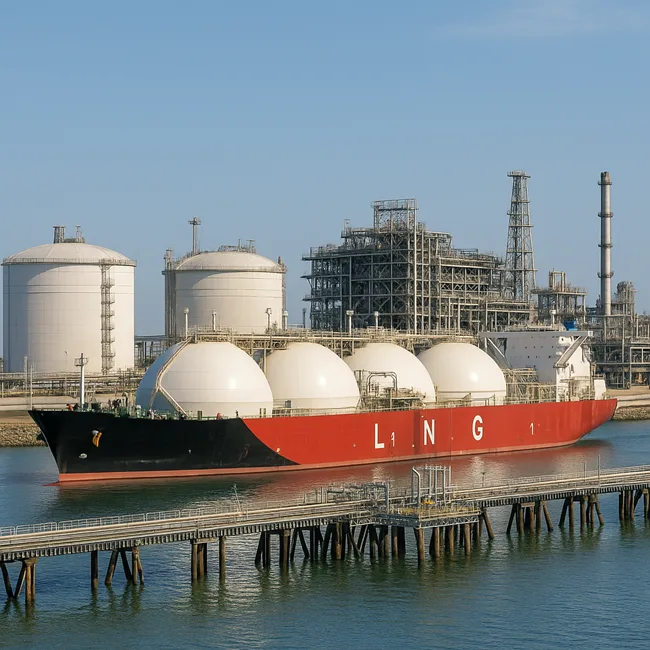
Louisiana LNG is a fully permitted export facility located near Lake Charles with a total permitted capacity of 27.6 Mtpa across five trains. The foundation phase of the project includes three trains with a combined capacity of 16.5 Mtpa, with first LNG expected in 2029.
Bechtel is the lead engineering, procurement, and construction contractor under a lump-sum turnkey contract. The facility will utilize Chart Industries’ IPSMR liquefaction technology and Baker Hughes’ LM6000PF+ gas turbines. This technology mix is intended to balance energy efficiency with cost competitiveness while maintaining emissions performance standards.
With Woodside Energy Group Ltd, Stonepeak, Bechtel, Chart Industries, Baker Hughes, and now Williams Companies Inc. all embedded in the project structure, the Louisiana LNG terminal is quickly emerging as one of the most de-risked greenfield LNG ventures in the U.S. Gulf Coast region.
The project’s modular execution model and established regulatory approvals position it well relative to peer projects that are still navigating early-stage permitting or contract finalization hurdles. With U.S. LNG demand continuing to rise from Asia and Europe, Woodside Energy Group Ltd’s ability to maintain timeline discipline will be a major sentiment driver among investors.
What is the broader industry significance of this transaction and what should investors monitor next?
The Woodside–Williams partnership comes at a time when global LNG markets are navigating a period of structural uncertainty. While long-term demand remains robust, near-term price volatility and geopolitical risk have slowed investment decisions across several planned terminals.
In this environment, securing a blue-chip midstream partner like Williams Companies Inc. represents a powerful signal to both lenders and prospective offtakers. It helps assure continuity in capital inflows, validates technical feasibility, and creates a diversified commercial profile.
From an institutional capital flow perspective, the deal could help Woodside Energy Group Ltd reduce its net debt exposure and improve balance sheet metrics ahead of final investment commitments in other parts of its global LNG portfolio. The move is also expected to strengthen its position in global LNG supply negotiations, especially in the context of U.S.–Asia gas trade corridors.
For Williams Companies Inc., the transaction offers a new growth vector beyond regulated pipeline infrastructure, with upside linked to global LNG pricing, offtake premiums, and capacity utilization at the Louisiana facility.
As the project advances, investors will be watching for additional offtake agreements, progress in modular construction of the liquefaction trains, and any signals around project-level financing, including debt syndication or export credit agency involvement.
What are the key strategic and financial takeaways from the Woodside–Williams LNG partnership?
- Woodside Energy Group Ltd (ASX: WDS | NYSE: WDS) has completed a $378 million transaction with Williams Companies Inc. (NYSE: WMB), including equity sale and capex reimbursement, effective from January 1, 2025.
- The deal includes a 10 percent stake in Louisiana LNG LLC and an 80 percent stake in Driftwood Pipeline LLC, with Williams assuming operatorship of the Line 200 pipeline.
- Williams Companies Inc. will contribute approximately USD 1.9 billion toward capex and has secured 1.6 Mtpa in LNG offtake, including through a new LNG SPA and a share of Woodside’s existing Uniper contract.
- Woodside’s total project capex has been revised down to USD 9.9 billion from USD 11.8 billion, improving forward capital efficiency and reducing balance sheet strain.
- Williams enters the LNG export sector for the first time, aligning with its “wellhead to water” strategy and expanding beyond traditional midstream operations.
- The Louisiana LNG facility, located near Lake Charles, is fully permitted for up to 27.6 Mtpa across five trains, with Bechtel, Chart Industries, and Baker Hughes already contracted.
- The project is targeting first LNG in 2029, with modular execution and global LNG offtake momentum contributing to improved investor sentiment.
- Institutional reaction has been largely positive, viewing the partnership as a de-risking move that increases offtake certainty and lowers financing risk.
Discover more from Business-News-Today.com
Subscribe to get the latest posts sent to your email.