



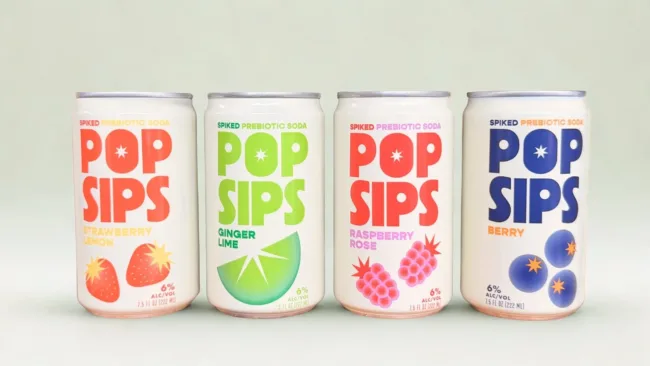
PopSips, the San Diego-based beverage startup behind the fast-growing line of spiked prebiotic sodas, is racing ahead in the U.S. “better-for-you” alcohol category with a clear message: drinking can still be fun, functional, and TikTok-friendly. Just a year after launching in select Target stores across five states, PopSips is now available in 10 states and aims to hit 1,000 retail outlets nationwide by year-end — a bold trajectory for a product that sits at the intersection of health-conscious soft drinks and low-alcohol social beverages.
Founded by Garrett Olsen, Jake Ryder, and Andy Kuklock, PopSips was built for a post-seltzer world. Instead of chasing the waning hard seltzer craze, the trio focused on a niche they believed was primed to explode — consumers seeking low-sugar, gut-friendly alcoholic drinks that reflect the same wellness trends powering the growth of functional beverages like kombucha, prebiotic sodas, and adaptogenic teas. Each PopSips can contains just 1g of sugar, 6% alcohol by volume, 2g of fiber from prebiotics, real fruit juice, and a splash of apple cider vinegar.
How is PopSips capitalizing on Gen Z and millennial preferences for healthier alcohol alternatives?
PopSips’ success is largely driven by cultural timing. The brand’s rapid rise coincides with a generational pivot away from traditional alcohol. Gen Z and younger millennials are drinking less overall, but when they do, they’re more likely to choose beverages that align with their broader wellness lifestyle. These consumers already treat prebiotic sodas like Olipop and Poppi as mixers — PopSips simply cut out the middleman.
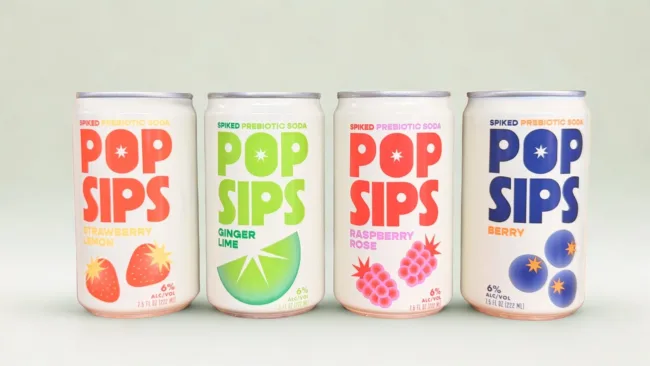
The brand’s core SKUs — Raspberry Rose, Ginger Lime, Strawberry Lemon, and limited-release Berry — combine a light buzz with bold flavors, in a way that resonates with the TikTok generation’s taste-first, label-second ethos. PopSips has leaned into this behavior with influencer-led campaigns and organic content that has racked up millions of views, featuring fridge restocks, blind taste tests, and friend-group reviews.
For shoppers weary of sugary canned cocktails and artificial-tasting hard seltzers, PopSips offers a compelling alternative: an alcohol drink with real ingredients that doesn’t feel like a compromise. Its pricing — $9.99 for a 4-pack and $18.99 for an 8-pack — sits squarely in the premium better-for-you space, targeting consumers who value experience and functionality over price.
What distribution strategy is enabling PopSips to scale quickly across the United States?
While its early traction came through Target and strong DTC presence via its own website, PopSips has since prioritized strategic retail and distribution expansion to fuel growth. By partnering with top-tier beer distributors in key regional markets, the brand is gaining shelf space in traditional retail while maintaining its direct line to health-conscious, trend-sensitive consumers online.
Retail expansion is not just about volume — it’s about identity reinforcement. Each new store and cooler placement reinforces the idea that PopSips belongs alongside both functional beverages and alcoholic brands. That duality is what sets it apart: a product that feels natural in a wellness fridge and a party cooler.
The founders’ message is clear: PopSips is not trying to compete with traditional beer or even hard kombucha. Instead, it’s carving a category of its own — one that treats alcohol like a functional ingredient, not just a means to an end. And in doing so, the brand is tapping into a lifestyle shift rather than just a consumer trend.
How are institutional and industry observers responding to PopSips’ category-defining positioning?
Although PopSips remains a privately held startup, beverage industry analysts are paying close attention to its trajectory. The better-for-you alcohol space is widely viewed as the next major disruption point in the alcoholic beverage sector, especially as legacy players like Anheuser-Busch and Constellation Brands scramble to capture younger drinkers.
PopSips’ clean ingredient list, clear functional benefits, and aesthetic packaging all contribute to what many see as a brand built for acquisition. Whether by a legacy alcohol conglomerate or a health-focused beverage house, observers believe PopSips could be a prime target once it scales nationally and proves recurring velocity across key markets.
Market insiders also note PopSips’ positioning as a masterclass in timing and consumer insight. Unlike many alcohol startups that burn cash chasing retail without a community, PopSips has cultivated an audience-first strategy — letting demand lead the expansion, not the other way around.
What challenges and competitive pressures could affect PopSips’ growth beyond 2025?
Despite the momentum, PopSips faces several headwinds common to breakout consumer brands. First, the functional alcohol segment is still nascent and lacks clear regulatory or category definitions. Educating consumers at scale about what “spiked prebiotic soda” actually means — and why it’s better — is an ongoing marketing challenge.
Second, copycat products are already emerging. As retailers and private labels take note of PopSips’ success, the race is on to replicate its functional alcohol model, often with cheaper formulations or looser ingredient integrity. Defending brand trust and ingredient quality could become an uphill battle in a crowded space.
Third, while TikTok has been a major amplifier, platform reliance carries risk. Algorithm changes or shifts in creator focus could dilute PopSips’ virality. Sustaining word-of-mouth momentum requires deeper brand engagement beyond viral moments.
Finally, profitability in beverage startups often lags growth. Without detailed financial disclosures, it’s unclear whether PopSips is profitable or how it is funding its rapid expansion. Investors will be watching closely for signs of disciplined scaling and SKU-level performance data as the brand matures.
What’s next for PopSips as it aims to dominate the functional alcohol category?
Looking ahead to 2026, PopSips is positioned to lead a new wave of beverage-alcohol hybrids designed for health-conscious consumers who still enjoy social drinking. The company’s founders say their mission remains unchanged: to make drinking feel better — not just physically, but emotionally too.
Whether that means expanding into new flavor profiles, innovating with botanicals or adaptogens, or launching into international markets, PopSips’ runway appears long — provided it continues to balance taste, brand ethos, and retail discipline.
The functional alcohol category is still forming, and PopSips is betting that its blend of science, storytelling, and style will make it the defining brand of this new drinking era.
What are the most important takeaways from PopSips’ rise in the functional alcohol category?
- PopSips has rapidly expanded from five states to ten and is targeting 1,000 stores nationwide by the end of 2025.
- The brand blends wellness trends with alcohol, offering 6% ABV spiked prebiotic sodas with real fruit juice, fiber, and minimal sugar.
- Organic TikTok traction and Gen Z lifestyle alignment have fueled its visibility and adoption across health-conscious drinkers.
- Strategic retail and distributor partnerships are enabling PopSips to scale while preserving brand identity.
- Industry observers view PopSips as a category-defining player and potential acquisition target as the functional alcohol space matures.
- Competitive threats include private-label imitations, shifting social media dynamics, and the challenge of educating mass consumers on functional alcohol.
- PopSips remains privately held with undisclosed financials, leaving questions about long-term profitability and funding.
- Future growth may depend on innovation, international expansion, and maintaining authenticity amid broader industry attention.
Discover more from Business-News-Today.com
Subscribe to get the latest posts sent to your email.