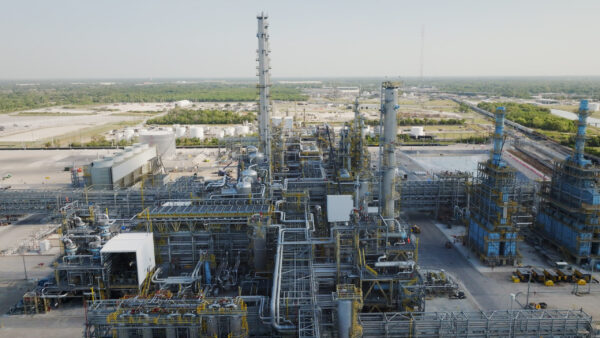
Eos Energy Enterprises, Inc. (NASDAQ: EOSE), the Edison, New Jersey–based manufacturer of zinc-based long-duration energy storage systems, has filed to sell 7.33 million shares of common stock. The fresh filing, highlighted in market monitoring reports, signals the company’s continued reliance on equity markets to finance its growth and operations. For investors, the central question is whether this latest step deepens dilution or strengthens Eos’s balance sheet for a high-stakes expansion phase.
As of February 26, 2025, Eos reported 226.6 million common shares outstanding, according to its Form 10-K. On that base, the 7.33 million shares represent about 3.2% incremental dilution before any underwriter option. This figure matters because in a capital-intensive industry where credibility hinges on execution, every percentage point of dilution must be weighed against the returns generated by the new capital.
Why is Eos Energy raising capital now, and what are the intended uses of proceeds?
Eos Energy has consistently emphasized that scaling up manufacturing and commercializing its third-generation Znyth (Z3) modules requires significant working capital. The company has previously tapped both equity and structured financing, including a Cerberus-led package in 2024 that mixed convertible preferred stock, warrants, and term loans.
The timing of this new filing suggests a strategic motive. By registering additional shares now, management may be seeking to front-load liquidity for the second half of 2025 and 2026, when order conversions and factory buildout are expected to accelerate. Sector analysts point out that the company’s decision may also be shaped by favorable market conditions: issuing stock while investor appetite for energy transition names is still intact could minimize the cost of capital compared with waiting for weaker sentiment.
How does the size of the new issuance compare with Eos Energy’s past equity raises?
Relative to its history, the 7.33 million-share filing looks small. In 2023, Eos raised capital by issuing 34.48 million shares with attached warrants, followed by larger registration statements covering more than 150 million shares tied to convertible and preferred securities. By contrast, today’s issuance is only a fraction of those deals.
Yet even small offerings matter in context. Given the cumulative dilution from prior financings, common shareholders remain highly sensitive to each incremental raise. The modest size of this filing does not eliminate those concerns but does suggest management is calibrating issuance more tightly than in prior rounds.
Why did Eos Energy stock react to the 7.33M-share news, and what role does short interest play?
The market reaction to such filings tends to be swift. Shares of EOSE most recently changed hands near $12.36 on heavy volume, with more than 27 million shares traded intraday around the news. Importantly, Eos remains one of the most heavily shorted clean-energy stocks, with a short float above 30% and over 80 million shares short according to Finviz data.
This positioning creates a paradox. On one hand, filings about new share supply often trigger selling as traders price in dilution. On the other, the crowded short book means any sign of strong demand for the offering or bullish use-of-proceeds language can spark violent upside reversals. That dynamic has already played out multiple times in Eos’s trading history, making execution details of this raise critical for both longs and shorts.
How do Eos Energy’s fundamentals justify another equity raise?
For FY2024, Eos Energy reported $15.6 million in revenue, broken down as $14.5 million from product sales and $1.1 million from services. Despite the revenue growth, the company posted a gross loss as costs from scaling its factory weighed heavily. Management has repeatedly argued that scaling production will improve unit economics and unlock positive gross margins, but until that milestone is reached, additional capital remains necessary.
From a fundamentals standpoint, therefore, the new filing does not come as a surprise. Energy storage is capital-intensive, and companies like Eos cannot rely solely on operating cash flow to fund expansion at this stage. Instead, they must blend equity, structured financing, and incentives linked to the Inflation Reduction Act (IRA) to build the bridge to profitability.
What risks do legacy financings like the Cerberus package pose to common shareholders?
The 2024 Cerberus financing introduced preferred stock, multi-draw loans, and large warrant packages into Eos’s capital structure. While these instruments provided crucial liquidity, they also built in potential dilution triggers. Anti-dilution provisions, conversion rights, and warrant exercises can all expand the fully diluted share count beyond what common shareholders may have anticipated.
Against this backdrop, the new 7.33M-share sale adds another layer of supply risk. For investors, the key is whether the proceeds will accelerate progress enough to offset the dilution impact. If funds are directed toward retiring higher-cost debt or scaling the Z3 production line more quickly, the net effect may tilt positive. If not, concerns about shareholder value erosion could dominate.
How are institutional investors and analysts framing the offering?
Institutional flows will be closely watched. Eos’s institutional ownership sits around 49% of the float, a level that ensures any new issuance must find sponsorship among funds already familiar with the story. Analysts covering EOSE remain mixed, with many maintaining a Hold stance due to the balance between sector tailwinds and execution risk. Price targets cluster in the single digits, reflecting caution around dilution and margin ramp timing.
Investor sentiment is split: long-only funds may use any post-offering weakness as a chance to add exposure to a differentiated battery technology, while hedge funds and event-driven traders will focus on the gap trade—shorting into the deal and covering once pricing stabilizes.
Why does this offering fit into a broader energy storage financing cycle?
Viewed through a historical lens, Eos Energy’s actions are not unusual. The energy storage sector has repeatedly cycled through equity-heavy funding phases. Peers in the long-duration storage and clean energy equipment industries have all leaned on secondary offerings, convertible notes, or private placements to maintain momentum.
What differentiates Eos is its commitment to zinc-based chemistry rather than lithium-ion. This alternative positioning has strategic appeal, particularly given supply chain nationalism and IRA-linked domestic content incentives. But it also requires investors to buy into a longer ramp and higher upfront capital intensity. The 7.33M-share filing fits into that pattern of capital markets dependence while reinforcing the sector-wide theme of scale-before-profitability.
What should investors watch for next in the Eos Energy story?
The most immediate catalyst will be the final pricing of the 7.33M-share offering. Investors will scrutinize the discount to the current market price, the size of any underwriter over-allotment, and the book quality. Strong institutional demand and a narrow discount could flip sentiment bullish, while a wide discount or weak coverage would reinforce dilution fears.
Equally important will be updated commentary from management. If Eos couples the filing with fresh milestones on Z3 production, backlog conversion, or IRA credit monetization, the capital raise could be seen as growth fuel rather than defensive liquidity. Without that context, skepticism may linger.
How should traders and long-term investors interpret Eos Energy’s stock outlook after the new equity raise
At present, the sentiment around EOSE is cautiously neutral. The deal size is manageable, but the stock’s high short interest and complex capital structure add layers of uncertainty.
For traders, the play hinges on offering pricing and syndicate dynamics. For long-term investors, the prudent stance is Hold until greater clarity emerges on how proceeds will be used and how quickly gross margins can turn positive. Opportunistic buyers may consider small adds if pricing comes tight and orderbook news follows, while risk-averse investors may trim into strength ahead of the final terms.
Why Eos Energy’s 7.33M-share filing leaves investors debating dilution versus growth potential
Eos Energy Enterprises has once again returned to equity markets, underscoring the realities of building a manufacturing-intensive clean-tech business. The 7.33M-share filing may be small compared with prior deals, but it sharpens the focus on how management balances dilution with growth. Investors should track the offering’s pricing, demand, and subsequent operational updates closely. The company’s ability to convert fresh capital into scaled production and improved margins will determine whether this raise is remembered as a prudent bridge or an unnecessary burden.
Discover more from Business-News-Today.com
Subscribe to get the latest posts sent to your email.