



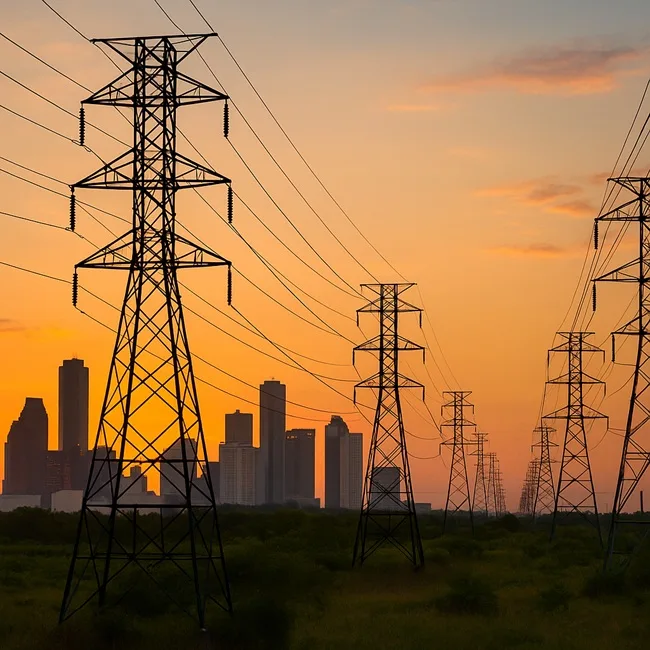
CenterPoint Energy Inc. (NYSE: CNP), the regulated utility based in Houston, has set the stage for one of the most ambitious long-term infrastructure programs in the American energy sector. On September 29, 2025, the utility announced that it will commit a record $65 billion in customer-driven capital investments between 2026 and 2035. The plan represents a nearly 40 percent increase over the capital blueprint CenterPoint unveiled at its 2021 Analyst Day and underscores both the opportunities and the challenges of operating in the nation’s fastest-growing energy market.
Texas is at the center of the story. In its Houston Electric division, CenterPoint now forecasts that electricity peak load demand will nearly double to 42 gigawatts by the mid-2030s, compared with 21 gigawatts only a few years ago. By 2031 alone, peak demand is projected to reach 31 gigawatts, representing almost 50 percent growth in less than a decade. This rapid escalation is driven by population inflows, industrial expansion, and the rise of energy-intensive data centers. For institutional investors tracking utilities, the company’s projections highlight why Texas is increasingly viewed as both a growth market and a stress test for grid resilience.
The expanded capital plan includes more than $10 billion in incremental investment opportunities, aimed at improving customer outcomes beyond the base program. Executives framed the strategy not only as a way to strengthen the most resilient coastal electric grid and safest gas systems in the country, but also as a tool to sustain economic development.
How does CenterPoint Energy’s new plan reshape customer outcomes while balancing growth with affordability and resilience?
The $65 billion plan reflects a deliberate customer-first strategy. CenterPoint Energy emphasized that every investment is intended to directly benefit its approximately seven million metered customers across six service territories. The focus is on enhancing resilience, upgrading gas distribution safety, and ensuring affordability even as demand surges. By linking infrastructure expansion to demographic and industrial growth, the utility positioned itself as an enabler of broader regional economic development.
Institutional sentiment indicates that framing is critical. Utilities are often scrutinized for whether capital-intensive programs result in higher bills for consumers. In this case, CenterPoint’s leadership made a point of stating that the plan is designed to keep customer rates broadly in line with inflation trends. Analysts noted that this pledge could help smooth the regulatory process, especially in Texas, where affordability and infrastructure resilience are closely tied to political and economic stability.
For stakeholders, the narrative extends beyond Texas. Other jurisdictions served by CenterPoint, including parts of the Midwest, will also see benefits from capital spending that prioritizes safety, efficiency, and modernization. However, Texas remains the growth engine where the utility’s vision of balancing customer benefits with shareholder returns will be tested most visibly.
What revisions did CenterPoint Energy make to its 2025 and 2026 non-GAAP EPS guidance and long-term earnings outlook?
Financially, the capital plan was paired with upgraded earnings guidance. CenterPoint Energy increased its 2025 non-GAAP earnings per share guidance to a range of 1.75 to 1.77 U.S. dollars, compared to its previous outlook of 1.74 to 1.76 U.S. dollars. That midpoint implies approximately nine percent growth over the 2024 results. For 2026, the utility introduced a fresh non-GAAP EPS guidance range of 1.89 to 1.91 U.S. dollars, projecting eight percent growth from the updated 2025 midpoint.
Crucially, CenterPoint extended its long-term growth forecast, now targeting seven to nine percent annual non-GAAP EPS growth through 2028, and reaffirming the same range through 2035. This consistency offers investors confidence in the utility’s ability to deliver high-single-digit growth even as it undertakes record levels of infrastructure spending.
Institutional investors typically view such guidance extensions as credibility markers. Analysts emphasized that few regulated utilities can credibly promise mid-to-high single-digit annual EPS expansion over a decade without major acquisitions. CenterPoint’s ability to do so through organic growth and customer-driven capital programs places it in an advantageous position compared to many sector peers.
How do non-GAAP earnings measures shape investor perception of CenterPoint Energy’s financial performance?
Like many of its peers, CenterPoint Energy supplements GAAP reporting with non-GAAP measures that it believes provide a more accurate reflection of its recurring operations. The company’s non-GAAP EPS excludes volatile or non-recurring items such as valuation changes in its Zero-Premium Exchangeable Subordinated Notes due 2029, impacts from mergers and divestitures, and costs tied to temporary emergency electric energy facilities once those are no longer part of regulated rate structures.
Executives argued that these adjustments are critical for investors seeking to evaluate long-term growth potential. Analysts agreed that while non-GAAP measures can sometimes obscure risk, in the utility sector they are widely accepted as tools for stripping away volatility and highlighting fundamental performance. Still, the reliance on non-GAAP metrics underscores why execution discipline and transparent reporting will remain essential for maintaining investor confidence.
How is CenterPoint Energy’s stock reacting to the announcement, and what does investor sentiment suggest about long-term confidence?
On October 2, 2025, CenterPoint Energy’s shares were trading at 38.46 U.S. dollars, up 0.81 percent from the previous close of 38.14 U.S. dollars. The modest but positive uptick reflected investor approval of the extended guidance and record-setting capital plan. The stock’s stability underscores that markets believe the utility’s commitments are both achievable and strategically aligned with Texas demand growth.
Utility stocks traditionally appeal to income-oriented investors due to steady dividends and defensive positioning. Analysts noted that CenterPoint’s ability to deliver both growth and income could broaden its appeal to institutional portfolios. If the utility sustains its seven to nine percent growth trajectory through the next decade, its shares could attract stronger fund inflows, particularly as interest rate conditions in the United States stabilize by 2026.
Institutional sentiment suggests cautious optimism. Investors are watching whether CenterPoint can maintain cost efficiency and secure regulatory approvals across jurisdictions. The upside case rests on Texas demand projections materializing as expected, while the downside scenario could emerge if capital expenditures run ahead of recovery or if rate cases face delays.
What does the long-term outlook for CenterPoint Energy mean for utility investors, regulators, and Texas energy growth?
The $65 billion capital plan cements CenterPoint Energy as one of the most aggressive U.S. regulated utilities in terms of forward investment. Its ability to tie customer benefits to shareholder value, while projecting earnings growth through 2035, positions it as both a growth and resilience story. For regulators, the message is that affordability will be preserved even amid record grid spending. For investors, the long-term EPS guidance signals that the Houston-based utility intends to deliver compounding returns without overextending its balance sheet.
Institutional voices described the outlook as a rare blend of defensive stability and long-term growth. By embedding demand growth assumptions into its 10-year plan, CenterPoint is effectively betting on Texas’ continued status as a magnet for industry, population, and energy-intensive innovation. The utility’s ability to execute will determine whether it sets a benchmark for peers navigating similar pressures in other fast-growing U.S. markets.
With shares holding steady in the upper 38 U.S. dollar range and guidance extending beyond a decade, CenterPoint Energy has reinforced its credibility in the eyes of investors. The next challenge will be execution, regulatory alignment, and navigating the unpredictable variables of economic cycles, energy demand, and policy frameworks that shape the American utility landscape.
Discover more from Business-News-Today.com
Subscribe to get the latest posts sent to your email.