
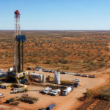




Why has BP’s sanction of the Tiber-Guadalupe project become a defining deepwater milestone?
BP p.l.c. (LON: BP; NYSE: BP) has taken a decisive step in its global upstream portfolio by approving the $5 billion Tiber-Guadalupe project in the U.S. Gulf of America. The final investment decision is significant not only because it represents the British energy company’s second new deepwater hub sanctioned in under two years but also because it reinforces the strategic role of the Gulf in BP’s global oil and gas expansion.
The new floating production platform will be the company’s seventh operated hub in the Gulf, designed to produce up to 80,000 barrels of oil per day. The development will incorporate six wells in the Tiber field and two more via a tieback from the Guadalupe field, with first oil anticipated in 2030. According to senior executives, the project has been structured within BP’s disciplined financial framework, highlighting the company’s ability to pursue large-scale growth without compromising on shareholder returns.
The project’s approval comes at a critical time when global energy markets are facing heightened volatility, with investors seeking reassurance that major oil companies can continue to provide stable and secure barrels even as the world transitions to cleaner energy.
How does the Tiber-Guadalupe hub compare with bp’s Kaskida project in scale, design, and financial efficiency?
Tiber-Guadalupe is being paired with BP’s earlier Kaskida project, which is also designed to produce 80,000 barrels per day. Together, the two platforms form the centerpiece of BP’s Paleogene deepwater strategy and represent a combined capital commitment of about $10 billion. They are expected to unlock around 350 million barrels of oil equivalent in their first production phases.
What sets Tiber-Guadalupe apart is its improved economics. BP will replicate more than 85 percent of Kaskida’s engineering design, allowing the company to reduce Tiber’s development costs by an estimated three dollars per barrel. This standardization approach reduces execution risk, accelerates project timelines, and demonstrates how the company is embedding modular efficiency into its global upstream program.
From a financial perspective, the cost efficiencies serve as a message to investors that BP is striking a balance between upstream expansion and capital discipline. Analysts following the stock have noted that the reuse of engineering designs is a positive development for margins, especially in a market environment where cost inflation remains a concern across the energy supply chain.
Why does bp continue to prioritize the Gulf of America within its 2030 output strategy?
In 2024, BP produced approximately 341,000 barrels of oil equivalent per day from its Gulf portfolio, which spans five operated hubs — Argos, Atlantis, Mad Dog, Na Kika and Thunder Horse — alongside four non-operated interests, including Mars, Olympus, Ursa and Great White. With the addition of Kaskida and Tiber-Guadalupe, production from the Gulf is projected to surpass 400,000 barrels per day by 2030.
The Gulf of America remains a cornerstone of BP’s U.S. growth strategy because of its resource scale, infrastructure maturity, and relatively stable regulatory environment. Unlike frontier regions, the Gulf provides long-cycle barrels with significant plateau production profiles, offering predictable cash flows for decades. Institutional investors tend to view the basin as a lower-risk play compared to emerging-market assets, an important consideration as shareholder scrutiny over hydrocarbon investment remains high.
The company has also invested heavily in the 20,000 psi subsea technology necessary to unlock these Paleogene reservoirs. This technology milestone, which includes advanced rigs and thicker metal casing, represents years of collaboration with industry partners. Independent verification processes will ensure that the technology meets stringent safety standards, a key consideration in light of the Gulf’s history and the Deepwater Horizon legacy.
How does this project fit into bp’s global portfolio of major projects between 2028 and 2030?
Tiber-Guadalupe is one of eight to ten major projects BP expects to bring online globally between 2028 and 2030. When combined with expansions at the Argos and Atlantis platforms, the project demonstrates that the Gulf of America will be BP’s most active deepwater theater in the years ahead.
By 2030, the company expects its Gulf platforms to deliver nearly 40 percent of its total global deepwater output. This scale demonstrates BP’s conviction that the Gulf will remain a highly competitive basin compared to other offshore regions. It also signals to the market that the company continues to place long-term bets on deepwater, even as competitors such as ExxonMobil, Chevron and Shell diversify their portfolios with a mix of shale, offshore, and low-carbon investments.
Historically, BP’s trajectory in the Gulf has been shaped by both opportunity and caution. The company first discovered the Tiber field in 2009, but commercialization was delayed until the industry could safely manage the extreme pressure of Paleogene formations. The adoption of 20K technology at Tiber-Guadalupe marks the culmination of more than a decade of research and development and reflects a determination to responsibly harness complex resources.
What does bp’s $5 billion commitment mean for stock sentiment, investor flows, and institutional positioning?
BP shares have been trading broadly in line with European oil peers in 2025, with investors alternating between optimism over steady cash returns and concern about the pace of its energy transition commitments. The announcement of Tiber-Guadalupe was met with moderate positive sentiment in the market. Analysts described the sanction as a reaffirmation of BP’s ability to deliver long-cycle barrels with competitive breakevens, reassuring investors who feared the company might scale back upstream ambitions.
Institutional flows after the announcement indicated incremental buying by global energy funds. Market watchers highlighted that the Gulf’s stability as a production region makes it especially attractive to investors concerned about geopolitical risk. While retail sentiment often fluctuates with oil price volatility, institutional investors appeared focused on the structural advantage of secure U.S. offshore barrels.
For foreign institutional investors, exposure to BP’s U.S. upstream assets fits within a broader strategy of balancing transition narratives with reliable hydrocarbon exposure. European domestic institutions, however, continue to weigh ESG commitments heavily, creating a split in sentiment. The divergence illustrates the challenge facing BP as it tries to satisfy both transition-focused stakeholders and investors demanding profitable oil growth.
How do deepwater Gulf projects like Tiber-Guadalupe align with bp’s energy transition narrative?
BP remains under scrutiny for its approach to balancing hydrocarbons with its net-zero commitments. The company’s argument is that long-cycle deepwater projects are a more responsible way of delivering oil because they provide stable, lower-cost barrels with longer lifespans compared to shorter-cycle shale investments.
Executives have consistently described the Gulf of America as a basin that will continue to deliver the secure energy the world needs during the transition. By positioning projects such as Tiber-Guadalupe as integral to energy security, BP is attempting to present a narrative in which upstream growth and transition investments can coexist.
This balancing act has implications for investor relations as well. Analysts have observed that capital discipline in upstream projects gives BP the flexibility to continue funding renewable and low-carbon initiatives without jeopardizing shareholder returns. The company will be judged not only on how efficiently it brings Tiber-Guadalupe online but also on how it maintains credibility in delivering its broader transition commitments.
What is the broader sectoral context of bp’s decision, and how does it position the company against peers?
The Tiber-Guadalupe project arrives as part of a wider resurgence of deepwater activity in the Gulf of America. ExxonMobil is advancing developments such as Yellowtail, Chevron is expanding Jack/St. Malo, and Shell is pushing ahead with Whale. These moves reflect a shared industry perspective that deepwater remains one of the most competitive and resilient sources of oil in the global supply mix.
BP’s strategy differs in its ownership structure. By fully owning both Kaskida and Tiber-Guadalupe, the company assumes greater exposure but also captures the full upside. Combined with its standardized design approach, BP is betting that cost leadership and operational expertise will enable it to deliver superior returns compared to rivals.
Analyst commentary suggests that if BP achieves its cost and schedule targets, the market could move from cautious optimism to a stronger buy case by the late 2020s, when the projects near completion. For now, the investment community views Tiber-Guadalupe as a carefully calculated risk, one that could pay off handsomely if oil demand remains resilient.
Final perspective on how bp’s Tiber-Guadalupe sanction reshapes the Gulf of America deepwater outlook for 2030
BP’s decision to approve the Tiber-Guadalupe project is more than just another upstream announcement. It is a statement about the company’s confidence in hydrocarbons, its ability to manage capital responsibly, and its technological edge in deepwater operations.
For shareholders, the project reinforces BP’s promise of delivering secure, high-margin barrels that can weather price cycles. For the industry, it demonstrates that the Gulf of America remains one of the most attractive basins for capital deployment. And for policymakers, it reignites debate on how the oil and gas sector can balance secure supply with global decarbonization goals.
As the project moves toward first oil in 2030, its execution will be closely watched by investors, regulators and industry peers alike. If BP delivers on its promises, Tiber-Guadalupe may stand as one of the most influential deepwater projects of the decade, shaping not just BP’s future but the competitive dynamics of the entire sector.
Discover more from Business-News-Today.com
Subscribe to get the latest posts sent to your email.

