


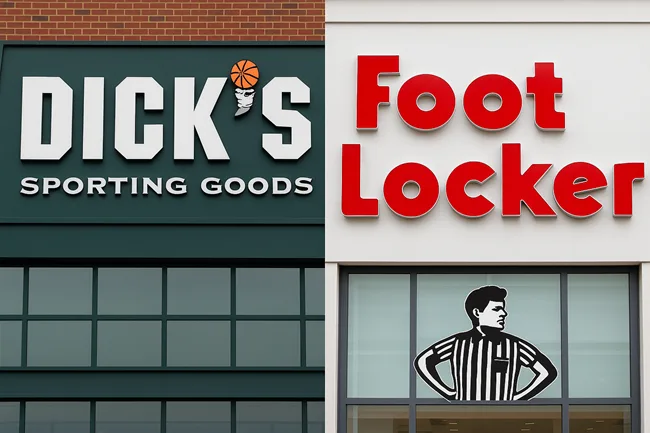
DICK’S Sporting Goods Inc. (NYSE: DKS) has finalized its $2.5 billion acquisition of Foot Locker Inc. (NYSE: FL), officially bringing together two of the most recognized names in the global sports retail industry. The combined company now operates more than 3,200 stores across 20 countries, blending performance-focused merchandise with youth-driven sneaker culture under one expansive umbrella.
The deal transforms DICK’S from a predominantly North American retailer into a global operator with an expanded footprint across Europe, Asia, Australia, and the Middle East. Foot Locker’s portfolio—comprising Kids Foot Locker, Champs Sports, atmos, and WSS—will continue to be managed independently, preserving brand identity while leveraging DICK’S operational scale. Analysts suggest the transaction strengthens DICK’S positioning against both direct-to-consumer brand strategies and digital-first competitors, especially as brand relationships with Nike, Adidas, and Puma evolve.
How does the DICK’S–Foot Locker combination strengthen global reach and category depth in 2025?
DICK’S Sporting Goods is now strategically positioned to unlock international growth, which had previously remained outside its core expansion narrative. Foot Locker’s established physical presence across 20 countries, along with licensed stores in the Middle East and Asia, opens up access to underserved and culturally dynamic sneaker markets. This significantly increases DICK’S global addressable market while allowing it to retain regional retail strategies tailored to local consumer behavior.
The structure of the deal ensures that Foot Locker will continue to operate as a standalone unit, preserving its brand equity while gaining access to DICK’S expertise in omnichannel retailing. This multi-banner strategy positions the group to serve performance athletes, school and community sports enthusiasts, and trend-driven sneaker buyers through differentiated formats—ranging from DICK’S experiential House of Sport stores to Foot Locker’s urban and lifestyle-driven outlets.
What leadership changes has DICK’S implemented to drive Foot Locker’s regional transformation?
As part of the integration, DICK’S Executive Chairman Ed Stack will oversee Foot Locker globally. Leadership has been split between North America and international regions to ensure targeted execution. Former Nike executive Ann Freeman has been appointed President of Foot Locker North America, with a separate international leadership appointment expected shortly. Freeman will work with a refreshed senior management team that includes leaders from both legacy Foot Locker and DICK’S.
Tony Aversa now heads Foot Locker and Kids Foot Locker in North America, bringing three decades of internal experience across multiple banners. Denise Karkos, who previously served as Chief eCommerce Officer at DICK’S, now leads Champs Sports. George Jenkins takes over customer experience and store operations after a long tenure at Foot Locker. Brett O’Brien, most recently Chief Sports Officer at PepsiCo, becomes the new Chief Marketing Officer. Steve Miller and Michael Keinath, both DICK’S veterans, have stepped in as Chief Operating Officer and Chief People Officer, respectively. These appointments are aimed at driving operational alignment while injecting new energy into Foot Locker’s turnaround plans.
What operational synergies and strategic advantages are expected from the merger?
DICK’S projects $100 to $125 million in cost synergies over the medium term. These efficiencies are expected to emerge from procurement optimization, direct sourcing improvements, and shared back-end infrastructure. Excluding one-time transaction and integration costs, the deal is forecast to be accretive to earnings per share beginning in fiscal 2026.
The strategic rationale extends beyond just cost savings. The merged business will benefit from a hybrid model of experiential retail formats, a broader customer base, and significantly enhanced negotiating power with brand partners. With both companies emphasizing immersive store experiences, digital personalization, and exclusive product offerings, analysts believe the deal will unlock cross-banner merchandising and loyalty synergies that would not have been possible independently.
Brand visibility is also expected to improve, especially as athletic brands pivot back toward selective wholesale partnerships. DICK’S and Foot Locker can now offer multiple differentiated platforms for showcasing products, ranging from elite sports performance to streetwear and lifestyle categories.
How did the deal value Foot Locker, and what does it mean for shareholders?
The acquisition values Foot Locker at $2.4 billion in equity and approximately $2.5 billion in enterprise value, representing a 6.1x multiple on fiscal 2024 adjusted EBITDA. Foot Locker shareholders were offered a choice of $24.00 in cash or 0.1168 shares of DICK’S common stock for each Foot Locker share held. This implied a 66% premium over Foot Locker’s 60-day volume-weighted average price prior to the merger announcement.
DICK’S funded the acquisition through a mix of cash reserves and newly raised debt, backed by bridge financing from Goldman Sachs. Legal counsel for DICK’S included Wachtell, Lipton, Rosen & Katz, while Foot Locker was advised by Skadden, Arps, Slate, Meagher & Flom LLP. Institutional sentiment around the transaction remains cautiously optimistic, with analysts describing the valuation as fair and the strategic fit as high-conviction.
What is the market and institutional investor sentiment post-closing?
Market reaction has been relatively stable, with DICK’S shares maintaining momentum and Foot Locker seeing a price uptick following the May announcement. Fund managers and analysts are closely monitoring three key aspects in the quarters ahead: the performance of Foot Locker’s North American division under new leadership, the pace of digital transformation across banners, and the depth of ongoing collaboration with key brand partners.
Early sentiment indicates confidence that DICK’S will avoid the common integration pitfalls seen in retail M&A. The lack of major channel overlap, coupled with a deliberate decision to keep Foot Locker operationally separate, appears to be calming concerns about culture clash or brand dilution. Foot Locker’s return to growth will likely determine how aggressively DICK’S can pursue future retail consolidations or innovation-led investments.
What comes next for DICK’S and Foot Locker after this transformative deal?
Looking forward, the merger could serve as a blueprint for brand and banner integration within the retail sector. Executives have hinted at expanding experiential concepts across more geographies, deepening digital engagement through personalization, and possibly exploring new joint ventures or house brand initiatives. There may also be increased focus on store reimagination, localized inventory models, and mobile-first loyalty experiences.
Foot Locker’s integration offers DICK’S an opportunity to apply its U.S.-proven merchandising and operational frameworks to global markets. Meanwhile, Foot Locker’s cultural cachet can provide DICK’S with new relevance among youth segments and urban markets where its brand has historically had limited presence.
While short-term integration risk remains, analysts agree that the deal provides both top-line growth opportunity and margin improvement potential if executed well. If successful, the combination could become one of the most strategically effective M&A moves in the retail sector in recent years.
Discover more from Business-News-Today.com
Subscribe to get the latest posts sent to your email.