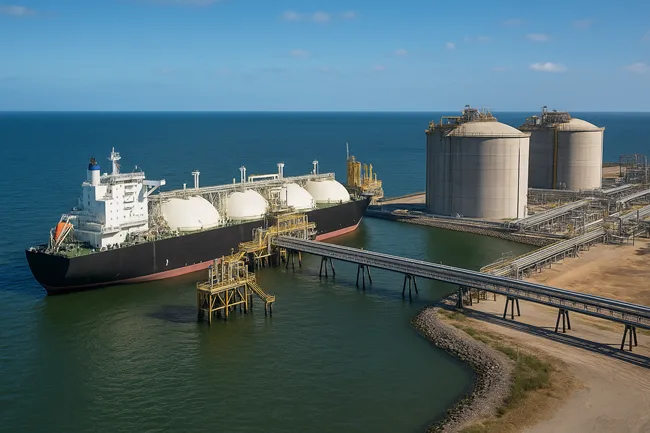


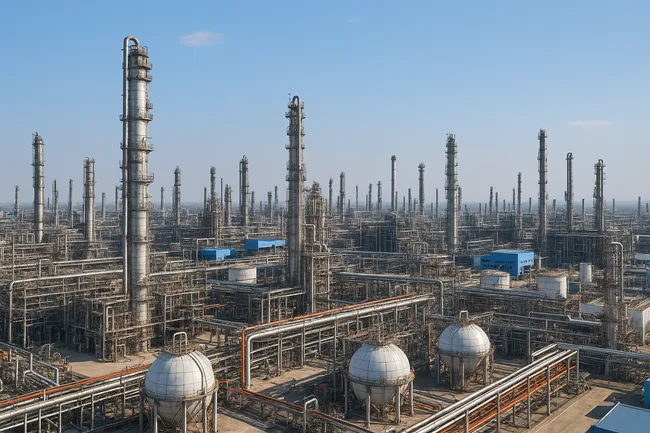
Exxon Mobil Corporation (NYSE: XOM) reported second-quarter 2025 chemical earnings of $293 million, flat compared to the first quarter but sharply down from the $1.56 billion recorded in the first half of 2024. While headline profitability looked subdued, the segment recorded higher sales volumes, driven largely by the ramp-up of the China Chemical Complex. For analysts, this juxtaposition of weak margins and growing output underscores the cyclical pressures facing global petrochemical markets and the longer-term bet ExxonMobil is making on Asia’s demand centers.
The segment’s year-to-date earnings fell to $566 million, nearly $1 billion lower than the prior year, as weaker margins and higher project-driven expenses weighed on results. Yet volumes rose to 10.0 million metric tons in the first half, up from 9.9 million in the same period of 2024. Management highlighted the contribution of the China Chemical Complex, which has begun ramping up production and driving incremental sales.
The question for investors is whether these capacity additions can offset near-term margin headwinds and ultimately transform ExxonMobil’s chemical portfolio into a higher-value growth engine.
Why did ExxonMobil’s chemical earnings remain flat even as volumes increased in the second quarter of 2025?
The core tension in ExxonMobil’s chemical results lies in margin dynamics. In 2Q25, North American feedstock advantages narrowed, eroding profitability compared to prior years when low-cost shale gas provided a strong competitive edge. This decline coincided with higher project expenses related to the start-up of the China Chemical Complex, where commissioning and initial operations added costs before the facility reached full utilization.
In effect, while output increased, each ton of production generated less incremental profit than in the past. Analysts noted that this dynamic is consistent with the petrochemical cycle, where overcapacity, feedstock cost shifts, and demand fluctuations compress earnings even as volumes rise. ExxonMobil’s year-on-year decline of nearly $1 billion in segment earnings illustrates the depth of this cyclical downturn.
At the same time, institutional investors recognize that higher volumes represent a foundation for future growth once margins recover. The chemical segment is among the most cyclical in ExxonMobil’s portfolio, but also among the most levered to global industrial and consumer demand. For that reason, rising sales volumes from new complexes—though initially margin-dilutive—are often seen as positioning the company for outsized gains when industry spreads normalize.
What makes the China Chemical Complex central to ExxonMobil’s long-term strategy in Asia?
The China Chemical Complex is ExxonMobil’s flagship downstream and petrochemical investment in Asia, designed to integrate refining and chemical production at scale. The facility is ramping up in stages, with a focus on high-demand products such as polyethylene, polypropylene, and performance chemicals that feed into packaging, automotive, and construction industries.
China remains the largest global consumer of petrochemicals, accounting for more than 40% of demand growth over the past decade. Despite slowing macroeconomic growth, the country’s industrial base and consumer sectors continue to require substantial volumes of polymers and specialty materials. By investing directly in China, ExxonMobil gains both proximity to end markets and the ability to capture value in a geography where domestic players like Sinopec and PetroChina have long dominated.
The project’s scale is notable. It is one of ExxonMobil’s largest downstream investments outside the United States in recent years, aimed at securing a long-term footprint in the Asia-Pacific region. The company’s integrated model—linking upstream feedstock supply with refining and chemical operations—gives it an operational hedge, allowing the complex to optimize production in response to demand shifts across fuels and chemicals.
For ExxonMobil, the strategic rationale goes beyond current margins. The complex is designed to produce higher-value products that can lift segment profitability when global spreads recover. This echoes the company’s broader strategy of focusing on “advantaged projects” that deliver higher returns through integration and product differentiation.
How does ExxonMobil’s chemical play compare with peers in the Asian petrochemical market?
ExxonMobil’s expansion in China reflects a competitive race among international oil companies (IOCs) and global chemical producers to secure a foothold in Asia’s downstream growth. Competitors such as BASF, SABIC, and Shell have also invested heavily in integrated complexes in China and Southeast Asia, seeking to align with the region’s long-term demand trajectory.
Sinopec and PetroChina, China’s domestic champions, continue to dominate in terms of scale, but their operations often focus on commodity-grade products with thinner margins. In contrast, ExxonMobil and its Western peers are targeting performance polymers and specialty products, where differentiation and integration yield higher profitability.
Institutional sentiment suggests that ExxonMobil’s China Chemical Complex is viewed as a strategic necessity rather than an optional investment. Without an Asian anchor, the company would be over-reliant on North American feedstock advantages, which have eroded in recent quarters. By diversifying geographically, ExxonMobil mitigates regional margin risk and positions itself in the world’s fastest-growing petrochemical market.
What does institutional sentiment reveal about ExxonMobil’s chemical outlook in 2025 and beyond?
Analysts largely interpret ExxonMobil’s flat second-quarter chemical earnings as cyclical noise rather than structural weakness. Institutional investors point to the historical volatility of petrochemical margins, which often swing dramatically based on feedstock spreads, demand cycles, and capacity additions. From this perspective, the 2025 downturn is seen as a temporary phase that could reverse sharply if industrial activity rebounds or global supply tightens.
ExxonMobil’s advantage lies in its scale and integration. The company has the ability to sustain investment through cycles, ensuring that new capacity like the China Chemical Complex comes online even when margins are depressed. This counter-cyclical approach allows it to capture outsize returns when the market recovers, as volumes are already in place and projects are de-risked operationally.
Some investors also highlight that ExxonMobil’s cost savings program—$13.5 billion in cumulative structural savings since 2019—provides a cushion to weather weak chemical margins. By reducing operating expenses across segments, the company maintains profitability while waiting for cyclical recovery in chemicals.
Can chemical diversification support ExxonMobil’s broader integrated earnings model?
The chemical segment plays an increasingly strategic role in ExxonMobil’s integrated model, complementing upstream and refining operations. When oil prices weaken and refining margins compress, chemicals often provide a counter-cyclical earnings stream, particularly through performance products and specialty materials. Although this balance did not materialize fully in 2Q25 due to widespread margin softness, the longer-term value remains intact.
The ramp-up of the China Chemical Complex is expected to strengthen this balance. By boosting volumes of polymers and performance chemicals, ExxonMobil is diversifying its revenue streams beyond fuels and crude-linked businesses. This diversification is particularly relevant as the company faces long-term questions about demand trajectories for oil and traditional fuels in the energy transition era.
From a capital allocation standpoint, chemicals are also more resilient to policy-driven headwinds. Unlike fossil fuel combustion, polymers and specialty chemicals remain in structural demand, tied to sectors such as packaging, consumer goods, construction, and industrial materials. This demand stickiness makes chemicals an attractive growth avenue even as transport fuels face decarbonization pressures.
What is the long-term outlook for ExxonMobil’s chemical business after 2Q25?
The near-term outlook remains cautious. Chemical earnings are likely to remain pressured until global margins recover, particularly as the China Chemical Complex continues to ramp and adds incremental operating expenses. Investors should expect continued volatility through the remainder of 2025 as global overcapacity weighs on spreads.
Longer term, however, the trajectory looks more favorable. Once fully operational, the China Chemical Complex is expected to materially lift volumes and earnings capacity. Combined with other ongoing projects in ExxonMobil’s portfolio, management projects over $3 billion in incremental earnings capacity by 2026 from the ten major start-ups in 2025, a portion of which is expected to come from chemicals.
Institutional sentiment suggests that while chemicals are currently a drag on consolidated earnings, they could become a driver of growth in the second half of the decade. ExxonMobil’s integrated approach, focus on high-value products, and counter-cyclical investment strategy position it well to capture that upside.
Share this:
Discover more from Business-News-Today.com
Subscribe to get the latest posts sent to your email.