



NVIDIA Corporation (NASDAQ: NVDA) continues to redefine enterprise AI delivery with its Inference Microservices (NIM). By offering containerized, GPU-optimized inference engines with standardized APIs, NIM dramatically lowers deployment complexity, inference cost, and latency while meeting the compliance needs of regulated industries. As organizations globalize AI adoption across finance, healthcare, telecom, and public services, NIM is emerging as the foundational infrastructure layer that enables scalable, secure, and cost-efficient inference.
This shift marks a strategic evolution from one-off hardware implementations to agile, reusable AI infrastructure, harmonized for modern enterprise deployments. With deep ecosystem integration, enterprise validation, and sovereign readiness, NIM is elevated not merely as a deployment tool, but as a high-value, trusted platform for delivering AI services sustainably.
What makes NIM different from traditional inference frameworks in enterprise settings?
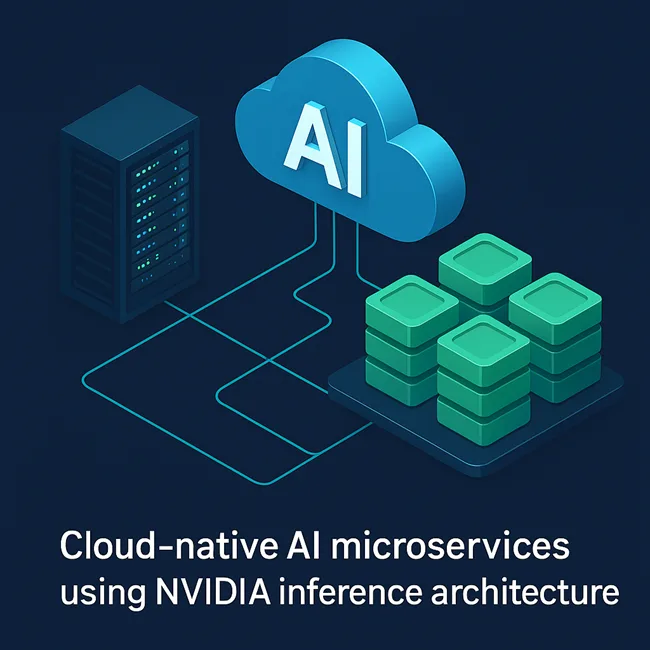
Traditional AI deployments often involve fragmentary pipelines: custom serving stacks, model-specific engineering, and manual scaling. NVIDIA NIM replaces this with microservices packaged as optimized containers. Each container includes the latest AI model, inference engine (such as TensorRT-LLM or Triton), runtime dependencies, and industry-standard APIs—all preconfigured to run on NVIDIA GPU infrastructure, on-premises, or across cloud environments via Kubernetes.
This deployment paradigm delivers unprecedented consistency and speed. With built-in orchestration via Helm charts and runtime auto-validation, deploying production-quality inference pipelines becomes a matter of minutes—not days. Benchmarking across real-time deployments shows significantly higher token throughput and deterministic low latency, making NIM ideal for demanding, real-time enterprise applications.
Why containerized inference could unlock the next phase of regulated AI adoption
Regulated environments demand high levels of traceability, auditability, and data sovereignty. NIM addresses this by delivering self-contained inference runtime environments deployable in private, sovereign, or hybrid clouds. These environments preserve control over data, inference logic, and deployment cadence, supporting structured compliance workflows.
The containerized nature enables encrypted deployment, version pinning, and transparent update mechanisms. This design caters to enterprise risk models demanding consistency across disaster response systems, health AI tools, and financial compliance engines—without compromising agility or performance. In effect, NIM empowers enterprises to move from proof-of-concept AI tools to mission-critical, production-grade services.
How enterprises are using NIM to reduce cost and ensure real-time compliance
Telecom giant Amdocs offers a real-world view of NIM’s economic and operational impact. By embedding NIM containers into its generative AI platform amAIz, Amdocs cut token requirements for data preprocessing by 60 percent and reduced inference costs by 40 percent. Latency dropped by almost 80 percent, substantially improving customer responsiveness.
This transformation was enabled through NIM’s optimized container stack and NVIDIA DGX Cloud infrastructure. Similar outcomes are being reported across banking, insurance, and logistics sectors. These performance improvements come with enterprise-grade licensing, predictable cost structures, and zero need for managing model weights, drivers, or runtime dependencies—streamlining operational burdens while maintaining compliance.
How NIM integrates into enterprise ecosystems and partner platforms
NIM is deeply embedded within the broader NVIDIA AI ecosystem. It is supported by a suite of NIM Agent Blueprints—customizable workflow modules for use cases such as customer-service avatars, document parsing, retail personalization, and drug discovery. These blueprints, co-developed with global IT service firms, are designed for immediate deployment via NIM containers and help enterprises accelerate time-to-value.
Integration extends to sovereign cloud and hyperscale platforms alike. NIM runs natively within Microsoft Azure AI Foundry and Amazon SageMaker, while remaining deployable across private infrastructure from Cisco, Lenovo, and Dell Technologies. Inference pipelines can also be embedded into Hugging Face endpoints or existing enterprise LLM workflows. This orchestration-friendly design ensures that whether a firm is building from scratch or retrofitting legacy systems, NIM offers a path to standardized, compliant AI delivery.
Can NVIDIA’s NIM moat hold against hyperscaler and open-source challengers?
Hyperscale platforms typically emphasize breadth and simplicity but often fall short on predictability, transparency, and data governance. Open-source inference stacks offer flexibility but require hands-on integration and lack performance tuning at scale. NIM fills this gap by providing a curated, enterprise-ready deployment layer with embedded performance, reliability, and compliance.
Its strategic advantage lies in its ability to unify AI operations across sectors with high regulatory thresholds—such as finance, healthcare, and public-sector use cases. As more organizations demand verticalized AI solutions with runtime security, compliance dashboards, and SLA-backed performance, NIM’s containerized architecture, enterprise support, and ecosystem positioning could sustain its moat.
What signals should organizations track to evaluate NIM’s broader infrastructure potential?
Key indicators include adoption across digital government infrastructure, national AI factories, and sovereign LLM ecosystems. Enterprise uptake in critical verticals, as well as integration into flagship partner platforms like VMware Private AI or ServiceNow AI Control Tower, may further signal NIM’s transition from a technical utility to a governance-critical infrastructure layer.
Additionally, continued innovation in NIM Agent Blueprints and cross-platform interoperability will influence market penetration. Enterprises and public institutions evaluating AI readiness will increasingly factor in ease of deployment, runtime control, and total cost of ownership—areas where NIM is engineered to excel.
Where does NIM sit within NVIDIA’s long-term AI enterprise architecture?
NIM is more than just a serving layer—it acts as the connective tissue between NVIDIA’s model training infrastructure (like DGX Cloud and NeMo), security and policy tooling (like NeMo Guardrails), and AI observability solutions (like NVIDIA AI Workbench). This makes it the operational endpoint of a vertically integrated AI pipeline—one that begins with foundation model training and ends with secure, production-grade inference delivery.
This role will only grow as more organizations adopt AI Factory architectures, in which inference, retrieval, and orchestration layers are abstracted into modular services. Within this context, NIM becomes the standard layer for policy-enforced, monetizable AI workloads.
Could NIM play a role in shaping global standards for inference-layer compliance?
As governments and regulators begin articulating standards around AI reliability, watermarking, transparency, and bias monitoring, NIM’s design could serve as a template for compliant inference architecture. With its prebuilt auditability, model introspection, and containerized traceability, NIM is well suited to power AI deployments that must meet disclosure mandates in the U.S., EU, India, and beyond.
By embedding guardrails directly into its runtime logic and providing hooks for observability, role-based access, and logging, NIM could act as the de facto standard for how commercial AI workloads achieve compliance in real-time settings. This regulatory alignment would further elevate its strategic relevance within enterprise procurement cycles and sovereign AI policy frameworks.
Discover more from Business-News-Today.com
Subscribe to get the latest posts sent to your email.