



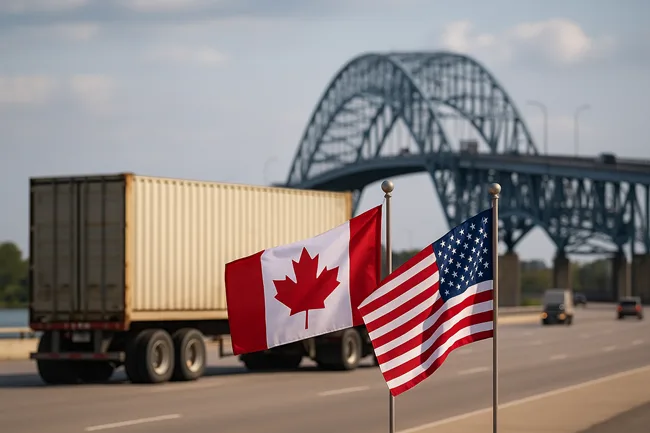
On August 22, 2025, Canadian Prime Minister Mark Carney announced that Canada will remove retaliatory tariffs on U.S. goods covered under the United States-Mexico-Canada Agreement (USMCA), effective September 1. The decision, framed as a reciprocal gesture following the United States’ recent exemptions, is being pitched as a pragmatic attempt to revive stalled trade and security negotiations between Ottawa and Washington.
The move represents a significant shift in Canada’s posture toward its largest trading partner. For months, both nations have been engaged in a grinding tariff standoff that has strained businesses and raised consumer costs. By easing some duties while keeping others intact, Canada is now testing whether a calibrated strategy can reset dialogue without sacrificing key leverage points.
Why has Canada decided to lift some retaliatory tariffs now, and which sectors remain affected?
The rollback of tariffs is being described by officials as a carefully timed move. Canada’s government stressed that more than 85 percent of Canada-U.S. trade is already tariff-free under USMCA rules, which remain the backbone of North American commerce. By lifting duties on a broad range of consumer goods, Ottawa hopes to align its trade posture more closely with exemptions recently granted by Washington.
The rollback encompasses roughly half of the goods originally targeted when Canada imposed its retaliatory tariffs earlier in 2025. Among the products now set for relief are household consumer staples such as orange juice, peanut butter, wine, spirits, major appliances, and motorcycles. Together, these categories represent around 21 billion U.S. dollars in exports from the United States to Canada.
Yet Canada has not gone so far as to remove all of its counter-tariffs. Duties on U.S. steel, aluminum, and automobiles remain firmly in place. These sectors have long been flashpoints in North American trade disputes, and Ottawa appears determined to keep them protected as leverage in ongoing negotiations. By splitting its response between everyday consumer products and critical industrial inputs, Canada is signaling a willingness to compromise while also preserving bargaining power where it matters most.
What historical context led to Canada’s retaliatory tariffs in the first place?
The backdrop to the current decision is the long-simmering trade confrontation between the United States and Canada that reignited earlier this year. In January 2025, the Trump administration introduced aggressive tariff measures aimed at Canadian goods, citing what it described as unfair advantages in energy, forestry, and manufacturing. A particularly controversial provision included a so-called “fentanyl tariff,” designed to pressure Ottawa on drug enforcement and supply chain issues.
Canada responded with swift counter-measures. In February, Ottawa imposed retaliatory tariffs of 25 percent on a wide basket of U.S. imports, totaling billions of dollars in value. The counter-tariffs were seen as both a defensive shield and a bargaining chip, designed to protect Canadian industries while sending a message to Washington that Canada would not back down easily.
By March, the Canadian government temporarily suspended planned expansions of those duties, particularly on health-related and manufacturing imports. The pause was intended to relieve domestic economic pressure while maintaining enough leverage to keep the United States engaged. This balancing act has been a recurring feature of Ottawa’s approach: assertive enough to defend domestic interests, but flexible enough to leave the door open for negotiation.
What has been the reaction from Canadian stakeholders, including unions and business groups?
The announcement has triggered sharply divided reactions across Canada. Labor unions, led by Unifor—the country’s largest private-sector union representing over 320,000 workers—were quick to criticize the decision. Unifor National President Lana Payne warned that dropping counter-tariffs undermines Canada’s bargaining power and exposes workers in auto plants, steel mills, aluminum smelters, and forestry operations to renewed U.S. aggression.
According to Payne, Canada’s leverage in the trade dispute is not merely symbolic. Retaliatory tariffs serve as both a deterrent and a shield, ensuring that Canada cannot be easily pressured into concessions. In her view, lifting those duties without securing tangible U.S. concessions sends the wrong signal at a moment when trade hostilities are intensifying.
Business groups, on the other hand, have reacted more positively. Several industry associations, particularly in retail and consumer goods, welcomed the tariff relief as a step toward stabilizing costs. For Canadian importers and consumers, the tariffs had translated into higher prices for everyday goods, from breakfast staples to household appliances. By dialing back duties on these categories, Ottawa is delivering immediate relief to households while easing friction for businesses reliant on cross-border supply chains.
Provincial leaders have also been split. Some premiers, particularly those representing manufacturing-heavy provinces, have echoed union concerns about weakening Canada’s negotiating position. Others, especially in provinces dependent on consumer imports, have supported the move as a pragmatic compromise that balances national and local interests.
What does this shift mean for Canada-U.S. trade talks—and what’s next?
Prime Minister Carney has described the rollback as a “matching” gesture meant to create space for renewed dialogue with Washington. The ultimate goal, he suggested, is to set the stage for discussions on a broader trade and security framework that would extend beyond the upcoming USMCA review.
In Washington, the move has been cautiously welcomed. President Trump called Canada’s decision “nice” and suggested it could pave the way for progress in trade and security talks. However, U.S. officials have not indicated whether further tariff relief or exemptions will follow. Analysts argue that while Canada has clearly signaled de-escalation, there is no guarantee that the United States will respond in kind.
Observers note that the timing is significant. With USMCA scheduled for review in 2026, both sides are eager to position themselves ahead of potentially contentious renegotiations. For Canada, softening its tariff stance could reduce friction in the short term and build goodwill heading into those talks. But the risk remains that Ottawa has conceded leverage without extracting meaningful commitments from Washington.
How is Canada balancing relief for domestic sectors with strategic leverage?
The structure of the rollback demonstrates Canada’s effort to balance political, economic, and strategic objectives. By lifting tariffs on consumer goods, Ottawa is delivering relief to households and businesses grappling with higher costs. At the same time, maintaining duties on core industrial sectors sends a clear message that Canada is not abandoning its critical industries to external pressure.
This dual approach allows Canada to claim both responsiveness and resilience. It can argue domestically that it has eased consumer burdens, while simultaneously assuring industrial workers that key sectors remain shielded. Internationally, the move offers Washington a sign of good faith without fully surrendering bargaining tools.
For Canadian manufacturers and exporters, the message is mixed. While input costs may stabilize with cheaper consumer goods imports, the ongoing dispute over steel, aluminum, and automotive tariffs continues to cast uncertainty over long-term competitiveness. Businesses in these sectors are likely to remain cautious until clearer signals emerge from Washington about the direction of U.S. trade policy.
What can analysts expect in terms of trade dynamics and policy developments moving forward?
Analysts expect the rollback to serve as a prelude to more comprehensive negotiations in the months ahead. With the USMCA review looming, both Canada and the United States have incentives to manage disputes now rather than face greater turbulence in 2026. Institutional investors view Canada’s move as a tactical concession designed to stabilize short-term relations while preparing for long-term bargaining.
Market sentiment has reflected this cautious optimism. Canadian equities exposed to consumer imports have shown signs of relief, while industrial names remain under pressure amid lingering uncertainty in the steel and automotive sectors. Currency markets have also responded moderately, with the Canadian dollar steadying against the U.S. dollar after weeks of volatility driven by trade tensions.
Looking forward, analysts warn that U.S. sectoral investigations into furniture, lumber, and other categories could spark fresh disputes. Canada will likely need to maintain a flexible but vigilant approach, ensuring that goodwill gestures do not translate into unchecked vulnerability. Pressure from provincial governments and labor groups will remain strong, making it politically costly for Ottawa to be seen as giving too much ground.
The broader question is whether this rollback represents a temporary tactical maneuver or the beginning of a durable thaw in U.S.-Canada relations. For now, the answer lies somewhere in between: Canada has opened the door for dialogue but has yet to secure assurances that its concessions will be met with equivalent gestures.
How will Canada’s rollback of retaliatory tariffs shape future trade relations with the United States?
Canada’s decision to remove many of its retaliatory tariffs on September 1 marks an overt effort to reset bilateral relations with the United States. It is a pivot from confrontation toward engagement, driven by the need to reduce economic strain at home while maintaining leverage abroad.
For Canadian workers and unions, the move sparks concern that Ottawa is weakening its defensive shield against U.S. aggression. For businesses and consumers, it provides welcome relief from higher costs. For policymakers, it represents a calculated gamble: trading some short-term leverage for the possibility of longer-term stability.
As Canada heads toward the 2026 USMCA review, the success of this strategy will hinge on whether Washington responds with genuine reciprocity. Until then, Ottawa’s challenge will be to balance optimism with vigilance, ensuring that its softened posture does not leave its core industries and workers exposed.
Discover more from Business-News-Today.com
Subscribe to get the latest posts sent to your email.